
Connecticut State Newsletter - April 15, 2025
In This Issue:
-
May 20, 2025 - Deadline to submit an Emergency Loan application for Severe Storm, Flooding, Landslides, and Mudslides that occurred in August, 2024.
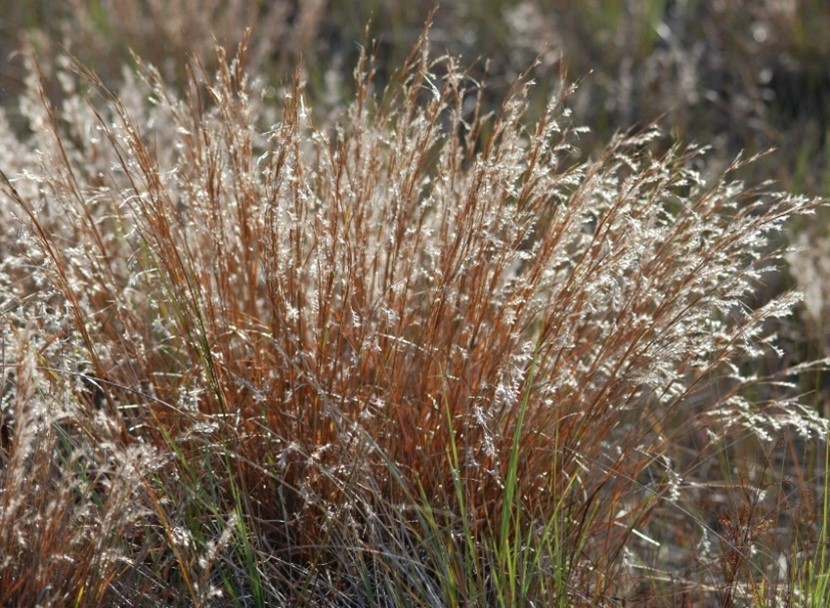 USDA has worked with the Conservation Biology Institute (CBI) to design and build a free online easy-to-use Seed and Vendor finder tool to support the producers enrolling in the CRP program, along with other conservation efforts involving native plantings. CBI also partnered with the Institute for Applied Ecology (IAE) to address the needs of the Native Seed Network and significantly expanded the native seed customer and vendor base.
The seed and vendor finder can be found here: Seed and Vendor Finder
Currently, CBI has seeded the tool with 214 vendors found through an online search from across the country with limited profiles, and 42 have voluntarily completed full profiles which includes their plant inventory. The tool is designed for easy uploading of their profile and inventory. It also provides an opportunity for vendors without a website to have an online presence and be found by customers looking for seeds. Also check out the plant finder tool where you can find suitable plants, including pollinator friendly plants for your area and soil type. Currently we have 20+ unique visitors to the tool every day and that number is growing!
All vendors are encouraged to add their profile and inventory to the tool. You can do this easily by filling out this simple form located here: https://crptool.org/contact/. A member of the CBI team will send you an invite within 24 h to create your full profile.
The Farm Service Agency’s (FSA) Noninsured Crop Disaster Assistance Program (NAP) provides financial assistance to producers of non-insurable crops, including mechanically harvested forage with NAP coverage, to protect against natural disasters that occur during the coverage, resulting in loss of production, loss of value, or prevented planting of an eligible crop.
If you have NAP coverage on mechanically harvested forage, you must:
- Maintain separate production records for each unit, crop, practice, crop type, and intended use.
- Submit production records to FSA by the designated production reporting date for the crop.
- Notify your FSA administrative county office before grazing, abandoning, or destroying forage acreage reported, on FSA form FSA-578, as intended to be mechanically harvested; and request an appraisal.
- Notify your FSA administrative county office of a loss and timely file CCC-576, Notice of Loss and Application for Payment Part B, the earlier of:
- 15 calendar days after the disaster occurs, or damage first becomes apparent.
- 15 calendar days after the crop’s normal harvest date.
- If you change your intended use or experience a loss during the coverage period, you must:
- Establish and maintain representative sample areas when an appraisal of the acreage is required.
- Inform your FSA administrative county office of the location of representative sample areas within 15 days of placing the panels.
- Request an appraisal of the representative sample areas at the end of harvest period but before first freeze.
For more information on NAP and NAP compliance requirements you must follow to retain NAP coverage, contact your local USDA service center.
The U.S. Department of Agriculture (USDA) is issuing up to $10 billion directly to agricultural producers through the Emergency Commodity Assistance Program (ECAP) for the 2024 crop year. Administered by USDA’s Farm Service Agency (FSA), ECAP will help agricultural producers mitigate the impacts of increased input costs and falling commodity prices.
Authorized by the American Relief Act, 2025, these economic relief payments are based on planted and prevented planted crop acres for eligible commodities for the 2024 crop year. To streamline and simplify the delivery of ECAP, FSA will begin sending pre-filled applications to producers who submitted acreage reports to FSA for 2024 eligible ECAP commodities soon after the signup period opens on March 19, 2025. Producers do not have to wait for their pre-filled ECAP application to apply. They can visit fsa.usda.gov/ecap to apply using a login.gov account or contact their local FSA office to request an application once the signup period opens.
Eligible Commodities and Payment Rates
The commodities below are eligible for these per-acre payment rates:
|
|
Eligible oilseeds:
|
|
|
|
|
|
|
|
|
|
|
|
|
- Upland cotton & Extra-long staple cotton - $84.74
|
|
- Long & medium grain rice - $76.94
|
|
|
|
|
|
|
|
|
|
|
|
|
|
|
|
|
|
|
|
Producer Eligibility
Eligible producers must report 2024 crop year planted and prevented planted acres to FSA on an FSA-578, Report of Acreage form. Producers who have not previously reported 2024 crop year acreage or filed a notice of loss for prevented planted crops must submit an acreage report by the Aug. 15, 2025, deadline. Eligible producers can visit fsa.usda.gov/ecap for eligibility and payment details.
Applying for ECAP
Producers must submit ECAP applications to their local FSA county office by Aug. 15, 2025. Only one application is required for all ECAP eligible commodities nationwide. ECAP applications can be submitted to FSA in-person, electronically using Box and One-Span, by fax or by applying online at fsa.usda.gov/ecap utilizing a secure login.gov account.
If not already on file for the 2024 crop year, producers must have the following forms on file with FSA:
-
Form AD-2047, Customer Data Worksheet.
-
Form CCC-901, Member Information for Legal Entities (if applicable).
-
Form CCC-902, Farm Operating Plan for an individual or legal entity.
-
Form CCC 943, 75 percent of Average Gross Income from Farming, Ranching, or Forestry Certification (if applicable).
-
AD-1026, Highly Erodible Land Conservation (HELC) and Wetland Conservation (WC) Certification.
-
SF-3881, Direct Deposit.
Except for the new CCC-943, most producers, especially those who have previously participated in FSA programs, likely have these forms on file. However, those who are uncertain and want to confirm the status of their forms or need to submit the new CCC-943, can contact their local FSA county office.
If a producer does not receive a pre-filled ECAP application, and they planted or were prevented from planting ECAP eligible commodities in 2024, they should contact their local FSA office.
ECAP Payments and Calculator
ECAP payments will be issued as applications are approved. Initial ECAP payments will be factored by 85% to ensure that total program payments do not exceed available funding. If additional funds remain, FSA may issue a second payment.
ECAP assistance will be calculated using a flat payment rate for the eligible commodity multiplied by the eligible reported acres. Payments are based on acreage and not production. For acres reported as prevented plant, ECAP assistance will be calculated at 50%.
For ECAP payment estimates, producers are encouraged to visit fsa.usda.gov/ecap to use the ECAP online calculator.
Farm Service Agency (FSA) farm loans are considered progression lending. Unlike loans from a commercial lender, FSA loans are intended to be temporary in nature. Our goal is to help you graduate to commercial credit, and our farm loan staff is available to help borrowers through training and credit counseling.
The FSA team will help borrowers identify their goals to ensure financial success. FSA staff will advise borrowers on developing strategies and a plan to meet your goals and graduate to commercial credit. FSA borrowers are responsible for the success of their farming operation, but FSA staff will help in an advisory role, providing the tools necessary to help you achieve your operational goals and manage your finances.
For more information on FSA farm loan programs, contact your local USDA Service Center or visit fsa.usda.gov.
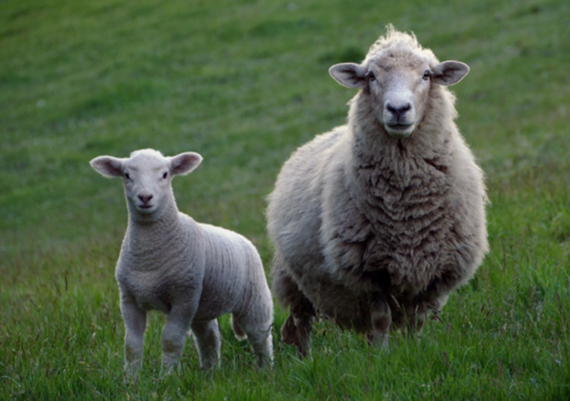 Marketing Assistance Loans (MALs) and Loan Deficiency Payments (LDPs) provide financing and marketing assistance for producers of many commodities, including graded and non-graded wool, mohair, and unshorn pelts. MALs and LDPs are available during shearing and provide interim financing to help you meet cash flow needs without having to sell commodities when market prices are low, enabling you to delay selling until more favorable marketing conditions emerge. LDPs are payments made to producers who, although eligible to obtain an MAL, agree to forgo the loan in return for a payment on the eligible commodity.
FSA is now accepting requests for 2025 MALs and LDPs for all eligible wool, mohair and unshorn pelts. These requests should be made on or before the final availability date of Jan. 31, 2026. USDA recently announced 2025 wool and mohair marketing assistance loan rates.
Eligibility
To be eligible for a wool or mohair MAL or LDP, producers must produce and shear eligible mohair and wool in the U.S. during the applicable crop year and must:
- comply with conservation and wetland protection requirements;
- report all cropland acreage on applicable farms where the eligible commodity is produced;
- have and retain beneficial interest in the commodity until the MAL is repaid or the Commodity Credit Corporation (CCC) takes title to the commodity, and;
- meet Adjusted Gross Income (AGI) limitations.
Unshorn pelts are eligible for LDPs only. In addition to the criteria above, producers of unshorn pelts must have sold the unshorn lamb for immediate slaughter or slaughter the lambs for personal use. LDPs and marketing loan gains are not subject to payment limitation, including actively engaged in farming and cash rent tenant provisions.
In addition to producer eligibility, the loan commodity must have been produced and shorn from live animals by an eligible producer, be in storable condition, and meet specific CCC minimum grade and quality standards. Producers are responsible for any loss in quantity or quality of the wool or mohair pledged as loan collateral.
To retain beneficial interest, the producer must have control and title of the wool, mohair, or unshorn pelt. If beneficial interest in the commodity is lost, the commodity loses eligibility for an MAL or LDP and remains ineligible even if the producer later regains beneficial interest. The producer must be able to make all decisions affecting the commodity including movement, sale, and the request for an MAL or LDP.
Producers may repay an MAL any time during the loan period at the lesser of the loan rate plus accrued interest and other charges or an alternative loan repayment rate, the national posted price, which is announced weekly. Visit the Farm Service Agency (FSA) website for posted loan and LDP rates.
How to Apply
Producers can apply for an MAL by contacting their local FSA county office. To be considered for a LDP, producers must first have the form CCC-633 EZ, Page 1, on file with FSA prior to losing beneficial interest in the wool, mohair or unshorn pelt. It is best to visit the county office and submit the CCC-633 Page 1 right before you shear. This is completed one time per crop year and indicates your intention to receive LDP benefits.
To apply and learn more information, contact your local USDA Service Center or visit fsa.usda.gov.
In April 2024, the USDA Animal and Plant Health Inspection Service (APHIS) announced the final rule that amends and strengthens our animal disease traceability regulations for certain cattle and bison. This rule went into effect on Nov. 5, 2024.
Learn more about seven common myths and misunderstandings about the new regulations.
All producers are encouraged to contact their local FSA office for more information on the final planting date for specific crops. The final planting dates vary by crop, planting period and county so please contact your local FSA office for a list of county-specific planting deadlines. The timely planting of a crop, by the final planting date, may prevent loss of program benefits.
Connecticut State NRCS Office
344 Merrow Road, Suite A
Tolland, CT 06084-3917
Phone: 860-871-4011
Connecticut State FSA Office
344 Merrow Road, Suite B
Tolland, CT 06084-3917
Phone: 860-871-4090
Fax: 855-934-2463
Deputy State Executive Director:
Nathan Wilson
|
|
Connecticut FSA State Website
|
|
State Office Staff:
Jule Dybdahl, Administrative Officer
Rebecca Palmer, Program Chief
A.J. Bellagamba, Program Specialist
Claire Vaterlaus-Staby, Outreach Coordinator
Keith Durao, Administrative Specialist
|
State Committee Chair:
Mary Concklin
State Committee Members:
Will O’Meara
|
Top of page
|






