In This Issue:
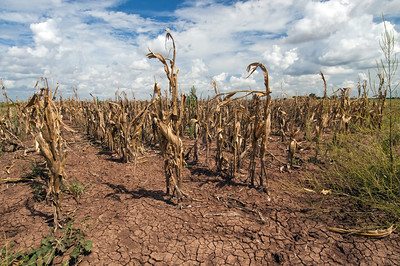
Severe weather events create significant challenges and often result in catastrophic loss for agricultural producers. Despite every attempt to mitigate risk, your operation may suffer losses. USDA offers several programs to help with recovery.
Risk Management
For producers with coverage through the Noninsured Crop Disaster Assistance Program (NAP), we want to remind you to report crop damage to your local Farm Service Agency (FSA) office. You will need to file a Notice of Loss (also called Form CCC-576) within 15 days of loss becoming apparent, except for hand-harvested crops, which should be reported within 72 hours.
If you have Federal Crop Insurance, contact your crop insurance agent within 72 hours of discovering damage and be sure to follow up in writing within 15 days.
Disaster Assistance
USDA also offers disaster assistance programs, which is especially important to livestock, fruit and vegetable, specialty and perennial crop producers who have fewer risk management options.
First, the Livestock Indemnity Program (LIP) and Emergency Assistance for Livestock, Honeybee and Farm-raised Fish Program (ELAP) reimburses producers for a portion of the value of livestock, poultry and other animals that died as a result of a qualifying natural disaster event or for loss of grazing acres, feed and forage. And, the Livestock Forage Disaster Program (LFP) provides assistance to producers of grazed forage crop acres that have suffered crop loss due to a qualifying drought. Livestock producers suffering the impacts of drought can also request Emergency Haying and Grazing on Conservation Reserve Program (CRP) acres.
Next, the Tree Assistance Program (TAP) provides cost share assistance to rehabilitate and replant tree, vines or shrubs loss experienced by orchards and nurseries. This complements NAP or crop insurance coverage, which cover the crop but not the plants or trees in all cases.
For LIP and ELAP, you will need to file a Notice of Loss for livestock and grazing or feed losses by the application deadline for each program. For TAP, you will need to file a program application within 90 days.
Documentation
It’s critical to keep accurate records to document all losses following this devastating cold weather event. Livestock producers are advised to document beginning livestock numbers by taking time and date-stamped video or pictures prior to after the loss.
Other common documentation options include:
- Purchase records
- Production records
- Vaccination records
- Bank or other loan documents
- Third-party certification
Its also critical to work with your local FSA office immediately after a disaster and prior to clean-up to help ensure program eligibility.
Other Programs
The Emergency Conservation Program and Emergency Forest Restoration Program can assist landowners and forest stewards with financial and technical assistance to restore damaged farmland or forests.
Additionally, FSA offers a variety of loans available including emergency loans that are triggered by disaster declarations and operating loans that can assist producers with credit needs. You can use these loans to replace essential property, purchase inputs like livestock, equipment, feed and seed, or refinance farm-related debts, and other needs.
Meanwhile, USDA’s Natural Resources Conservation Service (NRCS) provides financial resources through its Environmental Quality Incentives Program to help with immediate needs and long-term support to help recover from natural disasters and conserve water resources. Assistance may also be available for emergency animal mortality disposal from natural disasters and other causes.
Additional Resources
Additional details – including payment calculations – can be found on our NAP, ELAP, LIP, and TAP fact sheets. On farmers.gov, the Disaster Assistance Discovery Tool, Disaster-at-a-Glance fact sheet, and Farm Loan Discovery Tool can help you determine program or loan options.
The U.S. Department of Agriculture (USDA) is issuing up to $10 billion directly to agricultural producers through the Emergency Commodity Assistance Program (ECAP) for the 2024 crop year. Administered by USDA’s Farm Service Agency (FSA), ECAP will help agricultural producers mitigate the impacts of increased input costs and falling commodity prices.
Authorized by the American Relief Act, 2025, these economic relief payments are based on planted and prevented planted crop acres for eligible commodities for the 2024 crop year. To streamline and simplify the delivery of ECAP, FSA will begin sending pre-filled applications to producers who submitted acreage reports to FSA for 2024 eligible ECAP commodities soon after the signup period opens on March 19, 2025. Producers do not have to wait for their pre-filled ECAP application to apply. They can visit fsa.usda.gov/ecap to apply using a login.gov account or contact their local FSA office to request an application once the signup period opens.
Eligible Commodities and Payment Rates
The commodities below are eligible for these per-acre payment rates:
|
|
Eligible oilseeds:
|
|
|
|
|
|
|
|
|
|
|
|
|
- Upland cotton & Extra-long staple cotton - $84.74
|
|
- Long & medium grain rice - $76.94
|
|
|
|
|
|
|
|
|
|
|
|
|
|
|
|
|
|
|
|
Producer Eligibility
Eligible producers must report 2024 crop year planted and prevented planted acres to FSA on an FSA-578, Report of Acreage form. Producers who have not previously reported 2024 crop year acreage or filed a notice of loss for prevented planted crops must submit an acreage report by the August 15, 2025, deadline. Eligible producers can visit fsa.usda.gov/ecap for eligibility and payment details.
Applying for ECAP
Producers must submit ECAP applications to their local FSA county office by Aug. 15, 2025. Only one application is required for all ECAP eligible commodities nationwide. ECAP applications can be submitted to FSA in-person, electronically using Box and One-Span, by fax or by applying online at fsa.usda.gov/ecap utilizing a secure login.gov account.
If not already on file for the 2024 crop year, producers must have the following forms on file with FSA:
-
Form AD-2047, Customer Data Worksheet.
-
Form CCC-901, Member Information for Legal Entities (if applicable).
-
Form CCC-902, Farm Operating Plan for an individual or legal entity.
-
Form CCC 943, 75 percent of Average Gross Income from Farming, Ranching, or Forestry Certification (if applicable).
-
AD-1026, Highly Erodible Land Conservation (HELC) and Wetland Conservation (WC) Certification.
-
SF-3881, Direct Deposit.
Except for the new CCC-943, most producers, especially those who have previously participated in FSA programs, likely have these forms on file. However, those who are uncertain and want to confirm the status of their forms or need to submit the new CCC-943, can contact their local FSA county office.
If a producer does not receive a pre-filled ECAP application, and they planted or were prevented from planting ECAP eligible commodities in 2024, they should contact their local FSA office.
ECAP Payments and Calculator
ECAP payments will be issued as applications are approved. Initial ECAP payments will be factored by 85% to ensure that total program payments do not exceed available funding. If additional funds remain, FSA may issue a second payment.
ECAP assistance will be calculated using a flat payment rate for the eligible commodity multiplied by the eligible reported acres. Payments are based on acreage and not production. For acres reported as prevented plant, ECAP assistance will be calculated at 50%.
For ECAP payment estimates, producers are encouraged to visit fsa.usda.gov/ecap to use the ECAP online calculator.
With ever increasing weather events, IEMA has created a self-reporting tool for anyone who has experienced any type of disaster loss. IEMA’s tool is an effort to receive initial damage assessments for affected areas more quickly and accurately so that they can deploy resources and help accordingly. If utilized, this tool will capture information that will benefit a multitude of emergency-oriented agencies. The tool also has an area to self-report agricultural losses which the Farm Service Agency (FSA) will be able to review. Receiving this information from IEMA will allow FSA to assess ag damage more quickly and accurately for our producers to ensure disaster designations and disaster programs are implemented where they are needed. Please take a moment to view IEMA’s reporting or share the link if you or someone you know has experienced damages due to a recent weather event.
EMA Survey for Ag Damages/Losses
Link: https://arcg.is/1iqrWi

Farm Service Agency (FSA) is committed to providing our farm loan borrowers the tools necessary to be successful. FSA staff will provide guidance and counsel from the loan application process through the borrower’s graduation to commercial credit. While it is FSA’s commitment to advise borrowers as they identify goals and evaluate progress, it is crucial for borrowers to communicate with their farm loan staff when changes occur. It is the borrower’s responsibility to alert FSA to any of the following:
- Any proposed or significant changes in the farming operation
- Any significant changes to family income or expenses
- The development of problem situations
- Any losses or proposed significant changes in security
If a farm loan borrower can’t make payments to suppliers, other creditors, or FSA on time, contact your farm loan staff immediately to discuss loan servicing options.
For more information on FSA farm loan programs, contact your local County USDA Service Center or visit fsa.usda.gov.
Farm Service Agency (FSA) farm loans are considered progression lending. Unlike loans from a commercial lender, FSA loans are intended to be temporary in nature. Our goal is to help you graduate to commercial credit, and our farm loan staff is available to help borrowers through training and credit counseling.
The FSA team will help borrowers identify their goals to ensure financial success. FSA staff will advise borrowers on developing strategies and a plan to meet your goals and graduate to commercial credit. FSA borrowers are responsible for the success of their farming operation, but FSA staff will help in an advisory role, providing the tools necessary to help you achieve your operational goals and manage your finances.
For more information on FSA farm loan programs, contact your local County USDA Service Center or visit fsa.usda.gov.
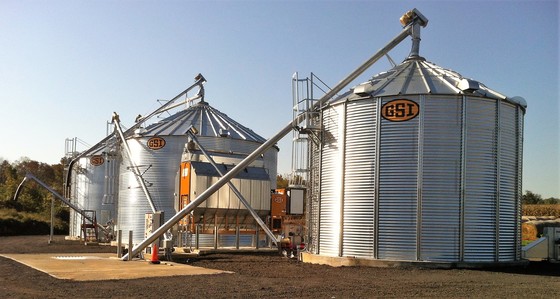
Agricultural producers of perishable commodities including fruits, vegetables and floriculture can now get funding for controlled atmosphere storage through Farm Storage Facility Loans (FSFL) offered by the U.S. Department of Agriculture’s (USDA) Farm Service Agency (FSA). Controlled atmosphere storage regulates the concentrations of oxygen, carbon dioxide and nitrogen in a storage room to increase the shelf life of crops.
In addition to now supporting controlled atmosphere storage, FSFLs also provide low-interest financing to help producers build or upgrade storage facilities and to purchase portable (new or used) structures, equipment and storage and handling trucks.
The low-interest funds can also be used for controlled atmosphere storage monitoring equipment, designed to notify facility owners immediately if potential atmospheric concerns are detected. Producers may renovate existing storage facilities to include controlled atmosphere storage monitoring equipment. Authorized loan terms for FSFL renovations are three and five years only.
To assist with monitoring gases and particle concentrations for controlled atmosphere storage, the following equipment, but not limited to, is eligible for an FSFL:
· Optical oxygen sensor.
· Low power CO2 sensor.
· Air quality sensor.
· Gas detection devices.
· Air temperature and relative humidity sensor.
· Water activity meter.
· Temperature stabilized water activity analyzer.
· Precision and performance humidity and temperature transmitter.
Loans of up to $50,000 can be secured by a promissory note/security agreement, loans between $50,000 and $100,000 may require additional security and loans exceeding $100,000 require additional security.
FSFL borrowers do not need to demonstrate lack of commercial credit availability to apply. The loans are designed to assist a diverse range of agricultural operations, including small and mid-sized businesses, new farmers and ranchers, operations supplying local food and farmers markets, non-traditional farm products and underserved producers.
For more information, see the FSFL fact sheet and contact FSA at your local USDA Service Cente
Don’t know much about Federal crop insurance, but you want to learn more?
Crop insurance is a risk management strategy that farmers use to protect their livelihoods. By purchasing a policy through a crop insurance agent, farmers are financially protected if there are losses due to a covered cause of loss. It’s not so different from car or homeowners insurance.
Start your journey out right by reading RMA’s Beginners Guide to Crop Insurance
This is likely no surprise to you, but drought persists across the western U.S. and is intensifying in some areas. No geographic area is immune to the potential of drought at any given time. The U.S. Drought Monitor provides a weekly drought assessment, and it plays an important role in USDA programs that help farmers and ranchers recover from drought.
Fact #1 - Numerous agencies use the Drought Monitor to inform drought-related decisions.
The map identifies areas of drought and labels them by intensity on a weekly basis. It categorizes the entire country as being in one of six levels of drought. The first two, None and Abnormally Dry (D0), are not considered to be drought. The next four describe increasing levels of drought: Moderate (D1), Severe (D2), Extreme (D3) and Exceptional (D4).
While many entities consult the Drought Monitor for drought information, drought declarations are made by federal, state and local agencies that may or may not use the Drought Monitor to inform their decisions. Some of the ways USDA uses it to determine a producer’s eligibility for certain drought assistance programs, like the Livestock Forage Disaster Program and Emergency Haying or Grazing on Conservation Reserve Program acres and to “fast-track” Secretarial drought disaster designations.
Fact #2 - U.S. Drought Monitor is made with more than precipitation data.
When you think about drought, you probably think about water, or the lack of it. Precipitation plays a major role in the creation of the Drought Monitor, but the map’s author considers numerous indicators, including drought impacts and local insight from over 450 expert observers around the country. Authors use several dozen indicators to assess drought, including precipitation, streamflow, reservoir levels, temperature and evaporative demand, soil moisture and vegetation health. Because the drought monitor depicts both short and long‐term drought conditions, the authors must look at data for multiple timeframes. The final map produced each week represents a summary of the story being told by all the pieces of data. To help tell that story, authors don’t just look at data. They converse over the course of the map-making week with experts across the country and draw information about drought impacts from media reports and private citizens.
Fact #3 - A real person, using real data, updates the map.
Each week’s map author, not a computer, processes and analyzes data to update the drought monitor. The map authors are trained climatologists or meteorologists from the National Drought Mitigation Center at the University of Nebraska-Lincoln (the academic partner and website host of the Drought Monitor), the National Oceanic and Atmospheric Administration and USDA. The author’s job is to do what a computer can’t – use their expertise to reconcile the sometimes-conflicting stories told by each stream of data into a single assessment.
Fact #4 - The Drought Monitor provides a current snapshot, not a forecast.
The Drought Monitor is a “snapshot” of conditions observed during the most recent week and builds off the previous week’s map. The map is released on Thursdays and depicts conditions based on data for the week that ended the preceding Tuesday. Rain that falls on the Wednesday just before the USDM’s release won’t be reflected until the next map is published. This provides a consistent, week‐to‐week product and gives the author a window to assess the data and come up with a final map.
Fact #5 – Your input can be part of the drought-monitoring process.
State climatologists and other trained observers in the drought monitoring network relay on-the-ground information from numerous sources to the US Drought monitor author each week. That can include information that you contribute.
The Drought Monitor serves as a trigger for multiple forms of federal disaster relief for agricultural producers, and sometimes producers contact the author to suggest that drought conditions in their area are worse than what the latest drought monitor shows. When the author gets a call like that, it prompts them to look closely at all available data for that area, to see whether measurements of precipitation, temperature, soil moisture and other indicators corroborate producer-submitted reports. This is the process that authors follow whether they receive one report or one hundred reports, although reports from more points may help state officials and others know where to look for impacts.
There are multiple ways to contribute your observations:
-
Talk to your state climatologist - Find the current list at the American Association of State Climatologists website.
-
Email - Emails sent to droughtmonitor@unl.edu inform the USDM authors.
-
Become a CoCoRaHS observer - Submit drought reports along with daily precipitation observations to the Community Collaborative Rain, Hail & Snow Network.
-
Submit Condition Monitoring Observer Reports (CMOR) - go.unl.edu/CMOR.
For more information, read our Ask the Expert blog with a NDMC climatologist or visit farmers.gov/protection-recovery.
If you’re enrolled in the Agriculture Risk Coverage (ARC) or Price Loss Coverage (PLC) programs, you must protect all cropland and noncropland acres on the farm from wind and water erosion and noxious weeds. By signing ARC county or individual contracts and PLC contracts, you agree to effectively control noxious weeds on the farm according to sound agricultural practices. If you fail to take necessary actions to correct a maintenance problem on your farm that is enrolled in ARC or PLC, the County Committee may elect to terminate your contract for the program year.
In order to claim a Farm Service Agency (FSA) payment on behalf of a deceased producer, all program conditions for the payment must have been met before the applicable producer’s date of death.
If a producer earned an FSA payment prior to his or her death, the following is the order of precedence for the representatives of the producer:
· administrator or executor of the estate
· the surviving spouse
· surviving sons and daughters, including adopted children
· surviving father and mother
· surviving brothers and sisters
· heirs of the deceased person who would be entitled to payment according to the State law
For FSA to release the payment, the legal representative of the deceased producer must file a form FSA-325 to claim the payment for themselves or an estate. The county office will verify that the application, contract, loan agreement, or other similar form requesting payment issuance, was signed by the applicable deadline by the deceased or a person legally authorized to act on their behalf at that time of application.
If the application, contract or loan agreement form was signed by someone other than the deceased participant, FSA will determine whether the person submitting the form has the legal authority to submit the form.
Payments will be issued to the respective representative’s name using the deceased program participant’s tax identification number. Payments made to representatives are subject to offset regulations for debts owed by the deceased.
FSA is not responsible for advising persons in obtaining legal advice on how to obtain program benefits that may be due to a participant who has died, disappeared or who has been declared incompetent.
 |
|
April 1 Nesting Season begins for Conservation
Conservation Reserve Practices (CRP)
Ongoing FSFL Applications
April 15 ARC/PLC Contract Deadline
May 26 Memorial Day Holiday - Office Closed
June 19 Juneteenth Holiday - Office Closed
July 4 Independence Day - Holiday Office Closed
July 15 Spring Seeded Crops final date to report
August 14 ECAP final Date
|
 |
|
Farm Loans
Direct Farm Operating Loans 5.375%
Direct Farm Ownership Loans 5.750%
Farm Ownership, Downpayment Loans 1.750%
Farm Ownership, Joint Financing Loans 3.750%
Emergency Loans 3.750%
Farm Facility Loans
3 year 4.00%
5 year 4.125%
7 year 4.125%
10 year 4.250%
12 year 4.375%
Commodity Loans 5.125%
|
Producers are encouraged to call their local FSA office to schedule an appointment to ensure maximum use of their time and to make sure FSA staff is available to tend to their important business needs. Please call your local FSA office ahead to set an appointment and to discuss any records or documentation that might be needed during your appointment. To find your local FSA office, visit farmers.gov/working-with-us/service-center-locator.
|