
Kentucky FSA Newsletter - April 2025
In This Issue:
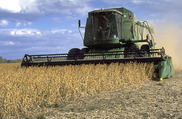
Agricultural producers who have not yet enrolled in the Agriculture Risk Coverage (ARC) or Price Loss Coverage (PLC) programs for the 2025 crop year have until April 15, 2025, to revise elections and sign contracts. Both safety net programs, delivered by USDA’s Farm Service Agency (FSA), provide vital income support to eligible farmers who experience substantial declines in crop prices or revenues for the 2025 crop year. In Kentucky, producers have completed 35,079 contracts to date, representing 79.9% of the more than 43,926 expected contracts.
Producers can elect coverage and enroll in ARC-County or PLC, which provide crop-by-crop protection, or ARC-Individual, which protects the entire farm. Although election changes for 2025 are optional, producers must enroll, with a signed contract, each year. If a producer has a multi-year contract on the farm, the contract will continue for 2025 unless an election change is made.
If producers do not submit their election revision by the April 15, 2025, deadline, the election remains the same as their 2024 election for eligible commodities on the farm. Also, producers who do not complete enrollment and sign their contract by the deadline will not be enrolled in ARC or PLC for the 2025 year and will not receive a payment if one is triggered. Farm owners can only enroll in these programs if they have a share interest in the commodity.
Producers are eligible to enroll farms with base acres for the following commodities: barley, canola, large and small chickpeas, corn, crambe, flaxseed, grain sorghum, lentils, mustard seed, oats, peanuts, dry peas, rapeseed, long grain rice, medium and short grain rice, safflower seed, seed cotton, sesame, soybeans, sunflower seed and wheat.
Web-Based Decision Tools
Many universities offer web-based decision tools to help producers make informed, educated decisions using crop data specific to their respective farming operations. Producers are encouraged to use the tool of their choice to support their ARC and PLC elections.
Crop Insurance Considerations
Producers are reminded that enrolling in ARC or PLC programs can impact eligibility for some crop insurance products offered by USDA’s Risk Management Agency (RMA). Producers who elect and enroll in PLC also have the option of purchasing Supplemental Coverage Option (SCO) through their Approved Insurance Provider, but producers of covered commodities who elect ARC are ineligible for SCO on their planted acres.
Unlike SCO, RMA’s Enhanced Coverage Option (ECO) is unaffected by participating in ARC for the same crop, on the same acres. Producers may elect ECO regardless of their farm program election.
Upland cotton farmers who enroll seed cotton base acres in ARC or PLC are ineligible for the stacked income protection plan, or STAX, on their planted cotton acres.
Optimizing FSA Office Visits
Agricultural producers visiting FSA to complete ARC/PLC elections and enrollment are encouraged to also conduct other FSA program business during their scheduled appointment including completing farm loan applications and applying for the recently announced Emergency Commodity Assistance Program (ECAP).
Sign up for ECAP began on March 19, 2025. ECAP, authorized by the American Relief Act, 2025, provides up to $10 billion to agricultural producers for the 2024 crop year. Administered by FSA, ECAP will help agricultural producers mitigate the impacts of increased input costs and falling commodity prices. Congress gave USDA 90 days to implement the program, and that deadline was met. Producers of eligible commodities must submit ECAP applications to their local FSA county office by Aug. 15, 2025. Only one application is required for all ECAP eligible commodities nationwide. ECAP applications can be submitted to FSA in-person, electronically using Box and One-Span, by fax or by applying online at fsa.usda.gov/ecap utilizing a secure login.gov account. For more information, please visit the ECAP website or review the ECAP Fact Sheet.
More details are forthcoming on more than $20 billion to be made available through the American Relief Act, 2025, for producers who suffered losses from natural disasters in 2023 and 2024 including $2 billion set aside for livestock producers and other funds that will be administered through block grants with states.
Top of page
|
Agricultural operations in Kentucky have been significantly impacted by recent severe weather and tornadoes. The U.S. Department of Agriculture (USDA) has technical and financial assistance available to help farmers and livestock producers recover from these adverse weather events. Impacted producers should contact their local USDA Service Center to report losses and learn more about program options available to assist in their recovery from crop, land, infrastructure, and livestock losses and damages.
USDA Disaster Assistance
Producers who experience livestock deaths in excess of normal mortality may be eligible for the Livestock Indemnity Program (LIP). To participate in LIP, producers will have to provide acceptable documentation of death losses resulting from an eligible adverse weather event and must submit a notice of loss and program payment application to the USDA Farm Service Agency (FSA) no later than March 2, 2026, for 2025 calendar year losses. Livestock producers who experience losses related to tornadoes should check with their local FSA office for LIP eligibility criteria.
Meanwhile, the Emergency Assistance for Livestock, Honeybees, and Farm-Raised Fish Program (ELAP) provides eligible producers with compensation for feed and grazing losses. For ELAP, producers are required to complete a notice of loss and submit a payment application to their local FSA office no later than the annual program application deadline, March 2, 2026, for 2025 calendar year losses.
Additionally, eligible orchardists and nursery tree growers may be eligible for cost-share assistance through the Tree Assistance Program (TAP) to replant or rehabilitate eligible trees, bushes or vines. TAP complements the Noninsured Crop Disaster Assistance Program (NAP) or crop insurance coverage, which covers the crop but not the plants or trees in all cases. For TAP, a program application must be filed within 90 days of the disaster event or the date when the loss of the trees, bushes or vines is apparent.
“Impacted producers should timely report all crop, livestock and farm infrastructure damages and losses to their local FSA county office as soon as possible,” said Clark Sturgeon, Deputy State Executive Director for FSA in Kentucky. “As you evaluate your operation, take time to gather important documents you will need to get assistance, including farm records, herd inventory, receipts and pictures of damages or losses.”
FSA also offers a variety of direct and guaranteed farm loans, including operating and emergency farm loans, to producers unable to secure commercial financing. Producers in counties with a primary or contiguous disaster designation may be eligible for low interest emergency loans to help them recover from production and physical losses. Loans can help producers replace essential property, purchase inputs like livestock, equipment, feed and seed, cover family living expenses or refinance farm-related debts and other needs.
Additionally, FSA offers several loan servicing options available for borrowers who are unable to make scheduled payments on their farm loan programs debt to the agency because of reasons beyond their control.
The Farm Storage Facility Loan Program (FSFL) provides low-interest financing so producers can build, repair, replace or upgrade facilities to store commodities. Loan terms vary from three to 12 years. Producers who incurred damage to or loss of their equipment or infrastructure funded by the FSFL program should contact their insurance agent and their local USDA Service Center. Producers in need of on-farm storage should also contact USDA.
Risk Management
Producers with NAP coverage should report crop damage to their local FSA office and must file a Notice of Loss (CCC-576) within 15 days of the loss becoming apparent, except for hand-harvested crops, which should be reported within 72 hours.
Producers with risk protection through Federal Crop Insurance should report crop damage to their crop insurance agent within 72 hours of discovering damage and be sure to follow up in writing within 15 days.
“Crop insurance and other USDA risk management options are offered to help producers manage risk because we never know what nature has in store for the future,” said Roddric Bell, Director of USDA’s Risk Management Agency (RMA) Regional Office that covers Kentucky. “The Approved Insurance Providers, loss adjusters and agents are experienced and well-trained in handling these types of events.”
Conservation
FSA’s Emergency Conservation Program (ECP) and Emergency Forest Restoration Program (EFRP) can assist landowners and forest stewards with financial and technical assistance to restore fencing, damaged farmland or forests, and remove debris from feed stocks, water supplies and feeding areas.
USDA’s Natural Resources Conservation Service (NRCS) is always available to provide technical assistance during the recovery process by assisting producers to plan and implement conservation practices on farms and working forests impacted by natural disasters. The Environmental Quality Incentives Program (EQIP) can help producers plan and implement conservation practices on land impacted by natural disasters.
“The Natural Resources Conservation Service can be a very valuable partner to help landowners with their recovery and resiliency efforts,” said Eric Allness, NRCS State Conservationist in Kentucky. “Our staff will work one-on-one with landowners to make assessments of the damages and develop approaches that focus on effective recovery of the land.”
Assistance for Communities
Additional NRCS programs include the Emergency Watershed Protection (EWP) program, which assists local government sponsors with the cost of addressing watershed impairments or hazards such as debris removal and streambank stabilization.
Eligible sponsors include cities, counties, towns or any federally recognized Native American tribe or tribal organization. Sponsors must submit a formal request (by mail or email) to the NRCS state conservationist for assistance within 60 days of the natural disaster occurrence or 60 days from the date when access to the sites become available. For more information sponsors should please contact their local NRCS office.
More Information
Additional USDA disaster assistance information can be found on farmers.gov, including USDA resources specifically for producers impacted by tornadoes. Those resources include the Disaster Assistance Discovery Tool, Disaster-at-a-Glance fact sheet and Loan Assistance Tool. Additionally, FarmRaise partnered with FSA to launch an online education hub comprised of videos, tools and interactive resources, including farm loan information and LIP and ELAP decision tools. For FSA and NRCS programs, producers should contact their local USDA Service Center. For assistance with a crop insurance claim, producers and landowners should contact their crop insurance agent.
Top of page
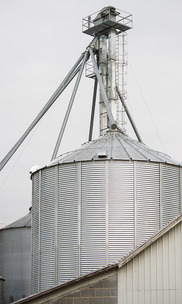
The Farm Service Agency’s (FSA) Farm Storage Facility Loan (FSFL) program provides low-interest financing to help you build or upgrade storage facilities and to purchase portable (new or used) structures, equipment and storage and handling trucks.
Eligible commodities include corn, grain sorghum, rice, soybeans, oats, peanuts, wheat, barley, minor oilseeds harvested as whole grain, pulse crops (lentils, chickpeas and dry peas), hay, honey, renewable biomass, fruits, nuts and vegetables for cold storage facilities, controlled atmosphere storage, floriculture, hops, malted small grains, maple sap, maple syrup, rye, milk, cheese, butter, yogurt, meat and poultry (unprocessed), eggs, and aquaculture (excluding systems that maintain live animals through uptake and discharge of water). Qualified facilities include grain bins, hay barns and cold storage facilities for eligible commodities.
Loans up to $50,000 can be secured by a promissory note/security agreement, loans between $50,000 and $100,000 may require additional security, and loans exceeding $100,000 require additional security.
You do not need to demonstrate the lack of commercial credit availability to apply. The loans are designed to assist a diverse range of farming operations, including small and mid-sized businesses, new farmers, operations supplying local food and farmers markets, non-traditional farm products, and underserved producers.
For more information, contact your local Service Center at farmers.gov/service-locator. or visit fsa.usda.gov/pricesupport.
Top of page
|
FSA offers direct farm ownership and direct farm operating loans to producers who want to establish, maintain, or strengthen their farm or ranch. Direct loans are processed, approved and serviced by FSA loan officers.
Direct farm operating loans can be used to purchase livestock and feed, farm equipment, fuel, farm chemicals, insurance, and other costs including family living expenses. Operating loans can also be used to finance minor improvements or repairs to buildings and to refinance some farm-related debts, excluding real estate.
Direct farm ownership loans can be used to purchase farmland, enlarge an existing farm, construct and repair buildings, and to make farm improvements.
The maximum loan amount for direct farm ownership loans is $600,000 and the maximum loan amount for direct operating loans is $400,000 and a down payment is not required. Repayment terms vary depending on the type of loan, collateral and the producer's ability to repay the loan. Operating loans are normally repaid within seven years and farm ownership loans are not to exceed 40 years.
Please contact your local FSA office for more information or to apply for a direct farm ownership or operating loan.
Top of page
The U.S. Department of Agriculture’s (USDA) updates to the Farm Service Agency’s (FSA) Farm Loan Programs are officially in effect. These changes, part of the Enhancing Program Access and Delivery for Farm Loans rule, are designed to increase financial flexibility for agricultural producers, allowing them to grow their operations, boost profitability, and build long-term savings.
These program updates reflect USDA’s ongoing commitment to supporting the financial success and resilience of farmers and ranchers nationwide, offering critical tools to help borrowers manage their finances more effectively.
What the new rules mean for you:
- Low-interest installment set-aside program: Financially distressed borrowers can now defer up to one annual loan payment at a reduced interest rate. This simplified option helps ease financial pressure while keeping farming operations running smoothly.
- Flexible repayment terms: New repayment options give borrowers the ability to increase their cash flow and build working capital reserves, allowing for long-term financial planning that includes saving for retirement, education, and other future needs.
- Reduced collateral requirements: FSA has lowered the amount of additional loan security needed for direct farm loans, making it easier for borrowers to leverage their existing equity without putting their personal residence at risk.
These new rules provide more financial freedom to borrowers. By giving farmers and ranchers better tools to manage their operations, we’re helping them build long-term financial stability. It’s all about making sure they can keep their land, grow their business, and invest in the future.
If you’re an FSA borrower or considering applying for a loan, now is the time to take advantage of these new policies. We encourage you to reach out to your local FSA farm loan staff to ensure you fully understand the wide range of loan making and servicing options available to assist with starting, expanding, or maintaining your agricultural operation.
To conduct business with FSA, please contact your local USDA Service Center.
Top of page
Top of page
Farm Loan Programs
|
Farm Programs
|
90-Day Treasury Bill
|
4.375%
|
Farm Storage Facility Loans
|
3 Year
|
4.0%
|
Farm Operating Loans - Direct
|
5.375%
|
Farm Storage Facility Loans
|
5 Year
|
4.125%
|
Farm Ownership Loans - Direct
|
5.75%
|
Farm Storage Facility Loans
|
7 Year
|
4.125%
|
Limited Resource Loans
|
5.000%
|
Farm Storage Facility Loans
|
10 Year
|
4.250%
|
Farm Ownership Loans - Direct FO Down Payment
|
1.75%
|
Farm Storage Facility Loans
|
12 Year
|
4.375%
|
Emergency Loans
|
3.750%
|
Commodity Loans
|
5.125%
|
|
|
CCC Borrowing Rate
|
4.125%
|
Kentucky FSA State Office
771 Corporate Dr., Ste 205
Lexington, KY 40503
Phone: 859-224-7601
State Webpage
|
|
Contact your local USDA Service Center for assistance with FSA loans or programs
|
Kentucky FSA State Committee
- Carrie Divine - Morganfield
- Pat Henderson - Irvington
- James Kay, Sr. - Versailles
- Roger Thomas - Smiths Grove
|
|








