Nevada April USDA Newsletter
In This Issue:
The U.S. Department of Agriculture (USDA) is issuing up to $10 billion directly to agricultural producers through the Emergency Commodity Assistance Program (ECAP) for the 2024 crop year. Administered by USDA’s Farm Service Agency (FSA), ECAP will help agricultural producers mitigate the impacts of increased input costs and falling commodity prices.
Authorized by the American Relief Act, 2025, these economic relief payments are based on planted and prevented planted crop acres for eligible commodities for the 2024 crop year. To streamline and simplify the delivery of ECAP, FSA will begin sending pre-filled applications to producers who submitted acreage reports to FSA for 2024 eligible ECAP commodities soon after the signup period opens on March 19, 2025. Producers do not have to wait for their pre-filled ECAP application to apply. They can visit fsa.usda.gov/ecap to apply using a login.gov account or contact their local FSA office to request an application once the signup period opens.
Eligible Commodities and Payment Rates
The commodities below are eligible for these per-acre payment rates:
|
|
Eligible oilseeds:
|
|
|
|
|
|
|
|
|
|
|
|
|
- Upland cotton & Extra-long staple cotton - $84.74
|
|
- Long & medium grain rice - $76.94
|
|
|
|
|
|
|
|
|
|
|
|
|
|
|
|
|
|
|
|
Producer Eligibility
Eligible producers must report 2024 crop year planted and prevented planted acres to FSA on an FSA-578, Report of Acreage form. Producers who have not previously reported 2024 crop year acreage or filed a notice of loss for prevented planted crops must submit an acreage report by the Aug. 15, 2025, deadline. Eligible producers can visit fsa.usda.gov/ecap for eligibility and payment details.
Applying for ECAP
Producers must submit ECAP applications to their local FSA county office by Aug. 15, 2025. Only one application is required for all ECAP eligible commodities nationwide. ECAP applications can be submitted to FSA in-person, electronically using Box and One-Span, by fax or by applying online at fsa.usda.gov/ecap utilizing a secure login.gov account.
If not already on file for the 2024 crop year, producers must have the following forms on file with FSA:
-
Form AD-2047, Customer Data Worksheet.
-
Form CCC-901, Member Information for Legal Entities (if applicable).
-
Form CCC-902, Farm Operating Plan for an individual or legal entity.
-
Form CCC 943, 75 percent of Average Gross Income from Farming, Ranching, or Forestry Certification (if applicable).
-
AD-1026, Highly Erodible Land Conservation (HELC) and Wetland Conservation (WC) Certification.
-
SF-3881, Direct Deposit.
Except for the new CCC-943, most producers, especially those who have previously participated in FSA programs, likely have these forms on file. However, those who are uncertain and want to confirm the status of their forms or need to submit the new CCC-943, can contact their local FSA county office.
If a producer does not receive a pre-filled ECAP application, and they planted or were prevented from planting ECAP eligible commodities in 2024, they should contact their local FSA office.
ECAP Payments and Calculator
ECAP payments will be issued as applications are approved. Initial ECAP payments will be factored by 85% to ensure that total program payments do not exceed available funding. If additional funds remain, FSA may issue a second payment.
ECAP assistance will be calculated using a flat payment rate for the eligible commodity multiplied by the eligible reported acres. Payments are based on acreage and not production. For acres reported as prevented plant, ECAP assistance will be calculated at 50%.
For ECAP payment estimates, producers are encouraged to visit fsa.usda.gov/ecap to use the ECAP online calculator.
Farm Service Agency (FSA) borrowers with farms located in designated primary or contiguous disaster areas who are unable to make their scheduled FSA loan payments should consider the Disaster Set-Aside (DSA) program.
DSA is available to producers who suffered losses as a result of a natural disaster and relieves immediate and temporary financial stress. FSA is authorized to consider setting aside the portion of a payment/s needed for the operation to continue on a viable scale.
Borrowers must have at least two years left on the term of their loan in order to qualify.
Borrowers have eight months from the date of the disaster designation to submit a complete application. The application must include a written request for DSA signed by all parties liable for the debt along with production records and financial history for the operating year in which the disaster occurred. FSA may request additional information from the borrower in order to determine eligibility.
All farm loans must be current or less than 90 days past due at the time the DSA application is complete. Borrowers may not set aside more than one installment on each loan.
The amount set-aside, including interest accrued on the principal portion of the set-aside, is due on or before the final due date of the loan.
For more information, contact your County USDA Service Center or visit fsa.usda.gov.
Producers in Inyo and Mono, CA Counties and Clark, Elko, Esmeralda, Lincoln, Mineral and Nye, and White Pine, NV Counties are eligible to apply for 2025 Livestock Forage Disaster Program (LFP) benefits on benefits on native and improved pasture.
LFP provides compensation if you suffer grazing losses for covered livestock due to drought on privately owned or cash leased land or fire on federally managed land.
County committees can only accept LFP applications after notification is received by the National Office of qualifying drought or if a federal agency prohibits producers from grazing normal permitted livestock on federally managed lands due to qualifying fire. You must complete a CCC-853 and the required supporting documentation no later than March 2, 2026, for 2025 losses.
For additional information about LFP, including eligible livestock and fire criteria, contact your County USDA Service Center or visit fsa.usda.gov.
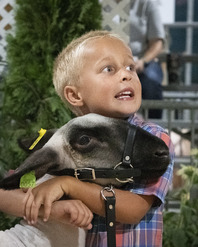
The Farm Service Agency (FSA) makes loans to youth to establish and operate agricultural income-producing projects in connection with 4-H clubs, FFA and other agricultural groups. Projects must be planned and operated with the help of the organization advisor, produce sufficient income to repay the loan and provide the youth with practical business and educational experience. The maximum loan amount is $10,000.
Youth Loan Eligibility Requirements:
- Be a citizen of the United States (which includes Puerto Rico, the Virgin Islands, Guam, American Samoa, the Commonwealth of the Northern Mariana Islands) or a legal resident alien
- Be 10 years to 20 years of age
- Comply with FSA’s general eligibility requirements
- Conduct a modest income-producing project in a supervised program of work as outlined above
- Demonstrate capability of planning, managing and operating the project under guidance and assistance from a project advisor. The project supervisor must recommend the youth loan applicant, along with providing adequate supervision.
For help preparing the application forms, contact your County USDA Service Center or visit fsa.usda.gov.
In this Ask the Expert, Jack Carlile, Farm Loan Manager for the USDA Farm Service Agency (FSA), answers questions about farm operating loans and when producers should apply in order to secure funds for the current crop year.
As the Farm Loan Manager for the Cherokee County Service Center, Jack is responsible for managing the loan making and loan servicing activities for five counties in northeast Oklahoma. His office provides services for over 650 farm loan customers. Jack was raised on a cross bred cow/calf operation that his grandparents started. Over the years, each generation has added to the operation by purchasing additional pasture. The operation also grows and bales their own hay. Jack’s agriculture background and degree in agriculture economics from Oklahoma State University help him better understand the financing needs of his producers.
Who can apply for FSA Farm Loans?
Anyone can apply for FSA’s loan programs. Applications will be considered on basic eligibility requirements. To apply for a loan, you must meet the following general eligibility requirements including:
- Be a U.S. citizen or qualified alien.
- Operator of a family farm or ranch.
- Have a satisfactory credit history.
- Unable to obtain credit elsewhere at reasonable rates and terms to meet actual needs.
- Not be delinquent on any federal debts.
To read the full blog visit farmers.gov/blog/ask-the-expert-farm-operating-loan-qa-with-jack-carlile
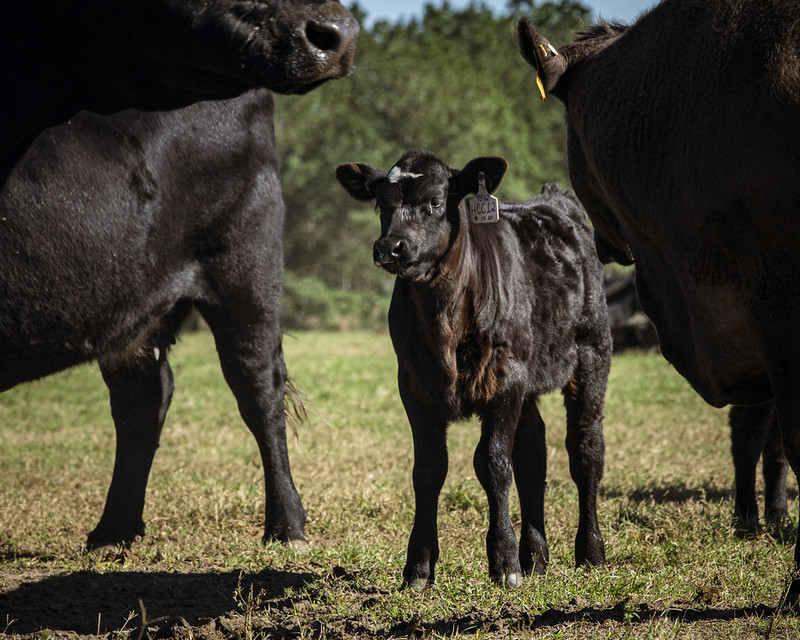
Livestock inventory records are necessary in the event of a natural disaster, so remember to keep them updated.
When disasters strike, the USDA Farm Service Agency (FSA) can help you if you’ve suffered excessive livestock death losses and grazing or feed losses due to eligible natural disasters.
To participate in the Livestock Indemnity Program (LIP), you’ll be required to provide verifiable documentation of death losses resulting from an eligible adverse weather event and must submit a notice of loss to your local FSA office no later than 60 calendar days after the end of the calendar year in which the eligible loss condition occurred. For the Emergency Assistance for Livestock, Honeybees, and Farm-raised Fish Program (ELAP), you must submit a notice of loss to your local FSA office no later than the annual program application deadline of January 30 following the program year in which the loss occurred and should maintain documentation and receipts.
You should record all pertinent information regarding livestock inventory records including:
- Documentation of the number, kind, type, and weight range of livestock
- Beginning inventory supported by birth recordings or purchase receipts.
For more information on documentation requirements, contact your County USDA Service Center or visit fsa.usda.gov.
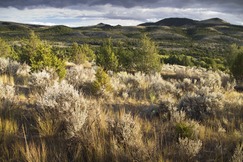
USDA’s Working Lands for Wildlife initiative recently unveiled the latest sagebrush science through a special issue of the 2024 Journal of Rangeland Ecology & Management. A group of experts from across the sagebrush biome, came together to publish the Sagebrush Conservation Design. The design is a roadmap that identifies the last, best, ecologically intact sagebrush areas to safeguard and also analyzes the largest threats degrading the biome today. Learn more about how the Sagebrush Conservation Design is providing a roadmap for diverse stakeholders to proactively conserve the sagebrush biome in the American West at https://sagebrushconservation.org/.
Carrie-Ann Houdeshell is a Grazing Land Co-Lead for the Conservation Effects Assessment Project (CEAP), an effort led by USDA’s Natural Resources Conservation Service (NRCS) to evaluate and inform voluntary conservation across the nation’s working lands. In this Ask the Expert, Carrie-Ann answers questions about recent findings on three key grazing land conservation practices, new resources to assist data-driven conservation decision making across the nation’s non-federal grazing land and federal rangeland, and NRCS programs and services to support ranchers and other land managers in pursuing voluntary conservation.
Let’s start with the basics: When we talk about “grazing land,” what is included?
Grazing land is a collective term that includes rangeland, pastureland, grazed forests, native and naturalized pasture, hayland, and grazed cropland. All 50 states have grazing land, and the national grazing land footprint is incredible – approximately 40 percent of all land across the United States. That includes more than 580 million acres of private land and more than 390 million acres of land managed by federal agencies.
Ranchers and other land managers use grazing land to feed and raise livestock, providing food and fiber for the United States and beyond. Through their stewardship, grazing land also delivers a suite of ecosystem services – like water conservation, wildlife habitat, and carbon sequestration – that benefit us all.
In the minds of many, a freshly tilled field is picturesque – cleaned and ordered for the next planting. But we’ve learned from studying soil that heavy tillage isn’t good. When soil is heavily tilled, the stalks and leaves remaining from the previous crop are chopped, disturbing the top several inches of soil. This “fluffing” action allows for better seed placement according to some, but soil scientists say not tilling leads to healthier, more drought-resistant soil.
USDA’s Natural Resources Conservation Service and other groups recommend producers to not till and leave the stalks and leaves, called residue, in place. By not tilling, soil organic matter is enhanced, increasing water infiltration and reducing erosion. No-till is a conservation practice that leaves the crop residue undisturbed from harvest.
Any tillage causes a flush of organic matter decomposition, resulting in loss of soil carbon. Tillage also breaks up soil aggregates, which are important for water infiltration, providing oxygen to plant roots, and reducing erosion.
Healthy soils cycle water and nutrients more efficiently. And they function better, enabling them to buffer against extreme drought and flooding. Plus, they reduce soil loss into waterways, which can cause problems for water quality.
Good management of field residue can increase efficiency of irrigation and control erosion. No-till can be used for many crops in almost any soil and can save producers labor costs and fuel. It’s a sound investment for the environment and the farm.
|
Acting State Executive Director
Katie Nuffer
775.834.0882
|
NRCS State Conservationist
Heidi Ramsey
775.857.8500
|
|
Acting District Director District 1 FSA
Katie Nuffer
775.834.0882
|
District Director District 2 FSA
Claire Kehoe
775.738.6445 x 106
|
|
Elko
Tamara Thompson, Acting CED - FSA
775.738.6445 x 106
Jaime Jasmine, DC - NRCS
775.738.8431 x 120
|
Ely
Chris Ward, CED - FSA
775.738.6445 x 106
Joe Noyes, Acting DC - NRCS
775.289.4065 x 105
|
|
Fallon
Krysta Roose, CED - FSA
775.423.5124 x 109
Albert Mulder, DC - NRCS
775.423.5124 x 114
|
Las Vegas
Dariya Zaporozhchenko,Urban Ag CED - FSA
702.407.1400
Jasmine Wilson, Urban Ag DC - NRCS
702.407.1400 x 6003
Jamie Gottilieb, DC-NRCS
775.623.5025 x 101
|
|
Lovelock
Ali Phillips, CED - FSA
775.273.2922 x 100
Chrisite Scilacci, Resource Conservationist - NRCS
775.857.8500
|
Minden
Carson Hicks, DC - NRCS
775.782.3661
Caliente
Amanda Wheatley, Range Managment Specialist - NRCS
775.726.3101
|
|
Winnemucca
Leah Mori, CED - FSA
775.623.5025 x 107
Morgan Weigand, Natural Resource Specialist - NRCS
775.623.5025 X 120
|
Yerington
Julie Thompson, CED - FSA
775.463.2265
Angela Mushrush, Range Managment Specialist - NRCS
775.782.3661
|
|