
New Jersey USDA Newsletter - April 2025
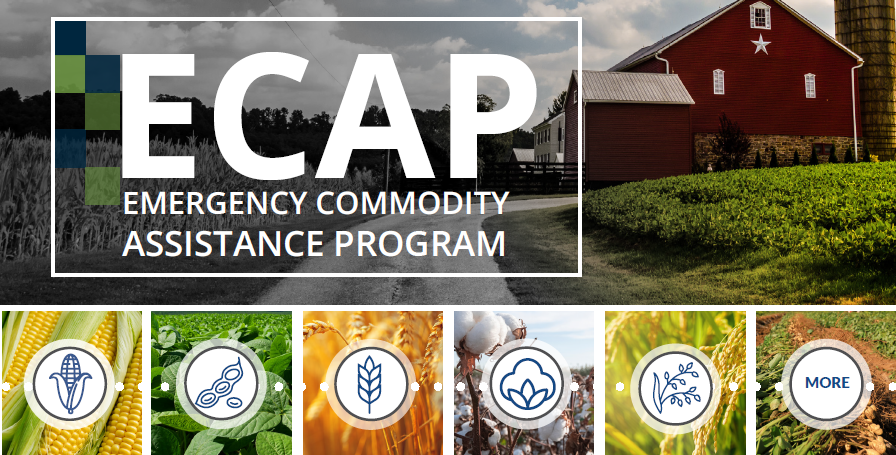 U.S. Secretary of Agriculture Brooke Rollins, on National Agriculture Day, announced that the U.S. Department of Agriculture (USDA) is issuing up to $10 billion directly to agricultural producers through the Emergency Commodity Assistance Program (ECAP) for the 2024 crop year. Administered by USDA’s Farm Service Agency (FSA), ECAP will help agricultural producers mitigate the impacts of increased input costs and falling commodity prices.
Authorized by the American Relief Act, 2025, these economic relief payments are based on planted and prevented planted crop acres for eligible commodities for the 2024 crop year. To streamline and simplify the delivery of ECAP, FSA will begin sending pre-filled applications to producers who submitted acreage reports to FSA for 2024 eligible ECAP commodities soon after the signup period opens on March 19, 2025. Producers do not have to wait for their pre-filled ECAP application to apply. They can visit fsa.usda.gov/ecap to apply using a login.gov account or contact their local FSA office to request an application once the signup period opens.
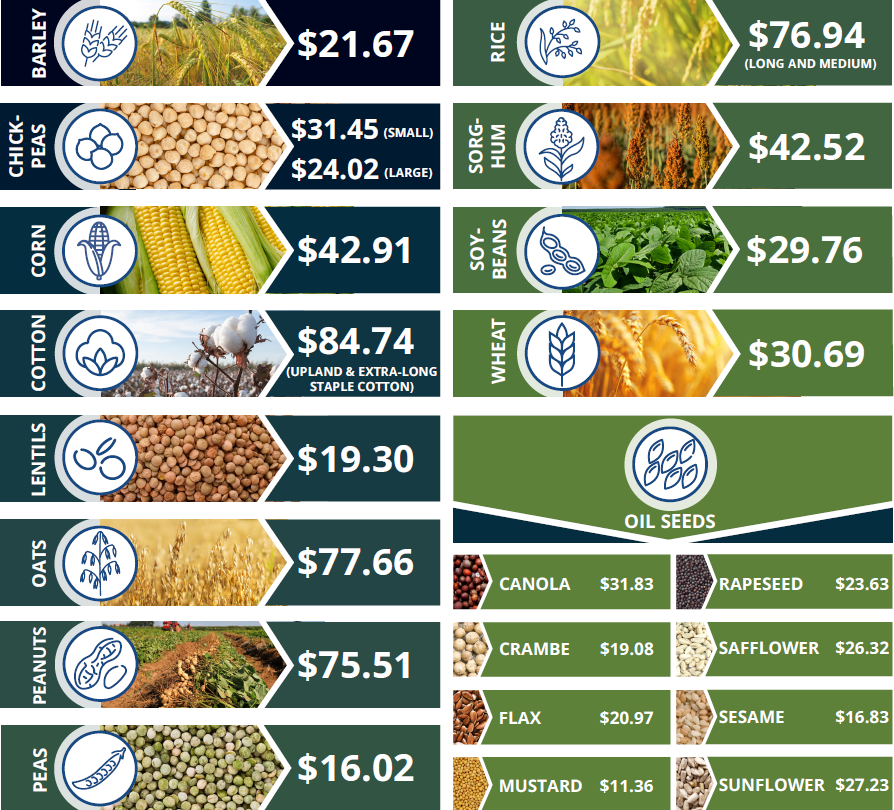
Eligible Commodities and Payment Rates
The commodities below are eligible for these per-acre payment rates:
 Producer Eligibility
Eligible producers must report 2024 crop year planted and prevented planted acres to FSA on an FSA-578, Report of Acreage form. Producers who have not previously reported 2024 crop year acreage or filed a notice of loss for prevented planted crops must submit an acreage report by the Aug. 15, 2025, deadline. Eligible producers can visit fsa.usda.gov/ecap for eligibility and payment details.
Applying for ECAP
Producers must submit ECAP applications to their local FSA county office by Aug. 15, 2025. Only one application is required for all ECAP eligible commodities nationwide. ECAP applications can be submitted to FSA in-person, electronically using Box and One-Span, by fax or by applying online at fsa.usda.gov/ecap utilizing a secure login.gov account.
If not already on file for the 2024 crop year, producers must have the following forms on file with FSA:
-
Form AD-2047, Customer Data Worksheet.
-
Form CCC-901, Member Information for Legal Entities (if applicable).
-
Form CCC-902, Farm Operating Plan for an individual or legal entity.
-
Form CCC 943, 75 percent of Average Gross Income from Farming, Ranching, or Forestry Certification (if applicable).
-
AD-1026, Highly Erodible Land Conservation (HELC) and Wetland Conservation (WC) Certification.
-
SF-3881, Direct Deposit.
Except for the new CCC-943, most producers, especially those who have previously participated in FSA programs, likely have these forms on file. However, those who are uncertain and want to confirm the status of their forms or need to submit the new Form-943, can contact their local FSA county office.
If a producer does not receive a pre-filled ECAP application, and they planted or were prevented from planting ECAP eligible commodities in 2024, they should contact their local FSA office.
ECAP Payments and Calculator
ECAP payments will be issued as applications are approved. Initial ECAP payments will be factored by 85% to ensure that total program payments do not exceed available funding. If additional funds remain, FSA may issue a second payment.
ECAP assistance will be calculated using a flat payment rate for the eligible commodity multiplied by the eligible reported acres. Payments are based on acreage and not production. For acres reported as prevented plant, ECAP assistance will be calculated at 50%.
For ECAP payment estimates, producers are encouraged to visit fsa.usda.gov/ecap to use the ECAP online calculator.
Top of page
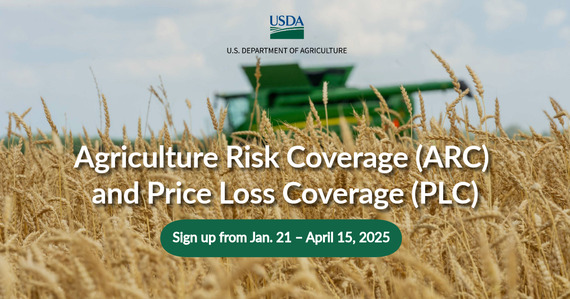 USDA’s Farm Service Agency (FSA) is accepting enrollments and elections for the Agriculture Risk Coverage (ARC) and Price Loss Coverage (PLC) for 2025 from Jan. 21 to April 15. ARC and PLC provide financial protections to farmers from substantial drops in crop prices or revenues and are vital economic safety nets for most American farms. The American Relief Act, 2025 extended many Farm Bill-authorized programs for another year, including ARC and PLC.
Producers can elect coverage and enroll in ARC-County (ARC-CO) or PLC, which provide crop-by-crop protection, or ARC-Individual (ARC-IC), which protects the entire farm. Although election changes for 2025 are optional, producers must enroll through a signed contract each year. Also, if a producer has a multi-year contract on the farm it will continue for 2025 unless an election change is made.
If producers do not submit their election revision by the April 15 deadline, their election remains the same as their 2024 election for commodities on the farm from the prior year. Farm owners cannot enroll in either program unless they have a share interest in the cropland.
Covered commodities include barley, canola, large and small chickpeas, corn, crambe, flaxseed, grain sorghum, lentils, mustard seed, oats, peanuts, dry peas, rapeseed, long grain rice, medium grain rice, safflower seed, seed cotton, sesame, soybeans, sunflower seed and wheat.
USDA also reminds producers that ARC and PLC elections and enrollments can impact eligibility for some crop insurance products including Supplemental Coverage Option, Enhanced Coverage Option and, for cotton producers, the Stacked Income Protection Plan (commonly referred to as STAX).
For more information on ARC and PLC, producers can visit the ARC and PLC webpage or contact your local USDA Service Center.
Top of page
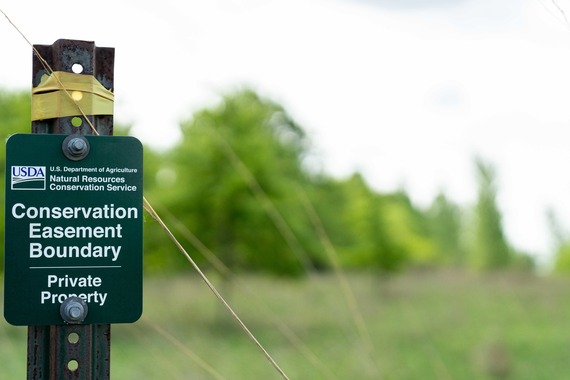 New Jersey's Natural Resources Conservation Service (NRCS) is now accepting
applications for the Agricultural Conservation Easement Program – Agricultural Land Easement (ACEP-ALE). There is one final signup offered for complete and eligible applications to compete for available funding. Application packages are due on Wednesday, May 7, 2025.
The ACEP-ALE program aims to protect the agricultural viability and related conservation values of eligible land by limiting nonagricultural uses of that land that negatively affect the agricultural uses and conservation values, and to protect grazing uses and related conservation values by restoring or conserving eligible land.
Applicants (eligible entities) must be a federally recognized Indian Tribe, state or local units of government, or a nongovernmental organization. Applicants must have an established farmland protection program that purchases agricultural conservation easements for the purpose of protecting agriculture use and related conservation values by limiting conversion to nonagricultural uses of the land.\
USDA provides up to 50 percent of the appraised fair market value of the conservation easement in this voluntary program and up to 75 percent for qualifying grasslands of special significance (GSS). The qualified landowner retains ownership and continues to use the land for agricultural purposes.
To be eligible to receive ALE funding, eligible entity applicants must demonstrate a commitment to long-term conservation of agricultural lands; a capability to acquire, manage, and enforce easements; adequate staff capacity for monitoring and easement stewardship; and the availability of funds. All landowners of record and the land being offered for enrollment must also meet specific eligibility criteria as outlined in the application materials posted to the State ACEP website.
Fully completed application packets may be sent to the attention of Easements Program Manager, by email (preferred) to katelyn.colon@usda.gov or by mail to USDA-NRCS, 200 Clocktower Dr, Suite 101, Hamilton Square, NJ 08690.
Only fully completed and properly executed applications that are submitted by these signup dates on the appropriate forms and accompanied by all required supporting documentation will be considered for funding in FY 2025. All qualified applications will be reviewed, ranked, and considered for funding according to the Final ACEP rule, policy, and guidance. Complete applications received after the cutoff date may be considered if another sign-up date is announced. Incomplete applications will not be considered.
For more information about ACEP-ALE, please contact Katelyn Colon at (732) 537-6099 or katelyn.colon@usda.gov or Gail Bartok at (732)-537-6042 or Gail.Bartok@usda.gov. You can also visit your local NRCS at your nearest USDA Service Center or visit the New Jersey NRCS ACEP website.
Top of page

Each year, state committees review and approve or disapprove county committee recommended changes or additions to specific combinations of crops.
Double-cropping is approved when two specific crops have the capability to be planted and carried to maturity for the intended use, as reported by the producer, on the same acreage within a crop year under normal growing conditions. The specific combination of crops recommended by the county committee must be approved by the state committee.
Double-cropping is approved in New Jersey on a county-by-county basis. Click here for a list of approved double-cropping combinations for your county.
A crop following a cover crop terminated according to termination guidelines is approved double cropping and these combinations do not have to be approved by the state committee.
Top of page
|
 The USDA Risk Management Agency’s (RMA) Nursery Value Select (NVS) is a pilot program that allows nursery producers to select the dollar amount of coverage that best fits their risk management needs. NVS is available in all states and counties.
Beginning with the 2026 crop year, NVS will replace the Nursery Field Grown and Container (FG&C) crop insurance program. Nursery FG&C will no longer be available for producers to purchase after the 2025 crop year.
NVS will offer comparable but improved risk management options for those who currently have coverage with the Nursery FG&C program. Like Nursery FG&C, NVS also covers field grown and containerized nursery plants and offers coverage levels between catastrophic and 75%. Unlike Nursery FG&C, NVS has simplified reporting requirements, and an Occurrence Loss Option is available.
The sales closing date for the 2026 crop year is May 1, 2025. Producers should contact a local crop insurance agent to learn more about NVS and how they can apply for coverage for the 2026 crop year.
Learn more about crop insurance and the modern farm safety net on the RMA website and the Basics for Beginners webpage. Producers may also contact their RMA Regional Office.
Top of page
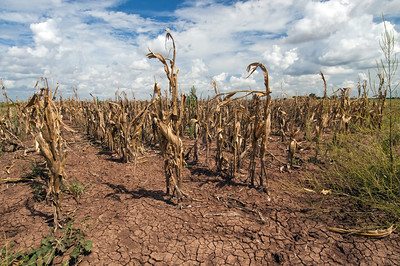
Several New Jersey Counties have been declared as either primary or contiguous disaster areas using the Secretarial Disaster Designation process. Under this designation, if you have operations in any primary or contiguous county, you are eligible to apply for low interest Emergency Loans.
Farmers in the following counties are eligible for Emergency Loans:
-
Administrator's Designation N1779 - New Jersey
- For Excessive Rain and High Winds from 7/16/2024 to 7/14/2024
- New Jersey Primary Counties: Hunterdon, Somerset
- New Jersey contiguous counties: Mercer, Middlesex, Morris, Union, Warren
- Loan application deadline: 05/27/2025
-
Secretarial Designation S5785 - Delaware
- For Drought and Excessive Heat from 6/01/2024 to 7/31/2024
- New Jersey contiguous counties: Cumberland, Gloucester, Salem
- Loan application deadline: 05/27/2025
Visit https://www.fsa.usda.gov/state-offices/new-jersey to see all current New Jersey Disaster Designations.
Emergency loans help you recover from production and physical losses due to drought, flooding and other natural disasters or quarantine.
You have eight months from the date of the declaration to apply for emergency loan assistance. FSA will consider each loan application on its own merits, taking into account the extent of losses, security available and repayment ability. You can borrow up to 100 percent of actual production or physical losses, to a maximum amount of $500,000.
For more information about emergency loans, contact your local USDA Service Center or visit fsa.usda.gov.
Top of page
|
Top of page
USDA is an equal opportunity provider, employer and lender. To file a complaint of discrimination, write: USDA, Office of the Assistant Secretary for Civil Rights, Office of Adjudication, 1400 Independence Ave., SW, Washington, DC 20250-9410 or call (866) 632-9992 (Toll-free Customer Service), (800) 877-8339 (Local or Federal relay), (866) 377-8642 (Relay voice users).
|






