
Pennsylvania FSA Update - March 2025
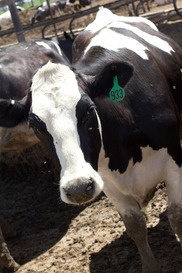
Dairy producers are Encouraged to Apply for DMC by March 31 for 2025 Crop Year
The U.S. Department of Agriculture (USDA) is encouraging dairy producers to enroll in Dairy Margin Coverage (DMC), an important safety net program that helps offset milk and feed price differences. This year’s DMC signup began Jan. 29 and the deadline to enroll is March 31, 2025.
The American Relief Act, 2025 extended provisions of the Agricultural Improvement Act of 2018 (2018 Farm Bill) authorizing DMC for coverage year 2025.
DMC provides dairy operations with risk management coverage that pays producers when the difference (the margin) between the national price of milk and the average cost of feed falls below a certain level selected by the program participants.
DMC offers different levels of coverage minus a $100 administrative fee. The administrative fee is waived for dairy producers who are considered limited resource, beginning, socially disadvantaged or a military veteran.
DMC payments are calculated using updated feed and premium hay costs, making the program more reflective of actual dairy producer expenses. These updated feed calculations use 100% premium alfalfa hay.
For more information on DMC, visit the DMC webpage or contact your local USDA Service Center.
|
USDA’s Farm Service Agency (FSA) is accepting enrollments and elections for the Agriculture Risk Coverage (ARC) and Price Loss Coverage (PLC) for 2025 from Jan. 21 to April 15. ARC and PLC provide financial protections to farmers from substantial drops in crop prices or revenues and are vital economic safety nets for most American farms. The American Relief Act, 2025 extended many Farm Bill-authorized programs for another year, including ARC and PLC.
Producers can elect coverage and enroll in ARC-County (ARC-CO) or PLC, which provide crop-by-crop protection, or ARC-Individual (ARC-IC), which protects the entire farm. Although election changes for 2025 are optional, producers must enroll through a signed contract each year. Also, if a producer has a multi-year contract on the farm it will continue for 2025 unless an election change is made.
If producers do not submit their election revision by the April 15 deadline, their election remains the same as their 2024 election for commodities on the farm from the prior year. Farm owners cannot enroll in either program unless they have a share interest in the cropland.
Covered commodities include barley, canola, large and small chickpeas, corn, crambe, flaxseed, grain sorghum, lentils, mustard seed, oats, peanuts, dry peas, rapeseed, long grain rice, medium grain rice, safflower seed, seed cotton, sesame, soybeans, sunflower seed and wheat.
USDA also reminds producers that ARC and PLC elections and enrollments can impact eligibility for some crop insurance products including Supplemental Coverage Option, Enhanced Coverage Option and, for cotton producers, the Stacked Income Protection Plan (commonly referred to as STAX).
For more information on ARC and PLC, producers can visit the ARC and PLC webpage or contact your local USDA Service Center.
Program payments to offset increased input costs, market decline
U.S. Secretary of Agriculture Brooke Rollins, on National Agriculture Day, announced that the U.S. Department of Agriculture (USDA) is issuing up to $10 billion directly to agricultural producers through the Emergency Commodity Assistance Program (ECAP) for the 2024 crop year. Administered by USDA’s Farm Service Agency (FSA), ECAP will help agricultural producers mitigate the impacts of increased input costs and falling commodity prices.
Authorized by the American Relief Act, 2025, these economic relief payments are based on planted and prevented planted crop acres for eligible commodities for the 2024 crop year. To streamline and simplify the delivery of ECAP, FSA will begin sending pre-filled applications to producers who submitted acreage reports to FSA for 2024 eligible ECAP commodities soon after the signup period opens on March 19, 2025. Producers do not have to wait for their pre-filled ECAP application to apply. They can visit fsa.usda.gov/ecap to apply using a login.gov account or contact their local FSA office to request an application once the signup period opens.
Eligible Commodities and Payment Rates
The commodities below are eligible for these per-acre payment rates:
|
· Wheat - $30.69
|
Eligible oilseeds:
|
|
· Corn - $42.91
|
· Canola – $31.83
|
|
· Sorghum - $42.52
|
· Crambe – $19.08
|
|
· Barley - $21.67
|
· Flax - $20.97
|
|
· Oats - $77.66
|
· Mustard - $11.36
|
|
· Upland cotton & Extra-long staple cotton - $84.74
|
· Rapeseed -$23.63
|
|
· Long & medium grain rice - $76.94
|
· Safflower - $26.32
|
|
· Peanuts - $75.51
|
· Sesame - $16.83
|
|
· Soybeans - $29.76
|
· Sunflower – $27.23
|
|
· Dry peas - $16.02
|
|
|
· Lentils - $19.30
|
|
|
· Small Chickpeas - $31.45
|
|
|
· Large Chickpeas - $24.02
|
|
Producer Eligibility
Eligible producers must report 2024 crop year planted and prevented planted acres to FSA on an FSA-578, Report of Acreage form. Producers who have not previously reported 2024 crop year acreage or filed a notice of loss for prevented planted crops must submit an acreage report by the Aug. 15, 2025, deadline. Eligible producers can visit fsa.usda.gov/ecap for eligibility and payment details.
Applying for ECAP
Producers must submit ECAP applications to their local FSA county office by Aug. 15, 2025. Only one application is required for all ECAP eligible commodities nationwide. ECAP applications can be submitted to FSA in-person, electronically using Box and One-Span, by fax or by applying online at fsa.usda.gov/ecap utilizing a secure login.gov account.
If not already on file for the 2024 crop year, producers must have the following forms on file with FSA:
-
Form AD-2047, Customer Data Worksheet.
-
Form CCC-901, Member Information for Legal Entities (if applicable).
-
Form CCC-902, Farm Operating Plan for an individual or legal entity.
- Form CCC 943, 75 percent of Average Gross Income from Farming, Ranching, or Forestry Certification (if applicable).
-
AD-1026, Highly Erodible Land Conservation (HELC) and Wetland Conservation (WC) Certification.
-
SF-3881, Direct Deposit.
Except for the new CCC-943, most producers, especially those who have previously participated in FSA programs, likely have these forms on file. However, those who are uncertain and want to confirm the status of their forms or need to submit the new Form-943, can contact their local FSA county office.
If a producer does not receive a pre-filled ECAP application, and they planted or were prevented from planting ECAP eligible commodities in 2024, they should contact their local FSA office.
ECAP Payments and Calculator
ECAP payments will be issued as applications are approved. Initial ECAP payments will be factored by 85% to ensure that total program payments do not exceed available funding. If additional funds remain, FSA may issue a second payment.
ECAP assistance will be calculated using a flat payment rate for the eligible commodity multiplied by the eligible reported acres. Payments are based on acreage and not production. For acres reported as prevented plant, ECAP assistance will be calculated at 50%.
For ECAP payment estimates, producers are encouraged to visit fsa.usda.gov/ecap to use the ECAP online calculator.
The U.S. Department of Agriculture (USDA) is announcing the launch of the Debt Consolidation Tool, an innovative online tool available through farmers.gov that allows agricultural producers to enter their farm operating debt and evaluate the potential savings that might be provided by obtaining a debt consolidation loan with USDA’s Farm Service Agency (FSA) or a local lender.
A debt consolidation loan is a new loan used to pay off other existing operating loans or lines of credit that might have unreasonable rates and terms. By combining multiple eligible debts into a single, larger loan, borrowers may obtain more favorable payment terms such as a lower interest rate or lower payments. Consolidating debt may also provide farmers and ranchers additional cash flow flexibilities.
The Debt Consolidation Tool is a significant addition to FSA’s suite of improvements designed to modernize its Farm Loan Programs. The tool enhances customer service and increases opportunities for farmers and ranchers to achieve financial viability by helping them identify potential savings that could be reinvested in their farming and ranching operation, retirement accounts, or college savings accounts.
Producers can access the Debt Consolidation Tool by visiting farmers.gov/debt-consolidation-tool. The tool is built to run on modern browsers including Chrome, Edge, Firefox, or the Safari browser. Producers do not need to create a farmers.gov account or access the authenticated customer portal to use the tool.
USDA encourages producers to reach out to their local FSA farm loan staff to ensure they fully understand the wide range of loan and servicing options available to assist with starting, expanding, or maintaining their agricultural operation. To conduct business with FSA, please contact your local USDA Service Center.
How much fuel can farmers save each year by transitioning from conventional tillage to continuous no-till? According to a report from USDA’s Conservation Effects Assessment Project (CEAP), 3.6 gallons per acre is a reasonable estimate. With current off-road diesel fuel prices, this could translate into approximately $17 per acre saved annually.
Nearly 87 percent of all cropland acres nationwide are farmed using some form of conservation tillage, where tillage is reduced for at least one crop within a given field. Continuous no-till accounts for 33 percent of this total.
Improving soil health is one known benefit of limiting disturbance. Farmers who minimize tillage across their operation may reduce soil erosion, maximize water infiltration, improve nutrient cycling, build organic matter, and strengthen resilience to disaster events or challenging growing conditions. Based on the latest data, they may also use significantly less fuel than with conventional tillage and reduce their associated carbon dioxide emissions.
According to CEAP, farmers who implement conservation tillage practices instead of continuous conventional tillage:
- Reduce potential nationwide fuel use by 763 million gallons of diesel equivalents each year, roughly the amount of energy used by 2.8 million households.
- Reduce potential associated emissions by 8.5 million tons of carbon dioxide (CO2) equivalents each year, equivalent to removing nearly 1.7 million gasoline-powered passenger vehicles from the road.
How is this possible? Annually, farmers who practice continuous no-till use approximately 3.6 fewer gallons of fuel per acre than if they practiced continuous conventional tillage. Farmers who practice seasonal no-till – farming without tilling for at least one crop – use approximately 3 fewer gallons of fuel per acre than they would with conventional tillage year-round.
Acre by acre, fuel saved is money saved. Let’s assume an average off-road diesel fuel price of $4.75 per gallon*. By transitioning from continuous conventional tillage to continuous no-till, a farmer can save just over $17 per acre each year in fuel costs. A farmer who transitions from continuous conventional tillage to seasonal no-till can save more than $14 per acre on fuel annually. These potential savings are significantly larger than with CEAP’s first fuel savings report, primarily due to the current price of diesel fuel.
The bottom line for farmers: Reducing tillage leads to fuel savings that deliver significant financial benefits while building healthier soils for a more resilient operation.
USDA Can Help
If you’re a farmer interested in reducing tillage or pursuing other conservation efforts across your operation, USDA’s Natural Resources Conservation Service (NRCS) can help.
-
This blog offers five simple tips for farmers interested in trying no-till for the first time.
-
This 90-second video provides a description of no-till and associated benefits according to a Delaware farmer.
-
This 23-minute video follows five South Carolina farmers seeking to quantify the benefits of conservation practices that support soil health.
-
This webpage details principles to improve soil health, including reduced tillage and complimentary conservation practices such as cover crops, crop rotations, and rotational grazing.
NRCS has local USDA Service Centers in nearly every county across the United States. You may find contact information for your nearest Service Center here. NRCS staff are available to provide free, one-on-one assistance with a suite of practices to strengthen your operation, conserve natural resources, and boost your bottom line. SMART nutrient management, for example, is important to consider with no-till and may help you save money on fertilizer while improving water quality – another win-win.
Visit the new NRCS website to learn more about conservation basics, getting assistance from NRCS, programs and initiatives, and resources to inform management decisions. Visit the new CEAP webpage for additional information about USDA’s efforts to quantify the effects of conservation practices across croplands and other working lands.
Top of page
|








