
Alaska State FSA April Newsletter - 9 April 2025
In This Issue:
The Palmer FSA staff will be in the Wasilla NRCS office every Thursday from 8:30am-4pm.
Upcoming Office Closures:
Monday, May 26th for Memorial Day
Thursday, June 19th for Juneteenth National Independence Day
Upcoming Deadlines:
Tuesday, April 15th- 2025 ARC/PLC Enrollment Deadline
Tuesday, July 15th- 2025 Acreage Reporting Deadline for all other spring planted crops, CRP and perennial forage
Friday, August 15th- Emergency Commodity Assistance Program (ECAP) Deadline
Monday, September 1st- 2026 NAP Deadline for Floriculture (Peonies), Aquaculture and Turf Grass
Tuesday, September 30th- 2026 Acreage Reporting Deadline for Value-loss crops (including Peonies) and controlled environment crops (except nursery)
Tuesday, September 30th- 2026 NAP Deadline for Perennial Grass Forage and Honey
Click here to learn more about upcoming deadlines and ongoing programs
|
Top of page
 U.S. Secretary of Agriculture Brooke Rollins, on National Agriculture Day, announced that the U.S. Department of Agriculture (USDA) is issuing up to $10 billion directly to agricultural producers through the Emergency Commodity Assistance Program (ECAP) for the 2024 crop year. Administered by USDA’s Farm Service Agency (FSA), ECAP will help agricultural producers mitigate the impacts of increased input costs and falling commodity prices.
“Producers are facing higher costs and market uncertainty, and the Trump Administration is ensuring they get the support they need without delay,” said Secretary Rollins. “With clear direction from Congress, USDA has prioritized streamlining the process and accelerating these payments ahead of schedule, ensuring farmers have the resources necessary to manage rising expenses and secure financing for next season.”
Authorized by the American Relief Act, 2025, these economic relief payments are based on planted and prevented planted crop acres for eligible commodities for the 2024 crop year. To streamline and simplify the delivery of ECAP, FSA will begin sending pre-filled applications to producers who submitted acreage reports to FSA for 2024 eligible ECAP commodities soon after the signup period opens on March 19, 2025. Producers do not have to wait for their pre-filled ECAP application to apply. They can visit fsa.usda.gov/ecap to apply using a login.gov account or contact their local FSA office to request an application once the signup period opens.
Eligible Commodities and Payment Rates
The commodities below are eligible for these per-acre payment rates:
|
|
Eligible oilseeds:
|
|
|
|
|
|
|
|
|
|
|
|
|
- Upland cotton & Extra-long staple cotton - $84.74
|
|
- Long & medium grain rice - $76.94
|
|
|
|
|
|
|
|
|
|
|
|
|
|
|
|
|
|
|
|
Producer Eligibility
Eligible producers must report 2024 crop year planted and prevented planted acres to FSA on an FSA-578, Report of Acreage form. Producers who have not previously reported 2024 crop year acreage or filed a notice of loss for prevented planted crops must submit an acreage report by the Aug. 15, 2025, deadline. Eligible producers can visit fsa.usda.gov/ecap for eligibility and payment details.
Applying for ECAP
Producers must submit ECAP applications to their local FSA county office by Aug. 15, 2025. Only one application is required for all ECAP eligible commodities nationwide. ECAP applications can be submitted to FSA in-person, electronically using Box and One-Span, by fax or by applying online at fsa.usda.gov/ecap utilizing a secure login.gov account.
If not already on file for the 2024 crop year, producers must have the following forms on file with FSA:
-
Form AD-2047, Customer Data Worksheet.
-
Form CCC-901, Member Information for Legal Entities (if applicable).
-
Form CCC-902, Farm Operating Plan for an individual or legal entity.
- Form CCC 943, 75 percent of Average Gross Income from Farming, Ranching, or Forestry Certification (if applicable).
-
AD-1026, Highly Erodible Land Conservation (HELC) and Wetland Conservation (WC) Certification.
-
SF-3881, Direct Deposit.
Except for the new CCC-943, most producers, especially those who have previously participated in FSA programs, likely have these forms on file. However, those who are uncertain and want to confirm the status of their forms or need to submit the new Form-943, can contact their local FSA county office.
If a producer does not receive a pre-filled ECAP application, and they planted or were prevented from planting ECAP eligible commodities in 2024, they should contact their local FSA office.
ECAP Payments and Calculator
ECAP payments will be issued as applications are approved. Initial ECAP payments will be factored by 85% to ensure that total program payments do not exceed available funding. If additional funds remain, FSA may issue a second payment.
ECAP assistance will be calculated using a flat payment rate for the eligible commodity multiplied by the eligible reported acres. Payments are based on acreage and not production. For acres reported as prevented plant, ECAP assistance will be calculated at 50%.
For ECAP payment estimates, producers are encouraged to visit fsa.usda.gov/ecap to use the ECAP online calculator.
More Information
To learn more about FSA programs, producers can contact their local USDA Service Center. Producers can also prepare maps for acreage reporting as well as manage farm loans and view other farm records data and customer information by logging into their farmers.gov account. If you don’t have an account, sign up today.
FSA helps America’s farmers, ranchers and forest landowners invest in, improve, protect and expand their agricultural operations through the delivery of agricultural programs for all Americans. FSA implements agricultural policy, administers credit and loan programs, and manages conservation, commodity, disaster recovery and marketing programs through a national network of state and county offices and locally elected county committees. For more information, visit fsa.usda.gov.
Top of page
Farmers and ranchers know all too well that natural disasters can be a common, and likely a costly, variable to their operation. The Farm Service Agency (FSA) has emergency assistance programs to provide assistance when disasters strike, and for some of those programs, a disaster designation may be the eligibility trigger.
FSA administers four types of disaster designations.
USDA Secretarial Disaster Designation
- The designation process can be initiated by individual farmers, local government officials, State governors, State agriculture commissions, tribal councils or the FSA State Executive Director
- This designation is triggered by a 30-percent or greater production loss to at least one crop because of a natural disaster, or at least one producer who sustained individual losses because of a natural disaster and is unable to obtain commercial financing to cover those losses
- In 2012, USDA developed a fast-track process for disaster declarations for severe drought. This provides for a nearly automatic designation when, during the growing season, any portion of a county meets the D2 (Severe Drought) drought intensity value for eight consecutive weeks or a higher drought intensity value for any length of time as reported by the U.S. Drought Monitor (https://www.droughtmonitor.unl.edu/)
Administrator’s Physical Loss Notification
- This designation is initiated by the FSA State Executive Director.
- The designation is triggered by physical damage and losses because of a natural disaster, including but not limited to dead livestock, collapsed buildings, and destroyed farm structures.
Presidential Designation
- A Presidential major disaster designation and emergency declaration is initiated by the Governor of the impacted state through the Federal Emergency Management Agency (FEMA).
- This designation is triggered by damage and losses caused by a disaster of such severity and magnitude that effective response is beyond the capability of the State and local governments.
Quarantine Designation
- This designation is requested of the Secretary of Agriculture by the FSA State Executive Director.
- A quarantine designation is triggered by damage and losses caused by the effects of a plant or animal quarantine approved by the Secretary under the Plant Protection Act or animal quarantine laws.
All four types of designations immediately trigger the availability of low-interest emergency loans to eligible producers in all primary and contiguous counties. FSA borrowers in these counties who are unable to make their scheduled payments on any debt may be authorized to have certain set asides. Additional disaster assistance requiring a designation may also be provided by new programs in the future.
For more information on FSA disaster programs and disaster designations, contact your Northern County USDA Service Center at (907)895-4242 ext. 2 or Southern County FSA Office at (907)761-7738 or visit fsa.usda.gov.
Top of page
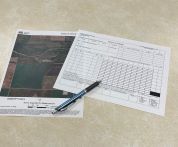
Maps are now available at the Alaska FSA Offices for acreage reporting purposes. If you wish to receive your maps by e-mail, please call our office or email Debbie White at deborah.white@usda.gov or (907)895-4242 ext. 2 for your Northern County USDA Service Center or Hazen Kazaks at hazen.kazaks@usda.gov or (907)761-7738 for your Southern County FSA Office. Please see the following acreage reporting deadlines for Alaska:
-
July 15, 2025: 2025- All other spring planted crops, CRP and perennial forage
-
September 30, 2025: 2026- Value-loss crops (including Peonies) and controlled environment crops (except nursery)
In order to maintain program eligibility and benefits, you must file timely acreage reports. Failure to file an acreage report by the crop acreage reporting deadline may cause ineligibility for future program benefits. FSA will not accept acreage reports provided more than a year after the acreage reporting deadline.
Producers are encouraged to file their acreage reports as soon as planting is completed.
|
Top of page
In this Ask the Expert, Jack Carlile, Farm Loan Manager for the USDA Farm Service Agency (FSA), answers questions about farm operating loans and when producers should apply in order to secure funds for the current crop year.
As the Farm Loan Manager for the Cherokee County Service Center, Jack is responsible for managing the loan making and loan servicing activities for five counties in northeast Oklahoma. His office provides services for over 650 farm loan customers. Jack was raised on a cross bred cow/calf operation that his grandparents started. Over the years, each generation has added to the operation by purchasing additional pasture. The operation also grows and bales their own hay. Jack’s agriculture background and degree in agriculture economics from Oklahoma State University help him better understand the financing needs of his producers.
Who can apply for FSA Farm Loans?
Anyone can apply for FSA’s loan programs. Applications will be considered on basic eligibility requirements. To apply for a loan, you must meet the following general eligibility requirements including:
- Be a U.S. citizen or qualified alien.
- Operator of a family farm or ranch.
- Have a satisfactory credit history.
- Unable to obtain credit elsewhere at reasonable rates and terms to meet actual needs.
- Not be delinquent on any federal debts.
To read the full blog visit farmers.gov/blog/ask-the-expert-farm-operating-loan-qa-with-jack-carlile.
Top of page
Farm loan borrowers who have pledged real estate as security for their Farm Service Agency (FSA) direct or guaranteed loans are responsible for maintaining loan collateral. Borrowers must obtain prior consent or approval from FSA or the guaranteed lender for any transaction that affects real estate security. These transactions include, but are not limited to:
- Leases of any kind
- Easements of any kind
- Subordinations
- Partial releases
- Sales
Failure to meet or follow the requirements in the loan agreement, promissory note, and other security instruments could lead to nonmonetary default which could jeopardize your current and future loans.
It is critical that borrowers keep an open line of communication with their FSA loan staff or guaranteed lender when it comes to changes in their operation. For more information on borrower responsibilities, read Your FSA Farm Loan Compass.
Top of page
Alaska State Farm Service Agency
|
800 E Palmer-Wasilla Hwy., Suite 216
Palmer, AK 99645
Phone: 907-761-7738
Fax: 855-638-4864
|
|
Alaska FSA Website
|
|
Northern County FSA Service Center
PO BOX 585
Delta Junction AK 99737
Phone: 907-895-4242 ext. 2
Fax: 855-711-9095
Email: akdeltajun-fsa@usda.gov
Northern County Committee
Steve Helkenn- Committee Chair
Becky Hammond- Vice Chair
Matt Bates- Member
Next meeting: April 15th at 9am
|
Southern County FSA Office
800 E Palmer-Wasilla Hwy., Ste 216
Palmer AK 99645
Phone: 907-761-7773
Fax: 855-638-4864
Email: akpalmer-fsa@usda.gov
Southern County Committee
Carol Symonds- Committee Chair
Ina Jones- Vice Chair
Abby Ala- Member
Next meeting: TBA
|
|
Hours: Monday-Friday 8:00 a.m.- 4:30 p.m.
Alaska FSA State Committee
Kelli Foreman- Committee Chair
Anne-Corinne Kell- Member
Christine St. Pierre- Member
Next meeting: TBA
|
|






