
Kentucky FSA Newsletter - March 2025
In This Issue:
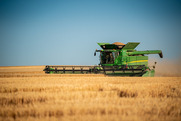
USDA’s Farm Service Agency (FSA) is accepting enrollments and elections for the Agriculture Risk Coverage (ARC) and Price Loss Coverage (PLC) for 2025 from Jan. 21 to April 15. ARC and PLC provide financial protections to farmers from substantial drops in crop prices or revenues and are vital economic safety nets for most American farms. The American Relief Act, 2025 extended many Farm Bill-authorized programs for another year, including ARC and PLC.
Producers can elect coverage and enroll in ARC-County (ARC-CO) or PLC, which provide crop-by-crop protection, or ARC-Individual (ARC-IC), which protects the entire farm. Although election changes for 2025 are optional, producers must enroll through a signed contract each year. Also, if a producer has a multi-year contract on the farm it will continue for 2025 unless an election change is made.
If producers do not submit their election revision by the April 15 deadline, their election remains the same as their 2024 election for commodities on the farm from the prior year. Farm owners cannot enroll in either program unless they have a share interest in the cropland.
Covered commodities include barley, canola, large and small chickpeas, corn, crambe, flaxseed, grain sorghum, lentils, mustard seed, oats, peanuts, dry peas, rapeseed, long grain rice, medium grain rice, safflower seed, seed cotton, sesame, soybeans, sunflower seed and wheat.
USDA also reminds producers that ARC and PLC elections and enrollments can impact eligibility for some crop insurance products including Supplemental Coverage Option, Enhanced Coverage Option and, for cotton producers, the Stacked Income Protection Plan (commonly referred to as STAX).
For more information on ARC and PLC, producers can visit the ARC and PLC webpage or find your local Service Center at farmers.gov/service-locator.
|
USDA’s Farm Service Agency (FSA) is accepting applications for Dairy Margin Coverage (DMC) for the 2025 coverage year from Jan. 29 to March 31. DMC is a voluntary risk management program that offers protection to dairy producers when the difference between the all-milk price and the average feed price (the margin) falls below a certain dollar amount selected by the producer. The American Relief Act, 2025 extended many Farm Bill-authorized programs for another year, including DMC.
DMC offers different levels of coverage, even an option that is free to producers, minus a $100 administrative fee. The administrative fee is waived for dairy producers who are considered limited resource, beginning, socially disadvantaged or a military veteran.
DMC payments are calculated using updated feed and premium hay costs, making the program more reflective of actual dairy producer expenses. These updated feed calculations use 100% premium alfalfa hay. For more information on DMC, visit the DMC webpage or find your local Service Center at farmers.gov/service-locator.
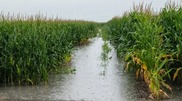
Severe weather events create significant challenges and often result in catastrophic loss for agricultural producers. Despite every attempt to mitigate risk, your operation may suffer losses. USDA offers several programs to help with recovery.
Risk Management
For producers who have risk protection through Federal Crop Insurance or the Noninsured Crop Disaster Assistance Program (NAP), we want to remind you to report crop damage to your crop insurance agent or the local Farm Service Agency (FSA) office.
If you have crop insurance, contact your agency within 72 hours of discovering damage and be sure to follow up in writing within 15 days. If you have NAP coverage, file a Notice of Loss (also called Form CCC-576) within 15 days of loss becoming apparent, except for hand-harvested crops, which should be reported within 72 hours.
Disaster Assistance
USDA also offers disaster assistance programs, which is especially important to livestock, fruit and vegetable, specialty and perennial crop producers who have fewer risk management options.
First, the Livestock Indemnity Program (LIP) and Emergency Assistance for Livestock, Honeybee and Farm-raised Fish Program (ELAP) reimburses producers for a portion of the value of livestock, poultry and other animals that died as a result of a qualifying natural disaster event or for loss of grazing acres, feed and forage. And, the Livestock Forage Disaster Program (LFP) provides assistance to producers of grazed forage crop acres that have suffered crop loss due to a qualifying drought. Livestock producers suffering the impacts of drought can also request Emergency Haying and Grazing on Conservation Reserve Program (CRP) acres.
Next, the Tree Assistance Program (TAP) provides cost share assistance to rehabilitate and replant tree, vines or shrubs loss experienced by orchards and nurseries. This complements NAP or crop insurance coverage, which cover the crop but not the plants or trees in all cases.
For LIP and ELAP, you will need to file a Notice of Loss for livestock and grazing or feed losses by the application deadline for each program. For TAP, you will need to file a program application within 90 days.
Documentation
It’s critical to keep accurate records to document all losses following this devastating cold weather event. Livestock producers are advised to document beginning livestock numbers by taking time and date-stamped video or pictures prior to after the loss.
Other common documentation options include:
- Purchase records
- Production records
- Vaccination records
- Bank or other loan documents
- Third-party certification
Other Programs
The Emergency Conservation Program and Emergency Forest Restoration Program can assist landowners and forest stewards with financial and technical assistance to restore damaged farmland or forests.
|
This Presidential disaster declaration allows the United States Department of Agriculture (USDA) Farm Service Agency (FSA) to extend much-needed emergency credit to producers recovering from natural disasters through emergency loans. Emergency loans can be used to meet various recovery needs including the replacement of essential items such as equipment or livestock, reorganization of a farming operation, or to refinance certain debts. FSA will review the loans based on the extent of losses, security available, and repayment ability.
1. Triggering Presidential Designation M4860:
Impacted Area: Kentucky
Triggering Disaster: Severe Storms, Straight-line Winds, Flooding, Landslides, and Mudslides
Application Deadline: October 24, 2025
Primary Counties Eligible:
- Kentucky: Breathitt, Clay, Harlan, Knott, Lee, Letcher, Martin, Owsley, Perry, Pike
Contiguous Counties Also Eligible:
-
Kentucky: Bell, Estill, Floyd, Jackson, Johnson, Knox, Laurel, Lawrence, Leslie, Magoffin, Powell, Wolfe
-
Virginia: Buchanan, Dickenson, Lee, Wise
-
West Virginia: Mingo, Wayne
2.Triggering Presidential Designation M4860, Amendment 1:
Impacted Area: Kentucky
Triggering Disaster: Severe Storms, Straight-line Winds, Flooding, Landslides, and Mudslides
Application Deadline: October 27, 2025
Primary Counties Eligible:
Contiguous Counties Also Eligible:
-
Kentucky: Johnson, Knott, Magoffin, Martin, Pike
3.Triggering Presidential Designation M4860, Amendment 2:
Impacted Area: Kentucky
Triggering Disaster: Severe Storms, Straight-line Winds, Flooding, Landslides, and Mudslides
Application Deadline: November 03, 2025
Primary Counties Eligible:
-
Kentucky: Estill, Johnson, Simpson
Contiguous Counties Also Eligible:
-
Kentucky: Allen, Clark, Floyd, Jackson, Lawrence, Lee, Logan, Madison, Magoffin, Martin, Morgan, Powell, Warren
4. Triggering Presidential Designation M4860, Amendment 3:
Impacted Area: Kentucky
Triggering Disaster: Severe Storms, Straight-line Winds, Flooding, Landslides, and Mudslides
Application Deadline: November 04, 2025
Primary Counties Eligible:
-
Kentucky: Ballard, Barren, Butler, Green, Hart, Marshall, Metcalfe, Rockcastle, Spencer, Wayne
Contiguous Counties Also Eligible:
-
Illinois: Alexander, Pulaski
-
Kentucky: Adair, Allen, Anderson, Bullitt, Calloway, Carlisle, Clinton, Cumberland, Edmonson, Garrard, Graves, Grayson, Hardin, Jackson, Jefferson, Larue, Laurel, Lincoln, Livingston, Logan, Lyon, McCracken, McCreary, Madison, Monroe, Muhlenberg, Nelson, Ohio, Pulaski, Russell, Shelby, Taylor, Trigg, Warren
-
Missouri: Mississippi
-
Tennessee: Pickett, Scott
More Resources
On farmers.gov, the Disaster Assistance Discovery Tool, Disaster Assistance-at-a-Glance fact sheet, and Loan Assistance Tool can help you determine program or loan options. To file a Notice of Loss or to ask questions about available programs, contact your local USDA Service Center.
FEMA offers different assistance programs for individual citizens, public groups including government agencies and private nonprofit organizations. To find the FEMA help you need following a disaster event, visit fema.gov/assistance.
This Presidential disaster declaration allows the United States Department of Agriculture (USDA) Farm Service Agency (FSA) to extend much-needed emergency credit to producers recovering from natural disasters through emergency loans. Emergency loans can be used to meet various recovery needs including the replacement of essential items such as equipment or livestock, reorganization of a farming operation, or to refinance certain debts. FSA will review the loans based on the extent of losses, security available, and repayment ability.
Impacted Area: West Virginia
Triggering Disaster M4861: Severe Storm, Straight-line Winds, Flooding, Landslides, and Mudslides
Application Deadline: 10/27/2025
Primary Counties Eligible:
-
West Virginia: McDowell, Mercer, Mingo, Wyoming
Contiguous Counties Also Eligible:
-
Kentucky: Martin, Pike
-
Virginia: Bland, Buchanan, Giles, Tazewell
-
West Virginia: Boone, Lincoln, Logan, Raleigh, Summers, Wayne
More Resources
On farmers.gov, the Disaster Assistance Discovery Tool, Disaster Assistance-at-a-Glance fact sheet, and Loan Assistance Tool can help you determine program or loan options. To file a Notice of Loss or to ask questions about available programs, contact your local USDA Service Center.
FEMA offers different assistance programs for individual citizens, public groups including government agencies and private nonprofit organizations. To find the FEMA help you need following a disaster event, visit fema.gov/assistance.
.
The USDA Farm Service Agency’s (FSA) Direct Farm Ownership loans can help farmers and ranchers become owner-operators of family farms, improve and expand current operations, increase agricultural productivity, and assist with land tenure to save farmland for future generations.
There are three types of Direct Farm Ownership Loans: regular, down payment and joint financing. FSA also offers a Direct Farm Ownership Microloan option for smaller financial needs up to $50,000.
Joint financing allows FSA to provide more farmers and ranchers with access to capital. FSA lends up to 50 percent of the total amount financed. A commercial lender, a state program or the seller of the property being purchased, provides the balance of loan funds, with or without an FSA guarantee. The maximum loan amount for a joint financing loan is $600,000, and the repayment period for the loan is up to 40 years.
The operation must be an eligible farm enterprise. Farm Ownership loan funds cannot be used to finance nonfarm enterprises and all applicants must be able to meet general eligibility requirements. Loan applicants are also required to have participated in the business operations of a farm or ranch for at least three years out of the 10 years prior to the date the application is submitted. The applicant must show documentation that their participation in the business operation of the farm or ranch was not solely as a laborer.
For more information about farm loans, contact your local Service Center at farmers.gov/service-locator or visit fsa.usda.gov.
Farmers can use USDA farm ownership microloans to buy and improve property. These microloans are especially helpful to beginning or underserved farmers, U.S. veterans looking for a career in farming, and those who have small and mid-sized farming operations. Microloans have helped farmers and ranchers with operating costs, such as feed, fertilizer, tools, fencing, equipment, and living expenses since 2013.
Microloans can also help with farmland and building purchases and soil and water conservation improvements. FSA designed the expanded program to simplify the application process, expand eligibility requirements and expedite smaller real estate loans to help farmers strengthen their operations. Microloans provide up to $50,000 to qualified producers and can be issued to the applicant directly from the USDA Farm Service Agency (FSA).
To learn more about the FSA microloan program, find your local Service Center at farmers.gov/service-locator or visit fsa.usda.gov/microloans.
Top of page
Top of page
Farm Loan Programs
|
Farm Programs
|
| 90-Day Treasury Bill |
4.375%
|
Farm Storage Facility Loans |
3 Year
|
4.25%
|
|
Farm Operating Loans - Direct
|
5.50%
|
Farm Storage Facility Loans |
5 Year
|
4.375%
|
|
Farm Ownership Loans - Direct
|
5.875%
|
Farm Storage Facility Loans |
7 Year
|
4.500%
|
|
Limited Resource Loans
|
5.000%
|
Farm Storage Facility Loans |
10 Year
|
4.500%
|
|
Farm Ownership Loans - Direct FO Down Payment
|
1.875%
|
Farm Storage Facility Loans |
12 Year
|
4.625%
|
|
Emergency Loans
|
3.750%
|
Commodity Loans
|
5.250%
|
|
|
|
CCC Borrowing Rate |
4.250%
|
Kentucky FSA State Office
771 Corporate Dr., Ste 205
Lexington, KY 40503
Phone: 859-224-7601
State Webpage
|
|
Contact your local USDA Service Center for assistance with FSA loans or programs
|
Kentucky FSA State Committee
- Carrie Divine - Morganfield
- Pat Henderson - Irvington
- James Kay, Sr. - Versailles
- Roger Thomas - Smiths Grove
|
|








