
Michigan Farm Service Agency Newsletter - February 19, 2025
In This Issue:

March 03, 2025: 2024 ELAP Notice of Loss and Application for Payment Deadline
March 03, 2025: 2024 LIP Notice of Loss and Application for Payment Deadline
March 03, 2025: 2024 LFP Notice of Loss and Application for Payment Deadline
March 15, 2025: 2025 NAP Sales Closing Date for most annual Spring/Summer Seeded Crops (reach out to your local service center for crop-specific questions)
March 31, 2025: 2025 Dairy Margin Coverage Program Signup Deadline
More Information
The above information is for general awareness. Program deadlines may change or vary by county. Be sure to verify program deadlines for your land or operation by contacting your local USDA Service Center.
|

If you’re an orchardist or nursery tree grower whose experienced losses from natural disasters during calendar year 2024, you must submit a TAP application either 90 calendar days after the disaster event or the date when the loss is apparent.
TAP provides financial assistance to help you replant or rehabilitate eligible trees, bushes and vines damaged by natural disasters.
Eligible tree types include trees, bushes or vines that produce an annual crop for commercial purposes. Nursery trees include ornamental, fruit, nut and Christmas trees that are produced for commercial sale. Trees used for pulp or timber are ineligible.
To qualify for TAP, orchardists must suffer a qualifying tree, bush or vine loss in excess of 15 percent mortality from an eligible natural disaster, plus an adjustment for normal mortality. The eligible trees, bushes or vines must have been owned when the natural disaster occurred; however, eligible growers are not required to own the land on which the eligible trees, bushes and vines were planted.
If the TAP application is approved, the eligible trees, bushes and vines must be replaced within 12 months from the date the application is approved. The cumulative total quantity of acres planted to trees, bushes or vines, for which you can receive TAP payments, cannot exceed 1,000 acres annually.
|
Top of page

The U.S. Department of Agriculture (USDA) updated three livestock disaster assistance programs to synchronize deadlines and streamline program delivery. The changes take effect for the 2024 program applications for the Emergency Assistance for Livestock, Honeybees and Farm-raised Fish Program (ELAP), Livestock Forage Disaster Program (LFP) and Livestock Indemnity Program (LIP).
USDA’s Farm Service Agency (FSA) is now accepting applications for ELAP, LFP and LIP until March 1 following the end of the calendar year in which the disaster circumstances occurred. For 2024 program applications, which are being accepted at FSA offices across the nation right now, the deadline to apply for this assistance is March 3, 2025, because March 1 falls on a Saturday.
ELAP Policy Clarification
FSA is clarifying the feed transportation provisions of the program. In 2022, ELAP policy was revised to recognize the impact of adverse weather, including drought, on producer expenses associated with the need to transport feed to livestock, or livestock to new forage resources. To be eligible for assistance, producers must have a loss resulting from the cost to transport livestock feed to eligible livestock for mileage above normal or transport livestock to feed resources outside the adversely impacted area. The policy clarifies what is considered an eligible feed expense under the feed transportation provisions and what is considered eligible documentation for claiming feed transportation expenses. This clarification also provides a program standard for calculating feed transportation costs based on the expected feed needs of eligible animals.
Programs Overview
ELAP provides financial assistance to producers of livestock, honeybees and farm-raised fish to assist with the impacts of adverse weather and disease that are not covered by other FSA programs. ELAP also helps dairy producers who incur milk production losses due to H5N1 infections in their dairy herds. LFP provides financial assistance to livestock producers who suffer eligible grazing losses on land impacted by qualifying droughts or are restricted from grazing federally managed lands due to wildfire. LIP provides financial assistance to producers who face livestock deaths in excess of normal mortality due to adverse weather or attacks by animals reintroduced into the wild by the federal government.
More Information
The updates to ELAP, LFP and LIP are detailed in this Jan. 17, 2025, notice in the Federal Register.
Producers who have questions about these program policy changes, including producers who previously submitted ELAP, LFP or LIP applications for 2024, should contact the FSA at their local USDA Service Center for additional information prior to the March 3, 2025, application deadline.
|

USDA’s Farm Service Agency (FSA) is accepting enrollments and elections for the Agriculture Risk Coverage (ARC) and Price Loss Coverage (PLC) for 2025 from Jan. 21 to April 15. ARC and PLC provide financial protections to farmers from substantial drops in crop prices or revenues and are vital economic safety nets for most American farms. The American Relief Act, 2025 extended many Farm Bill-authorized programs for another year, including ARC and PLC.
Producers can elect coverage and enroll in ARC-County (ARC-CO) or PLC, which provide crop-by-crop protection, or ARC-Individual (ARC-IC), which protects the entire farm. Although election changes for 2025 are optional, producers must enroll through a signed contract each year. Also, if a producer has a multi-year contract on the farm it will continue for 2025 unless an election change is made.
If producers do not submit their election revision by the April 15 deadline, their election remains the same as their 2024 election for commodities on the farm from the prior year. Farm owners cannot enroll in either program unless they have a share interest in the cropland.
Covered commodities include barley, canola, large and small chickpeas, corn, crambe, flaxseed, grain sorghum, lentils, mustard seed, oats, peanuts, dry peas, rapeseed, long grain rice, medium grain rice, safflower seed, seed cotton, sesame, soybeans, sunflower seed and wheat.
USDA also reminds producers that ARC and PLC elections and enrollments can impact eligibility for some crop insurance products including Supplemental Coverage Option, Enhanced Coverage Option and, for cotton producers, the Stacked Income Protection Plan (commonly referred to as STAX).
For more information on ARC and PLC, producers can visit the ARC and PLC webpage or contact your local County USDA Service Center.
|

Farmers and ranchers rely on crop insurance to protect themselves from disasters and unforeseen events, but not all crops are insurable through the USDA’s Risk Management Agency. The Farm Service Agency’s (FSA) Noninsured Crop Disaster Assistance Program (NAP) provides producers another option to obtain coverage against disaster for these crops. NAP provides financial assistance to producers of non-insurable crops impacted by natural disasters that result in lower yields, crop losses, or prevents crop planting.
Commercially produced crops and agricultural commodities for which crop insurance is not available are generally eligible for NAP. Eligible crops include those grown specifically for food, fiber, livestock consumption, biofuel or biobased products, or value loss crops such as aquaculture, Christmas trees, ornamental nursery, and others. Contact your local FSA office to see which crops are eligible in your state and county.
Eligible causes of loss include drought, freeze, hail, excessive moisture, excessive wind or hurricanes, earthquake and flood. These events must occur during the NAP policy coverage period, before or during harvest, and the disaster must directly affect the eligible crop. For guidance on causes of loss not listed, contact your local FSA county office.
Interested producers apply for NAP coverage using FSA form CCC-471, “Application for Coverage,” and pay the applicable service fee at the FSA office where their farm records are maintained. These must be filed by the application closing date, which varies by crop. Contact your local FSA office to verify application closing dates and ensure coverage for eligible NAP crops.
At the time of application, each producer acknowledges they have received the NAP Basic Provisions, which describes NAP requirements for coverage. NAP participants must report crop acreage shortly after planting and provide verifiable or reliable crop production records when required by FSA.
Producers are required to pay service fees which vary depending on the number of crops and number of counties your operation is located in. The NAP service fee is the lesser of $325 per crop or $825 per producer per administrative county, not to exceed a total of $1,950 for a producer with farming interests in multiple counties. Premiums also apply when producers elect higher levels of coverage with a maximum premium of $15,750 per person or legal entity.
A producer’s certification on Form CCC-860 Socially Disadvantaged, Limited Resource, Beginning and Veteran Farmer or Rancher Certification may serve as an application for basic NAP coverage for all eligible crops beginning with crop year 2022. These producers will have all NAP-related service fees for basic coverage waived, in addition to a 50 percent premium reduction if higher levels of coverage are elected.
For more detailed information on NAP, download the NAP Fact Sheet. To get started with NAP, we recommend you contact your local USDA service center.
|
Top of page
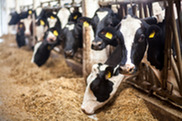
USDA’s Farm Service Agency (FSA) is accepting applications for Dairy Margin Coverage (DMC) for the 2025 coverage year from Jan. 29 to March 31. DMC is a voluntary risk management program that offers protection to dairy producers when the difference between the all-milk price and the average feed price (the margin) falls below a certain dollar amount selected by the producer. The American Relief Act, 2025 extended many Farm Bill-authorized programs for another year, including DMC.
DMC offers different levels of coverage, even an option that is free to producers, minus a $100 administrative fee. The administrative fee is waived for dairy producers who are considered limited resource, beginning, socially disadvantaged or a military veteran.
DMC payments are calculated using updated feed and premium hay costs, making the program more reflective of actual dairy producer expenses. These updated feed calculations use 100% premium alfalfa hay. For more information on DMC, visit the DMC webpage or contact your local County USDA Service Center.
|
Top of page
FSA offers direct farm ownership and direct farm operating loans to producers who want to establish, maintain, or strengthen their farm or ranch. Direct loans are processed, approved and serviced by FSA loan officers.
Direct farm operating loans can be used to purchase livestock and feed, farm equipment, fuel, farm chemicals, insurance, and other costs including family living expenses. Operating loans can also be used to finance minor improvements or repairs to buildings and to refinance some farm-related debts, excluding real estate.
Direct farm ownership loans can be used to purchase farmland, enlarge an existing farm, construct and repair buildings, and to make farm improvements.
The maximum loan amount for direct farm ownership loans is $600,000 and the maximum loan amount for direct operating loans is $400,000 and a down payment is not required. Repayment terms vary depending on the type of loan, collateral and the producer's ability to repay the loan. Operating loans are normally repaid within seven years and farm ownership loans are not to exceed 40 years.
Please contact your local FSA office for more information or to apply for a direct farm ownership or operating loan.
|
Top of page
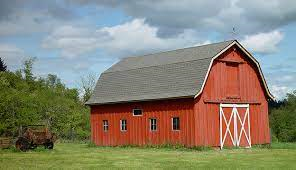
The U.S. Department of Agriculture (USDA) announced loan interest rates for February 2025, which are effective Feb. 3, 2025. USDA Farm Service Agency (FSA) loans provide important access to capital to help agricultural producers start or expand their farming operation, purchase equipment and storage structures or meet cash flow needs.
Operating, Ownership and Emergency Loans
FSA offers farm ownership, operating and emergency loans with favorable interest rates and terms to help eligible agricultural producers obtain financing needed to start, expand or maintain a family agricultural operation.
Interest rates for Operating and Ownership loans for February 2025 are as follows:
FSA also offers guaranteed loans through commercial lenders at rates set by those lenders. To access an interactive online, step-by-step guide through the farm loan process, visit the Loan Assistance Tool on farmers.gov.
Commodity and Storage Facility Loans
Additionally, FSA provides low-interest financing to producers to build or upgrade on-farm storage facilities and purchase handling equipment and loans that provide interim financing to help producers meet cash flow needs without having to sell their commodities when market prices are low. Funds for these loans are provided through the Commodity Credit Corporation (CCC) and are administered by FSA.
More Information
To learn more about FSA programs, producers can contact their local USDA Service Center. Additionally, producers can use online tools, such as the Loan Assistance Tool and Debt Consolidation Tool to explore loan options.
FSA helps America’s farmers, ranchers and forest landowners invest in, improve, protect and expand their agricultural operations through the delivery of agricultural programs for all Americans. FSA implements agricultural policy, administers credit and loan programs, and manages conservation, commodity, disaster recovery and marketing programs through a national network of state and county offices and locally elected county committees. For more information, visit fsa.usda.gov.
|
Top of page
Michigan Farm Service Agency
3001 Coolidge Road
Suite 350
East Lansing, MI 48823
Phone: 517-324-5110
State Executive Director, Acting
Christina Salenbien
State Committee Members:
Cheryl Kobernik, Chair
Amanda Carey Goodfellow
Jerry Ann Hebron
Joseph Van Alstine
Administrative Officer
Troy Nichols
Conservation Programs Chief
Farm Loan Programs Chief
Dave Russ
Price Support Programs Chief
Ken Schapman
Production Adjustment Programs Chief
Kyle Knapp
Outreach & Communications
Aimee Swenson
|
| |
| |
|
| |
|
|








