Minnesota FSA Updates - January 16, 2025
In This Issue:
This time of year we are typically focused on looking forward to new programs and the new production year. However, I want to start the first Minnesota newsletter of the new year by taking a moment to provide a reminder regarding a few upcoming deadlines that are particularly relevant to livestock producers who experienced losses last year. The deadline to apply for financial assistance through the Emergency Assistance for Livestock, Honeybees and Farm-raised Fish Program (ELAP) is Jan. 30, 2025. This program is for losses due to specific adverse conditions that occurred in 2024 and is also applicable to dairy operations impacted by H5N1. The deadline to apply for payment under the Livestock Forage Disaster Program (LFP) is also January 30, 2025 for 2024 losses. The deadline to apply for payment through the Livestock Indemnity Program (LIP) for 2024 losses is March 3, 2025. More information about these programs and resources are available on farmers.gov.
Looking forward, 2025 enrollment periods for two key safety-net programs were announced this week, the Agriculture Risk Coverage (ARC) and Price Loss Coverage (PLC) as well as Dairy Margin Coverage (DMC) Program. Agricultural producers can submit applications to USDA’s Farm Service Agency (FSA) for ARC and PLC for the 2025 crop year from Jan. 21 to April 15 and for DMC for the 2025 coverage year from Jan. 29 to March 31.
It was also announced this week that the Conservation Reserve Enhancement Program (CREP) has been expanded to assist Minnesota farmers and agricultural landowners in improving water quality and conserving other natural resources. The Minnesota Water Quality and Habitat CREP offered by USDA and the Minnesota Board of Water and Soil Resources (BWSR), has expanded the voluntary, incentive-based conservation program to include an additional 12 counties and increased the enrollment goal to 75,000 acres for Minnesota agricultural producers. The Farm Service Agency (FSA) will communicate when Conservation Reserve Program (CRP) enrollment is re-opened.
In February and March, University of Minnesota Extension is hosting a series of Multi-Generational Farm Transition Retreats. These feature hands-on planning and discussion on farm transition for the whole farm family. All retreats are Friday 5 p.m. to 8:30 p.m. and Saturday 8:30 a.m. to 4 p.m. There are currently three scheduled retreats available for registration; Mankato: February 21-22, 2025, St. Cloud: March 7-8, 2025, and Rochester: March 21-22, 2025 for more information visit the University of Minnesota Extension website.
The University of Minnesota Extension is also hosting the first annual Ag for All conference for LGBTQIA+ Farmers and Agriculturists on March 8, 2025. The conference will feature a panel of professionals, producers, and community members, as well as educational workshops, and roundtable discussions on emerging topics affecting the LGBTQIA+ community. For more information contact Joe Rand at joerand@umn.edu or visit the 2025 Ag for All Conference site.
Daniel Mahoney
Deputy State Executive Director
|
The Farm Service Agency (FSA) is an exciting and rewarding place to start, build, and/or continue your career. Be part of our team and support the well-being of Minnesota agriculture and the American public.
FSA's diverse culture and benefits allow for a healthy balance between your career and home life. In addition to a generous salary, FSA offers a friendly and professional working environment with a diverse workforce, flexible hours/work schedules, and other family-friendly benefits such as: paid vacation and sick leave, paid holidays, retirement and supplemental savings plan, a wide array of health, dental, vision, and life insurance plans, flexible spending accounts, twelve weeks of paid parental leave with FMLA eligibility, and long-term care insurance. Working for the U.S. Department of Agriculture (USDA) will afford you the opportunity to contribute to projects that positively impact the lives of over 300 million people. Explore a career with the USDA at www.usajobs.gov.
New job openings are posted on a regular basis. Interested individuals can search for career opportunities based upon keywords and/or specific locations as well as create search profiles and job announcement notifications. Currently, Minnesota FSA is seeking candidates to perform work in support of Minnesota agriculture and farmers in a number of locations across the state. Individuals who are interested in applying for these job opportunities will need to apply online at www.usajobs.gov. Applicants may enter the appropriate job announcement number below into the keyword search or click on the applicable link(s).
Expanded County Executive Director:
-
Roseau, MN - Roseau County Program Analyst
FSACO-12650208-25-MN-KM
Application period: 12/30/2024 to 01/17/2025
-
Little Falls, MN - Morrison County Loan Assistant/Specialist
FSA-25-12665163-DHA-MN-WS
Application period: 01/13/2025 to 01/17/2025
-
Alexandria/Glenwood, MN - Douglas/Pope Expanded County Executive Director
FSACO-12661978-25-MN-KM
Application period: 01/13/2025 to 01/27/2025
-
Lakefield, MN - Jackson County Program Analyst
FSACO-12261637-25-MN-KM
Application period: 01/13/2025 to 01/27/2025
Deadline to apply for assistance is Jan. 30, 2025
The U.S. Department of Agriculture’s (USDA) Farm Service Agency (FSA) reminds producers, including dairy producers impacted by H5N1, that the deadline to apply for financial assistance through the Emergency Assistance for Livestock, Honeybees and Farm-raised Fish Program (ELAP) is Jan. 30, 2025, for losses due to specific adverse conditions that occurred in 2024.
ELAP provides emergency relief to eligible producers of livestock, honeybees, and farm-raised fish to assist with losses due to disease, adverse weather, or other conditions, such as wildfires, that are not covered by other FSA disaster assistance programs. In July 2024, USDA established ELAP eligibility for dairy producers who incur milk losses resulting from reduced milk production when cattle are removed from commercial milking in dairy herds due to positive H5N1 tests.
To date, USDA has provided more than $80 million in ELAP assistance to help H5N1-impacted dairy producers offset the cost of lost milk production. As of Jan. 8, 2025, there are active known detections of H5N1 in dairy herds in two states (California and Texas), though ELAP assistance has reached producers in 16 states who have faced infections at some point during the outbreak. USDA’s Animal and Plant Health Inspection Service maintains an interactive map showing states with current and past detections.
ELAP Eligible Losses ELAP provides recovery assistance for:
- livestock feed and grazing losses that are not due to drought or wildfires on federally managed lands;
- livestock feed losses caused by an eligible loss condition that resulted in purchased or mechanically harvested feed being destroyed, additional feed purchased above normal and additional cost of feed delivery;
- losses resulting from the cost of transporting water to livestock due to an eligible drought;
- above normal costs of hauling feed to livestock and hauling livestock to forage or other grazing acres due to a qualifying drought;
- losses resulting from the additional cost associated with gathering livestock for treatment and/or inspection related to cattle tick fever;
- honeybee feed, colony and hive losses due to colony collapse disorder, eligible adverse weather and other conditions;
- farm-raised fish feed and death losses due to eligible disease, adverse weather and other qualifying conditions; and,
- loss of income when removing dairy cattle from commercial milking due to positive H5N1 test confirmed by USDA’s Animal and Plant Health Inspection Service National Veterinary Services Laboratories.
Dairy H5N1 Eligibility
Dairy producers are reminded eligible adult dairy cattle under this new H5N1 provision of ELAP must be maintained for commercial milk production and be currently lactating. Assistance is available for up to 120 days after the sample collection date for the positive H5N1 test. Producers submitting an application for assistance under this provision, if their 120-day impact period starts in 2024 and extends into 2025, will need to submit a notice of loss and application for payment by Jan. 30, 2025, for the days impacted in 2024, and then submit a notice of loss and application for payment for the remainder of the 120 days that occur in 2025.
Producers must submit two applications for payments based on the applicable calendar year losses.
Other ELAP Loss Conditions and Payments
Eligible adverse weather or loss conditions under ELAP include, but are not limited to, blizzards, drought, winter storms, excessive wind, floods, hail (grazing loss only), hurricane, lightning, tidal surge and tornado. Not all eligible loss conditions are applicable to all categories of ELAP assistance, and producers are encouraged to visit with their county FSA office for more information. Payments are based on a percentage of the fair market value of the livestock, honeybees, or fish lost, or the cost of feed and water shortages.
Producers are responsible for providing verifiable documentation of losses and the conditions causing the loss. This may include veterinary records, feed purchase receipts, and other supporting documents.
For more ELAP information, visit ELAP for Livestock; ELAP for Honeybees; ELAP for Farm-raised Fish and ELAP for H5N1-impacted dairies.
Producers interested in applying for ELAP assistance for calendar year 2024 should contact FSA at their nearest USDA Service Center by the Jan. 30, 2025, deadline. To find a Service Center visit farmers.gov/service-locator.
|
Livestock inventory records are necessary in the event of a natural disaster, so remember to keep them updated.
When disasters strike, the USDA Farm Service Agency (FSA) can help you if you’ve suffered excessive livestock death losses and grazing or feed losses due to eligible natural disasters.
To participate in the Livestock Indemnity Program (LIP), you’ll be required to provide verifiable documentation of death losses resulting from an eligible adverse weather event and must submit a notice of loss to your local FSA office no later than 60 calendar days after the end of the calendar year in which the eligible loss condition occurred. For the Emergency Assistance for Livestock, Honeybees, and Farm-raised Fish Program (ELAP), you must submit a notice of loss to your local FSA office no later than the annual program application deadline of January 30 following the program year in which the loss occurred and should maintain documentation and receipts.
You should record all pertinent information regarding livestock inventory records including:
- Documentation of the number, kind, type, and weight range of livestock
- Beginning inventory supported by birth recordings or purchase receipts.
Farmers and ranchers rely on crop insurance to protect themselves from disasters and unforeseen events, but not all crops are insurable through the USDA’s Risk Management Agency. The Farm Service Agency’s (FSA) Noninsured Crop Disaster Assistance Program (NAP) provides producers another option to obtain coverage against disaster for these crops. NAP provides financial assistance to producers of non-insurable crops impacted by natural disasters that result in lower yields, crop losses, or prevents crop planting.
Commercially produced crops and agricultural commodities for which crop insurance is not available are generally eligible for NAP. Eligible crops include those grown specifically for food, fiber, livestock consumption, biofuel or biobased products, or value loss crops such as aquaculture, Christmas trees, ornamental nursery, and others. Contact your local FSA office to see which crops are eligible in your state and county.
Eligible causes of loss include drought, freeze, hail, excessive moisture, excessive wind or hurricanes, earthquake and flood. These events must occur during the NAP policy coverage period, before or during harvest, and the disaster must directly affect the eligible crop. For guidance on causes of loss not listed, contact your local FSA county office.
Interested producers apply for NAP coverage using FSA form CCC-471, “Application for Coverage,” and pay the applicable service fee at the FSA office where their farm records are maintained. These must be filed by the application closing date, which varies by crop. Contact your local FSA office to verify application closing dates and ensure coverage for eligible NAP crops.
At the time of application, each producer acknowledges they have received the NAP Basic Provisions, which describes NAP requirements for coverage. NAP participants must report crop acreage shortly after planting and provide verifiable or reliable crop production records when required by FSA.
Producers are required to pay service fees which vary depending on the number of crops and number of counties your operation is located in. The NAP service fee is the lesser of $325 per crop or $825 per producer per administrative county, not to exceed a total of $1,950 for a producer with farming interests in multiple counties. Premiums also apply when producers elect higher levels of coverage with a maximum premium of $15,750 per person or legal entity.
A producer’s certification on Form CCC-860 Socially Disadvantaged, Limited Resource, Beginning and Veteran Farmer or Rancher Certification may serve as an application for basic NAP coverage for all eligible crops beginning with crop year 2022. These producers will have all NAP-related service fees for basic coverage waived, in addition to a 50 percent premium reduction if higher levels of coverage are elected.
For more detailed information on NAP, download the NAP Fact Sheet. To get started with NAP, we recommend you contact your local USDA service center.
Farm loan borrowers who have pledged real estate as security for their Farm Service Agency (FSA) direct or guaranteed loans are responsible for maintaining loan collateral. Borrowers must obtain prior consent or approval from FSA or the guaranteed lender for any transaction that affects real estate security. These transactions include, but are not limited to:
- Leases of any kind
- Easements of any kind
- Subordinations
- Partial releases
- Sales
Failure to meet or follow the requirements in the loan agreement, promissory note, and other security instruments could lead to nonmonetary default which could jeopardize your current and future loans.
It is critical that borrowers keep an open line of communication with their FSA loan staff or guaranteed lender when it comes to changes in their operation. For more information on borrower responsibilities, read Your FSA Farm Loan Compass.
The Farm Loan team in Minnesota is already working on operating loans for spring 2025 and asks potential borrowers to submit their requests early so they can be timely processed. The farm loan team can help determine which loan programs are best for applicants.
FSA offers a wide range of low-interest loans that can meet the financial needs of any farm operation for just about any purpose. The traditional farm operating and farm ownership loans can help large and small farm operations take advantage of early purchasing discounts for spring inputs as well expenses throughout the year.
Microloans are a simplified loan program that will provide up to $50,000 for both Farm Ownership and Operating Microloans to eligible applicants. These loans, targeted for smaller and non-traditional operations, can be used for operating expenses, starting a new operation, purchasing equipment, and other needs associated with a farming operation. Loans to beginning farmers and members of underserved groups are a priority.
Other types of loans available include:
Marketing Assistance Loans allow producers to use eligible commodities as loan collateral and obtain a 9-month loan while the crop is in storage. These loans provide cash flow to the producer and allow them to market the crop when prices may be more advantageous.
Farm Storage Facility Loans can be used to build permanent structures used to store eligible commodities, for storage and handling trucks, or portable or permanent handling equipment. A variety of structures are eligible under this loan, including bunker silos, grain bins, hay storage structures, and refrigerated structures for vegetables and fruit. A producer may borrow up to $500,000 per loan.
Agricultural producers of perishable commodities including fruits, vegetables and floriculture can now get funding for controlled atmosphere storage through Farm Storage Facility Loans (FSFL) offered by the U.S. Department of Agriculture’s (USDA) Farm Service Agency (FSA). Controlled atmosphere storage regulates the concentrations of oxygen, carbon dioxide and nitrogen in a storage room to increase the shelf life of crops.
In addition to now supporting controlled atmosphere storage, FSFLs also provide low-interest financing to help producers build or upgrade storage facilities and to purchase portable (new or used) structures, equipment and storage and handling trucks.
The low-interest funds can also be used for controlled atmosphere storage monitoring equipment, designed to notify facility owners immediately if potential atmospheric concerns are detected. Producers may renovate existing storage facilities to include controlled atmosphere storage monitoring equipment. Authorized loan terms for FSFL renovations are three and five years only.
To assist with monitoring gases and particle concentrations for controlled atmosphere storage, the following equipment, but not limited to, is eligible for an FSFL:
- Optical oxygen sensor.
- Low power CO2 sensor.
- Air quality sensor.
- Gas detection devices.
- Air temperature and relative humidity sensor.
- Water activity meter.
- Temperature stabilized water activity analyzer.
- Precision and performance humidity and temperature transmitter.
Loans of up to $50,000 can be secured by a promissory note/security agreement, and loans exceeding $100,000 require additional security.
FSFL borrowers do not need to demonstrate lack of commercial credit availability to apply. The loans are designed to assist a diverse range of agricultural operations, including small and mid-sized businesses, new farmers and ranchers, operations supplying local food and farmers markets, non-traditional farm products and underserved producers.
For more information, see the FSFL fact sheet and contact FSA at your local USDA Service Center.
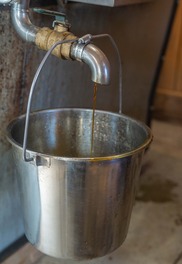
Malted small grains and maple syrup are now eligible for Farm Storage Facility Loans (FSFL) through the USDA Farm Service Agency (FSA).
FSFLs provide low-interest financing to help you build or upgrade storage facilities and to purchase portable (new or used) structures, equipment and storage and handling trucks.
Eligible malted small grains include barley, oats, rice, rye and wheat. Maple sap is used to produce maple syrup.
The low-interest funds can be used for:
- bottler or filling systems for maple syrup, excluding containers
- equipment to improve, maintain, or monitor the quality of stored FSFL commodities, such as cleaners, moisture testers, heat detectors, along with a proposed storage facility
- handling and drying equipment determined by the County Committee to be needed and essential to the proper functioning of a storage system
- electrical equipment, such as pumps, lighting, motors, and wiring, integral to the proper operation of the storage and handling equipment, excluding installing electric service to the electrical meter.
FSFLs are not available for the actual processing of the small grain into the malted commodity or maple sap into maple syrup. Additionally, purchased commodities are not eligible for FSFLs.
The following storage and handling equipment is ineligible for FSFLs:
- boiling equipment
- feed handling and processing equipment
- production and feed facilities
- structures of a temporary nature not having a useful life of the term of the loan
- maple sap tubing and pumping systems.
Loans up to $50,000 can be secured by a promissory note/security agreement, and loans exceeding $100,000 require additional security.
You do not need to demonstrate the lack of commercial credit availability to apply. The loans are designed to assist a diverse range of farming operations, including small and mid-sized businesses, new farmers, operations supplying local food and farmers markets, non-traditional farm products, and underserved producers.
For more information, contact your local County USDA Service Center at or visit fsa.usda.gov/pricesupport.
|
FSA and NRCS program applicants for benefits are required to submit a completed CCC-902 Farming Operation Plan and CCC-941 Average Gross Income (AGI) Certification and Consent to Disclosure of Tax Information for FSA to determine the applicant’s payment eligibility and establish the maximum payment limitation applicable to the program applicant.
Participants are not required to annually submit new CCC-902s for payment eligibility and payment limitation purposes unless a change in the farming operation occurs that may affect the previous determination of record. A valid CCC-902 filed by the participant is considered to be a continuous certification used for all payment eligibility and payment limitation determinations applicable for the program benefits requested.
Participants are responsible for ensuring that all CCC-902 and CCC-941 and related forms on file in the county office are updated, current, and correct. Participants are required to timely notify the county office of any changes in the farming operation that may affect the previous determination of record by filing a new or updated CCC-902 as applicable.
Changes that may require a NEW determination include, but are not limited to, a change of:
- Shares of a contract, which may reflect:
-A land lease from cash rent to share rent
-A land lease from share rent to cash rent (subject to the cash rent tenant rule
-A modification of a variable/fixed bushel-rent arrangement
- The size of the producer’s farming operation by the addition or reduction of cropland that may affect the application of a cropland factor
- The structure of the farming operation, including any change to a member's share
- The contribution of farm inputs of capital, land, equipment, active personal labor, and/or active personal management
- Farming interests not previously disclosed on CCC-902 including the farming interests of a spouse or minor child
- Certifications of average AGI are required to be filed annually for participation in an annual USDA program. For multi-year conservation contracts and NRCS easements, a certification of AGI must be filed prior to approval of the contract or easement and is applicable for the duration of the contract period.
Participants are encouraged to file or review these forms within the deadlines established for each applicable program for which program benefits are being requested.
FSA is cleaning up our producer record database and needs your help. Please report any changes of address, zip code, phone number, email address or an incorrect name or business name on file to our office. You should also report changes in your farm operation, like the addition of a farm by lease or purchase. You should also report any changes to your operation in which you reorganize to form a Trust, LLC or other legal entity.
FSA and NRCS program participants are required to promptly report changes in their farming operation to the County Committee in writing and to update their Farm Operating Plan on form CCC-902.
To update your records, contact your local USDA Service Center.
30-Day Public Review and Comment Period Now Open
The U.S. Department of Agriculture (USDA) welcomes input on the assessment of environmental impacts on two programs – the Tree Assistance Program (TAP) and Farm Storage Facility Loan (FSFL) program. USDA’s Farm Service Agency (FSA) is accepting comments until Jan. 18 on its draft programmatic environmental assessments. The TAP environmental assessment includes updates to streamline the program and enable a quick response to natural disasters. The FSFL environmental assessment recommends continuing the program as currently administered.
The National Environmental Policy Act requires federal agencies to consider the potential effects of major federal actions to both the natural and human environments as part of their planning and decision-making processes. Draft programmatic environmental assessments help FSA to determine whether program changes are needed and plan the implementation of proposed updates.
Tree Assistance Program
TAP helps cover the cost of replanting or rehabilitating eligible trees, bushes and vines that produce annual crops that have been damaged or destroyed by natural disasters. This program is crucial for helping producers recover from adverse natural disaster events and ensuring the long-term viability of their agricultural operations. The proposed program implementation update would include additional management tools and screening criteria that allow FSA to respond more quickly and effectively to time-sensitive natural disasters, including plant diseases.
Farm Storage Facility Loan Program
FSFL improves nationwide on-farm storage capacity for upgrading and building farm storage facilities for eligible commodities. The recommendation to continue the program as currently administered is based on a need to improve the ability of agricultural producers to preserve harvested crops, reduce post-harvest losses and improve marketing and sales opportunities.
More Information
Both draft programmatic environmental assessments may be reviewed on the FSA current environmental documents page Written comments regarding the TAP and FSFL programs can be emailed to SM.FPAC.FBC.ENV@usda.gov until Jan. 18.
For detailed program information, view FSA’s TAP and FSFL program fact sheets.
Top of page
Minnesota USDA Farm Service Agency
375 Jackson Street
Suite 400
Saint Paul, MN 55101
Phone: 651-602-7700
Fax: 855-719-9917
|
|
Minnesota FSA Deputy State Executive Director:
Daniel Mahoney
|
|
Division Leaders:
Cassie Buck
Lee Crawford
Savanah Farrell
Calvin Gellatly
Angela Hanson
|
Minnesota State Committee:
Eunice Biel, Committee Chairperson
Hannah Bernhardt, Committee Member
Kurt Blomgren, Committee Member
Lisa Brunner, Committee Member
Tim Velde, Committee Member
|
|
To find contact information for your local USDA Farm Service Agency office, go to: www.fsa.usda.gov/mn
|
|