
Indiana FSA State Newsletter - January 14, 2025
In This Issue:

As my time as the State Executive Director of the Indiana USDA Farm Service Agency (FSA) comes to a close (for the second time), I find myself reflecting on the incredible journey it has been to serve Indiana’s agricultural community from the FSA vantage point. This role has been one of the most rewarding experiences of my life, allowing me to combine my lifelong passion for agriculture with a deep commitment to public service.
Agriculture has always been at the heart of who I am. Growing up and still living on my family farm has instilled in me a profound respect for the land, the work ethic of farmers, and the resilience required to thrive in this industry. Those lessons have guided me every step of the way as I work alongside the dedicated men and women of the Farm Service Agency to support Indiana’s farmers and producers.
The USDA Farm Service Agency is more than just an organization—it’s a mission-driven team that plays a vital role in strengthening rural communities and ensuring the stability of our nation’s food supply. I have been continually inspired by the professionalism and passion of our staff, whose efforts make a difference in the lives of producers across Indiana. From implementing vital farm programs to providing disaster assistance, loan services, and conservation support, the work we do matters in ways that extend far beyond the farm gate.
To Indiana’s farmers, thank you. Your resilience, innovation, and stewardship are the backbone of our communities and our country. Working with you has been a privilege and a reminder of why agriculture holds such a special place in my heart. Your stories of triumphs and challenges have not only motivated me but also shaped how we approach the services and support FSA provides.
Public service has always been my calling, and it has been an honor to serve in this capacity. My time at FSA has been marked by opportunities to collaborate with farmers, agricultural organizations, and policymakers to address the challenges and opportunities facing Indiana agriculture. Together, we have navigated uncertain times, worked to ensure equitable access to programs, and celebrated the successes of this vibrant industry.
As I step away from this role, I remain committed to advocating for agriculture and rural communities in whatever comes next. While I may no longer serve in an official capacity, I will always be a champion for the values and mission of FSA.
Thank you to the FSA staff, Indiana’s agricultural community, and my colleagues across the USDA. Your support and dedication have made this experience unforgettable. It has been an honor to work with you and for you.
With Gratitude and Best Wishes – Onward and Upward!
|
 |
|
|
State Executive Director
Deadline to apply for assistance is January 30, 2025
The deadline to apply for financial assistance through the Emergency Assistance for Livestock, Honeybees and Farm-raised Fish Program (ELAP) is January 30, 2025, for losses due to specific adverse conditions that occurred in 2024.
ELAP provides emergency relief to eligible producers of livestock, honeybees, and farm-raised fish to assist with losses due to disease, adverse weather, or other conditions, such as wildfires, that are not covered by other FSA disaster assistance programs. In July 2024, USDA established ELAP eligibility for dairy producers who incur milk losses resulting from reduced milk production when cattle are removed from commercial milking in dairy herds due to positive H5N1 tests.
To date, USDA has provided more than $80 million in ELAP assistance to help H5N1-impacted dairy producers offset the cost of lost milk production. As of January 8, 2025, there are active known detections of H5N1 in dairy herds in two states (California and Texas), though ELAP assistance has reached producers in 16 states who have faced infections at some point during the outbreak. USDA’s Animal and Plant Health Inspection Service maintains an interactive map showing states with current and past detections.
ELAP Eligible Losses
ELAP provides recovery assistance for:
- livestock feed and grazing losses that are not due to drought or wildfires on federally managed lands;
- livestock feed losses caused by an eligible loss condition that resulted in purchased or mechanically harvested feed being destroyed, additional feed purchased above normal and additional cost of feed delivery;
- losses resulting from the cost of transporting water to livestock due to an eligible drought;
- above normal costs of hauling feed to livestock and hauling livestock to forage or other grazing acres due to a qualifying drought;
- losses resulting from the additional cost associated with gathering livestock for treatment and/or inspection related to cattle tick fever;
- honeybee feed, colony and hive losses due to colony collapse disorder, eligible adverse weather and other conditions;
- farm-raised fish feed and death losses due to eligible disease, adverse weather and other qualifying conditions; and,
- loss of income when removing dairy cattle from commercial milking due to positive H5N1 test confirmed by USDA’s Animal and Plant Health Inspection Service National Veterinary Services Laboratories.
Dairy H5N1 Eligibility
Dairy producers are reminded eligible adult dairy cattle under this new H5N1 provision of ELAP must be maintained for commercial milk production and be currently lactating. Assistance is available for up to 120 days after the sample collection date for the positive H5N1 test. Producers submitting an application for assistance under this provision, if their 120-day impact period starts in 2024 and extends into 2025, will need to submit a notice of loss and application for payment by January 30, 2025, for the days impacted in 2024, and then submit a notice of loss and application for payment for the remainder of the 120 days that occur in 2025.
Producers must submit two applications for payments based on the applicable calendar year losses.
Other ELAP Loss Conditions and Payments
Eligible adverse weather or loss conditions under ELAP include, but are not limited to, blizzards, drought, winter storms, excessive wind, floods, hail (grazing loss only), hurricane, lightning, tidal surge and tornado. Not all eligible loss conditions are applicable to all categories of ELAP assistance, and producers are encouraged to visit with their county FSA office for more information. Payments are based on a percentage of the fair market value of the livestock, honeybees, or fish lost, or the cost of feed and water shortages.
Producers are responsible for providing verifiable documentation of losses and the conditions causing the loss. This may include veterinary records, feed purchase receipts, and other supporting documents.
For more ELAP information, visit ELAP for Livestock; ELAP for Honeybees; ELAP for Farm-raised Fish and ELAP for H5N1-impacted dairies.
Producers interested in applying for ELAP assistance for calendar year 2024 should contact FSA at their nearest USDA Service Center by the January 30, 2025, deadline.
Top of page
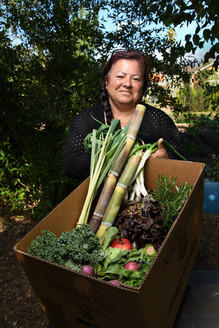
Eligible specialty crop growers can apply for assistance for expenses related to obtaining or renewing a food safety certification through the Food Safety Certification for Specialty Crops (FSCSC) program. The deadline to apply for calendar year 2024 expenses is January 31, 2025.
Program Details
FSCSC assists specialty crop operations that incurred eligible on-farm food safety certification and expenses related to obtaining or renewing a food safety. FSCSC covers a percentage of the specialty crop operation’s cost of obtaining or renewing its certification, as well as a portion of related expenses.
Eligible FSCSC applicants must be a specialty crop operation; meet the definition of a small or medium-size business and have paid eligible expenses related to certification.
- A small business has an average annual monetary value of specialty crops sold by the applicant during the three-year period preceding the program year of no more than $500,000.
- A medium size business has an average annual monetary value of specialty crops the applicant sold during the three-year period preceding the program year of at least $500,001 but no more than $1,000,000.
Specialty crop operations can receive the following cost assistance:
- Developing a food safety plan for first-time food safety certification.
- Maintaining or updating an existing food safety plan.
- Food safety certification.
- Certification upload fees.
- Microbiological testing for products, soil amendments and water.
- Training.
FSCSC payments are calculated separately for each eligible cost category. Details about payment rates and limitations are available at farmers.gov/food-safety.
Applying for Assistance
Interested applicants have until January 31, 2025, to apply for assistance for 2024 eligible expenses. FSA will issue payments as applications are processed and approved.
For program year 2025, the application period will be January 1, 2025, through January 31, 2026. FSA will issue 50% of the calculated payment for program year 2025 following application approval, with the remaining amount to be paid after the application deadline. If calculated payments exceed the amount of available funding, payments will be prorated.
Specialty crop producers can apply by completing the FSA-888-1, Food Safety Certification for Specialty Crops Program (FSCSC) for Program Years 2024 and 2025 application. The application, along with the AD-2047, Customer Data Worksheet and SF-3881, ACH Vendor/Miscellaneous Payment Enrollment Form, if not already on file with FSA, can be submitted to the FSA office at any USDA Service Center nationwide by mail, fax, hand delivery or via electronic means. Alternatively, producers with an eAuthentication account can apply for FSCSC online. Producers interested in creating an eAuthentication account should visit farmers.gov/sign-in.
Specialty crop producers can also call 877-508-8364 to speak directly with an FSA employee ready to assist. Visit farmers.gov/food-safety for additional program details, eligibility information and forms needed to apply.
For assistance in completing your application, please schedule an appointment with your local USDA Service Center staff.
|
Enrollment periods begin this month for the ARC-PLC and Dairy Margin Coverage Programs.
USDA announced the 2025 enrollment periods for key safety-net programs – Agriculture Risk Coverage (ARC) and Price Loss Coverage (PLC) as well as Dairy Margin Coverage (DMC). Agricultural producers can submit applications to USDA’s Farm Service Agency (FSA) for ARC and PLC for the 2025 crop year from Jan. 21 to April 15 and for DMC for the 2025 coverage year from Jan. 29 to March 31.
ARC and PLC provide financial protections to farmers from substantial drops in crop prices or revenues and are vital economic safety nets for most American farms. Meanwhile, DMC provides producers with price support to help offset milk and feed price differences.
The American Relief Act, 2025 extended many Farm Bill-authorized programs for another year, including ARC and PLC as well as DMC.
ARC and PLC
Producers can elect coverage and enroll in ARC-County (ARC-CO) or PLC, which provide crop-by-crop protection, or ARC-Individual (ARC-IC), which protects the entire farm. Although election changes for 2025 are optional, producers must enroll through a signed contract each year. Also, if a producer has a multi-year contract on the farm it will continue for 2025 unless an election change is made.
If producers do not submit their election revision by the April 15 deadline, their election remains the same as their 2024 election for commodities on the farm from the prior year. Farm owners cannot enroll in either program unless they have a share interest in the cropland.
Covered commodities include barley, canola, large and small chickpeas, corn, crambe, flaxseed, grain sorghum, lentils, mustard seed, oats, peanuts, dry peas, rapeseed, long grain rice, medium grain rice, safflower seed, seed cotton, sesame, soybeans, sunflower seed and wheat.
USDA also reminds producers that ARC and PLC elections and enrollments can impact eligibility for some crop insurance products including Supplemental Coverage Option, Enhanced Coverage Option and, for cotton producers, the Stacked Income Protection Plan (commonly referred to as STAX).
For more information on ARC and PLC, producers can visit the ARC and PLC webpage or contact their local USDA Service Center to schedule an appointment to sign up.
DMC
DMC is a voluntary risk management program that offers protection to dairy producers when the difference between the all-milk price and the average feed price (the margin) falls below a certain dollar amount selected by the producer.
DMC offers different levels of coverage, even an option that is free to producers, minus a $100 administrative fee. The administrative fee is waived for dairy producers who are considered limited resource, beginning, socially disadvantaged or a military veteran.
DMC payments are calculated using updated feed and premium hay costs, making the program more reflective of actual dairy producer expenses. These updated feed calculations use 100% premium alfalfa hay.
For more information on DMC, schedule an appointment with your local USDA Service Center staff or visit the DMC webpage.
Top of page
Marketing Assistance Loans (MALs) and Loan Deficiency Payments (LDPs) provide financing and marketing assistance for wheat, feed grains, soybeans, and other oilseeds, pulse crops, rice, peanuts, cotton, wool and honey. MALs provide you with interim financing after harvest to help you meet cash flow needs without having to sell your commodities when market prices are typically at harvest-time lows. A producer who is eligible to obtain a loan, but agrees to forgo the loan, may obtain an LDP if such a payment is available. Marketing loan provisions and LDPs are not available for sugar and extra-long staple cotton.
FSA is now accepting requests for 2024 MALs and LDPs for all eligible commodities after harvest. Requests for loans and LDPs shall be made on or before the final availability date for the respective commodities.
Commodity certificates are available to loan holders who have outstanding nonrecourse loans for wheat, upland cotton, rice, feed grains, pulse crops (dry peas, lentils, large and small chickpeas), peanuts, wool, soybeans and designated minor oilseeds. These certificates can be purchased at the posted county price (or adjusted world price or national posted price) for the quantity of commodity under loan, and must be immediately exchanged for the collateral, satisfying the loan. MALs redeemed with commodity certificates are not subject to Adjusted Gross Income provisions.
To be considered eligible for an LDP, you must have form CCC-633EZ, Page 1 on file at your local FSA Office before losing beneficial interest in the crop. Pages 2, 3 or 4 of the form must be submitted when payment is requested.
Marketing loan gains (MLGs) and loan deficiency payments (LDPs) are no longer subject to payment limitations, actively engaged in farming and cash-rent tenant rules.
Adjusted Gross Income (AGI) provisions state that if your total applicable three-year average AGI exceeds $900,000, then you’re not eligible to receive an MLG or LDP. You must have a valid CCC-941 on file to earn a market gain of LDP. The AGI does not apply to MALs redeemed with commodity certificate exchange.
For more information and additional eligibility requirements, contact FSA at your local USDA Service Center or visit fsa.usda.gov.
Top of page
Landowners and operators are reminded that in order to receive payments from USDA, compliance with Highly Erodible Land (HEL) and Wetland Conservation (WC) provisions are required. Farmers with HEL determined soils are reminded of tillage, crop residue, and rotation requirements as specified per their conservation plan. Producers are to notify the USDA Farm Service Agency prior to breaking sod, clearing land (tree removal), and of any drainage projects (tiling, ditching, etc.) to ensure compliance. Failure to update certification of compliance, with form AD-1026, triggering applicable HEL and/or wetland determinations, for any of these situations, can result in the loss of FSA farm program payments, FSA farm loans, NRCS program payments, and premium subsidy to Federal Crop Insurance administered by RMA.
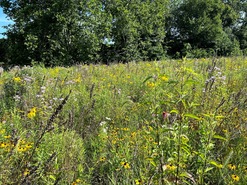
If you plan to sell farmland that’s enrolled in Conservation Reserve Program (CRP), FSA would like to remind you about the terms and conditions of your contract.
Under the CRP program, the original contract (CRP-1) will need to be revised to reflect the change in participants and/or shares on the contract. The new CRP participant(s) must sign a revised contract within 60 calendar days from the date of notification by the county committee or county executive director. If a revised contract isn't signed within the 60-day timeframe, the contract will be terminated with respect to the affected portions of such land and the original CRP participant will be held liable.
If the new landowner elects not to continue the CRP contract, the contract will be terminated. When a contract is terminated, refund is required from the original CRP participant. This refund includes all annual rental payments, all cost share payments, signup incentive payments, and practice incentive payments, plus interest. Liquidated damages are also assessed.
Refunds of payments will not be required in cases where the owner's estate or the heirs do not succeed to the contract. There are other cases that do not require the refund of payments, when a participant loses control of the land, such as eminent domain.
Participants should contact their FSA County office if there are any questions regarding the terms and conditions of your CRP contract.
|
The Distressed Borrower Set-Aside Program (DBSA) provides USDA direct loan borrowers the opportunity to set-aside one loan payment to the end of the loan term if they are unable to make their scheduled installment. DBSA results in the borrower accruing significantly reduced interest and allows them to become current on their loans and continue farming.
When a borrower indicates they are in financial distress or when they become 90 days past due on an FSA direct loan, they will be notified of the availability of the Distressed Borrower Set-Aside Program (DBSA), or they can request DBSA assistance at any time at their local FSA office.
For more information on eligibility and how to apply, check out the Distressed Borrower Set-Aside Program fact sheet.
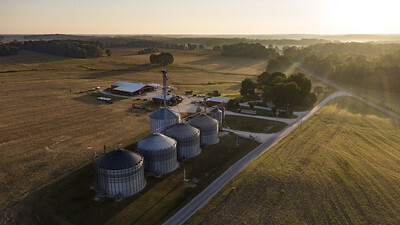
Direct Farm Ownership loans can help farmers become owner-operators of family farms, improve and expand current operations, increase agricultural productivity, and assist with land tenure to save farmland for future generations.
There are three types of Direct Farm Ownership Loans: regular, down payment and joint financing. FSA also offers a Direct Farm Ownership Microloan option for smaller financial needs up to $50,000.
Joint financing allows FSA to provide more farmers with access to capital. FSA lends up to 50 percent of the total amount financed. A commercial lender, a State program or the seller of the property being purchased, provides the balance of loan funds, with or without an FSA guarantee. The maximum loan amount for a joint financing loan is $600,000, and the repayment period for the loan is up to 40 years.
The operation must be an eligible farm enterprise. Farm Ownership loan funds cannot be used to finance nonfarm enterprises and all applicants must be able to meet general eligibility requirements. Loan applicants are also required to have participated in the business operations of a farm for at least three years out of the 10 years prior to the date the application is submitted. The applicant must show documentation that their participation in the business operation of the farm was not solely as a laborer.
For more information about farm loans, contact your local USDA Service Center or visit fsa.usda.gov.
|
Top of page
Farm Loan Programs can be used to support a variety of climate-smart agriculture practices, which build on many practices that farmers already use, like cover cropping, nutrient management and conservation tillage.
Climate-smart agricultural practices generate significant environmental benefits by capturing and sequestering carbon, improving water management, restoring soil health and more. Farm loan funding complements other tools to help producers adopt climate-smart practices, such as FSA’s Conservation Reserve Program, crop insurance options that support conservation, and conservation programs offered by USDA’s Natural Resources Conservation Service (NRCS).
FSA offers multiple types of loans to help farmers start, expand or maintain a family agricultural operation. These loans can provide the capital needed to invest in climate-smart practices and equipment including the establishment of rotational grazing systems, precision agriculture equipment or machinery for conversion to no-till residue management. Additionally, for programs like Conservation Reserve Program and NRCS conservation programs where USDA and the producer share the implementation cost, a farm loan could be used for the producer’s share, if consistent with the authorized loan purpose.
Some additional ways farm loans can be leveraged to invest in climate-smart agriculture practices or equipment include:
-
Precision Agriculture Equipment - Eligible producers could use a Term Operating Loan to purchase equipment like GPS globes, monitors, or strip till fertilizer equipment.
-
Cover Crops - Eligible producers could use an Annual Operating Loan for seed costs.
-
No/Reduced Till - Eligible producers could use a Term Operating Loan to purchase equipment.
-
Livestock Facility Air Scrubber or Waste Treatment - Eligible producers could use a Farm Ownership Loan for capital improvements to livestock facilities.
-
Cross Fencing - Eligible producers could use an Annual or Term Operating Loan to purchase fencing and installation equipment.
Visit the Climate-Smart Agriculture and Forestry webpage on farmers.gov to learn more and see detailed examples of how an FSA farm loan can support climate-smart agriculture practices.

Apply by March 10
for Urban Agriculture
and Innovative
Production Grants
USDA is providing a total of $14.4 million in grants and technical assistance through two separately funded projects to support urban agriculture and innovative production. USDA’s Office of Urban Agriculture and Innovative Production (OUAIP) is making available $2.5 million for Urban Agriculture and Innovative Production (UAIP) grants, building on $53.7 million invested in UAIP grant projects by OUAIP since 2020. In addition, USDA’s Natural Resources Conservation Service (NRCS), which oversees OUAIP, is providing $11.9 million in funding through an interagency agreement with the National Institute of Food and Agriculture (NIFA) to promote the hiring of Urban Agriculture Conservation Extension Educators through the Cooperative Extension programs at Land-grant Universities. Read More
|
Top of page
USDA is accepting applications for the USDA 1890 National Scholars Program, which aims to encourage students at 1890 land-grant universities to pursue career paths in food, agriculture, natural resource sciences, or related academic disciplines. The application deadline is March 1, 2025.
Young people around the country are invited to complete and submit their applications online through an e-application. Administered through USDA’s Office of Partnerships and Public Engagement (OPPE), the USDA 1890 National Scholars Program is available to eligible high school seniors entering their freshman year of college as well as rising college sophomores and juniors.
The USDA 1890 National Scholars Program is a partnership between USDA and the 19 land-grant universities that were established in the Morrill Land Grand Act of 1890. USDA partners with these 1890 universities to provide scholarship recipients with full tuition, fees, books and room and board. Scholarship recipients attend one of the 1890 land-grant universities and pursue degrees in agriculture, food, natural resource sciences, or related academic disciplines. The scholarship also provides work experience at USDA through summer internships. Scholars accepted into the program are eligible for noncompetitive conversion to a permanent appointment with USDA upon successful completion of their degree requirements and program requirements by the end of the agreement period.
Learn more and apply online at USDA 1890 National Scholars Program. For more information, contact partnerships@usda.gov.
January 15 – Final Acreage Reporting Date for Apples
January 20 – Offices Closed in Observance of Martin Luther King, Jr’s Birthday
January 21 - Agriculture Risk Coverage (ARC) and Price Loss Coverage (PLC) Signup Begins
January 29 - Dairy Margin Coverage (DMC) Signup Begins
January 30 – Final Date to Submit Application for Payment for 2024 Losses under Livestock Forage Program (LFP)
January 30 – Final Date to Submit Application for Payment and Notice of Loss (NOL) for 2024 Losses under Emergency Assistance for Livestock, Honeybees and Farm-Raised Fish Program (ELAP).
January 31 – Deadline to Apply for Loan Deficiency Payments (LDP) for Unshorn Pelts Produced During the 2024 Crop Year
January 31 – Final Date to Submit Application for 2024 Food Safety Certification for Specialty Crops (FSCSC) Program
USDA announced loan interest rates for January 2025, which are effective January 1, 2025. USDA’s FSA loans provide important access to capital to help agricultural producers start or expand their farming operation, purchase equipment and storage structures, or meet cash flow needs.
Additionally, FSA provides low-interest financing to producers to build or upgrade on-farm storage facilities and purchase handling equipment and loans that provide interim financing to help producers meet cash flow needs without having to sell their commodities when market prices are low. Funds for these loans are provided through the Commodity Credit Corporation (CCC) and are administered by FSA.
FSA also offers guaranteed loans through commercial lenders at rates set by those lenders.
Check your eligibility for FSA loans and find the right loans to fit your needs by utilizing the Farm Loan Assistance Tool.
Top of page
Stay in the Know
Sign up for GovDelivery Newsletters, Bulletins and Indiana Press Releases
USDA-FSA Facebook!
We encourage you to like our pages, comment and share our posts.
Signup for Local County Office FSA Text Alerts
Text Your Service Center Keyword (2-digit State Abbreviation and County Name Example: Adams County IN would be INAdams) to FSANOW (372-669).
Top of page
|








