In This Issue:
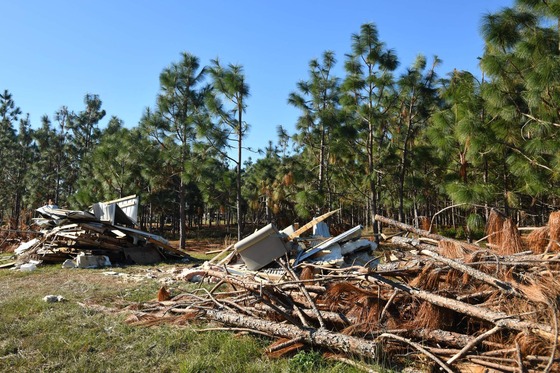 Madison County Hurricane Damage Photo by Cynthia Portalatin, Florida NRCS Public Affairs Specialist
Emergency Environmental Quality Incentives Program provides technical and financial assistance to assist in recovery
The U.S. Department of Agriculture’s (USDA) Natural Resources Conservation Service (NRCS) in Florida reminds agricultural producers and landowners it is accepting applications for disaster assistance funding through the Emergency Environmental Quality Incentives Program (EQIP) through December 20, 2024. EQIP provides technical and financial assistance to assist in recovery from agricultural damages caused by hurricanes Debby, Helene, and Milton. Approximately $26 million will be made available for EQIP disaster assistance applicants to address resource concerns on their land.
NRCS Florida is evaluating disaster assistance applications using the ACT NOW process. ACT NOW allows NRCS to pre-approve ranked application when the ranking score meets or exceeds an established threshold score. The minimum threshold ranking score for EQIP disaster assistance funding is 50 points. Applications will be batched and processed in the order received. To expedite hurricane disaster recovery, Florida NRCS is offering early start waivers to allow commencement of conservation practices prior to program contract approval.
EQIP disaster assistance funding is targeted to the following conservation practices:
- 325 – High Tunnel System
- 368 – Emergency Animal Mortality Management
- 384 – Woody Residue Treatment
- 400 – Bivalve Aquaculture Gear and Biofouling Control
- 442 – Sprinkler System (center pivots)
- 484 – Mulching
- 590 – Nutrient Management
- 595 – Pest Management Conservation System
- 612 – Tree/Shrub Establishment
Florida counties targeted for EQIP disaster assistance include: Alachua, Baker, Bradford, Brevard, Brevard, Charlotte, Citrus, Clay, Collier, Columbia, Desoto, Dixie, Duval, Flagler, Franklin, Gadsden, Gilchrist, Gulf, Hamilton, Hardee, Hendry, Hernando, Highlands, Hillsborough, Indian River, Jefferson, Lafayette, Lake, Lee, Leon, Levy, Liberty, , Madison, Manatee, Marion, Martin, Nassau, Okeechobee, Orange, Osceola, Palm Beach, Pasco, Pinellas, Polk, Putnam, Sarasota, Seminole, St. Johns, St. Lucie, Sumter, Suwannee, Taylor, Union, Volusia, and Wakulla.
Farm Service Agency (FSA) borrowers with farms located in designated primary or contiguous disaster areas who are unable to make their scheduled FSA loan payments should consider the Disaster Set-Aside (DSA) program.
DSA is available to producers who suffered losses as a result of a natural disaster and relieves immediate and temporary financial stress. FSA is authorized to consider setting aside the portion of a payment/s needed for the operation to continue on a viable scale.
Borrowers must have at least two years left on the term of their loan in order to qualify.
Borrowers have eight months from the date of the disaster designation to submit a complete application. The application must include a written request for DSA signed by all parties liable for the debt along with production records and financial history for the operating year in which the disaster occurred. FSA may request additional information from the borrower in order to determine eligibility.
All farm loans must be current or less than 90 days past due at the time the DSA application is complete. Borrowers may not set aside more than one installment on each loan.
The amount set-aside, including interest accrued on the principal portion of the set-aside, is due on or before the final due date of the loan.
For more information, contact your local County USDA Service Center or visit fsa.usda.gov.
The U.S. Department of Agriculture (USDA) is seeking public input by December 23, 2024, on how to improve conservation practice standards to maximize climate change mitigation and adaptation benefits, as supported by peer-reviewed scientific literature. Conservation practices providing climate benefits are delivered through existing USDA Natural Resources Conservation Service (NRCS) conservation programs popular with producers, like the Environmental Quality Incentives Program (EQIP), Conservation Stewardship Program (CSP), Agricultural Conservation Easement Program (ACEP), and Regional Conservation Partnership Program (RCPP) as well as NRCS technical assistance. The Inflation Reduction Act, part of President Biden’s Investing in America agenda, and Farm Bill provide funding for these programs.
Specifically, NRCS is asking for public input on improvements that can be made to conservation practice standards for:
-
Mitigation: to maximize climate benefits for practice standards currently considered Climate-Smart Agriculture and Forestry Mitigation Activities as well as on any other practices and innovations; and to support the agency’s estimation of the mitigation benefits associated with the practice standards; and
-
Adaptation: to assist producers in adapting to and building resilience to current and future climate changes, such as seasonal temperature shifts and extremes, drought, increasing wildfire hazards, sea level rise, movement of invasive species and other issues.
While NRCS welcomes comments on all practices through this request for information, as a priority, the agency is requesting input on several conservation practice standards that are at the beginning of their five-year review process, including:
- Waste Storage Facility;
- Brush Management;
- Herbaceous Weed Treatment;
- Soil Carbon Amendment;
- Prescribed Burning;
- Roofs and Covers;
- Fuel Break;
- Wildlife Habitat Planting;
- Drainage Water Management;
- Nutrient Management;
- Feed Management;
- Waste Separation Facility;
- Restoration of Rare or Declining Natural Communities; and
- Forest Stand Improvement.
The agency also asks for input for the following practices up for review but not currently on the Climate-Smart Agriculture and Forestry Mitigation Activities list:
- Animal Mortality Facility;
- Waste Facility Closure; and
- Denitrifying Bioreactor.
NRCS will use information to identify and prioritize improvements that can be made to the conservation practice standards or associated technical guidance. NRCS will look to identify immediate changes that can be implemented for funding available for fiscal year 2026 and will continue to identify and adopt additional changes in future years.
Comments and Questions
Public comments should be submitted through this Federal Register notice (or through one of the methods listed below) by December 23, 2024.
Comments may also be submitted through one of the following methods:
-
Federal eRulemaking Portal:
- Go to regulations.gov and search for Docket ID: NRCS-2024-0015.
- Follow the online instructions for submitting comments .
-
Mail or Hand Delivery:
- Address your comments to: Ms. Sara del Fierro, Climate Change Mitigation Lead, NRCS Climate Office, Office of the Chief, NRCS, USDA, 1400 Independence Avenue, South Building, Room 4613, Washington, DC 20250.
- In your comment, please specify the Docket ID: NRCS-2024-0015.
All comments received will be made publicly available on regulations.gov.
Anyone with questions may contact Dana Ashford-Kornburger, National Climate Coordinator, at 202-205-9434, or email at dana.ashford@usda.gov. Individuals who require alternative means for communication may contact the USDA TARGET Center at (202) 720–2600 (voice and text telephone (TTY)) or dial 711 for Telecommunications Relay service (both voice and text telephone users can initiate this call from any telephone).
More Information
National conservation practice standards contain information on why and where each practice is applied and set forth the minimum planning criteria that must be met during the implementation of that practice for it to achieve its intended purpose. State conservation practice standards are available through the Field Office Technical Guide. If no state conservation practice standard is available in the guide, you should contact the appropriate NRCS State Office or your local USDA Service Center. More information is available about the information contained in conservation practice standards.
To learn more about NRCS programs, producers can contact their local USDA Service Center. Producers can also apply for NRCS programs, manage conservation plans and contracts, and view and print conservation maps by logging into their farmers.gov account. If you don’t have an account, sign up today.
Agricultural producers of perishable commodities including fruits, vegetables and floriculture can now get funding for controlled atmosphere storage through Farm Storage Facility Loans (FSFL) offered by the U.S. Department of Agriculture’s (USDA) Farm Service Agency (FSA). Controlled atmosphere storage regulates the concentrations of oxygen, carbon dioxide and nitrogen in a storage room to increase the shelf life of crops.
In addition to now supporting controlled atmosphere storage, FSFLs also provide low-interest financing to help producers build or upgrade storage facilities and to purchase portable (new or used) structures, equipment and storage and handling trucks.
The low-interest funds can also be used for controlled atmosphere storage monitoring equipment, designed to notify facility owners immediately if potential atmospheric concerns are detected. Producers may renovate existing storage facilities to include controlled atmosphere storage monitoring equipment. Authorized loan terms for FSFL renovations are three and five years only.
To assist with monitoring gases and particle concentrations for controlled atmosphere storage, the following equipment, but not limited to, is eligible for an FSFL:
- Optical oxygen sensor.
- Low power CO2 sensor.
- Air quality sensor.
- Gas detection devices.
- Air temperature and relative humidity sensor.
- Water activity meter.
- Temperature stabilized water activity analyzer.
- Precision and performance humidity and temperature transmitter.
Loans of up to $50,000 can be secured by a promissory note/security agreement, loans between $50,000 and $100,000 may require additional security and loans exceeding $100,000 require additional security.
FSFL borrowers do not need to demonstrate lack of commercial credit availability to apply. The loans are designed to assist a diverse range of agricultural operations, including small and mid-sized businesses, new farmers and ranchers, operations supplying local food and farmers markets, non-traditional farm products and underserved producers.
For more information, see the FSFL fact sheet and contact FSA at your local USDA Service Center.
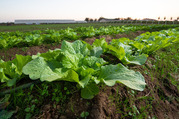
The U.S. Department of Agriculture (USDA) is expanding the to now include medium-sized businesses in addition to small businesses. Eligible specialty crop growers can apply for assistance for expenses related to obtaining or renewing a food safety certification. The program has also been expanded to include assistance for 2024 and 2025 expenses. Producers can apply for assistance on their calendar year 2024 expenses beginning July 1, 2024, through Jan. 31, 2025. For program year 2025, the application period will be Jan. 1, 2025, through Jan. 31, 2026.
Program Details
FSCSC assists specialty crop operations that incurred eligible on-farm food safety certification and expenses related to obtaining or renewing a food safety. FSCSC covers a percentage of the specialty crop operation’s cost of obtaining or renewing its certification, as well as a portion of related expenses.
Eligible FSCSC applicants must be a specialty crop operation; meet the definition of a small or medium-size business and have paid eligible expenses related to certification.
- A small business has an average annual monetary value of specialty crops sold by the applicant during the three-year period preceding the program year of no more than $500,000.
- A medium size business has an average annual monetary value of specialty crops the applicant sold during the three-year period preceding the program year of at least $500,001 but no more than $1,000,000.
Specialty crop operations can receive the following cost assistance:
- Developing a food safety plan for first-time food safety certification.
- Maintaining or updating an existing food safety plan.
- Food safety certification.
- Certification upload fees.
- Microbiological testing for products, soil amendments and water.
- Training.
FSCSC payments are calculated separately for each eligible cost category. Details about payment rates and limitations are available at .
Applying for Assistance
Interested applicants have until Jan. 31, 2025, to apply for assistance for 2024 eligible expenses. FSA will issue payments as applications are processed and approved. For program year 2025, the application period will be January 1, 2025, through January 31, 2026. FSA will issue 50% of the calculated payment for program year 2025 following application approval, with the remaining amount to be paid after the application deadline. If calculated payments exceed the amount of available funding, payments will be prorated.
Specialty crop producers can apply by completing the , Food Safety Certification for Specialty Crops Program (FSCSC) for Program Years 2024 and 2025 application. The application, along with the , Customer Data Worksheet and , ACH Vendor/Miscellaneous Payment Enrollment Form, if not already on file with FSA, can be submitted to the FSA office at any USDA Service Center nationwide by mail, fax, hand delivery or via electronic means. Alternatively, producers with an eAuthentication account can apply for FSCSC . Producers interested in creating an eAuthentication account should visit .
Specialty crop producers can also call 877-508-8364 to speak directly with a FSA employee ready to assist. Visit for additional program details, eligibility information and forms needed to apply.
More Information
To learn more about FSA programs, producers can contact their local Producers can also prepare maps for acreage reporting as well as manage farm loans and view other farm records data and customer information by . Producers without an account can .
|
Farmers can use USDA farm ownership microloans to buy and improve property. These microloans are especially helpful to beginning or underserved farmers, U.S. veterans looking for a career in farming, and those who have small and mid-sized farming operations. Microloans have helped farmers and ranchers with operating costs, such as feed, fertilizer, tools, fencing, equipment, and living expenses since 2013.
Microloans can also help with farmland and building purchases and soil and water conservation improvements. FSA designed the expanded program to simplify the application process, expand eligibility requirements and expedite smaller real estate loans to help farmers strengthen their operations. Microloans provide up to $50,000 to qualified producers and can be issued to the applicant directly from the USDA Farm Service Agency (FSA).
To learn more about the FSA microloan program, contact your local County USDA Service Center or visit fsa.usda.gov/microloans.

ELAP provides emergency assistance to eligible livestock, honeybee, and farm-raised fish producers who have losses due to disease, adverse weather or other conditions, such as blizzards and wildfires, not covered by other agricultural disaster assistance programs.
Eligible losses include:
-
Livestock - grazing losses not covered under the Livestock Forage Disaster Program (LFP), loss of purchased feed and/or mechanically harvested feed due to an eligible adverse weather event, additional cost of transporting water and feed because of an eligible drought and additional cost associated with gathering livestock to treat for cattle tick fever.
-
Honeybee - loss of purchased feed due to an eligible adverse weather event, cost of additional feed purchased above normal quantities due to an eligible adverse weather condition, colony losses in excess of normal mortality due to an eligible weather event or loss condition, including CCD, and hive losses due to eligible adverse weather.
-
Farm-Raised Fish - death losses in excess of normal mortality and/or loss of purchased feed due to an eligible adverse weather event.
If you’ve suffered eligible livestock, honeybee, or farm-raised fish losses during calendar year 2024, you must file a notice of loss and an application for payment by Jan. 30, 2025.
Keeping Livestock Inventory Records
Livestock inventory records are necessary in the event of a natural disaster, so remember to keep them updated.
When disasters strike, the USDA Farm Service Agency (FSA) can help you if you’ve suffered excessive livestock death losses and grazing or feed losses due to eligible natural disasters.
To participate in the (LIP), you’ll be required to provide verifiable documentation of death losses resulting from an eligible adverse weather event and must submit a notice of loss to your local FSA office no later than 60 calendar days after the end of the calendar year in which the eligible loss condition occurred. For the (ELAP), you must submit a notice of loss to your local FSA office no later than the annual program application deadline of January 30 following the program year in which the loss occurred and should maintain documentation and receipts.
You should record all pertinent information regarding livestock inventory records including:
- Documentation of the number, kind, type, and weight range of livestock
- Beginning inventory supported by birth recordings or purchase receipts.
For more information on documentation requirements, contact your local County USDA Service Center or visit .
|
Farm Service Agency (FSA) loans require applicants to have a satisfactory credit history. A credit report is requested for all FSA direct farm loan applicants. These reports are reviewed to verify outstanding debts, see if bills are paid timely and to determine the impact on cash flow.
Information on your credit report is strictly confidential and is used only as an aid in conducting FSA business.
Our farm loan staff will discuss options with you if you have an unfavorable credit report and will provide a copy of your report. If you dispute the accuracy of the information on the credit report, it is up to you to contact the issuing credit report company to resolve any errors or inaccuracies.
There are multiple ways to remedy an unfavorable credit score:
- Make sure to pay bills on time
- Setting up automatic payments or automated reminders can be an effective way to remember payment due dates.
- Pay down existing debt
- Keep your credit card balances low
- Avoid suddenly opening or closing existing credit accounts
FSA’s farm loan staff will guide you through the process, which may require you to reapply for a loan after improving or correcting your credit report.
For more information on FSA farm loan programs, contact your local County USDA Service Center or visit fsa.usda.gov.
The U.S. Department of Agriculture’s (USDA) Natural Resources Conservation Service (NRCS) has released a new Tribal Relations Strategy, demonstrating the agency’s commitment to honoring its federal trust relationship with the 574 federally recognized tribes and Alaska Native Villages that have sovereign interest in more than 119 million acres of land across the United States.
The strategy was based on feedback from Tribal Nations, including recommendations made to Chief Cosby at the 2021, 2022, and 2023 National Tribal Consultations, and in-depth collaboration that took place at seven Regional Tribal Conservation Advisory Council meetings. Its six action items include:
- Hiring a Tribal Relations Director to establish an NRCS Office of Tribal Relations within the Office of the Chief.
- Filling positions dedicated to tribal conservation.
- Providing housing assistance on tribal lands (in partnership with the Department of the Interior).
- Implementing a tribal knowledge training plan.
- Creating an advanced tribal development program.
- Recording correctly tribal conservation data.
This strategy builds on many years of listening, working and consulting with tribes to address their natural resources concerns. NRCS is committed to carrying out its federal trust responsibilities by ensuring that the agency has tribal operations built into its organizational structure.
NRCS plans to announce a new national Tribal Relations Director in the coming months. Tribal organizations can reach out to their State Conservationist for more information and submit a request for assistance.
More Information
In addition to NRCS, USDA’s Farm Service Agency and Risk Management Agency are also supporting Tribal Nations. Learn more on the Partnerships with Tribal Nations webpage on farmers.gov. USDA Disaster Assistance Available for Hurricanes Debby, Helene and Milton Recovery
USDA is working diligently to implement program flexibilities and waivers for producers impacted by recent hurricanes to help streamline your recovery process. Periodically check the Hurricane webpage on farmers.gov for updates and resources as we are regularly reviewing our disaster assistance programs.
Some of our current resources include:
Documenting Loss
We encourage you to document damages and losses your operation has sustained as best you can, including gathering farm records, herd inventory, receipts and pictures of damages or losses. Livestock producers are advised to document livestock numbers by taking time and date-stamped video or pictures of injury or loss, to the extent possible. Please know that we recognize these are extremely extenuating and stressful circumstances and there may be instances where documentation is lost, destroyed or unattainable. Regardless, please contact us and we will do whatever we can to help you access the assistance you need.
Reporting Loss
Once you are able to safely evaluate the impact on your operation, be sure to contact your local USDA Farm Service Agency (FSA) county office or your crop insurance agent to report all crop, livestock and farm infrastructure damages and losses. For producers who have risk protection through Federal Crop Insurance, the USDA Risk Management Agency has authorized Approved Insurance Providers to provide flexibility on reporting requirements for those who are unable to report losses due the disaster.
Getting Assistance
When you’re ready, we’re ready. To file a Notice of Loss or to ask questions about available programs, contact your local USDA Service Center.
USDA has resources available through the FSA call center at 877-508-8364, the USDA hotline at 833-ONE-USDA (663-8732), or producers can access program information online at farmers.gov.
Dec 13 - Organic Dairy Marketing Assistance Program (ODMAP)
Dec 20 - Agricultural Conservation Easement Program (ACEP) Ranking Date
Jan 31 - Food Safety Certification for Specialty Crops Program (FSCSC)
| Farm Operating - Direct |
4.750% |
| Farm Operating - Microloan |
4.750% |
| Farm Ownership - Direct |
5.250% |
| Farm Ownership - Microloan |
5.250% |
| Farm Ownership - Direct, Joint Financing |
3.250% |
| Farm Ownership - Down Payment |
1.500% |
| Emergency Loan - Amount of Actual Loss |
3.750% |
|








