
In This Issue:
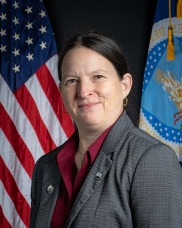
Happy November! I hope that your Thanksgiving holiday celebration with family and friends is filled with bounty and joy!
We are thankful to all our Pennsylvania producers who provide the food that we will enjoy throughout the upcoming holiday seasons. I also want to voice my gratitude to our Pennsylvania Farm Service Agency (FSA) employees. They work every day to deliver programs and services to current and potential new customers, supporting and growing the agriculture industry in our state. I hope you share the same sentiment for the services and help that our County Office staff provide to YOU! I also want to thank our elected County Committee (COC) members who serve every FSA county office in Pennsylvania. The committee members are producers themselves, who are elected to their positions by the farmers they serve. The knowledge and talent our County and State office teams bring to serving the producers and landowners across Pennsylvania is remarkable. We are successful in our pursuits because of the dedicated team we have at Pennsylvania FSA.
A few program updates:
We are excited to report that all our county offices are fully staffed. They will continue providing the skilled, trained leadership to the agricultural community. This has been a huge accomplishment, and we will continue to provide training to our staff when and where, and as often as we can to make sure that they have the support they need to better serve producers.
We are gearing up for winter conferences and meetings over the coming weeks and months like the Pennsylvania Farm Show, Keystone Farm Show, Mid-Atlantic Fruit and Vegetable Conference and the Pasa Sustainable Ag Conference. These meetings are a great opportunity to connect directly with farmers about FSA programs, but also to talk about the work we must do to ensure we are serving all farmers across the state. Farm Service Agency staff are very passionate about the work we do to support new and beginning farmers. We are focused on opportunities to attract young people to agriculture by addressing unique challenges such as access to land and capital, along with many other issues that continue to be hurdles to their success. Over the next few months, make sure to contact your county or state office and let us know how we at FSA can do a better job in serving new and beginning farmers.
Even though it’s the end of the month and past Veterans Day - I am always and ever grateful to those who have served in the military. In Pennsylvania we have roughly 7,000 farmers that have also contributed military service, and more within their farm families. There are many FSA staff members who are also veterans. As a reminder, USDA has different Veteran Resources across the Department, including some provisions in FSA programs and loans. Thank you for your service.
From my farm gate to yours,
Heidi Secord
|
The 2024 Farm Service Agency County Committee Elections began on Nov. 4, when ballots were mailed to eligible voters. The deadline to return the ballots to local FSA offices, or to be postmarked, is Dec. 2, 2024.
County committee members are an important component of the operations of FSA and provide a link between the agricultural community and USDA. Farmers elected to county committees help deliver FSA programs at the local level, applying their knowledge and judgment to make decisions on commodity price support programs; conservation programs; incentive indemnity and disaster programs for some commodities; emergency programs and eligibility. FSA committees operate within official regulations designed to carry out federal laws.
To be an eligible voter, farmers must participate or cooperate in an FSA program. A person who is not of legal voting age but supervises and conducts the farming operations of an entire farm, may also be eligible to vote.
Eligible voters, in Local Administrative Areas (LAA's) that are up for election, who do not receive a ballot can obtain one from their local FSA county office. Customers can identify which LAA they or their farming operation is in by using the GIS locator tool available at fsa.usda.gov/elections.
Newly elected committee members will take office Jan. 1, 2025. More information on county committees, such as the COC fact sheet, can be found on the FSA website at fsa.usda.gov/elections or by contacting your FSA County office.
The application deadline for the Organic Dairy Marketing Assistance Program (ODMAP) 2024 is extended to Dec.13, 2024. This extension gives organic dairy producers two additional weeks to apply for the program. Eligible producers include certified organic dairy operations that produce milk from cows, goats and sheep.
ODMAP 2024 helps mitigate market volatility, higher input and transportation costs, and unstable feed supply and prices that have created unique hardships in the organic dairy industry. Specifically, through ODMAP 2024, USDA’s Farm Service Agency (FSA) is assisting organic dairy operations with projected marketing costs in 2024 calculated using their marketing costs in 2023.
ODMAP 2024 Program Improvements
Dairy producers who participate in ODMAP 2024 will benefit from improvements to provisions outlined in the program. Specifically, ODMAP 2024 provides a payment rate increase to $1.68 per hundredweight compared to the previous $1.10 per cwt. Additionally, the production cap has increased to nine million pounds compared to the previous five million pounds.
FSA is providing financial assistance for a producer’s projected marketing costs in 2024 based on their 2023 costs. ODMAP 2024 provides a one-time cost-share payment based on marketing costs on pounds of organic milk marketed in the 2023 calendar year or estimated 2024 marketing costs for organic dairy operations that have increased milk production.
ODMAP 2024 provides financial assistance that immediately supports certified organic dairy operations during 2024 keeping organic dairy operations sustainable until markets return to more normal conditions.
How to Apply
FSA is now accepting applications through Dec. 13. To apply, producers should contact FSA at their local USDA Service Center. To complete the ODMAP 2024 application, producers must certify pounds of 2023 milk production, show documentation of their organic certification and submit a completed application form.
Organic dairy operations are required to provide their USDA certification of organic status confirming operation as an organic dairy in 2024 and 2023 along with the certification of 2023 milk production or estimated 2024 milk production in hundredweight.
ODMAP 2024 complements other assistance available to dairy producers, including Dairy Margin Coverage (DMC), with more than $36 million in benefits paid for the 2024 program year to date. Learn more on the FSA Dairy Programs webpage.
The U.S. Department of Agriculture (USDA) is expanding the Food Safety Certification for Specialty Crops (FSCSC) program to now include medium-sized businesses in addition to small businesses. Eligible specialty crop growers can apply for assistance for expenses related to obtaining or renewing a food safety certification. The program has also been expanded to include assistance for 2024 and 2025 expenses. Producers can apply for assistance on their calendar year 2024 expenses beginning July 1, 2024, through Jan. 31, 2025. For program year 2025, the application period will be Jan. 1, 2025, through Jan. 31, 2026.
Program Details
FSCSC assists specialty crop operations that incurred eligible on-farm food safety certification and expenses related to obtaining or renewing a food safety. FSCSC covers a percentage of the specialty crop operation’s cost of obtaining or renewing its certification, as well as a portion of related expenses.
Eligible FSCSC applicants must be a specialty crop operation; meet the definition of a small or medium-size business and have paid eligible expenses related to certification.
- A small business has an average annual monetary value of specialty crops sold by the applicant during the three-year period preceding the program year of no more than $500,000.
- A medium size business has an average annual monetary value of specialty crops the applicant sold during the three-year period preceding the program year of at least $500,001 but no more than $1,000,000.
Specialty crop operations can receive the following cost assistance:
- Developing a food safety plan for first-time food safety certification.
- Maintaining or updating an existing food safety plan.
- Food safety certification.
- Certification upload fees.
- Microbiological testing for products, soil amendments and water.
-
FSCSC payments are calculated separately for each eligible cost category. Details about payment rates and limitations are available at farmers.gov/food-safety.
Applying for Assistance
Interested applicants have until Jan. 31, 2025, to apply for assistance for 2024 eligible expenses. FSA will issue payments as applications are processed and approved. For program year 2025, the application period will be January 1, 2025, through January 31, 2026. FSA will issue 50% of the calculated payment for program year 2025 following application approval, with the remaining amount to be paid after the application deadline. If calculated payments exceed the amount of available funding, payments will be prorated.
Specialty crop producers can apply by completing the FSA-888-1, Food Safety Certification for Specialty Crops Program (FSCSC) for Program Years 2024 and 2025 application. The application, along with the AD-2047, Customer Data Worksheet and SF-3881, ACH Vendor/Miscellaneous Payment Enrollment Form, if not already on file with FSA, can be submitted to the FSA office at any USDA Service Center nationwide by mail, fax, hand delivery or via electronic means. Alternatively, producers with an eAuthentication account can apply for FSCSC online. Producers interested in creating an eAuthentication account should visit farmers.gov/sign-in.
Specialty crop producers can also call 877-508-8364 to speak directly with a FSA employee ready to assist. Visit farmers.gov/food-safety for additional program details, eligibility information and forms needed to apply.
More Information
To learn more about FSA programs, producers can contact their local USDA Service Center. Producers can also prepare maps for acreage reporting as well as manage farm loans and view other farm records data and customer information by logging into their farmers.gov account. Producers without an account can sign up today.
Don’t know much about Federal crop insurance, but you want to learn more?
Crop insurance is a risk management strategy that farmers use to protect their livelihoods. By purchasing a policy through a crop insurance agent, farmers are financially protected if there are losses due to a covered cause of loss. It’s not so different from car or homeowners insurance.
Start your journey out right by reading RMA’s Beginners Guide to Crop Insurance.
|
Farm Operating Loans, Direct
|
4.5%
|
|
Farm Ownership Loans, Direct
|
5.125%
|
|
Farm Ownership Loans, Down Payment
|
1.500%
|
|
Emergency Loan
|
3.750%
|
|
Farm Ownership – Joint Financing
|
3.125%
|
|
Farm Storage Facility Loan, 3 year
|
3.750%
|
|
Farm Storage Facility Loan, 5 year
|
3.7500%
|
|
Farm Storage Facility Loan, 7 year
|
3.750%
|
|
Farm Storage Facility Loan, 10 year
|
3.850%
|
|
Farm Storage Facility Loan, 12 year
|
4.000%
|
|
Commodity Loans
|
5.125%
|
Top of page
|








