Minnesota FSA Updates - November 18, 2024
In This Issue:

Earlier in November Farm Service Agency Staff were able to attend the 19th annual Emerging Farmers Conference. The Emerging Farmers Conference serves to advance the success and sustainability of farmers who traditionally face barriers to the education and resources necessary to build profitable agricultural businesses, including immigrant farmers and farmers of color. We had the opportunity to talk to producers and aspiring farmers and ranchers about farm loans, programs, and provide education on establishing farm records with USDA. The Emerging Farmers Conference will be celebrating the 20th anniversary during next year’s conference.
County Committee Ballots have been mailed to voters in Local Administrative Areas (LAA) where elections are currently taking place. Ballots must be postmarked or delivered in-person to local FSA offices by close of business on December 2, 2024. The nomination period for the 2025 election will start in June of 2025. FSA is always looking to identify individuals willing to be nominated to serve on local County Committees. For more information on your County Committee Local Administrative Area please visit the LAA Digital Boundary Locator to find your voting administrative area.
In this newsletter you will find an article detailing the extension of the Organic Dairy Marketing Assistance Program (ODMAP) deadline to December 13, 2024. I also want to touch on the Organic Certification Cost Share Program (OCCSP). While the deadline for the program was October 31, 2024, authority to approve late-filed applications has been extended through February 7, 2025. Operations that paid organic certification expenses in fiscal year 2024 that have not applied for cost share through either the Farm Service Agency of the Minnesota Department of Agriculture should contact their local office for more information and to apply.
November and December prove to be busy times for both Farm Storage Facility Loan, Marketing Assistance Loan, and farm loan applications. Articles on each program are included in this newsletter for you to familiarize yourself further with the programs. Please ensure that you contact your local office early as the agency understands that timely access to funds is important for your operation.
Respectfully,
Daniel Mahoney, Acting State Executive Director
|
The Farm Service Agency (FSA) is an exciting and rewarding place to start, build, and/or continue your career. Be part of our team and support the well-being of Minnesota agriculture and the American public.
FSA's diverse culture and benefits allow for a healthy balance between your career and home life. In addition to a generous salary, FSA offers a friendly and professional working environment with a diverse workforce, flexible hours/work schedules, and other family-friendly benefits such as: paid vacation and sick leave, paid holidays, retirement and supplemental savings plan, a wide array of health, dental, vision, and life insurance plans, flexible spending accounts, twelve weeks of paid parental leave with FMLA eligibility, and long-term care insurance. Working for the U.S. Department of Agriculture (USDA) will afford you the opportunity to contribute to projects that positively impact the lives of over 300 million people. Explore a career with the USDA at www.usajobs.gov.
New job openings are posted on a regular basis. Interested individuals can search for career opportunities based upon keywords and/or specific locations as well as create search profiles and job announcement notifications. Currently, Minnesota FSA is seeking candidates to perform work in support of Minnesota agriculture and farmers in a number of locations across the state. Individuals who are interested in applying for these job opportunities will need to apply online at www.usajobs.gov. Applicants may enter the appropriate job announcement number below into the keyword search or click on the applicable link(s).
Program Analyst:
Expanded County Executive Director:
The U.S. Department of Agriculture (USDA) mailed ballots last week for the Farm Service Agency (FSA) county committee elections to all eligible agricultural producers and private landowners across the country. Elections are occurring in certain Local Administrative Areas (LAA) for these committee members who make important decisions about how federal farm programs are administered locally. Producers and landowners must return ballots to their local FSA county office or have their ballots postmarked by Dec. 2, 2024, for those ballots to be counted.
Producers must participate or cooperate in a USDA program and reside in the LAA that is up for election this year to be eligible to vote in the county committee election. A cooperating producer is someone who has provided information about their farming or ranching operation to FSA, even if they have not applied or received program benefits. Additionally, producers who are not of legal voting age, but supervise and conduct farming operations for an entire farm, are eligible to vote in these elections.
For purposes of FSA county committee elections, every member of an American Indian tribe is considered an agricultural landowner if the land on which the tribal member’s voting eligibility is based is tribally owned or held in trust by the U.S. for the tribe, even if the individual does not personally produce a commodity on that land. Tribal agricultural landowners 18 years and older can contact their local FSA county office to register to vote.
Nationwide, more than 7,700 dedicated members of the agricultural community serve on FSA county committees. Each committee has from three to 11 elected members who serve three-year terms, and at least one seat representing a LAA up for election each year. Committee members are vital to how FSA carries out disaster recovery, conservation, commodity and price support programs, as well as making decisions on county office employment and other agricultural issues. They help ensure inclusive representation on committees and equitable administration of FSA farm programs in their jurisdiction.
Ballots must be postmarked or delivered in person to the local FSA office by close of business Dec. 2, 2024, to be counted. Newly elected committee members will take office Jan. 1, 2025. Producers can identify LAAs up for election through a geographic information system locator tool available at fsa.usda.gov/elections and may confirm their LAA by contacting their local FSA office. Eligible voters who do not receive a ballot in the mail can request one from their local FSA county office.
Urban county committees have been established in 27 cities to strengthen administration of FSA programs in urban areas. Urban committee members are nominated and elected to serve by local urban producers in the same jurisdiction. Committee members will provide outreach to ensure urban producers understand USDA programs, serve as the voice of other urban producers and assist in program implementation that support the needs of the growing urban community.
Farm Service Agency (FSA) is committed to providing our farm loan borrowers the tools necessary to be successful. FSA staff will provide guidance and counsel from the loan application process through the borrower’s graduation to commercial credit. While it is FSA’s commitment to advise borrowers as they identify goals and evaluate progress, it is crucial for borrowers to communicate with their farm loan staff when changes occur. It is the borrower’s responsibility to alert FSA to any of the following:
- Any proposed or significant changes in the farming operation
- Any significant changes to family income or expenses
- The development of problem situations
- Any losses or proposed significant changes in security
If a farm loan borrower can’t make payments to suppliers, other creditors, or FSA on time, contact your farm loan staff immediately to discuss loan servicing options.
For more information on FSA farm loan programs, contact your local USDA Service Center or visit fsa.usda.gov.
The Farm Service Agency (FSA) assists beginning farmers to finance agricultural enterprises. Under these designated farm loan programs, FSA can provide financing to eligible applicants through either direct or guaranteed loans. FSA defines a beginning farmer as a person who:
- Has operated a farm for not more than 10 years
- Will materially and substantially participate in the operation of the farm
- Agrees to participate in a loan assessment, borrower training and financial management program sponsored by FSA
- Does not own a farm in excess of 30 percent of the county’s average size farm.
For more information contact, contact your local USDA Service Center or visit fsa.usda.gov.

$58 Million Available, Program Improvements Include Increased Payment Rate and Production Cap
USDA is extending the application deadline for the Organic Dairy Marketing Assistance Program (ODMAP) 2024 to Dec.13, 2024. This extension gives organic dairy producers two additional weeks to apply for the program. Eligible producers include certified organic dairy operations that produce milk from cows, goats and sheep.
ODMAP 2024 helps mitigate market volatility, higher input and transportation costs, and unstable feed supply and prices that have created unique hardships in the organic dairy industry. Specifically, through ODMAP 2024, USDA’s Farm Service Agency (FSA) is assisting organic dairy operations with projected marketing costs in 2024 calculated using their marketing costs in 2023.
ODMAP 2024 Program Improvements
Dairy producers who participate in ODMAP 2024 will benefit from improvements to provisions outlined in the program. Specifically, ODMAP 2024 provides a payment rate increase to $1.68 per hundredweight compared to the previous $1.10 per cwt. Additionally, the production cap has increased to nine million pounds compared to the previous five million pounds.
How ODMAP 2024 Works
FSA is providing financial assistance for a producer’s projected marketing costs in 2024 based on their 2023 costs. ODMAP 2024 provides a one-time cost-share payment based on marketing costs on pounds of organic milk marketed in the 2023 calendar year or estimated 2024 marketing costs for organic dairy operations that have increased milk production.
ODMAP 2024 provides financial assistance that immediately supports certified organic dairy operations during 2024 keeping organic dairy operations sustainable until markets return to more normal conditions.
How to Apply
FSA is now accepting applications through Dec. 13. To apply, producers should contact FSA at their local USDA Service Center. To complete the ODMAP 2024 application, producers must certify pounds of 2023 milk production, show documentation of their organic certification and submit a completed application form.
Organic dairy operations are required to provide their USDA certification of organic status confirming operation as an organic dairy in 2024 and 2023 along with the certification of 2023 milk production or estimated 2024 milk production in hundredweight.
ODMAP 2024 complements other assistance available to dairy producers, including Dairy Margin Coverage (DMC), with more than $36 million in benefits paid for the 2024 program year to date. Learn more on the FSA Dairy Programs webpage.
More Information
To learn more about USDA programs, producers can contact their local USDA Service Center. Producers can also prepare maps for acreage reporting as well as manage farm loans and other programs by logging into their farmers.gov account. Producers without an account can sign up today.
FSA helps America’s farmers, ranchers and forest landowners invest in, improve, protect and expand their agricultural operations through the delivery of agricultural programs for all Americans. FSA implements agricultural policy, administers credit and loan programs, and manages conservation, commodity, disaster recovery and marketing programs through a national network of state and county offices and locally elected county committees. For more information, visit fsa.usda.gov.
USDA touches the lives of all Americans each day in so many positive ways. In the Biden-Harris administration, USDA is transforming America’s food system with a greater focus on more resilient local and regional food production, fairer markets for all producers, ensuring access to safe, healthy and nutritious food in all communities, building new markets and streams of income for farmers and producers using climate smart food and forestry practices, making historic investments in infrastructure and clean energy capabilities in rural America, and committing to equity across the Department by removing systemic barriers and building a workforce more representative of America. To learn more, visit usda.gov.
|
The U.S. Department of Agriculture (USDA) Animal and Plant Health Inspection Service (APHIS) has confirmed the detection of Highly Pathogenic Avian Influenza (HPAI), also known as H5N1, in dairy cattle in 12 states including Colorado, Idaho, Iowa, Kansas, Michigan, Minnesota, North Carolina, New Mexico, Ohio, South Dakota, Texas and Wyoming. To protect the U.S. livestock industry from the threat posed by HPAI H5N1 USDA is taking a number of actions with our federal partners.
On April 24, APHIS announced a federal order that includes mandatory testing for interstate movement of dairy cattle and mandatory reporting of influenza A detections in livestock. In addition to the Federal Order mandates, USDA provides several voluntary testing and monitoring options, including the HPAI Dairy Herd Status Program announced on May 31, 2024. APHIS has released a list of requirements and recommendations that apply to interstate moving of lactating dairy cattle, testing guidance for livestock, and answers to frequently asked questions. Producers are encouraged to visit the APHIS HPAI Livestock Detection website for information about these programs and requirements, as well as the most comprehensive and timely updates about this rapidly evolving situation.
Assistance for Milk Loss
Confirmed H5N1 Positive Test Results Required for Recovery Assistance
Producers who incur milk losses in their dairy herds due to HPAI H5N1 can now apply for financial assistance through the USDA’s updated Emergency Assistance for Livestock, Honeybees, and Farm-raised Fish Program (ELAP). USDA’s Farm Service Agency (FSA) expanded ELAP policy through the rule-making process to assist with financial losses resulting from reduced milk production when cattle are removed from commercial milking in dairy herds having a confirmed positive H5N1 test. Positive tests must be confirmed through the USDA’s APHIS’ National Veterinary Services Laboratories (NVSL).
To apply, producers need to submit the following to FSA:
- Proof of herd infection through a confirmed positive H5N1 test (based on USDA’s APHIS H5N1 case definition) on individual animal or bulk tank samples confirmed by APHIS’ NVSL;
- A notice of loss indicating the date when the loss is apparent, which is the sample collection date for the positive H5N1 test; and
- An application for payment certifying the number of eligible adult dairy cows removed from production, the month the cows were removed from production, and the producer’s share in the milk production.
The final date to file a notice of loss and application for payment for eligible losses is 30 days after the end of the prior calendar year, which is January 30.
Note: To determine livestock and producer eligibility for ELAP H5N1 assistance, to submit an application or if you’ve not previously conducted business with FSA, contact your local FSA county office for details. Find your local office. Other online resources include frequently asked questions and a fact sheet.
Loans for Biosecurity Implementation
FSA also provides direct and guaranteed loans for farmers and ranchers that can assist with implementation of biosecurity measures for their operations. Loans can assist with:
- Installing physical barriers to facilitate quarantine, to prevent livestock interaction with wildlife, and to prevent unauthorized access by visitors
- Purchase of disinfectant, footbaths, and disposable footwear and clothing;
- Veterinary costs related to vaccination and general animal health;
- Testing of feed and water sources for toxins and other disease;
- Costs associated with responsible manure disposal and management;
- Costs associated with cleaning and disinfecting livestock transportation equipment; and
- Other biosecurity measures recommended by USDA or other applicable agencies.
To learn more about loans, producers can use the:
-
Loan Assistance Tool – helps producers better navigate the farm loan process. The online Loan Assistance Tool provides producers needing agricultural financing with an interactive, step-by-step guide.
-
Farm Loans Overview Factsheet – provides an overview of all FSA direct and guaranteed loans, and eligibility requirements.
-
Farm Loans Homepage – gives in-depth farm loan information, including fact sheets, for those who don’t want to use the online Loan Assistance Tool.
To learn more about ELAP or farm loans, producers should contact the FSA at the local USDA Service Center.
To learn more about APHIS requirements and resources, visit APHIS’ Highly Pathogenic Avian Influenza (HPAI) Detections in Livestock webpage.
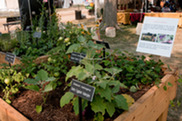
Urban and innovative agriculture producers will be able to more easily participate in U.S. Department of Agriculture (USDA) programs as a result of acreage reporting improvements. These improvements, implemented by USDA’s Farm Service Agency, provide more flexibility for reporting acreage on a smaller scale and identifying innovative planting practices like multi-level planting or vertical farming practices.
An acreage report documents crops and where they are grown on a farm or ranch along with the intended use of the crop. Filing an accurate and timely acreage report for all crops and land uses, including failed acreage and prevented planted acreage, can prevent the loss of program benefits.
Acreage Reporting Improvements
FSA’s acreage reporting software previously allowed acreage to be reported down to .0001 acres, approximately a four-square foot area. Producers will now be able to report acreage-based crops at a minimum size of .000001 acre, approximately a 2.5-inch by 2.5-inch area.
Additional improvements will distinguish alternate growing methods such as crops grown within multiple levels of a building, or crops grown using multi-level or multi-layer growing structures such as panels or towers within a container system. This change allows the distinction of vertical farming practices. Urban and innovative producers will also have the option to report plant inventory along with their acreage-based report, allowing producers to better report the full scope of their operation. Producers can contact FSA at their local USDA Service Center for acreage reporting deadlines that are specific to their county.
USDA Urban Service Centers
USDA is committed to working with farms of all sizes and in all locations, including those in urban areas. USDA works with agricultural producers through a network of more than 2,300 Service Centers nationwide. To better serve urban farmers, USDA is establishing 17 new Urban Service Centers.
The Urban Service Centers are staffed by FSA and Natural Resources Conservation Service (NRCS) employees and offer farm loan, conservation, disaster assistance and risk management programs.
To find exact locations and contact information for these Urban Service Centers or to learn how to prepare for a USDA Service Center appointment, producers can visit farmers.gov/your-business/urban-growers/urban-service-centers.
For questions, producers should call their FSA county office. Urban operations that are not located near one of the Urban Service Centers can contact one of the more than 2,300 Service Centers across the country by visiting farmers.gov/service-locator.
Additional resources include:
|
Landowners and operators are reminded that in order to receive payments from USDA, compliance with Highly Erodible Land (HEL) and Wetland Conservation (WC) provisions are required. Farmers with HEL determined soils are reminded of tillage, crop residue, and rotation requirements as specified per their conservation plan. Producers are to notify the USDA Farm Service Agency prior to breaking sod, clearing land (tree removal), and of any drainage projects (tiling, ditching, etc.) to ensure compliance. Failure to update certification of compliance, with form AD-1026, triggering applicable HEL and/or wetland determinations, for any of these situations, can result in the loss of FSA farm program payments, FSA farm loans, NRCS program payments, and premium subsidy to Federal Crop Insurance administered by RMA.
In order to claim a Farm Service Agency (FSA) payment on behalf of a deceased producer, all program conditions for the payment must have been met before the applicable producer’s date of death.
If a producer earned a FSA payment prior to his or her death, the following is the order of precedence for the representatives of the producer:
- administrator or executor of the estate
- the surviving spouse
- surviving sons and daughters, including adopted children
- surviving father and mother
- surviving brothers and sisters
- heirs of the deceased person who would be entitled to payment according to the State law
For FSA to release the payment, the legal representative of the deceased producer must file a form FSA-325 to claim the payment for themselves or an estate. The county office will verify that the application, contract, loan agreement, or other similar form requesting payment issuance, was signed by the applicable deadline by the deceased or a person legally authorized to act on their behalf at that time of application.
If the application, contract or loan agreement form was signed by someone other than the deceased participant, FSA will determine whether the person submitting the form has the legal authority to submit the form.
Payments will be issued to the respective representative’s name using the deceased program participant’s tax identification number. Payments made to representatives are subject to offset regulations for debts owed by the deceased.
FSA is not responsible for advising persons in obtaining legal advice on how to obtain program benefits that may be due to a participant who has died, disappeared or who has been declared incompetent.
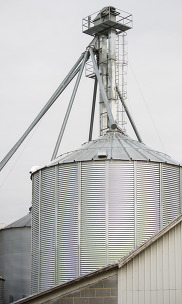
The Farm Service Agency’s (FSA) Farm Storage Facility Loan (FSFL) program provides low-interest financing to help you build or upgrade storage facilities and to purchase portable (new or used) structures, equipment and storage and handling trucks.
Eligible commodities include corn, grain sorghum, rice, soybeans, oats, peanuts, wheat, barley, minor oilseeds harvested as whole grain, pulse crops (lentils, chickpeas and dry peas), hay, honey, renewable biomass, fruits, nuts and vegetables for cold storage facilities, floriculture, hops, maple sap, rye, milk, cheese, butter, yogurt, meat and poultry (unprocessed), eggs, and aquaculture (excluding systems that maintain live animals through uptake and discharge of water). Qualified facilities include grain bins, hay barns and cold storage facilities for eligible commodities.
Loans up to $50,000 can be secured by a promissory note/security agreement, loans between $50,000 and $100,000 may require additional security, and loans exceeding $100,000 require additional security.
You do not need to demonstrate the lack of commercial credit availability to apply. The loans are designed to assist a diverse range of farming operations, including small and mid-sized businesses, new farmers, operations supplying local food and farmers markets, non-traditional farm products, and underserved producers.
To apply and learn more information, contact your local USDA Service Center or visit fsa.usda.gov.
|
Marketing Assistance Loans (MALs) and Loan Deficiency Payments (LDPs) provide financing and marketing assistance for producers of many commodities, including graded and non-graded wool, mohair, and unshorn pelts. MALs and LDPs are available during shearing and provide interim financing to help you meet cash flow needs without having to sell commodities when market prices are low, enabling you to delay selling until more favorable marketing conditions emerge. LDPs are payments made to producers who, although eligible to obtain an MAL, agree to forgo the loan in return for a payment on the eligible commodity.
FSA is now accepting requests for 2024 MALs and LDPs for all eligible wool, mohair and unshorn pelts. These requests should be made on or before the final availability date of Jan. 31, 2025. USDA recently announced 2024 wool and mohair marketing assistance loan rates.
Eligibility
To be eligible for a wool or mohair MAL or LDP, producers must produce and shear eligible mohair and wool in the U.S. during the applicable crop year and must:
- comply with conservation and wetland protection requirements;
- report all cropland acreage on applicable farms where the eligible commodity is produced;
- have and retain beneficial interest in the commodity until the MAL is repaid or the Commodity Credit Corporation (CCC) takes title to the commodity, and;
- meet Adjusted Gross Income (AGI) limitations.
Unshorn pelts are eligible for LDPs only. In addition to the criteria above, producers of unshorn pelts must have sold the unshorn lamb for immediate slaughter or slaughter the lambs for personal use. LDPs and marketing loan gains are not subject to payment limitation, including actively engaged in farming and cash rent tenant provisions.
In addition to producer eligibility, the loan commodity must have been produced and shorn from live animals by an eligible producer, be in storable condition, and meet specific CCC minimum grade and quality standards. Producers are responsible for any loss in quantity or quality of the wool or mohair pledged as loan collateral.
To retain beneficial interest, the producer must have control and title of the wool, mohair, or unshorn pelt. If beneficial interest in the commodity is lost, the commodity loses eligibility for an MAL or LDP and remains ineligible even if the producer later regains beneficial interest. The producer must be able to make all decisions affecting the commodity including movement, sale, and the request for an MAL or LDP.
Producers may repay an MAL any time during the loan period at the lesser of the loan rate plus accrued interest and other charges or an alternative loan repayment rate, the national posted price, which is announced weekly. Visit the Farm Service Agency (FSA) website for posted loan and LDP rates.
How to Apply
Producers can apply for an MAL by contacting their local FSA county office. To be considered for a LDP, producers must first have the form CCC-633 EZ, Page 1, on file with FSA prior to losing beneficial interest in the wool, mohair or unshorn pelt. It is best to visit the county office and submit the CCC-633 Page 1 right before you shear. This is completed one time per crop year and indicates your intention to receive LDP benefits.
To apply and learn more information, contact your local USDA Service Center or visit fsa.usda.gov.
The U.S. Department of Agriculture (USDA) began issuing more than $2.14 billion in payments to eligible agricultural producers, and landowners—providing much needed support through key conservation and safety-net programs. Producers should soon receive payments from USDA’s Farm Service Agency (FSA) for their participation in these programs aimed to conserve natural resources and keep family farms economically viable.
Specifically, program participants are expected to receive more than $1.7 billion through the Conservation Reserve Program (CRP) and CRP Transition Incentive Program (CRP TIP) and more than $447 million through the Agriculture Risk Coverage and Prices Loss Coverage (ARC/PLC) programs. Additionally, FSA is announcing an investment of $21 million for projects to better measure the effectiveness of CRP.
Conservation Reserve Program Payments
FSA is issuing more than $1.7 billion in annual rental payments to agricultural producers and private landowners through the Conservation Reserve Program and CRP Transition Incentive Program. These annual rental payments are made to eligible farmers and ranchers throughout the country who establish long-term, resource-conserving plant species, such as approved grasses or trees, to control soil erosion, improve water quality and enhance wildlife habitat on cropland taken out of production. The duration of CRP contracts is between 10 and 15 years.
FSA accepted offers for more than 2.2 million acres through this year’s Grassland, General, and Continuous CRP signups, bringing current enrollment to nearly 26 million acres.
These conservation-minded producers help provide invaluable benefits to the nation’s environment and economy.
Top five states for current acreage in CRP:
Investments in CRP Monitoring, Assessment, and Evaluation
FSA invested $21 million in projects to further the monitoring, assessment, and evaluation of the Conservation Reserve Program (CRP). Projects funded this year include the adoption of emerging technology to increase knowledge on subjects such as the benefits of wetland restoration to mitigate flooding, contributions of CRP to wildlife habitat, and role CRP plays in strengthening the resiliency of agricultural operations.
FSA originally committed $10 million to the Notice of Funding Opportunity in May, but due to the quality of project proposals submitted FSA awarded more than $20 million. Since 2021, FSA has invested over $70 million into monitoring, assessment, and evaluation efforts.
The monitoring, assessment, and evaluation projects are designed to produce information that enables USDA to better target CRP toward conservation outcomes by improving data, models, and planning tools while supporting USDA’s goal of putting American agriculture and forestry at the center of climate-smart solutions. The land currently enrolled in the program improve water quality, protect soil resources, provide critical wildlife habitat and aid to climate resiliency within agricultural systems. Further quantifying program benefits allows the USDA to better target CRP to achieve continued conservation wins across environmentally sensitive lands while strengthening the program’s modeling and conservation planning resources for all producers.
Signed into law in 1985, CRP is one of the largest voluntary private-lands conservation programs in the United States. It was originally intended to primarily control soil erosion and potentially stabilize commodity prices by taking marginal lands out of production. The program has evolved over the years, providing many conservation and economic benefits.
Agriculture Risk Coverage and Price Loss Coverage Programs
USDA has started to issue payments to producers of 2023 crops that are estimated at more than $447 million through the Agriculture Risk Coverage (ARC) and Price Loss Coverage (PLC) programs. ARC and PLC provide financial protections to farmers from substantial drops in crop prices or revenue and are vital economic safety nets for most American farms. ARC and PLC program and crop specific data is available online and through your local FSA county office.
Authorized by the 2014 farm bill they can provide a cushion for farmers during tough economic conditions and fluctuating market prices.
USDA touches the lives of all Americans each day in so many positive ways. In the Biden-Harris Administration, USDA is transforming America’s food system with a greater focus on more resilient local and regional food production, fairer markets for all producers, ensuring access to safe, healthy and nutritious food in all communities, building new markets and streams of income for farmers and producers using climate smart food and forestry practices, making historic investments in infrastructure and clean energy capabilities in rural America, and committing to equity across the Department by removing systemic barriers and building a workforce more representative of America. To learn more, visit usda.gov.
Top of page
Minnesota USDA Farm Service Agency
375 Jackson Street
Suite 400
Saint Paul, MN 55101
Phone: 651-602-7700
Fax: 855-719-9917
|
|
Minnesota FSA Acting State Executive Director:
Daniel Mahoney
|
|
Division Leaders:
Cassie Buck
Lee Crawford
Savanah Farrell
Calvin Gellatly
Angela Hanson
|
Minnesota State Committee:
Eunice Biel, Committee Chairperson
Hannah Bernhardt, Committee Member
Kurt Blomgren, Committee Member
Lisa Brunner, Committee Member
Tim Velde, Committee Member
|
|
To find contact information for your local USDA Farm Service Agency office, go to: www.fsa.usda.gov/mn
|
|