
Farm Service Agency, Kansas State Office - November 19, 2024
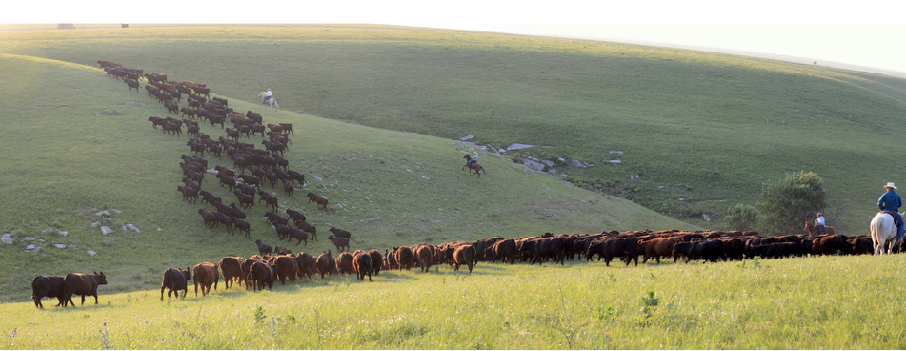 In 2020 a policy was adopted that prohibited grazing of CRP from November 1 to March 1.
Kansas has received a waiver allowing the FSA State Executive Director to approve CRP grazing between November 1 and March 1 on a case-by-case basis.
Producers have to apply at their local FSA Office for the nonemergency grazing between November 1 and March 1. Certain forms will have to be filled out at the local FSA office. Concurrence of the technical service provider, NRCS, will be needed to certify that the grazing between November 1, 2024, and March 1, 2025, will not cause long term negative impact on the grass. The number of days of grazing will be limited under existing policy and minimum cover requirements will still apply. The application will be sent to the State FSA Office for review and approval by the FSA State Executive Director.
To initiate a request to graze CRP, please contact your local USDA Service Center.
 The U.S. Department of Agriculture’s (USDA) long-awaited updates to the Farm Service Agency’s (FSA) Farm Loan Programs are officially in effect. These changes, part of the Enhancing Program Access and Delivery for Farm Loans rule, are designed to increase financial flexibility for agricultural producers, allowing them to grow their operations, boost profitability, and build long-term savings.
These program updates reflect USDA’s ongoing commitment to supporting the financial success and resilience of farmers and ranchers nationwide, offering critical tools to help borrowers manage their finances more effectively.
What the new rules mean for you:
- Low-interest installment set-aside program: Financially distressed borrowers can now defer up to one annual loan payment at a reduced interest rate. This simplified option helps ease financial pressure while keeping farming operations running smoothly.
- Flexible repayment terms: New repayment options give borrowers the ability to increase their cash flow and build working capital reserves, allowing for long-term financial planning that includes saving for retirement, education, and other future needs.
- Reduced collateral requirements: FSA has lowered the amount of additional loan security needed for direct farm loans, making it easier for borrowers to leverage their existing equity without putting their personal residence at risk.
These new rules provide more financial freedom to borrowers. By giving farmers and ranchers better tools to manage their operations, we’re helping them build long-term financial stability. It’s all about making sure they can keep their land, grow their business, and invest in the future.
If you’re an FSA borrower or considering applying for a loan, now is the time to take advantage of these new policies. We encourage you to reach out to your local FSA farm loan staff to ensure you fully understand the wide range of loan making and servicing options available to assist with starting, expanding, or maintaining your agricultural operation.
To conduct business with FSA, please contact your local USDA Service Center.
FSA and NRCS program applicants for benefits are required to submit a completed CCC-902 Farming Operation Plan and CCC-941 Average Gross Income (AGI) Certification and Consent to Disclosure of Tax Information for FSA to determine the applicant’s payment eligibility and establish the maximum payment limitation applicable to the program applicant.
Participants are not required to annually submit new CCC-902s for payment eligibility and payment limitation purposes unless a change in the farming operation occurs that may affect the previous determination of record. A valid CCC-902 filed by the participant is considered to be a continuous certification used for all payment eligibility and payment limitation determinations applicable for the program benefits requested.
Participants are responsible for ensuring that all CCC-902 and CCC-941 and related forms on file in the county office are updated, current, and correct. Participants are required to timely notify the county office of any changes in the farming operation that may affect the previous determination of record by filing a new or updated CCC-902 as applicable.
Changes that may require a NEW determination include, but are not limited to, a change of:
- Shares of a contract, which may reflect:
- A land lease from cash rent to share rent
- A land lease from share rent to cash rent (subject to the cash rent tenant rule
- A modification of a variable/fixed bushel-rent arrangement
- The size of the producer’s farming operation by the addition or reduction of cropland that may affect the application of a cropland factor
- The structure of the farming operation, including any change to a member's share
- The contribution of farm inputs of capital, land, equipment, active personal labor, and/or active personal management
- Farming interests not previously disclosed on CCC-902 including the farming interests of a spouse or minor child
- Certifications of average AGI are required to be filed annually for participation in an annual USDA program. For multi-year conservation contracts and NRCS easements, a certification of AGI must be filed prior to approval of the contract or easement and is applicable for the duration of the contract period.
Participants are encouraged to file or review these forms within the deadlines established for each applicable program for which program benefits are being requested.
To conduct business with FSA, please contact your local USDA Service Center.
 Using the correct signature when doing business with FSA can save time and prevent a delay in program benefits.
The following are FSA signature guidelines:
- Married individuals must sign their given name.
- Example—Mary Doe and John Doe are married. When signing FSA forms, each must use their given name, and may not sign with the name of their spouse. Mrs. Mary Doe may not sign documents as Mrs. John Doe. For Farm Loan Purposes, spouses may not sign on behalf of the other as an authorized signatory, a signature will be needed for each. For a minor, FSA requires the minor's signature and one from the minor’s parent. There are certain exceptions where a minor’s signature may be accepted without obtaining the signature of one of the parents. Despite minority status, a youth executing a promissory note for a Youth Loan will incur full personal liability for the debt and will sign individually.
Note: By signing a document with a minor, the parent is liable for actions of the minor and may be liable for refunds, liquidated damages, or other penalties, etc.
When signing on one’s behalf the signature must agree with the name typed or printed on the form or be a variation that does not cause the name and signature to be in disagreement. Example - John W. Smith is on the form. The signature may be John W. Smith or J.W. Smith or J. Smith. Or Mary J. Smith may be signed as Mrs. Mary Joe Smith, M.J. Smith, Mary Smith, etc.
FAXED signatures will be accepted for certain forms and other documents provided the acceptable program forms are approved for FAXED signatures. Producers are responsible for the successful transmission and receipt of FAXED information.
Examples of documents not approved for FAXED signatures include:
- Promissory note
- Assignment of payment
- Joint payment authorization
- Acknowledgement of commodity certificate purchase
Spouses may sign documents on behalf of each other for FSA and CCC programs in which either spouse has an interest, unless written notification denying a spouse this authority has been provided to the county office.
Spouses cannot sign on behalf of each other as an authorized signatory for partnerships, joint ventures, corporations or other similar entities. Likewise, a spouse cannot sign a document on behalf of the other in order to affirm the eligibility of oneself.
Any member of a general partnership can sign on behalf of the general partnership and bind all members unless the Articles of Partnership are more restrictive. Spouses may sign on behalf of each other’s individual interest in a partnership, unless notification denying a spouse that authority is provided to the county office. Acceptable signatures for general partnerships, joint ventures, corporations, estates, and trusts must consist of an indicator “by” or “for” the individual’s name, individual’s name and capacity, or individual’s name, capacity, and name of entity.
Kansas Farm Service Agency
State Office
3600 Anderson Ave
Manhattan, KS 66503
Phone: 785-539-3531
|
|
|
|
State Executive Director
Dennis McKinney
|
Deputy State Executive Director
Josh Ridder
|
|
State Committee
Adrian Polansky
Alan Green
Kathy Bloom
Kris Graves
Nicholas Bowser
|
|








