Minnesota FSA Updates - October 18, 2024
In This Issue:
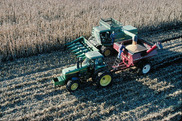
Harvest is in full swing in Minnesota and we’re hoping all those in the field are having a safe and productive harvest. As I’ve traveled parts of Minnesota, I’ve noted that there are areas where harvest is nearly complete. The 2024 growing season certainly has provided many challenges with excess rain and flooding during planting which evolved into a moderate to severe drought status across much of the state as of this week’s U.S. Drought Monitor report. We continue to monitor disaster conditions across the state as producers move through harvest.
The 19th annual Emerging Farmers Conference (EFC) will be held in Minneapolis, Minnesota on November 1-2, 2024. The conference is designed by farmers, for farmers, with a focus on serving emerging food growers, particularly Black, Indigenous, People of Color (BIPOC) farmers, New American farmers, and women farmers. The EFC will share practical information and examples of farming success through sessions, hands-on demonstrations, story sharing, networking opportunities, and resources from agriculture and research professionals. The link to register can be found here.
FSA recently announced significant changes to Farm Loan Programs through the Enhancing Program Access and Delivery for Farm Loans rule. Effective Sept. 25, 2024, these policy changes are designed to expand opportunities for borrowers to increase profitability and be better prepared to make strategic investments in enhancing or expanding their agricultural operations. USDA encourages producers to reach out to their local FSA farm loan staff to ensure they fully understand the wide range of loan making and servicing options available to assist with starting, expanding, or maintaining their agricultural operation. To conduct business with FSA, producers should contact their local USDA Service Center.
October 12 was National Farmer’s Day. We want to take time to extend a special thank you, for the hard-working people and families that supply food, fuel, and fiber across the world. Farmers set an example with their endless hard work. Not only do they provide the groceries on our tables, but they also contribute to our economy in numerous ways. From manufacturing, marketing, and tourism, farmers keep communities going strong. See how FSA can assist in achieving your agricultural goals on our website.
Respectfully,
Daniel Mahoney
|
The Farm Service Agency (FSA) is an exciting and rewarding place to start, build, and/or continue your career. Be part of our team and support the well-being of Minnesota agriculture and the American public.
FSA's diverse culture and benefits allow for a healthy balance between your career and home life. In addition to a generous salary, FSA offers a friendly and professional working environment with a diverse workforce, flexible hours/work schedules, and other family-friendly benefits such as: paid vacation and sick leave, paid holidays, retirement and supplemental savings plan, a wide array of health, dental, vision, and life insurance plans, flexible spending accounts, twelve weeks of paid parental leave with FMLA eligibility, and long-term care insurance. Working for the U.S. Department of Agriculture (USDA) will afford you the opportunity to contribute to projects that positively impact the lives of over 300 million people. Explore a career with the USDA at www.usajobs.gov.
New job openings are posted on a regular basis. Interested individuals can search for career opportunities based upon keywords and/or specific locations as well as create search profiles and job announcement notifications. Currently, Minnesota FSA is seeking candidates to perform work in support of Minnesota agriculture and farmers in a number of locations across the state. Individuals who are interested in applying for these job opportunities will need to apply online at www.usajobs.gov. Applicants may enter the appropriate job announcement number below into the keyword search or click on the applicable link(s).
Program Analyst:
FSA offers direct farm ownership and direct farm operating loans to producers who want to establish, maintain, or strengthen their farm or ranch. Direct loans are processed, approved and serviced by FSA loan officers.
Direct farm operating loans can be used to purchase livestock and feed, farm equipment, fuel, farm chemicals, insurance, and other costs including family living expenses. Operating loans can also be used to finance minor improvements or repairs to buildings and to refinance some farm-related debts, excluding real estate.
Direct farm ownership loans can be used to purchase farmland, enlarge an existing farm, construct and repair buildings, and to make farm improvements.
The maximum loan amount for direct farm ownership loans is $600,000 and the maximum loan amount for direct operating loans is $400,000 and a down payment is not required. Repayment terms vary depending on the type of loan, collateral and the producer's ability to repay the loan. Operating loans are normally repaid within seven years and farm ownership loans are not to exceed 40 years.
The U.S. Department of Agriculture (USDA) announced today that most farm loan borrowers will soon be able to make payments to their direct loans online through the Pay My Loan feature on farmers.gov in early February. Pay My Loan is part of a broader effort by USDA’s Farm Service Agency (FSA) to streamline its processes, especially for producers who may have limited time during the planting or harvest seasons to visit a local FSA office; modernize and improve customer service; provide additional customer self-service tools; and expand credit access to assist more producers.
On average, local USDA Service Centers process more than 225,000 farm loan payments each year. Pay My Loan gives most borrowers an online repayment option and relieves them from needing to call, mail, or visit a Service Center to pay their loan installment. Farm loan payments can now be made at the borrower’s convenience, on their schedule and outside of FSA office hours.
Pay My Loan also provides time savings for FSA’s farm loan employees by minimizing manual payment processing activities. This new service for producers means that farm loan employees will have more time to focus on reviewing and processing new loans or servicing requests.
The Pay My Loan feature can be accessed at farmers.gov/loans. To use the payment feature, producers must establish a USDA customer account and a USDA Level 2 eAuthentication (“eAuth”) account or a Login.gov account. This initial release only allows individuals with loans to make online payments. For now, borrowers with jointly payable checks will need to continue to make loan payments through their local office.
FSA has a significant initiative underway to streamline and automate the Farm Loan Program customer-facing business process. For the over 26,000 producers who submit a direct loan application annually, FSA has made various improvements including:
- The Online Loan Application, an interactive, guided application that is paperless and provides helpful features including an electronic signature option, the ability to attach supporting documents such as tax returns, complete a balance sheet, and build a farm operating plan.
- The Loan Assistance Tool that provides customers with an interactive online, step-by-step guide to identifying the direct loan products that may be a fit for their business needs and to understanding the application process.
- A simplified direct loan paper application, which reduced loan applications by more than half, from 29 pages to 13 pages.
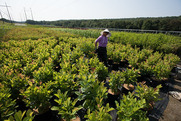
If you’re an orchardist or nursery tree grower whose experienced losses from natural disasters during calendar year 2024, you must submit a TAP application either 90 calendar days after the disaster event or the date when the loss is apparent.
TAP provides financial assistance to help you replant or rehabilitate eligible trees, bushes and vines damaged by natural disasters.
Eligible tree types include trees, bushes or vines that produce an annual crop for commercial purposes. Nursery trees include ornamental, fruit, nut and Christmas trees that are produced for commercial sale. Trees used for pulp or timber are ineligible.
To qualify for TAP, orchardists must suffer a qualifying tree, bush or vine loss in excess of 15 percent mortality from an eligible natural disaster, plus an adjustment for normal mortality. The eligible trees, bushes or vines must have been owned when the natural disaster occurred; however, eligible growers are not required to own the land on which the eligible trees, bushes and vines were planted.
If the TAP application is approved, the eligible trees, bushes and vines must be replaced within 12 months from the date the application is approved. The cumulative total quantity of acres planted to trees, bushes or vines, for which you can receive TAP payments, cannot exceed 1,000 acres annually.
|
NAP provides financial assistance to you for crops that aren’t eligible for crop insurance to protect against lower yields or crops unable to be planted due to natural disasters including excessive wind and qualifying drought (includes native grass for grazing).
To receive payment, you had to purchase NAP coverage for 2024 crops and file a notice of loss the earlier of 15 days of the occurrence of the disaster or when losses become apparent or 15 days of the final harvest date.
For hand-harvested crops and certain perishable crops, you must notify FSA within 72 hours of when a loss becomes apparent.
Eligible crops must be commercially produced agricultural commodities for which crop insurance is not available, including perennial grass forage and grazing crops, fruits, vegetables, mushrooms, floriculture, ornamental nursery, aquaculture, turf grass, ginseng, honey, syrup, bioenergy, and industrial crops.
For more information, contact your local USDA Service Center or visit fsa.usda.gov.
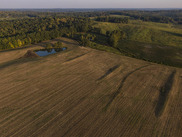
Landowners and operators are reminded that in order to receive payments from USDA, compliance with Highly Erodible Land (HEL) and Wetland Conservation (WC) provisions are required. Farmers with HEL determined soils are reminded of tillage, crop residue, and rotation requirements as specified per their conservation plan. Producers are to notify the USDA Farm Service Agency prior to breaking sod, clearing land (tree removal), and of any drainage projects (tiling, ditching, etc.) to ensure compliance. Failure to update certification of compliance, with form AD-1026, triggering applicable HEL and/or wetland determinations, for any of these situations, can result in the loss of FSA farm program payments, FSA farm loans, NRCS program payments, and premium subsidy to Federal Crop Insurance administered by RMA.
For more information, contact your local USDA Service Center or visit fsa.usda.gov.
|
Farm Service Agency (FSA) program payments are issued electronically into your bank account. In order to receive timely payments, you need to notify your FSA servicing office if you close your account or if your bank information is changed for any reason (such as your financial institution merging or being purchased). Payments can be delayed if FSA is not notified of changes to account and bank routing numbers.
For some programs, payments are not made until the following year. For example, payments for crop year 2019 through the Agriculture Risk Coverage and Price Loss Coverage program aren’t paid until 2020. If the bank account was closed due to the death of an individual or dissolution of an entity or partnership before the payment was issued, please notify your local FSA office as soon as possible to claim your payment.

Marketing Assistance Loans (MALs) and Loan Deficiency Payments (LDPs) provide financing and marketing assistance for producers of many commodities, including graded and non-graded wool, mohair, and unshorn pelts. MALs and LDPs are available during shearing and provide interim financing to help you meet cash flow needs without having to sell commodities when market prices are low, enabling you to delay selling until more favorable marketing conditions emerge. LDPs are payments made to producers who, although eligible to obtain an MAL, agree to forgo the loan in return for a payment on the eligible commodity.
FSA is now accepting requests for 2024 MALs and LDPs for all eligible wool, mohair and unshorn pelts. These requests should be made on or before the final availability date of Jan. 31, 2025. USDA recently announced 2024 wool and mohair marketing assistance loan rates.
Eligibility
To be eligible for a wool or mohair MAL or LDP, producers must produce and shear eligible mohair and wool in the U.S. during the applicable crop year and must:
- comply with conservation and wetland protection requirements;
- report all cropland acreage on applicable farms where the eligible commodity is produced;
- have and retain beneficial interest in the commodity until the MAL is repaid or the Commodity Credit Corporation (CCC) takes title to the commodity, and;
- meet Adjusted Gross Income (AGI) limitations.
Unshorn pelts are eligible for LDPs only. In addition to the criteria above, producers of unshorn pelts must have sold the unshorn lamb for immediate slaughter or slaughter the lambs for personal use. LDPs and marketing loan gains are not subject to payment limitation, including actively engaged in farming and cash rent tenant provisions.
In addition to producer eligibility, the loan commodity must have been produced and shorn from live animals by an eligible producer, be in storable condition, and meet specific CCC minimum grade and quality standards. Producers are responsible for any loss in quantity or quality of the wool or mohair pledged as loan collateral.
To retain beneficial interest, the producer must have control and title of the wool, mohair, or unshorn pelt. If beneficial interest in the commodity is lost, the commodity loses eligibility for an MAL or LDP and remains ineligible even if the producer later regains beneficial interest. The producer must be able to make all decisions affecting the commodity including movement, sale, and the request for an MAL or LDP.
Producers may repay an MAL any time during the loan period at the lesser of the loan rate plus accrued interest and other charges or an alternative loan repayment rate, the national posted price, which is announced weekly. Visit the Farm Service Agency (FSA) website for posted loan and LDP rates.
How to Apply
Producers can apply for an MAL by contacting their local FSA county office. To be considered for a LDP, producers must first have the form CCC-633 EZ, Page 1, on file with FSA prior to losing beneficial interest in the wool, mohair or unshorn pelt. It is best to visit the county office and submit the CCC-633 Page 1 right before you shear. This is completed one time per crop year and indicates your intention to receive LDP benefits.
To apply and learn more information, contact your local USDA Service Center or visit fsa.usda.gov.
|
Marketing Assistance Loans (MALs) and Loan Deficiency Payments (LDPs) provide financing and marketing assistance for wheat, feed grains, soybeans, and other oilseeds, pulse crops, rice, peanuts, cotton, wool and honey. MALs provide you with interim financing after harvest to help you meet cash flow needs without having to sell your commodities when market prices are typically at harvest-time lows. A producer who is eligible to obtain a loan, but agrees to forgo the loan, may obtain an LDP if such a payment is available. Marketing loan provisions and LDPs are not available for sugar and extra-long staple cotton.
FSA is now accepting requests for 202X MALs and LDPs for all eligible commodities after harvest. Requests for loans and LDPs shall be made on or before the final availability date for the respective commodities.
Commodity certificates are available to loan holders who have outstanding nonrecourse loans for wheat, upland cotton, rice, feed grains, pulse crops (dry peas, lentils, large and small chickpeas), peanuts, wool, soybeans and designated minor oilseeds. These certificates can be purchased at the posted county price (or adjusted world price or national posted price) for the quantity of commodity under loan, and must be immediately exchanged for the collateral, satisfying the loan. MALs redeemed with commodity certificates are not subject to Adjusted Gross Income provisions.
To be considered eligible for an LDP, you must have form CCC-633EZ, Page 1 on file at your local FSA Office before losing beneficial interest in the crop. Pages 2, 3 or 4 of the form must be submitted when payment is requested.
Marketing loan gains (MLGs) and loan deficiency payments (LDPs) are no longer subject to payment limitations, actively engaged in farming and cash-rent tenant rules.
Adjusted Gross Income (AGI) provisions state that if your total applicable three-year average AGI exceeds $900,000, then you’re not eligible to receive an MLG or LDP. You must have a valid CCC-941 on file to earn a market gain of LDP. The AGI does not apply to MALs redeemed with commodity certificate exchange.
For more information, contact your local USDA Service Center or visit fsa.usda.gov.
The U.S. Department of Agriculture (USDA) announced an additional $250 million in automatic payments for distressed direct and guaranteed farm loan borrowers under Section 22006 of the Inflation Reduction Act. This significant step continues USDA's commitment to keeping farmers and ranchers financially viable and support for agricultural communities.
Over the past two years, USDA acted swiftly to assist borrowers in retaining their land and continuing their agricultural operations. Since President Biden signed the Inflation Reduction Act into law in August 2022, the USDA has provided approximately $2.4 billion in assistance to more than 43,900 distressed borrowers.
Building on this momentum, USDA is announcing an estimated additional $250 million in assistance to approximately 4,650 distressed direct and guaranteed farm loan borrowers. This includes approximately $235 million in assistance for an estimated 4,485 delinquent direct and guaranteed borrowers who have not received prior IRA 22006 assistance, and approximately $15 million in assistance for an estimated 165 direct and guaranteed borrowers with Shared Appreciation Agreements.
Distressed FSA borrowers with loans secured by real estate must sign a Shared Appreciation Agreement when they accept loan servicing actions that write down a portion of their direct or guaranteed debt. FSA is required to recapture a portion of that write-down if the property value of the real estate security increases when the agreement matures. Borrowers are required to either repay this amount or have it converted into an interest-accruing repayment agreement. As loan servicing actions that were paused due to the COVID-19 pandemic resume, such as Shared Appreciation Agreement recaptures, this added debt burden could severely impact borrowers who are already struggling.
How Payments Will Be Made
For direct borrower delinquency assistance, FSA will make an automatic payment in the amount of any outstanding delinquencies, as of Sept. 30, 2024, on qualifying direct borrower loans that are one or more days delinquent, as of that date, provided those borrowers have not received prior Section 22006 assistance that was applied to reduce a direct FSA loan balance (excluding assistance for Disaster Set-Asides and Emergency Loans).
For guaranteed borrower delinquency payments, FSA will mail via check an automatic payment in the amount of any outstanding delinquencies, as of Sept. 30, 2024, on qualifying guaranteed loans that are 30 or more days delinquent, as of that date, provided those borrowers have not received prior Section 22006 guaranteed loan assistance. Guaranteed loan borrowers are not considered to be in monetary default until 30 days past due. This assistance will be in the form of a United States Department of the Treasury check that is jointly payable to the borrower and the lender.
For borrowers receiving assistance on their Shared Appreciation Agreements, a payment will be made to resolve outstanding amortized repayment agreements and recapture amounts owed to FSA which have matured as of Sept. 30, 2024. Borrowers whose Shared Appreciation Agreements have not matured as of Sept. 30, 2024, will be contacted by FSA and provided an opportunity to request that FSA calculate a partial recapture and Shared Appreciation Agreement assistance offer.
Shared Appreciation Agreement assistance amounts will be calculated as follows:
-
For borrowers whose Shared Appreciation Agreement had previously matured and the receivable owed was converted into a Shared Appreciation Payment Agreement prior to Sept. 30, 2024, Shared Appreciation Agreement assistance will be equal to the total amount of outstanding principal and interest owed on the payment agreement of Sept. 30, 2024.
-
For Shared Appreciation Agreements that have reached their maturity date, but FSA has not yet calculated recapture due, FSA will complete required appraisals and calculate the recapture due as of the date of the Shared Appreciation Agreement maturity. Shared Appreciation Agreement assistance will be equal to the amount of calculated recapture.
-
For Shared Appreciation Agreements that have not yet matured, FSA will be in contact with borrowers and will provide the option to request Shared Appreciation Agreement payment assistance. Borrowers must consent to FSA completing an appraisal on real estate security prior to March 31, 2025. FSA will calculate the amount of recapture that would be due as if the Shared Appreciation Agreement matured as of Sept. 30, 2024, and the borrower may accept that payment as a partial payment towards the receivable due at final maturity. Borrowers may still owe additional recapture at final Shared Appreciation Agreement maturity.
As with previous rounds of Section 22006 of the Inflation Reduction Act assistance, direct and guaranteed borrowers receiving assistance under any category above will receive a letter from FSA explaining the payment they received. Guaranteed borrowers will receive instructions to make an appointment with their lender to process the payment and apply it to their qualifying guaranteed loan accounts. FSA will provide a letter to guaranteed lenders with instructions for providing updated status reports.
Any distressed direct and guaranteed borrowers who qualify for these forms of assistance and are currently in bankruptcy will be addressed using the same case-by-case review process announced in October 2022 for complex cases.
Impact of Section 22006 of the Inflation Reduction Act Assistance
USDA conducted an Economic Impact Analysis on the $2.2 billion in payments previously provided to distressed Farm Loan Program borrowers through Section 22006 of the Inflation Reduction Act. Key findings show these payments will:
-
Generate or support nearly 49,000 jobs.
-
Increase household income by $2.471 billion.
-
Contribute $3.556 billion to the United States gross domestic product.
-
Increase gross revenues from total sales of final goods and services by $5.663 billion.
While the economic impacts of these payments will diminish over time as the economy returns to a steady state, the one-time payments are expected to strengthen local economies and potentially improve resilience and growth prospects. View the additional estimated economic impacts in this fact sheet.
Since fiscal year 2021, USDA foreclosures have significantly decreased, with only 12 farm foreclosures initiated directly by FSA, compared to a 10-year average of 51 annually. Chapter 12 farm bankruptcies have dropped from an average of 493 annually to 139 in 2023. Inflation Reduction Act assistance has brought 1,904 farmers facing foreclosure current and prevented the initiation of foreclosures for 3,970 farmers. Around 82% of direct loan borrowers who received assistance remain current on their loans.
Additional Farm Loan Programs Improvements
FSA recently announced significant changes to Farm Loan Programs through the Enhancing Program Access and Delivery for Farm Loans rule. These policy changes are designed to expand opportunities for borrowers to increase profitability and be better prepared to make strategic investments in the enhancement or expansion of their agricultural operations.
FSA also has a significant initiative underway to streamline and automate the Farm Loan Program customer-facing business process. FSA has made several impactful improvements including:
-
The Loan Assistance Tool that provides customers with an interactive online, step-by-step guide to identifying the direct loan products that may be a fit for their business needs and to understanding the application process.
-
The Online Loan Application, an interactive, guided application that is paperless and provides helpful features including an electronic signature option, the ability to attach supporting documents such as tax returns, complete a balance sheet and build a farm operating plan.
-
The Distressed Borrowers Assistance Network, a national initiative aimed at providing personalized support to financially distressed farmers and ranchers. The network connects borrowers with individualized assistance to help them regain financial stability.
USDA encourages producers to reach out to their local FSA farm loan staff to ensure they fully understand the wide range of loan and servicing options available to assist with starting, expanding, or maintaining their agricultural operation. To conduct business with FSA, producers should contact their local USDA Service Center.
USDA is investing nearly $9 million in funding to local organizations to provide outreach, education and technical assistance to urban agricultural producers in ten U.S. cities. FSA is partnering with To Improve Mississippi Economics (T.I.M.E.) to administer an urban farm outreach program offering subawards to community groups that work with producers in cities where FSA has established Urban County Committees, including Minneapolis/St. Paul in Minnesota. News Release
Top of page
Minnesota USDA Farm Service Agency
375 Jackson Street
Suite 400
Saint Paul, MN 55101
Phone: 651-602-7700
Fax: 855-719-9917
|
|
Minnesota FSA Acting State Executive Director:
Daniel Mahoney
|
|
Division Leaders:
Cassie Buck
Lee Crawford
Savanah Farrell
Calvin Gellatly
Angela Hanson
Daniel Mahoney
|
Minnesota State Committee:
Eunice Biel, Committee Chairperson
Hannah Bernhardt, Committee Member
Kurt Blomgren, Committee Member
Lisa Brunner, Committee Member
Tim Velde, Committee Member
|
|
To find contact information for your local USDA Farm Service Agency office, go to: www.fsa.usda.gov/mn
|
|