
Benton/Mille Lacs USDA Service Center Updates - October 17, 2024
In This Issue:
Jerry Hurrle, Farm Loan Manager
Harvest season is now in full swing and we are hearing that yields and crop quality are extremely variable again this year. Some early yields reports indicate that yields are better than expected. We also have had a significant decrease in crop prices from last year so the profit margin will be much lower than what was planned at the beginning of the year. Hopefully the net margin will be adequate to cover the input costs and all debt payments. If you will have difficulty making your payments or paying off your operating loans, please contact your lender as soon as possible to review your options. You also should have your records up to date, and a current financial statement so you are fully prepared to discuss your options. As you wrap up your harvest and fall tillage, it is also a good idea to review your records and complete a tax estimate to be as proactive as you can. We hope everyone has a safe harvest. Please keep safety in mind as you rush through harvest and all the fall activities.
Ryan Brunn, County Executive Director
October is a busy month for FSA payments! The CRP annual rental payments have been processed and by the third week of October, these payments should be received by our participants. If you have not received your payment through the direct deposit on file with FSA and do not receive a payment after the third week of October, please contact our office.
2023 ARC-County payments have triggered for a number of crops in different counties and have been processed by the office. A few items to remember are as follows:
- payments are calculated on producer’s shares on the 2023 ARC-CO contracts
- paid on 85% of the base acres
- based on the physical location of the land, not the administrative county
- ARC-CO uses yield and price data from 2017-2021 to establish the benchmark revenue and uses the actual county average yield and national price for 2023 to determine payment amount
2023 ARC-County payment rates for our area are as follows:
- Benton County – Non-irrigated corn - $60.17/acre
- Mille Lacs County – Wheat - $21.79/acre
- Sherburne County – Non-irrigated corn - $52.28/acre
- Sherburne County – Non-irrigated soybeans - $27.35/acre
The Price Loss Coverage (PLC) program did not generate payments for 2023 as the actual marketing price for 2023 was over the established reference price for all base crops in our counties.
Lastly, I want to highlight some articles included in this newsletter. Our local County Committee election process will begin in November. Please read the biographies of our candidates for election. We also have some surrounding counties hiring Permanent Program Analysts. If you know of anyone interested in applying, please share with them!
We hope that harvest is progressing well for our farmers and everyone remains safe during this busy time!
|
Top of page

The Kanabec/Pine County (Mora) and the Morrison County (Little Falls) Farm Service Agency (FSA) office is hiring a full time Program Analyst (PA). The deadline to apply for either position is Monday, October 21, 2024.
Duties include general office activities supporting FSA programs administered at the field level. Successful applicants must be reliable, have a professional attitude and enjoy working with the public.
If you are interested or know of someone who might be interested, please share this information with them. Here is the direct link to the position with information on how to apply:
Kanabec/Pine: USAJOBS - Job Announcement
Morrison: USAJOBS - Job Announcement
Applications must be completed through USAJOBs.gov no later than 10:59 p.m. on Monday, October 21, 2024. Please follow the directions in their entirety to submit a successful application.
Contact Jay Backowski at 320-632-5477 EXT 2 if you have specific questions regarding the position or assistance in applying for the Morrison County position.
Contact Abby Penzenstadler at 320-679-2080 EXT 2 if you have specific questions regarding the position or assistance in applying for the Kanabec/Pine County position.
USDA is an equal opportunity provider, employer, and lender.
|
The 2024 FSA County Committee Election will begin on November 2, 2024, when ballots are mailed to eligible voters. In Benton/Mille Lacs County we have two (2) Local Administrative Areas (LAA) up for election. Please take a moment to read the biographies of the candidates.
LAA 1 consists of Mille Lacs County townships Page, Hayland, and all townships north of them. There is one candidate for election, Dustin Hoeck.
Dustin Hoeck: I was born and raised on a dairy farm in Central Mille Lacs County. I am the third generation on this farm and have been operating it as a beef cow/calf feedlot for the past 15 years. Our crops are hay and a small amount of corn.
LAA 4 consists of Benton County townships St. George and Glendorado and Mille Lacs County townships Milo and Greenbush. There are two candidates for election, Amber Britz and Michael Traut.
Amber Britz: My family and I have lived and farmed in Glendorado township since 2008. On our farm we raise black angus cow/calves and crop farm rotational corn, soybeans, and hay. I enjoy volunteering at Foley Public Schools and currently serve on the District Staff Development Committee and also substitute teach in my spare time.
Michael Traut: Greetings! My name is Mike Traut and I am applying for the FSA County Committee position. I was born and raised on a dairy farm in Stearns County. I helped with daily chores beginning at six years old and milked cows with my brothers before and after school through my senior year in high school. I attended St. Cloud Technical College after high school and received a degree in Mechanical Engineering. Then went on to work for Corporate America for 35 years as an estimator, project manager and sales engineer servicing the food, dairy, pharmaceutical and bio-tech industries.
In 1979, I married a Glendorado Township farm girl, Lois Talberg, and we purchased her father’s Century Farm on the corner of Benton 9 and Highway 95. We raised beef cattle, corn and soybeans and were blessed with two daughters. We continue to crop farm 450 acres of corn and soybeans. I also incorporate some custom tillage, planting and harvesting. Currently reflecting on a succession plan to keep the next generation on the farm. I would appreciate your support for the upcoming election.
Top of page
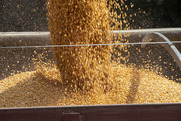
As harvest continues to progress, I wanted to remind producers of the availability of our Marketing Loans (MALs) that could help an operation in cash flow if you store your grain prior to marketing.
MALs and LDPs provide financing and marketing assistance for wheat, corn, oats, barley, soybeans, wool, and honey. MALs provide you with interim financing after harvest to help you meet cash flow needs without having to sell your commodities when market prices are typically at harvest-time lows. A producer who is eligible to obtain a loan, but agrees to forgo the loan, may obtain an LDP if such a payment is available. At this time, the only crop eligible for an LDP due to low market prices is wool.
FSA is now accepting requests for 2024 MALs for all eligible commodities after harvest. Requests for loans and LDPs shall be made on or before the final availability date for the respective commodities.
MALs mature after nine-months. The current interest rate for 2024 crop loans is 5.125%. Producers are responsible for repaying the bushels prior to feeding. Marketing Authorizations must be obtained from FSA prior to selling bushels. This allows the hauling of bushels to an approved purchaser that will repay FSA for the bushels sold.
To be considered eligible for an LDP, you must have form CCC-633EZ, Page 1, on file at your local FSA Office before losing beneficial interest in the crop. Pages 2, 3 or 4 of the form must be submitted when payment is requested.
Marketing loan gains (MLGs) and loan deficiency payments (LDPs) are no longer subject to payment limitations, actively engaged in farming and cash-rent tenant rules.
Adjusted Gross Income (AGI) provisions state that if your total applicable three-year average AGI exceeds $900,000, then you’re not eligible to receive an MLG or LDP. You must have a valid CCC-941 on file to earn a market gain of LDP. The AGI does not apply to MALs redeemed with commodity certificate exchange.
For additional information and eligibility requirements, contact your local FSA office!
|
Top of page
The U.S. Department of Agriculture (USDA) is announcing the launch of the Distressed Borrowers Assistance Network, an initiative designed to provide personalized support to financially distressed farmers and ranchers across the nation. Through a series of Cooperative Agreements, this national network will connect distressed borrowers with individualized assistance to help them stabilize and regain financial footing. USDA’s Farm Service Agency (FSA) made this announcement today at the Farm Aid Festival in Saratoga Springs, N.Y.
Network partners include Farm Aid, Rural Advancement Foundation International, the University of Arkansas, the Socially Disadvantaged Farmers and Ranchers Policy Center at Alcorn State University, and the University of Minnesota. Through this initiative, we are collaborating with community-based organizations to better serve financially distressed producers. Network partners will provide farm loan policy training to the community-based organizations so the organizations can work alongside FSA to help producers understand financing available through FSA, ensuring that when they visit an FSA office, the partner organization representative and FSA staff can better assist.
FSA, in collaboration with farm support organizations and land-grant institutions, will facilitate this network, which will provide the technical resources and guidance of USDA partners to experts from distressed and underserved communities. The network's approach includes integrating knowledgeable service providers to deliver one-on-one support to borrowers so they can best make plans and understand options to overcome their financial challenges.
The Distressed Borrowers Assistance Network will address the immediate needs of distressed borrowers and provide comprehensive, wraparound services aimed at addressing the unique challenges faced by financially distressed producers. Once stabilized financially, these borrowers will be better positioned to access new opportunities and continue contributing to the agricultural economy. These investments will also build a system of service providers that can better support agricultural communities for years to come. Investing in a network of agricultural financing service providers to help bridge access to FSA loans is a benefit for rural and agricultural communities.
Additional Farm Loan Programs Improvements FSA recently announced significant changes to Farm Loan Programs through the Enhancing Program Access and Delivery for Farm Loans rule. These policy changes, to take effect Sept. 25, 2024, are designed to expand opportunities for borrowers to increase profitability and be better prepared to make strategic investments in enhancing or expanding their agricultural operations.
FSA also has a significant initiative underway to streamline and automate the Farm Loan Program customer-facing business process. For the over 26,000 producers who submit a direct loan application annually, FSA has made several meaningful improvements including:
- The Loan Assistance Tool that provides customers with an interactive online, step-by-step guide to identifying the direct loan products that may fit their business needs and to understanding the application process.
- The Online Loan Application, an interactive, guided application that is paperless and provides helpful features including an electronic signature option, the ability to attach supporting documents such as tax returns, complete a balance sheet, and build a farm operating plan.
- An online direct loan repayment feature that relieves borrowers from the necessity of calling, mailing, or visiting a local USDA Service Center to pay a loan installment.
- A simplified direct loan paper application, reduced from 29 pages to 13 pages.
- A new educational hub with farm loan resources and videos.
USDA encourages producers to reach out to their local FSA farm loan staff to ensure they fully understand the wide range of loan making and servicing options available to assist with starting, expanding, or maintaining their agricultural operation. To conduct business with FSA, producers should contact their local USDA Service Center.
The Natural Resources Conservation Service (NRCS) works to help farmers, ranchers and forest landowners invest in their operations and local communities to keep working lands working, boost rural economies, increase the competitiveness of American agriculture and improve the quality of our air, water, soil and wildlife habitat.
Simply put – NRCS helps America’s farmers, ranchers and forestland owners make conservation work for them.
Our Conservation Technical Assistance (CTA) program enables every acre of voluntary conservation applied through every program NRCS administers. It is the foundation of our financial and technical assistance delivery system.
Every farm and acre is unique and requires tailored management; and every decision maker has different management concerns and needs. Our technical assistance is one-on-one, personalized advice and support to help producers make the best decisions for their lands – and is offered free of charge.
This personalized assistance provides producers with the science-based data and tools to make informed decisions about where to target efforts to get the greatest return on their investment and ensure the long-term sustainability of American agriculture.
A comprehensive conservation plan is the first step to managing all the natural resources on a farm. NRCS walks the farm with the producer and develops options to address that producer’s needs. Our toolbox includes aerial photos, soil surveys, engineering solutions and individual science-based analysis customized for the producer’s property. The plan we develop with the producer combines existing production methods with recommended conservation practices to best manage that farm’s unique natural resources, while allowing the producer to grow sustainably and productively. Supported by our expert analysis and recommendations, the producer chooses which option best meets their needs. These decisions become the producer’s conservation plan, a step-by-step guide to reach their objectives.
This planning process also makes it easier to identify how and when the farmer, rancher or forest landowner could qualify for Farm Bill financial assistance to help them install conservation systems or receive incentives for trying new ones. We have the expertise to see our customers through this process. Because identifying when, where and how to implement practices is not plug and play.
The final plan provides a roadmap for the producer to meet their natural resource conservation goals. It includes helpful information on each of the producer’s practices, such as how they benefit the farm, how to maintain them, and how they help the soil, water and wildlife.
By developing a conservation plan and adding conservation to the land, farmers, ranchers and forest landowners can protect the land’s ability to provide for their family and future generations.
With offices in communities nationwide, NRCS staff provide the information, tools and delivery systems necessary for producers – in every state and territory – to conserve, maintain and improve their natural resources.
Contact your local USDA service center to find out more.
|






