
New York FSA Updates - October 16, 2024
Want to work for FSA? Click here to see our current open positions!
In This Issue:
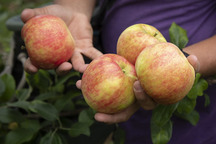
Controlled Atmosphere (CA) storage is now eligible for Farm Storage Facility Loans (FSFL) through the USDA Farm Service Agency (FSA).
CA storage facilities are widely used by the apple industry in NY. Our apple growers will now benefit from having this type of facility added to the list of eligible structures for Farm Storage Facility Loans.
FSFLs provide low-interest financing to help you build or upgrade storage facilities and to purchase portable (new or used) structures, equipment and storage and handling trucks.
CA Storage is a continuously controlled agricultural process that regulates the concentrations of oxygen, carbon dioxide, and nitrogen in a storage room to increase the shelf life of fresh fruits like apples, as well as other eligible FSFL commodities.
The low-interest funds can also be used for CA storage monitoring equipment, designed to notify facility owners immediately if there is any detection of potential atmospheric dangers. Producers may renovate existing storage facilities to include CA storage monitoring equipment. Authorized loan terms for FSFL renovations are 3 and 5 years only.
To assist with monitoring gases and particle concentrations for CA storage, the following equipment, but not limited to, is eligible for a FSFL:
- optical oxygen sensor
- low power CO2 sensor
- air quality sensor
- gas detection devices
- air temperature and relative humidity sensor
- water activity meter
- temperature stabilized water activity analyzer
- precision and performance humidity and temperature transmitter.
Loans up to $50,000 can be secured by a promissory note/security agreement, loans between $50,000 and $100,000 may require additional security, and loans exceeding $100,000 require additional security.
You do not need to demonstrate the lack of commercial credit availability to apply. The loans are designed to assist a diverse range of farming operations, including small and mid-sized businesses, new farmers, operations supplying local food and farmers markets, non-traditional farm products, and underserved producers.
For more information, contact your local USDA Service Center or visit fsa.usda.gov/pricesupport.
|
Through the Organic Certification Cost Share Program (OCCSP), USDA’s Farm Service Agency (FSA) will cover up to 75% of organic certification costs at a maximum of $750 per certification category. FSA is now accepting applications, and organic producers and handlers should apply for OCCSP by the Oct. 31, 2024, deadline for eligible expenses incurred from Oct. 1, 2023, to Sept. 30, 2024. FSA will issue payments as applications are received and approved.
OCCSP was part of a broader organic announcement made by Agriculture Secretary Tom Vilsack on May 15, 2024, which also included the Organic Market Development Grant program and Organic Transition Initiative.
Eligible Applicants, Expenses and Categories
OCCSP provides cost-share assistance to producers and handlers of organic agricultural commodities for expenses incurred obtaining or maintaining organic certification under USDA’s National Organic Program. Eligible OCCSP applicants include any certified organic producers or handlers who have paid organic certification fees to a USDA-accredited certifying agent.
Cost share assistance covers expenses including application fees, inspection costs, fees related to equivalency agreement and arrangement requirements, inspector travel expenses, user fees, sales assessments and postage. OCCSP pays a maximum of $750 per certification category for crops, wild crops, livestock, processing/handling, and state organic program fees (California only).
How to Apply
To apply, producers and handlers should contact FSA at their local USDA Service Center and be prepared to provide documentation of organic certification and eligible expenses. OCCSP applications can also be submitted through participating state departments of agriculture. For more information, visit the OCCSP webpage.
More Information
USDA offers other assistance for organic producers, including the Organic Transition Initiative (OTI), which includes direct farmer assistance for organic production and processing and conservation. For more information on organic agriculture, visit farmers.gov/organic.
To learn more about FSA programs, producers can contact their local USDA Service Center. Producers can also prepare maps for acreage reporting as well as manage farm loans and view other farm records data and customer information by logging into their farmers.gov account. If you don’t have an account, sign up today.
|

Farm Service Agency (FSA) reminds producers of approaching application deadlines for purchasing risk coverage for some crops through the Noninsured Crop Disaster Assistance Program (NAP). NAP provides financial assistance to producers of non-insurable crops impacted by natural disasters that result in lower yields, crop losses, or prevented crop planting.
NAP covers losses from natural disasters on crops for which no permanent federal crop insurance program is available, including forage and grazing crops, fruits, vegetables, floriculture, ornamental nursery, aquaculture, turf grass and more.
Upcoming application deadlines for NAP coverage in New York for the 2025 production season include:
November 20 – Fruit trees, nut trees and perennial crops
December 31 - Honey and maple sap
NAP basic coverage is available at 55% of the average market price for crop losses that exceed 50% of expected production. Buy-up coverage is available in some cases. NAP offers higher levels of coverage, ranging from 50% to 65% of expected production in 5% increments, at 100% of the average market price. Producers of organic crops and crops marketed directly to consumers also may exercise the “buy-up” option to obtain NAP coverage of 100% of the average market price at coverage levels ranging between 50% and 65% of expected production. Buy-up coverage is not available for crops intended for grazing.
For all coverage levels, the NAP service fee is the lesser of $325 per crop or $825 per producer per county, not to exceed a total of $1,950 for a producer with farming interests in multiple counties. Premiums apply for buy-up coverage.
If a producer has a Socially Disadvantaged, Limited Resource, Beginning and Veteran Farmer or Rancher Certification (form CCC-860) on file with FSA, it may serve as an application for basic coverage for all eligible crops beginning with crop year 2022. These producers will have all NAP-related service fees for basic coverage waived. These producers may also receive a 50% premium reduction if higher levels of coverage are elected on form CCC-471, prior to the application closing date for each crop.
To learn more about NAP visit fsa.usda.gov/nap or contact your local USDA Service Center.
|
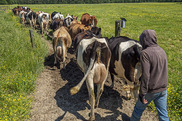
The U.S. Department of Agriculture (USDA) announced $58 million available for assistance to dairy producers through the Organic Dairy Marketing Assistance Program (ODMAP) 2024. ODMAP 2024 helps mitigate market volatility, higher input and transportation costs, and unstable feed supply and prices that have created unique hardships in the organic dairy industry. Specifically, through ODMAP 2024, USDA’s Farm Service Agency (FSA) is assisting organic dairy operations with projected marketing costs in 2024 calculated using their marketing costs in 2023. Eligible producers include certified organic dairy operations that produce milk from cows, goats, and sheep.
ODMAP 2024 Program Improvements
Dairy producers who participate in ODMAP 2024 will benefit from improvements to provisions outlined in the program. Specifically, ODMAP 2024 provides for an increase in the payment rate to $1.68 per hundredweight compared to the previous $1.10 per cwt. Additionally, the production cap has increased to nine million pounds compared to the previous five million pounds.
How ODMAP 2024 Works
FSA is providing financial assistance for a producer’s projected marketing costs in 2024 based on their 2023 costs. ODMAP 2024 provides a one-time cost-share payment based on marketing costs on pounds of organic milk marketed in the 2023 calendar year or estimated 2024 marketing costs for organic dairy operations that have increased milk production.
ODMAP 2024 provides financial assistance that immediately supports certified organic dairy operations during 2024 keeping organic dairy operations sustainable until markets return to more normal conditions.
How to Apply
FSA is accepting applications from Sept. 30 to Nov. 29. To apply, producers should contact FSA at their local USDA Service Center. To complete the ODMAP 2024 application, producers must certify to pounds of 2023 milk production, show documentation of their organic certification, and submit a completed application form.
Organic dairy operations are required to provide their USDA certification of organic status confirming operation as an organic dairy in 2024 and 2023 along with the certification of 2023 milk production or estimated 2024 milk production in hundredweight.
ODMAP 2024 complements other assistance available to dairy producers, including Dairy Margin Coverage (DMC), with more than $36 million in benefits paid for the 2024 program year to date. Learn more on the FSA Dairy Programs webpage.
More Information
To learn more about USDA programs, producers can contact their local USDA Service Center. Producers can also prepare maps for acreage reporting as well as manage farm loans and other programs by logging into their farmers.gov account. If you don’t have an account, sign up today.
|
The U.S. Department of Agriculture (USDA) announced changes to the Farm Service Agency’s (FSA) Farm Loan Programs. Changes that are intended to increase opportunities for farmers and ranchers to be financially viable. These improvements, part of the Enhancing Program Access and Delivery for Farm Loans rule, demonstrate USDA’s commitment to improving farm profitability through farm loans designed to provide important financing options used by producers to cover operating expenses and purchase land and equipment.
Farm loan policy changes outlined in the Enhancing Program Access and Delivery for Farm Loans rule, are designed to better assist borrowers to make strategic investments in the enhancement or expansion of their agricultural operations.
The three most notable policy changes include:
- Establishing a new low-interest installment set-aside program for financially distressed borrowers. Eligible financially distressed borrowers can defer up to one annual loan installment per qualified loan at a reduced interest rate, providing a simpler and expedited option to resolve financial distress in addition to FSA’s existing loan servicing programs.
- Providing all eligible loan applicants access to flexible repayment terms that can increase profitability and help build working capital reserves and savings. By creating upfront positive cash flow, borrowers can find opportunities in their farm operating plan budgets to include a reasonable margin for increased working capital reserves and savings, including for retirement and education.
- Reducing additional loan security requirements to enable borrowers to leverage equity. This reduces the amount of additional security required for direct farm loans, including reducing the frequency borrowers must use their personal residence as additional collateral for a farm loan.
Additional Farm Loan Program Improvements
Under the Biden-Harris Administration, USDA’s FSA has embarked on a comprehensive and systemic effort to ensure equitable delivery of Farm Loan Programs and improve access to credit for small and mid-size family farms.
FSA has also included additional data in its annual report to Congress to provide information that Congress, stakeholders, and the general public need to hold USDA accountable on the progress that has been made in improving services to underserved producers. This year’s report shows FSA direct and guaranteed loans were made to a greater percentage of young and beginning farmers and ranchers, as well as improvements in the participation rates of minority borrowers. The report also highlights FSA’s microloan program’s new focus on urban agriculture operations and niche market lending, as well as increased support for producers seeking direct loans for farm ownership in the face of increasing land values across the country.
FSA has a significant initiative underway to streamline and automate the Farm Loan Program customer-facing business process. For the over 26,000 producers who submit a direct loan application annually, FSA has made several impactful improvements including:
- The Loan Assistance Tool that provides customers with an interactive online, step-by-step guide to identifying the direct loan products that may be a fit for their business needs and to understanding the application process.
- The Online Loan Application, an interactive, guided application that is paperless and provides helpful features including an electronic signature option, the ability to attach supporting documents such as tax returns, complete a balance sheet, and build a farm operating plan.
- An online direct loan repayment feature that relieves borrowers from the necessity of calling, mailing, or visiting a local USDA Service Center to pay a loan installment.
- A simplified direct loan paper application, reduced from 29 pages to 13 pages.
USDA encourages producers to reach out to their local FSA farm loan staff to ensure they fully understand the wide range of loan and servicing options available to assist with starting, expanding, or maintaining their agricultural operation. To conduct business with FSA, please contact your local USDA Service Center
FSA helps America’s farmers, ranchers and forest landowners invest in, improve, protect and expand their agricultural operations through the delivery of agricultural programs for all Americans. FSA implements agricultural policy, administers credit and loan programs, and manages conservation, commodity, disaster recovery and marketing programs through a national network of state and county off ices and locally elected county committees. For more information, visit, www.fsa.usda.gov
|

The Farm Service Agency (FSA) administers two programs that have specific safety net benefits for producers of honeybees and honey. The Noninsured Crop Disaster Assistance Program (NAP) and the Emergency Assistance for Livestock, Honeybees and Farm-Raised Fish Program (ELAP) assist producers when disasters impact honey production or damage or destroy colonies, hives or honeybee feed.
NAP is designed to reduce financial losses when natural disasters result in lower yields or crop losses, including honey. NAP coverage is equivalent to catastrophic insurance, meaning it covers up to 50 percent of a producer’s normal yield (must have at least a 50 percent loss) at 55 percent of the average market price. The 2018 Farm Bill reinstates higher levels of coverage, from 50 to 65 percent of expected production in 5 percent increments, at 100 percent of the average market price. Producers of organics and crops marketed directly to consumers also may exercise the “buy-up” option to obtain NAP coverage of 100 percent of the average market price at the coverage levels of between 50 and 65 percent of expected production.
The NAP service fee is the lesser of $325 per crop or $825 per producer per administrative county, not to exceed a total of $1,950 for a producer with farming interests in multiple counties.
You must apply for NAP coverage by Dec. 31 prior to the year for which you’re seeking coverage.
ELAP covers colony losses, honeybee hive losses (the physical structure) and honeybee feed losses in instances where the colony, hive or feed has been destroyed by a natural disaster or, in the case of colony losses, because of Colony Collapse Disorder. Colony losses must be in excess of normal mortality.
Both the NAP and ELAP programs require you to report the number of colonies you have in production to FSA by Jan. 2, 2025. You must notify FSA within 30 calendar days of changes in the total number of colonies or when honeybees are moved to another county.
For both programs, you must notify FSA within 15 calendar days of when a loss occurs or from when the loss is apparent. To learn more about programs for honey and honeybee producers, contact your local USDA Service Center or visit fsa.usda.gov.
|
Farmers can use USDA farm ownership microloans to buy and improve property. These microloans are especially helpful to beginning or underserved farmers, U.S. veterans looking for a career in farming, and those who have small and mid-sized farming operations. Microloans have helped farmers and ranchers with operating costs, such as feed, fertilizer, tools, fencing, equipment, and living expenses since 2013.
Microloans can also help with farmland and building purchases and soil and water conservation improvements. FSA designed the expanded program to simplify the application process, expand eligibility requirements and expedite smaller real estate loans to help farmers strengthen their operations. Microloans provide up to $50,000 to qualified producers and can be issued to the applicant directly from the USDA Farm Service Agency (FSA).
To learn more about the FSA microloan program, contact your local USDA Service Center or visit fsa.usda.gov/microloans.
Don’t know much about Federal crop insurance, but you want to learn more?
Crop insurance is a risk management strategy that farmers use to protect their livelihoods. By purchasing a policy through a crop insurance agent, farmers are financially protected if there are losses due to a covered cause of loss. It’s not so different from car or homeowners insurance.
Start your journey out right by reading RMA’s Beginners Guide to Crop Insurance.
Top of page
Farm Service Agency
New York State Office
441 S. Salina St.
Syracuse, NY 13202
Ph: 315-477-6300
http://www.fsa.usda.gov/ny
Click to find your local USDA office.
|
|
State Executive Director
Jim Barber
jim.barber2@usda.gov
|
|
Farm Program Chief:
Jenifer Dean
jenifer.dean@usda.gov
|
Farm Loan Chief:
John Liddington
john.liddington@usda.gov
|
|
New York FSA State Committee
Norman Greig - Chairperson
Larry Eckhardt
Jill Gould
Julian Mangano
Michael McMahon
________________________________________________________
|
|
Current Interest Rates
|
|
Farm Storage Facility Loans:
3 yr - 3.625%
5 yr - 3.500%
7 yr - 3.625%
10 yr - 3.750%
12 yr - 3.875%
Commodity Loans: 5.125%
|
Farm Loan Programs:
Farm Operating: 4.875%
Farm Ownership: 5.375%
Conservation Loans: 5.375%
Direct Down Payment: 1.500%
Joint Financing: 3.375%
|
|







