
Wasco/Hood River County USDA Updates - September 2024
In This Issue:

Please Join Us!
The Wasco/Hood River FSA reminds producers that the new Federal Fiscal year starts tomorrow. With the new year come annual payments like CRP and potentially ARCPLC. Please update your financial information if your bank account has changed since last year's payments.
Please be mindful of the following deadlines:
-
Acreage Reporting: Please call 541-298-8559 Ext. 2 to schedule an appointment for 2025 acreage reporting.
-
CRP (Conservation Reserve Program): Please complete your mid-contract management activities and submit results to FSA.
- Emergency grazing available to livestock grazers impacted by 2024 wildfires. Please contact FSA for more information.
-
ECP (Emergency Conservation Program): Sign up for rebuilding/replacing burned fences from recent 2024 wildfires begins October 7, 2024 and will run through December 5th. Please schedule your appointment as soon as practical.
-
EFRP (Emergency Forest Restoration Program): Sign up for technical or financial assistance on nonindustrial private forestland damaged by recent 2024 wildfires begins October 7, 2024 and will run through December 5th. Please schedule your appointment as soon as practical.
-
FSCSC (Food Safety Certification for Specialty Crops): Eligible specialty crop growers can apply for assistance for expenses related to obtaining or renewing a food safety certification on their calendar year 2024 expenses beginning July 1, 2024, through Jan. 31, 2025.
-
LIP/ELAP Losses: Please contact the FSA office to report your losses from 2024 wildfires before January 30, 2025 for the Livestock Indemnity Program or Emergency Assistance for Livestock, Honeybees and Farm-raised Fish Program.
-
NAP (Noninsured Crop Disaster Assistance Program): Submit production records for losses within 60 days of harvest. If you need more time, please request an extension before October 15, 2024. Sign up deadlines for 2025 coverage are coming soon! Please get your coverage by:
-
November 20, 2024 for perennial fruit crops
-
November 30, 2024 for grazing and hay crops
-
OCCSP (Organic Certification Cost-Share Program): Certification costs may be reimbursed at 75%, not to exceed $750 per scope. Deadline to apply for 2024 expenses is October 31, 2024.
-
TAP (Tree Assistance Program): Once cost-share agreements have been approved, participants have 12 months to complete practices. Please keep these deadlines in mind as you finish replanting your trees, bushes or vines under a TAP claim. If you need more time, please request an extension before your practice expires. Please report losses to establish a new claim within 90 days of the event.
|
Top of page
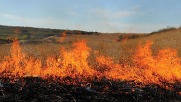
Wasco/Hood River County Producers May be Eligible for Emergency Conservation Program Assistance
Several wildfires have caused severe damage in both Wasco and Hood River counties.
If you’ve suffered severe damage, especially to livestock fencing, you may be eligible for assistance under the Emergency Conservation Program (ECP) administered by the Wasco/Hood River County Farm Service Agency (FSA)
For land to be eligible, the natural disaster must create new conservation problems that, if untreated, would:
- be so costly to rehabilitate that Federal assistance is or will be needed to return the land to productive agricultural use
- is unusual and is not the type that would recur frequently in the same area
- affect the productive capacity of the farmland
- impair or endanger the land
If you qualify for ECP assistance, you may receive cost-share levels not to exceed 75 percent of the eligible cost of restoration measures. Eligible socially disadvantaged and beginning farmers and ranchers can receive up to 90 percent of the eligible cost of restoration. No one is eligible for more than $500,000 cost sharing per natural disaster occurrence.
If you’ve suffered a loss from a natural disaster may contact the local FSA County Office and request assistance from October 7- December 5, 2024.
To be eligible for assistance, practices must not be started until all the following are met:
- an application for cost-share assistance has been filed
- the local FSA County Committee (COC) or its representative has conducted an onsite inspection of the damaged area
- the Agency responsible for technical assistance, such as the Natural Resource Conservation Service (NRCS), has made a needs determination, which may include cubic yards of earthmoving, etc., required for rehabilitation
In accordance with the National Environmental Policy Act (NEPA), FSA must complete an environmental compliance review prior to producers taking any actions.
For more information about ECP, contact your Wasco/Hood River County USDA Service Center at 541-298-8559 Ext. 2 or visit fsa.usda.gov.
Wildfire Affected Producers in Oregon are Eligible to Utilize Emergency Grazing of CRP Ground
Agricultural producers impacted by wildfires in Oregon can now request grazing on Conservation Reserve Program (CRP) acres, while still receiving their full rental payment for the land.
In response to wildfires occurring in Oregon, DAFP is authorizing CRP participants from all counties in the state to donate grazing rights through March 1, 2025, to livestock producers affected by the wildfires.
To ensure emergency grazing of CRP is only being utilized by those producers whose livestock grazing land was adversely impacted by wildfire, producers must file a CCC-576 (Notice of Loss) or provide a written certification. CRP can only be utilized for up to 90 consecutive days for grazing.
Producers interested in emergency haying or grazing of CRP acres must notify their Wasco/Hood River County FSA office at 541-298-8559 Ext. 2, before starting any activities. This includes producers accessing CRP acres held by someone else. To maintain contract compliance, producers must have their conservation plan modified by USDA’s Natural Resources Conservation Service.
How to Document Wildfire Losses
If you’ve suffered excessive livestock death losses and grazing or feed losses due to recent wildfires, you may be eligible for disaster assistance programs through the USDA Farm Service Agency (FSA).
The Livestock Indemnity Program (LIP) offers payments to you for livestock death losses in excess of normal mortality due to adverse weather and the Emergency Assistance for Livestock, Honeybees, and Farm-Raised Fish Program (ELAP) provides emergency relief for losses due to feed or water shortages, disease, adverse weather, or other conditions, which are not adequately addressed by other disaster programs.
To participate in LIP, you will be required to provide verifiable documentation of death losses resulting from an eligible adverse weather event, and you must submit a notice of loss to your local FSA by the application deadline, February 28, 2025. To participate in ELAP, you must submit a notice of loss to your local FSA office by the application deadline, January 30, 2025, and should maintain documentation and receipts.
You should record all pertinent information regarding livestock losses due to the eligible adverse weather or loss condition, including:
- Documentation of the number, kind, type, and weight range of livestock that have died, supplemented if possible by photographs or video records of ownership and losses;
- Rendering truck receipts by kind, type and weight - important to document prior to disposal;
- Beginning inventory supported by birth recordings or purchase receipts;
- Documentation from Animal Plant Health Inspection Service, Department of Natural Resources, or other sources to substantiate eligible death losses due to an eligible loss condition;
- Documentation that livestock were removed from grazing pastures due to an eligible adverse weather or loss condition;
- Costs of transporting livestock feed to eligible livestock, such as receipts for equipment rental fees for hay lifts and snow removal;
- Feed purchase receipts if feed supplies or grazing pastures are destroyed;
- Number of gallons of water transported to livestock due to water shortages.
For more information on these programs and documentation requirements, contact your Wasco/Hood River County FSA office at 541-298-8559 Ext. 2 or visit fsa.usda.gov/disaster.
FSA Offers Assistance for Wildfire Feed and Grazing Losses, Water, Feed and Livestock Transportation Losses
If you’ve suffered livestock feed or grazing losses or losses associated with Water, Feed or Livestock Transportation due to recent wildfires, you could be eligible for assistance through the Emergency Assistance for Livestock, Honeybees, and Farm-Raised Fish Program (ELAP).
ELAP covers physically damaged or destroyed livestock feed that was purchased, or mechanically harvested forage or feedstuffs intended for use as feed for your eligible livestock. In order to be considered eligible, harvested forage must be baled. Forage that is only cut, raked or windrowed is not eligible.
ELAP also covers costs associated with transportation of Water, Feed and Livestock due to Fires. You must submit a notice of loss by the application deadline, January 30, following the program year in which the loss occurred.
ELAP also covers up to 180 lost grazing days in instances when you’ve been forced to remove livestock from a grazing pasture due to wildfire.
You should maintain records and receipts documenting that livestock were removed from the grazing pasture due to wildfire, costs of transporting livestock feed to eligible livestock, receipts for equipment rental fees for hay lifts, feed purchase receipts and the number of gallons of water transported to livestock due to water shortages.
For beekeepers, ELAP covers beehive losses (the physical structure) in instances where the hive has been destroyed by a natural disaster including wildfire. For honeybee losses, you must notify FSA within 15 calendar days of when a loss occurs or from when the loss is apparent.
For more information regarding ELAP, contact your Wasco/Hood River County FSA office at 541-298-8559 Ext. 2or visit fsa.usda.gov/disaster. January 30, 2025 is the last day to submit notice of loss and applications for payments for this program.
Farmers.gov has provided a Disaster Assistance Recovery Tool to help producers learn about which programs may be the best fit. To determine program eligibility, please go to https://www.farmers.gov/protection-recovery/disaster-tool.
USDA Approves Emergency Forest Restoration Assistance for Wasco/Hood River County
The Farm Service Agency (FSA) is accepting applications in Wasco andHood River counties for the Agency’s (FSA) Emergency Forest Restoration Program (EFRP) to address wildfire damages.
EFRP provides payments to eligible owners of nonindustrial private forest (NIPF) land to enable them to carry out emergency measures to restore land damaged by a natural disaster. EFRP signup will begin on October 7, 2024 and end on December 5, 2024.
After applications are received, local FSA county committees determine land eligibility using on-site damage inspections that assess the type and extent of damage and approve applications.
Eligible forest restoration practices include debris removal, such as down or damaged trees, in order to establish a new stand or provide natural regeneration; site preparation, planting materials and labor to replant forest land; restoration of forestland roads, fire lanes, fuel breaks or erosion control structures; fencing, tree shelters and tree tubes to protect trees from wildlife damage; and wildlife enhancement to provide cover openings and wildlife habitat.
In order to meet eligibility requirements, NIPF land must have existing tree cover or had tree cover immediately before the natural disaster occurred and be sustainable for growing trees. The land must also be owned by any nonindustrial private individual, group, association, corporation or other private legal entity that has definitive decision-making authority over the land. The natural disaster must have resulted in damage that if untreated would impair or endanger the natural resources on the land and/or materially affect future use of the land.
An environmental review must be completed before actions are approved, such as site preparation or ground disturbance.
For more information contact the Wasco/Hood River County USDA Service Center at 541-298-8559 ext. 2 or visit farmers.gov/recover.
Top of page
|

Wasco/Hood River County FSA would like to remind producers of their obligations on the Operation and Maintenance (O&M) of conservation practices, including fences replaced using the Emergency Conservation Program (ECP) cost share funds.
Operation and Maintenance is work performed by the participant to keep the applied conservation practice functioning for the intended purpose during its life span. Operation includes the administration, management, and performance of non-maintenance actions needed to keep the completed practice safe and functioning as intended. Maintenance includes work to prevent deterioration of the practice, repairing damage, or replacement of the practice to its original condition if one or more components fail. Per ECP guidelines, fences should be maintained for the lifespan of 20 years. If you voluntarily remove ECP fencing prior to the end of the normal lifespan, you may be subject to refunding FSA for cost-shares earned.
Top of page
|

It’s 1899, and as the world prepares for a new century, railroad tycoon Edward Henry Harriman, along with a large crew, embarks on a two-month expedition to catalog the flora and fauna of the Alaskan coast; Joshua Lionel Cowen invents and patents the electric flash-lamp; and aviation pioneer Wilbur Wright discovers wing warping for aircraft wings.
With the spirit of exploration and invention in the air, Congress recognized the vital role soil surveys play in guiding agricultural development and supporting community planning and resource development. On May 3, 1899, Congress authorized funds for the U.S. Department of Agriculture (USDA) to investigate the soil resources of the United States in the field and laboratory, and the first soil surveys began. By the end of 1899, USDA mapped 720,000 acres and published four separate soil surveys in parts of Maryland, Connecticut, Massachusetts, Utah, and New Mexico.
After 125 years, USDA soil surveyors and partners continue to map soils in new areas, collecting data on what are called static soil properties, or those that change over thousands of years. They also revisit mapped soils to explore dynamic soil properties, such as soil organic carbon and structure, which change within the human timescale. These changes can be from natural factors, like soils eroding during a severe rain event, and human-caused factors, like soils building carbon as a result of good conservation practices.
Our knowledge of soils increases each year as we evolve with new technology, types of field and laboratory equipment, and ideas. Our experience observing, investigating, and researching in the field leads to new standards, methodology, and new and improved products for public use. Traditionally, we have conducted soil surveys on land to determine the best soils for growing corn, building a pond, maintaining wetlands, or supporting roads; however, today, we even conduct soil surveys from specialized boats in coastal zones!
The USDA’s Natural Resources Conservation Service (NRCS) is founded on the need to understand the soil resources of our nation. Data-driven and science-based, we fulfill a legislative mandate to inventory the soil resources and keep the soil survey relevant to ever-changing needs through the National Cooperative Soil Survey (NCSS).
We set standards in classification, mapping, and laboratory procedures with the largest and highest resolution inventory of natural resource data in the world used by our staff for conservation planning, application ranking criteria, and Highly Erodible Land determinations, among other services. The USDA NRCS’ world-renowned Kellogg Soil Survey Laboratory (KSSL) provides data and standards to the international community, as well as for our state conservation staff, supporting conservation activities involving soil health, wetlands, and ecological sites.
How Can Soil Surveys Help You?
Soil data assist farmers, ranchers, foresters, land managers, and conservation planners in effectively managing, conserving, and appraising their most valuable investment—the soil. The data can help determine soil-related hazards or limitations that affect home sites. It can help estimate the potential crop or forage production of a farmer’s land. Soil data can also help determine the suitability of soil for housing areas, onsite sewage disposal systems, pipelines, buildings, landfills, and recreation areas.
The fruits of our labor with soil surveys are visible in the productive soils we walk on, the food we eat, and the air we breathe. We will continue to build upon our 125-year legacy by providing soil data to inform, protect, and sustain future generations.
Visit the NRCS website for more information about soil surveys in your area or to locate your State Soil Scientist. Web Soil Survey is a one-stop shop for free soil information and soil maps, properties, and interpretations. Learn more about NRCS’ Soil Science.
|
Top of page

The U.S. Department of Agriculture (USDA) is updating the Federal crop insurance program to affirm the use of USDA conservation practices as Good Farming Practices for crop insurance. Recently, USDA’s Risk Management Agency (RMA) recently updated the Good Farming Practices Handbook, as part of the agency’s broader efforts to support conservation and climate-smart activities as well as to improve crop insurance for agricultural producers.
The updated handbook recognizes all conservation practices offered by USDA’s Natural Resources Conservation Service (NRCS) as Good Farming Practices for crop insurance. Essentially, appropriate use of NRCS conservation practices will have no impact on crop insurance coverage, which affirms how the rules have worked on the ground for years.
Additionally, in the handbook, NRCS is recognized as an agricultural expert resource for cover crop management systems.
This updated handbook builds on similar efforts, including RMA’s designation of planting cover crops as a Good Farming Practice in 2019.
Conservation and Crop Insurance
In recent years, RMA has increased its support of conservation by encouraging producers to use conservation and climate-smart practices. In November, RMA announced improvements to its Hybrid Seed Rice coverage to support producers using irrigation practices that conserve water. Also in recent years, RMA has offered premium benefits to producers to plant cover crops through the Pandemic Cover Crop Program and provided coverage for producers who split apply nutrients. Learn more on RMA’s Conservation and Crop Insurance webpage.
More Information
Across USDA, agencies like RMA and NRCS are working to improve programs to better support the needs of producers. For example, NRCS is streamlining its Regional Conservation Partnership Program and Agricultural Conservation Easement Program, part of its efforts to strengthen implementation of the Inflation Reduction Act. The Inflation Reduction Act – part of President Biden’s Investing in America agenda – provided $19.5 billion of additional funding for NRCS conservation programs.
Top of page
|

The U.S. Department of Agriculture (USDA) announced today that most farm loan borrowers will soon be able to make payments to their direct loans online through the Pay My Loan feature on farmers.gov in early February. Pay My Loan is part of a broader effort by USDA’s Farm Service Agency (FSA) to streamline its processes, especially for producers who may have limited time during the planting or harvest seasons to visit a local FSA office; modernize and improve customer service; provide additional customer self-service tools; and expand credit access to assist more producers.
On average, local USDA Service Centers process more than 225,000 farm loan payments each year. Pay My Loan gives most borrowers an online repayment option and relieves them from needing to call, mail, or visit a Service Center to pay their loan installment. Farm loan payments can now be made at the borrower’s convenience, on their schedule and outside of FSA office hours.
Pay My Loan also provides time savings for FSA’s farm loan employees by minimizing manual payment processing activities. This new service for producers means that farm loan employees will have more time to focus on reviewing and processing new loans or servicing requests.
The Pay My Loan feature can be accessed at farmers.gov/loans. To use the payment feature, producers must establish a USDA customer account and a USDA Level 2 eAuthentication (“eAuth”) account or a Login.gov account. This initial release only allows individuals with loans to make online payments. For now, borrowers with jointly payable checks will need to continue to make loan payments through their local office.
FSA has a significant initiative underway to streamline and automate the Farm Loan Program customer-facing business process. For the over 26,000 producers who submit a direct loan application annually, FSA has made various improvements including:
- The Online Loan Application, an interactive, guided application that is paperless and provides helpful features including an electronic signature option, the ability to attach supporting documents such as tax returns, complete a balance sheet, and build a farm operating plan.
- The Loan Assistance Tool that provides customers with an interactive online, step-by-step guide to identifying the direct loan products that may be a fit for their business needs and to understanding the application process.
- A simplified direct loan paper application, which reduced loan applications by more than half, from 29 pages to 13 pages.
|
Top of page
Wasco/Hood River County USDA Service Center
2325 River Rd
The Dalles OR 97058
Phone: 541-298-8559
Fax: 855-824-6183
|
|
Office Hours: Monday-Friday, 8:00 am-4:30 pm
|
|
FSA Staff
Lissa Ann Biehn, CED
Lissa.Biehn@usda.gov
Martha Blair, Program Analyst
Martha.Blair@usda.gov
Kristianna Geiter, Program Analyst
Kristianna.Geiter@usda.gov
Patti Fields, Program Analyst
Patricia.Fields@usda.gov
Iris Jones, Program Analyst
Iris.Jones@usda.gov
|
NRCS Staff
Emily Huth, DC- Wasco County Emily.Huth@usda.gov
Dellaina Morse, Soil Conservationist Dellaina.Morse@usda.gov
Erin Beuttenmuller, Soil Conservationist Erin.Beuttenmuller@usda.gov
Carly Heron, DC- Hood River County
Carly.Heron@usda.gov
Calina Dwyer, Soil Conservationist calina.dwyer@usda.gov
|
|
Farm Loan Staff
Jane Harrison, FLO
Jane.Harrison@usda.gov
Next COC Meeting:
October 22, 2024, 9:00 am The Dalles USDA Service Center Conference Room
|
Wasco/Hood River County Committee (COC)
Megan Thompson~ Chair
Bob Benton, Jr~ Vice Chair
Michael H Kelly~ LAA 2
Tim Morelli~ LAA 3
Trent Weseman~ LAA 5
|
| |
|
|






