
Fillmore County - September 26, 2024
In This Issue:
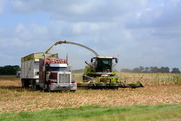
As you start getting out in the field and harvest begins, please take a moment to read through the information below and stay informed. We wish you a safe and bountiful harvest!
Banking Changes - In preparation for CRP payments being issued in October, please inform the FSA office of any recent banking changes. Please call the office immediately to update your banking information so payments are issued to the correct account.
MDA Beginning Farmer Equipment & Infrastructure Grant - Applications for a new grant to help beginning Minnesota farmers purchase equipment and infrastructure through the Minnesota Department of Agriculture (MDA) are open from September 24 - November 21. Farmers can apply for up to $20,000 to reimburse costs associated with purchasing farm equipment or paying for farm infrastructure development, such as investments in water access, irrigation, fencing, electricity, walk-in coolers, livestock buildings, greenhouses, and other similar structures. Visit the MDA website for more information, including downloading the RFP and registering to join one of the online public information sessions on October 1 and October 2. Language interpretation will be available at these sessions for Spanish, Hmong, and Somali.
Farm Storage Facility Loan - Did you know FSA’s Farm Storage Facility Loan Program (FSFL) can help you with your storage and handling needs? During harvest, were you thinking that you really could use a truck, grain cart, sugar beet cart, auger, or another piece of equipment to meet your handling needs? Do you need additional storage? Are interest rates at your local lender holding you back from making that purchase? Then why don’t you give our FSFL program a chance to help you:
- Acquire new or used storage and handling trucks;
- Acquire portable or permanently affixed storage and handling equipment; and/or
- Acquire new storage bins.
A variety of structures, handling equipment, and trucks are eligible under this loan, including dryers, augers, trucks – new & used, grain trailers (hopper, live bottom, end dump), including semi tractors, baggers, bale wrappers, grain carts, sugar beet carts, forklifts and skid steers, bulk tanks, propane tanks, hay barns, facilities for cold storage, storage, drying, & handling facilities, and many more options available. A producer may borrow up to $500,000 per loan, with a minimum down payment of 15 percent. Loan terms range from 3 to 12 years, depending on the amount of the loan with favorable interest rates. Producers must demonstrate storage needs based on three years of production history for storage facilities. FSA also provides a microloan option that, while available to all eligible farmers and ranchers, also should be of particular interest to new or small producers where there is a need for financing options for loans up to $50,000 at a lower down payment with reduced documentation. Applicants for all loans will be charged a nonrefundable $100 application fee. If there is construction required, which would include ground disturbance such as site preparation, an environmental review must be completed before actions are approved. Contact your local FSA office early in your planning process to determine what level of environmental review is required for your program application so that it can be completed timely.
We look forward to serving you!
Fillmore County FSA Team
|
Top of page
Important Dates and Deadlines
September 30- Noninsured Crop Disaster Assistance Program (NAP) Minnesota closing deadlines for perennial forage, wild rice, asparagus, rhubarb, strawberries, garlic, aquaculture, Christmas trees, rye, floriculture, mushrooms, ginseng, and sod for crop year 2025.
October 14- FSA offices closed in observance of Columbus Day.
October 31- Organic Certification Cost Share Program (OCCSP) deadline
Farm Loan Program Interest Rates
5.250% - Farm Operating Loans, Direct
5.500% - Farm Ownership Loans, Direct
3.500% - Farm Ownership, Joint Financing
1.500% - Farm Ownership Loans, Beginning Farmer Down Payment
Farm Storage Facility Loan Program Interest Rates
4.000% - Farm Storage Facility Loans, 3-Year
3.875% - Farm Storage Facility Loans, 5-Year
3.875% - Farm Storage Facility Loans, 7-Year
4.000% - Farm Storage Facility Loans, 10-Year
4.125% - Farm Storage Facility Loans, 12-Year
September 2024 Commodity Loan Interest Rate
5.625% - Commodity Loans
Fillmore County Commodity Loan Rates for 2024 Crops
Corn $2.08/bu
Soybeans $6.07/bu

The U.S. Department of Agriculture (USDA) today announces changes to the Farm Service Agency’s (FSA) Farm Loan Programs, effective Sept. 25, 2024 — changes that are intended to increase opportunities for farmers and ranchers to be financially viable. These improvements, part of the Enhancing Program Access and Delivery for Farm Loans rule, demonstrate USDA’s commitment to improving farm profitability through farm loans designed to provide important financing options used by producers to cover operating expenses and purchase land and equipment.
Farm loan policy changes outlined in the Enhancing Program Access and Delivery for Farm Loans rule, are designed to better assist borrowers to make strategic investments in the enhancement or expansion of their agricultural operations.
The three most notable policy changes include:
- Establishing a new low-interest installment set-aside program for financially distressed borrowers. Eligible financially distressed borrowers can defer up to one annual loan installment per qualified loan at a reduced interest rate, providing a simpler and expedited option to resolve financial distress in addition to FSA’s existing loan servicing programs.
- Providing all eligible loan applicants access to flexible repayment terms that can increase profitability and help build working capital reserves and savings. By creating upfront positive cash flow, borrowers can find opportunities in their farm operating plan budgets to include a reasonable margin for increased working capital reserves and savings, including for retirement and education.
- Reducing additional loan security requirements to enable borrowers to leverage equity. This reduces the amount of additional security required for direct farm loans, including reducing the frequency borrowers must use their personal residence as additional collateral for a farm loan.
Additional Farm Loan Program Improvements
Under the Biden-Harris Administration, USDA’s FSA has embarked on a comprehensive and systemic effort to ensure equitable delivery of Farm Loan Programs and improve access to credit for small and mid-size family farms.
FSA has also included additional data in its annual report to Congress to provide information that Congress, stakeholders, and the general public need to hold USDA accountable on the progress that has been made in improving services to underserved producers. This year’s report shows FSA direct and guaranteed loans were made to a greater percentage of young and beginning farmers and ranchers, as well as improvements in the participation rates of minority borrowers. The report also highlights FSA’s microloan program’s new focus on urban agriculture operations and niche market lending, as well as increased support for producers seeking direct loans for farm ownership in the face of increasing land values across the country.
FSA has a significant initiative underway to streamline and automate the Farm Loan Program customer-facing business process. For the over 26,000 producers who submit a direct loan application annually, FSA has made several impactful improvements including:
- The Loan Assistance Tool that provides customers with an interactive online, step-by-step guide to identifying the direct loan products that may be a fit for their business needs and to understanding the application process.
- The Online Loan Application, an interactive, guided application that is paperless and provides helpful features including an electronic signature option, the ability to attach supporting documents such as tax returns, complete a balance sheet, and build a farm operating plan.
- An online direct loan repayment feature that relieves borrowers from the necessity of calling, mailing, or visiting a local USDA Service Center to pay a loan installment.
- A simplified direct loan paper application, reduced from 29 pages to 13 pages.
USDA encourages producers to reach out to their local FSA farm loan staff to ensure they fully understand the wide range of loan and servicing options available to assist with starting, expanding, or maintaining their agricultural operation. To conduct business with FSA, please contact your local USDA Service Center
FSA helps America’s farmers, ranchers and forest landowners invest in, improve, protect and expand their agricultural operations through the delivery of agricultural programs for all Americans. FSA implements agricultural policy, administers credit and loan programs, and manages conservation, commodity, disaster recovery and marketing programs through a national network of state and county off ices and locally elected county committees. For more information, visit, www.fsa.usda.gov
|
Top of page
Through the Organic Certification Cost Share Program (OCCSP), USDA’s Farm Service Agency (FSA) will cover up to 75% of organic certification costs at a maximum of $750 per certification category. FSA is now accepting applications, and organic producers and handlers should apply for OCCSP by the Oct. 31, 2024, deadline for eligible expenses incurred from Oct. 1, 2023, to Sept. 30, 2024. FSA will issue payments as applications are received and approved.
OCCSP was part of a broader organic announcement made by Agriculture Secretary Tom Vilsack on May 15, 2024, which also included the Organic Market Development Grant program and Organic Transition Initiative.
Eligible Applicants, Expenses and Categories
OCCSP provides cost-share assistance to producers and handlers of organic agricultural commodities for expenses incurred obtaining or maintaining organic certification under USDA’s National Organic Program. Eligible OCCSP applicants include any certified organic producers or handlers who have paid organic certification fees to a USDA-accredited certifying agent.
Cost share assistance covers expenses including application fees, inspection costs, fees related to equivalency agreement and arrangement requirements, inspector travel expenses, user fees, sales assessments and postage. OCCSP pays a maximum of $750 per certification category for crops, wild crops, livestock, processing/handling, and state organic program fees (California only).
How to Apply
To apply, producers and handlers should contact FSA at their local USDA Service Center and be prepared to provide documentation of organic certification and eligible expenses. OCCSP applications can also be submitted through participating state departments of agriculture. For more information, visit the OCCSP webpage.
Opportunity for State Departments of Agriculture
FSA is also accepting applications from state departments of agriculture to administer OCCSP. FSA posted a funding opportunity summary on grants.gov and will electronically mail the Notice of Funding Opportunity to all eligible state departments of agriculture. Applications are due July 12, 2024.
If a state department of agriculture chooses to participate in OCCSP, both the state department of agriculture and FSA county offices in that state will accept OCCSP applications and make payments to eligible certified operations. Producers or handlers can receive OCCSP assistance from either FSA or the participating state department of agriculture but not both.
More Information
USDA offers other assistance for organic producers, including the Organic Transition Initiative (OTI), which includes direct farmer assistance for organic production and processing and conservation. For more information on organic agriculture, visit farmers.gov/organic.
To learn more about FSA programs, producers can contact their local USDA Service Center. Producers can also prepare maps for acreage reporting as well as manage farm loans and view other farm records data and customer information by logging into their farmers.gov account. If you don’t have an account, sign up today.
The U.S. Department of Agriculture (USDA) is announcing the launch of the Distressed Borrowers Assistance Network, an initiative designed to provide personalized support to financially distressed farmers and ranchers across the nation. Through a series of Cooperative Agreements, this national network will connect distressed borrowers with individualized assistance to help them stabilize and regain financial footing. USDA’s Farm Service Agency (FSA) made this announcement today at the Farm Aid Festival in Saratoga Springs, N.Y.
Network partners include Farm Aid, Rural Advancement Foundation International, the University of Arkansas, the Socially Disadvantaged Farmers and Ranchers Policy Center at Alcorn State University, and the University of Minnesota. Through this initiative, we are collaborating with community-based organizations to better serve financially distressed producers. Network partners will provide farm loan policy training to the community-based organizations so the organizations can work alongside FSA to help producers understand financing available through FSA, ensuring that when they visit an FSA office, the partner organization representative and FSA staff can better assist.
FSA, in collaboration with farm support organizations and land-grant institutions, will facilitate this network, which will provide the technical resources and guidance of USDA partners to experts from distressed and underserved communities. The network's approach includes integrating knowledgeable service providers to deliver one-on-one support to borrowers so they can best make plans and understand options to overcome their financial challenges.
The Distressed Borrowers Assistance Network will address the immediate needs of distressed borrowers and provide comprehensive, wraparound services aimed at addressing the unique challenges faced by financially distressed producers. Once stabilized financially, these borrowers will be better positioned to access new opportunities and continue contributing to the agricultural economy. These investments will also build a system of service providers that can better support agricultural communities for years to come. Investing in a network of agricultural financing service providers to help bridge access to FSA loans is a benefit for rural and agricultural communities.
Additional Farm Loan Programs Improvements
FSA recently announced significant changes to Farm Loan Programs through the Enhancing Program Access and Delivery for Farm Loans rule. These policy changes, to take effect Sept. 25, 2024, are designed to expand opportunities for borrowers to increase profitability and be better prepared to make strategic investments in enhancing or expanding their agricultural operations.
FSA also has a significant initiative underway to streamline and automate the Farm Loan Program customer-facing business process. For the over 26,000 producers who submit a direct loan application annually, FSA has made several meaningful improvements including:
- The Loan Assistance Tool that provides customers with an interactive online, step-by-step guide to identifying the direct loan products that may fit their business needs and to understanding the application process.
- The Online Loan Application, an interactive, guided application that is paperless and provides helpful features including an electronic signature option, the ability to attach supporting documents such as tax returns, complete a balance sheet, and build a farm operating plan.
- An online direct loan repayment feature that relieves borrowers from the necessity of calling, mailing, or visiting a local USDA Service Center to pay a loan installment.
- A simplified direct loan paper application, reduced from 29 pages to 13 pages.
- A new educational hub with farm loan resources and videos.
USDA encourages producers to reach out to their local FSA farm loan staff to ensure they fully understand the wide range of loan making and servicing options available to assist with starting, expanding, or maintaining their agricultural operation. To conduct business with FSA, producers should contact their local USDA Service Center.
FSA helps America’s farmers, ranchers and forest landowners invest in, improve, protect and expand their agricultural operations through the delivery of agricultural programs for all Americans. FSA implements agricultural policy, administers credit and loan programs, and manages conservation, commodity, disaster recovery and marketing programs through a national network of state and county offices and locally elected county committees. For more information, visit fsa.usda.gov.
USDA touches the lives of all Americans each day in so many positive ways. In the Biden-Harris administration, USDA is transforming America’s food system with a greater focus on more resilient local and regional food production, fairer markets for all producers, ensuring access to safe, healthy and nutritious food in all communities, building new markets and streams of income for farmers and producers using climate smart food and forestry practices, making historic investments in infrastructure and clean energy capabilities in rural America, and committing to equity across the Department by removing systemic barriers and building a workforce more representative of America. To learn more, visit usda.gov.
Marketing Assistance Loans (MALs) and Loan Deficiency Payments (LDPs) provide financing and marketing assistance for wheat, feed grains, soybeans, and other oilseeds, pulse crops, rice, peanuts, cotton, wool and honey. MALs provide you with interim financing after harvest to help you meet cash flow needs without having to sell your commodities when market prices are typically at harvest-time lows. A producer who is eligible to obtain a loan, but agrees to forgo the loan, may obtain an LDP if such a payment is available. Marketing loan provisions and LDPs are not available for sugar and extra-long staple cotton.
FSA is now accepting requests for 2024 MALs and LDPs for all eligible commodities after harvest. Requests for loans and LDPs shall be made on or before the final availability date for the respective commodities.
Commodity certificates are available to loan holders who have outstanding nonrecourse loans for wheat, upland cotton, rice, feed grains, pulse crops (dry peas, lentils, large and small chickpeas), peanuts, wool, soybeans and designated minor oilseeds. These certificates can be purchased at the posted county price (or adjusted world price or national posted price) for the quantity of commodity under loan, and must be immediately exchanged for the collateral, satisfying the loan. MALs redeemed with commodity certificates are not subject to Adjusted Gross Income provisions.
To be considered eligible for an LDP, you must have form CCC-633EZ, Page 1 on file at your local FSA Office before losing beneficial interest in the crop. Pages 2, 3 or 4 of the form must be submitted when payment is requested.
Marketing loan gains (MLGs) and loan deficiency payments (LDPs) are no longer subject to payment limitations, actively engaged in farming and cash-rent tenant rules.
Adjusted Gross Income (AGI) provisions state that if your total applicable three-year average AGI exceeds $900,000, then you’re not eligible to receive an MLG or LDP. You must have a valid CCC-941 on file to earn a market gain of LDP. The AGI does not apply to MALs redeemed with commodity certificate exchange.
For more information and additional eligibility requirements, contact your Fillmore County USDA Service Center at 507-765-3892 or visit fsa.usda.gov.
Soil data assist farmers, ranchers, foresters, land managers, and conservation planners in effectively managing, conserving, and appraising their most valuable investment—the soil. The data can help determine soil-related hazards or limitations that affect home sites. It can help estimate the potential crop or forage production of a farmer’s land. Soil data can also help determine the suitability of soil for housing areas, onsite sewage disposal systems, pipelines, buildings, landfills, and recreation areas.
The fruits of our labor with soil surveys are visible in the productive soils we walk on, the food we eat, and the air we breathe. We will continue to build upon our 125-year legacy by providing soil data to inform, protect, and sustain future generations.
Visit the NRCS website for more information about soil surveys in your area or to locate your State Soil Scientist. Web Soil Survey is a one-stop shop for free soil information and soil maps, properties, and interpretations. Learn more about NRCS’ Soil Science.
Top of page
Fillmore USDA Service Center
21257 US Hwy 52
Preston, MN 55965
Phone: 507-765-3892
Fax: 855-771-5564
|
|
County Executive Director
Tessa Olson 507-765-3892 ext. 114 tessa.olson@usda.gov
Farm Program Analysts
Robyn West
Trevor Wangen
Kristina Redalen
Mariah Boland
Jade Grabau
Mary Mensink
Erin Kloempken
Farm Loan Manager
Adam Gritz 507-765-2123 ext. 111
adam.gritz@usda.gov
Farm Loan Staff
William Durow, FLOT
Isaiah Mack, FLOT
Nick Brown, FLA
|
NRCS Team Lead District Conservationist
Jessica Bronson 507-765-3892 ext. 106 jessica.bronson@usda.gov
NRCS Staff
Chris Papenfuss
Brenda Haug
Jess Stevens
Stacy Every
FSA County Committee
Rodney Vorwerk, Chairman
Luke McCabe, Vice Chairman
Richard Johnson, Member
Janet Webb, Minority Advisor
Next COC Meeting
November 13, 2024 @ 8:30am
|
|
To subscribe to text message alerts, text MNFillmore to FSANOW (372-669).
|
|






