
West Otter Tail and Wilkin County FSA Office Program Updates - October 8, 2024
In This Issue:
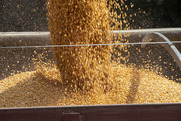
Fall harvest is in full swing, weather permitting. The leaves on the trees have been turning and their beautiful colors will soon disappear. Keep safety in mind as we continue to move through the fall harvest.
Farm Program Payments: October can be a busy month issuing various farm program payments. If you have changed bank accounts, please contact the office to update your information to make sure any direct deposit activity is not held up.
- Older CRP Contracts – Payments went out last week.
- PLC and ARC payments for Wilkin and West Otter Tail for small grains, corn,
soybeans, and sunflowers have been calculated to zero based on 2023
marketing year prices and yields. No payments will be issued.
- Newer CRP Contracts – Payments will begin to go out Wednesday,
October 9th.
Marketing Assistance Loans (MAL): With small grain harvest wrapped up and soybean harvest starting, FSA offers a 9-month commodity loan to provide interim financing after harvest to help meet cash flow needs without having to sell your commodities when market prices are typically at harvest-time lows. We know that wheat quality is a concern this year and discounts are common for falling numbers and vomitoxin. We would advise you to make sure you know the quality of your grain before taking a loan. Give our office a call if you have any questions about this option.
Minnesota Department of Agriculture Beginning Farmer Grants: Applications for a new grant to help beginning Minnesota farmers purchase equipment and infrastructure through the Minnesota Department of Agriculture (MDA) are open from September 24 - November 21. Farmers can apply for up to $20,000 to reimburse costs associated with purchasing farm equipment or paying for farm infrastructure development, such as investments in water access, irrigation, fencing, electricity, walk-in coolers, livestock buildings, greenhouses, and other similar structures. Visit the MDA website for more information.
Certifying Fall Crops: As September arrives, we would like to remind producers who plant fall-seeded crops to report their acreage to FSA by November 15th. Fall seeded crops are commodities planted during the fall that will be harvested next spring. Examples for crops in our area would be winter wheat or rye but that is not an all-inclusive list.
Cover Requirements on Idle Acres: By signing ARC County or Individual contracts and PLC contracts, you agree to effectively control noxious weeds on the farm according to sound agricultural practices. If you fail to take necessary actions to correct a maintenance problem on your farm that is enrolled in ARC or PLC, the County Committee may elect to terminate your contract for the program year. Cover crops are not required but encouraged. Additional guidance from FSA can be found here: MN ARCPLC Cover on Idle Acres
Farm Storage Facility Loan: Did you know FSA’s Farm Storage Facility Loan Program (FSFL) can help you with your storage and handling needs? During harvest, were you thinking that you really could use a truck, grain cart, sugar beet cart, auger, or another piece of equipment to meet your handling needs? Do you need additional storage? Are interest rates at your local lender holding you back from making that purchase? Then why don’t you give our FSFL program a chance to help you:
- Acquire new or used storage and handling trucks;
- Acquire portable or permanently affixed storage and handling equipment;
- Acquire new or used storage bins.
A variety of structures, handling equipment, and trucks are eligible under this loan, including new and used - dryers, augers, trucks, grain trailers (hopper, live bottom, end dump), including semi tractors, baggers, bale wrappers, grain carts, sugar beet carts, forklifts and skid steers, bulk tanks, propane tanks, hay barns, facilities for cold storage, storage, drying, & handling facilities, and many more options available.
A producer may borrow up to $500,000 per loan, with a minimum down payment of 15 percent. Loan terms range from 3 to 12 years, depending on the amount of the loan with favorable interest rates (3.500 - 3.875%) currently. Producers must demonstrate storage needs based on three years of production history for storage facilities. FSA also provides a microloan option that, while available to all eligible farmers and ranchers, also should be of particular interest to new or small producers where there is a need for financing options for loans up to $50,000 at a lower down payment with reduced documentation. Applicants for all loans will be charged a nonrefundable $100 application fee. If there is construction required, which would include ground disturbance such as site preparation, an environmental review must be completed before actions are approved. Contact your local FSA office early in your planning process to determine what level of environmental review is required for your program application so that it can be completed timely.
Leon Johnson, CED
|

Important Dates and Deadlines:
October 14 - USDA Service Centers closed in observance of Columbus Day.
October 31 - Organic Certification Cost Share Program (OCCSP) Application Deadline.
November 4 - December 2 - County Committee Election
November 15 - Fall Acreage Reporting Deadline for Fall Seeded Crops such as Winter Wheat, Rye, etc.
November 15 - NRCS CSP (Conservation Stewardship Program) Cutoff for 2025, Contact NRCS for details
October Interest Rates
Commodity Loan Interest Rate: 5.125%
|
2024 Commodity Loan Rates:
|
|
Crop
|
West Otter Tail
|
Wilkin
|
|
Corn / bu.
|
$2.09
|
$2.05
|
|
Soybeans / bu.
|
$5.99
|
$6.01
|
|
Wheat / bu.
|
$3.95
|
$3.94
|
|
Sunflowers / cwt
|
$10.14
|
$10.21
|
|
Barley / bu.
|
$2.33
|
$2.38
|
Farm Loan Program - Interest Rates:
4.875% - Farm Operating Loans, Direct
5.375% - Farm Ownership Loans, Direct
3.375% - Farm Ownership, Joint Financing
1.500% - Farm Ownership Loans, Beginning Farmer Down Payment
Farm Storage Facility Loan Program Interest Rates:
3.625% - Farm Storage Facility Loans, 3-Year
3.500% - Farm Storage Facility Loans, 5-Year
3.625% - Farm Storage Facility Loans, 7-Year
3.750% - Farm Storage Facility Loans, 10-Year
3.875% - Farm Storage Facility Loans, 12-Year
Keep Connected with FSA: How do you want to get information from us in the office - besides this bulletin - the best way is to sign up for text messages that pertain to critical information that is happening at that time. Signup for text messages by following the steps below!
Get a Text From FSA: As we continue to transition to more and more electronic pathways of communication, I encourage you to sign up for our text message alerts. This will assist you with staying on top of all FSA program deadlines. FSA provides text message alerts (no more than 2 per month) for important reminders and deadlines. Don’t miss out on getting these effortless reminders. Let’s get you signed up right now!
- Take out your cell-phone
- Create a new text message, send: MNWestOtterTail to 372-669 or MNWilkin to 372-669
- Press send
If you did these 3 easy steps, you are signed up to receive text alerts!
|
If you’re enrolled in the Agriculture Risk Coverage (ARC) or Price Loss Coverage (PLC) programs, you must protect all cropland and noncropland acres on the farm from wind and water erosion and noxious weeds. By signing ARC county or individual contracts and PLC contracts, you agree to effectively control noxious weeds on the farm according to sound agricultural practices. If you fail to take necessary actions to correct a maintenance problem on your farm that is enrolled in ARC or PLC, the County Committee may elect to terminate your contract for the program year.
Top of page
The U.S. Department of Agriculture (USDA) today announces changes to the Farm Service Agency’s (FSA) Farm Loan Programs, effective Sept. 25, 2024 — changes that are intended to increase opportunities for farmers and ranchers to be financially viable. These improvements, part of the Enhancing Program Access and Delivery for Farm Loans rule, demonstrate USDA’s commitment to improving farm profitability through farm loans designed to provide important financing options used by producers to cover operating expenses and purchase land and equipment.
Farm loan policy changes outlined in the Enhancing Program Access and Delivery for Farm Loans rule, are designed to better assist borrowers to make strategic investments in the enhancement or expansion of their agricultural operations.
The three most notable policy changes include:
· Establishing a new low-interest installment set-aside program for financially distressed borrowers. Eligible financially distressed borrowers can defer up to one annual loan installment per qualified loan at a reduced interest rate, providing a simpler and expedited option to resolve financial distress in addition to FSA’s existing loan servicing programs.
· Providing all eligible loan applicants access to flexible repayment terms that can increase profitability and help build working capital reserves and savings. By creating upfront positive cash flow, borrowers can find opportunities in their farm operating plan budgets to include a reasonable margin for increased working capital reserves and savings, including for retirement and education.
· Reducing additional loan security requirements to enable borrowers to leverage equity. This reduces the amount of additional security required for direct farm loans, including reducing the frequency borrowers must use their personal residence as additional collateral for a farm loan.
Additional Farm Loan Program Improvements
Under the Biden-Harris Administration, USDA’s FSA has embarked on a comprehensive and systemic effort to ensure equitable delivery of Farm Loan Programs and improve access to credit for small and mid-size family farms. FSA has also included additional data in its annual report to Congress to provide information that Congress, stakeholders, and the general public need to hold USDA accountable on the progress that has been made in improving services to underserved producers. This year’s report shows FSA direct and guaranteed loans were made to a greater percentage of young and beginning farmers and ranchers, as well as improvements
in the participation rates of minority borrowers. The report also highlights FSA’s microloan program’s new focus on urban agriculture operations and niche market lending, as well as increased support for producers seeking direct loans for farm ownership in the face of increasing land values across the country.
FSA has a significant initiative underway to streamline and automate the Farm Loan Program customer-facing business process. For the over 26,000 producers who submit a direct loan application annually, FSA has made several impactful improvements including:
· The Loan Assistance Tool that provides customers with an interactive online, step-by-step guide to identifying the direct loan products that may be a fit for their business needs and to understanding the application process.
· The Online Loan Application, an interactive, guided application that is paperless and provides helpful features including an electronic signature option, the ability to attach supporting documents such as tax returns, complete a balance sheet, and build a farm operating plan.
· An online direct loan repayment feature that relieves borrowers from the necessity of calling, mailing, or visiting a local USDA Service Center to pay a loan installment.
· A simplified direct loan paper application, reduced from 29 pages to 13 pages.
USDA encourages producers to reach out to their local FSA farm loan staff to ensure they fully understand the wide range of loan and servicing options available to assist with starting, expanding, or maintaining their agricultural operation. To conduct business with FSA, please contact your local USDA Service Center
FSA helps America’s farmers, ranchers and forest landowners invest in, improve, protect and expand their agricultural operations through the delivery of agricultural programs for all Americans. FSA implements agricultural policy, administers credit and loan programs, and manages conservation, commodity, disaster recovery and marketing programs through a national network of state and county off ices and locally elected county committees. For more information, visit, www.fsa.usda.gov
USDA touches the lives of all Americans each day in so many positive ways. In the Biden-Harris administration, USDA is transforming America’s food system with a greater focus on more resilient local and regional food production, fairer markets for all producers, ensuring access to safe, healthy and nutritious food in all communities, building new markets and streams of income for farmers and producers using climate smart food and forestry practices, making historic investments in infrastructure and clean energy capabilities in rural America, and committing to equity across the Department by removing systemic barriers and building a workforce more representative of America. To learn more, visit www.usda.gov.
|
The cut-off for 2025 Conservation Stewardship Program (CSP) applications is November 15, 2024.
The Conservation Stewardship Program (CSP) is a voluntary conservation program that encourages producers to address resource concerns in a comprehensive manner by undertaking additional conservation activities; and improving, maintaining, and managing existing conservation activities. Eligible applications received by 11/15/2024, will be evaluated, prioritized, and ranked for funding in 2025.
If funding allows, a second application cutoff will be set later in the year. Applications are accepted continually – the announced dates are the cutoff for ranking.
Visit your local NRCS field office to apply now. For more information, visit https://www.nrcs.usda.gov/programs-initiatives/csp-conservation-stewardship-program/minnesota/conservation-stewardship. We look forward to assisting with your conservation needs!
|

Creating Market Opportunities, Delivering Climate Solutions
USDA’s Partnerships for Climate-Smart Commodities effort is expanding markets for America’s climate-smart commodities, leveraging the greenhouse gas benefits of climate-smart commodity production, and providing direct, meaningful benefits to production agriculture, including for small and underserved producers. Learn more about expanded markets, premiums, and incentives for producing climate-smart commodities as well as cost share and technical assistance to implement climate-smart practices. Find a project near you and get started today!
|
Through the Organic Certification Cost Share Program (OCCSP), USDA’s Farm Service Agency (FSA) will cover up to 75% of organic certification costs at a maximum of $750 per certification category. FSA is now accepting applications, and organic producers and handlers should apply for OCCSP by the Oct. 31, 2024, deadline for eligible expenses incurred from Oct. 1, 2023, to Sept. 30, 2024. FSA will issue payments as applications are received and approved. OCCSP was part of a broader organic announcement made by Agriculture Secretary Tom Vilsack on May 15, 2024, which also included the Organic Market Development Grant program and Organic Transition Initiative.
Eligible Applicants, Expenses and Categories
OCCSP provides cost-share assistance to producers and handlers of organic agricultural commodities for expenses incurred obtaining or maintaining organic certification under USDA’s National Organic Program. Eligible OCCSP applicants include any certified organic producers or handlers who have paid organic certification fees to a USDA-accredited certifying agent.
Cost share assistance covers expenses including application fees, inspection costs, fees related to equivalency agreement and arrangement requirements, inspector travel expenses, user fees, sales assessments and postage. OCCSP pays a maximum of $750 per certification category for crops, wild crops, livestock, processing/handling, and state organic program fees (California only).
How to Apply
To apply, producers and handlers should contact FSA at their local USDA Service Center and be prepared to provide documentation of organic certification and eligible expenses. OCCSP applications can also be submitted through participating state departments of agriculture. For more information, visit the OCCSP webpage.
Opportunity for State Departments of Agriculture
FSA is also accepting applications from state departments of agriculture to administer OCCSP. FSA posted a funding opportunity summary on grants.gov and will electronically mail the Notice of Funding Opportunity to all eligible state departments of agriculture. Applications are due July 12, 2024.
If a state department of agriculture chooses to participate in OCCSP, both the state department of agriculture and FSA county offices in that state will accept OCCSP applications and make payments to eligible certified operations. Producers or handlers can receive OCCSP assistance from either FSA or the participating state department of agriculture but not both.
More Information
USDA offers other assistance for organic producers, including the Organic Transition Initiative (OTI), which includes direct farmer assistance for organic production and processing and conservation. For more information on organic agriculture, visit farmers.gov/organic. To learn more about FSA programs, producers can contact their local USDA Service Center. Producers can also prepare maps for acreage reporting as well as manage farm loans and view other farm records data and customer information by logging into their farmers.gov account. If you don’t have an account, sign up today.
|
Top of page
West Otter Tail and Wilkin County
USDA Service Centers
FSA County Executive Director
Leon Johnson 218-321-3235
leon.johnson@usda.gov
NRCS Team Lead
Robert Guetter 218-530-3295
robert.guetter@usda.gov
FSA Farm Loan Manager
Brian Christensen 218-739-4694
brian.christensen@usda.gov
FSA District Director
Mark Bertram 218-739-4694
mark.bertram@usda.gov
Service Center Radio Program
KBRF 1250 AM - Wednesday Morning's at 6:20 AM
|
West Otter Tail County USDA Service Center
506 Western Ave N
Fergus Falls MN 56537
Phone: 218-739-4694
FAX: 855-739-3982
FSA Office Email: mnfergusfa-fsa@usda.gov
NRCS Office Email: mnfergusfa-nrcs@usda.gov
Wilkin County USDA Service Center
1150 highway 75 North Suite 1
Breckenridge MN 56520
Phone: 218-643-1536
FAX: 855-771-5571
FSA Office Email: mnbreckenr-fsa@usda.gov
NRCS Office Email: mnbreckenr-nrcs@usda.gov
|
|
West Otter Tail
Farm Program Analysts
Vicki Hull
Bernie Schleske
Abigail Fronning
Logan Frigaard
Angela Erickson
FSA Farm Loan Staff
Micah Bengtson, Farm Loan Officer Jason Winkels, Farm Loan Officer Shelby Bengtson, Farm Loan Analyst
FSA County Committee
Paul Dubbels, Chairperson
Travis Grefsrud, Vice Chairperson
John Wold, Member
Renee Nelson, Minority Advisor
Next COC Meeting: TBD
|
West Otter Tail NRCS Staff
218-739-4694, Ext. 3
Dalton Skonseng,
Acting District Conservationist
dalton.skonseng@usda.gov
Micayla Nelson, Soil Conservationist micayla.nelson@usda.gov
|
|
Wilkin County
Farm Program Analysts
Mary Norman
Shelley Price
Patty Moses
Melissa Amundson
FSA County Committee
David Simmer, Chairperson
Vance Johnson, Vice Chairperson
Mike Friederichs, Member
Marissa Moxness, Minority Advisor
Next COC Meeting: TBD
|
Wilkin County NRCS Staff
218-643-1536, Ext. 3
Jamieson Volk, District Conservationist jamieson.volk@usda.gov
Jenna Steffes, Agronomist jenna.steffes@usda.gov
Alex Sirovy, Soil Scientist alex.sirovy@usda.gov
|
|






