
Clay & Norman County, MN USDA Service Center Update - September 12, 2024
In This Issue:
The past week has really felt like the fall season is upon us. Harvest of small grains is complete and soybean, sugar beet and corn harvest is not far off. We hope you have a safe and successful fall harvest! And remember to make safety your top priority, because I want to hear from you, not about you!
I also encourage you to remind your farmer neighbors who are not receiving these bulletins to sign up and to sign up for text alerts. We don’t want anyone to miss out on opportunities to assist your farming operations. It's vital to keep on top of all our deadlines and changes that occur.
Please take a little time to read over this month’s bulletin to stay up to date with all the available programs and deadlines.
Farm Program Payments – October can be a busy month issuing various farm program payments. If you have changed bank accounts, please contact the office to update your information to make sure any direct deposit activity is not held up.
Protect Your USDA Benefits – As you consider tiling activities, removing trees, or bringing land into production, be sure your proposed activity is in compliance with federal wetland (WC) and highly erodible land (HELC) regulations; and therefore, not jeopardizing your USDA benefits. Conservation Compliance Fact Sheet. When in doubt, contact our office. Remember to also check with the Soil and Water Conservation District regarding applicable state and county laws.
Livestock Reminder – A reminder for all livestock producers to keep records throughout the year. It becomes essential to have inventory and loss records when applications start to roll in for our Livestock Indemnity Program (LIP) due to eligible adverse weather events. LIP provides disaster assistance to livestock owners who experience livestock deaths, in excess of normal mortality, cause by eligible events for calendar year 2024.
Organic Producers – If you are an organic producer, just a reminder that we have the Organic Certification Cost Share Program (OCCSP) that can help reimburse you for eligible costs including application fees, inspection costs, and travel/per diem for inspectors. OCCSP covers 75% or up to $750 per category of certification scope (crops, livestock, wild crops, handling) and covers costs incurred from October 1, 2023 to September 30, 2024. Please contact the office if this applies to your operation. Applications for OCCSP are due October 31, 2024.
CRP Activities Reminder – The primary nesting season ended on August 1, now is a good time to explore your CRP acreage for weeds, volunteer trees and rodents. If you have received a letter about the need to complete CRP Required Management Activities such as mowing or burning of your CRP or completing the establishment of the contract, now is the time to do so if you haven't already completed these activities. Establishment of CRP must be completed in accordance with your approved conservation plan and is eligible to receive cost-share. FSA requests all bills, forms, and documentation for required management completion and new CRP contract practice establishment be submitted by September 18th. CRP required management and establishment activities must be completed by the deadline specified in your approved conservation plan and FSA-848. In very limited circumstances an extension of time may be allowed to complete required management activities and establishment activities however, you must make a request in writing to the FSA CED/COC. Please call the office if you have any questions or concerns about completing these scheduled actions by the deadline specified in your approved plan and FSA-848.
Certifying Fall Crops – We would like to remind producers who plant fall-seeded crops to report their acreage to FSA by November 15th. Fall seeded crops are commodities planted during the fall that will be harvested next spring. Examples for crops in our area would be winter wheat or rye but that is not an all-inclusive list.
Marketing Assistance Loans (MAL) – With small grain harvest underway, FSA offers a 9-month commodity loan to provide interim financing after harvest to help meet cash flow needs without having to sell your commodities when market prices are typically at harvest-time lows. We know that wheat quality is a concern this year and discounts are common for falling numbers and vomitoxin. We would advise you to make sure you know the quality of your grain before taking a loan. Give our office a call if you have any questions about this option.
Farm Storage Facility Loan – Did you know FSA’s Farm Storage Facility Loan Program (FSFL) can help you with your storage and handling needs? As you go into harvest, think about what needs you might have to make your storage and handling more efficient. Could you use a truck, grain cart, sugar beet cart, auger, or another piece of equipment to meet your handling needs? Do you need additional storage? Are interest rates at your local lender holding you back from making that purchase? Then why don’t’ you give our FSFL program a chance to help you:
- Acquire new or used storage and handling trucks;
- Acquire portable or permanently affixed storage and handling equipment; and/or
- Acquire new storage facilities.
A variety of structures, handling equipment, and trucks are eligible under this loan, including new & used dryers, augers, trucks, semi tractors, grain trailers (hopper, live bottom, end dump), baggers, bale wrappers, grain carts, sugar beet carts, forklifts and skid steers, bulk tanks, propane tanks, hay barns, facilities for cold storage, storage, drying, & handling facilities, and many more options available.
Contact your local FSA office early in your planning process to determine what level of environmental review is required for your program application so that it can be completed timely.
Please contact the Clay County USDA Service Center at 218-233-7773 or Norman County USDA Service Center at 218-784-4000 regarding any questions pertaining to the information within this bulletin, or any other concerns you may have. Thank you and please enjoy the remaining weeks of summer!
James Kruize, CED
|
Top of page

Important Dates and Deadlines
September 30 – Noninsured Crop Disaster
Assistance Program (NAP)
Minnesota closing deadlines
for perennial forage, wild rice,
asparagus, rhubarb, strawberries,
garlic, aquaculture, Christmas trees,
rye, floriculture, mushrooms, ginseng, and sod for crop year 2025
October 14 – USDA Service Centers closed in observance of Columbus Day
October 31 – Organic Certification Cost Share Program (OCCSP) Application
Deadline
November 4 – December 2 – County Committee Election
November 15 – Fall Acreage Reporting Deadline for Fall Seeded Crops such as
Winter Wheat, Rye, etc
September 2024 Interest Rates
Commodity Loan Interest Rate
5.625% - Commodity Loans
Farm Loan Program
5.25% - Farm Operating Loans, Direct
5.50% - Farm Ownership Loans, Direct
3.50% - Farm Ownership, Joint Financing
1.50% - Farm Ownership Loans, Beginning Farmer Down Payment
Farm Storage Facility Loan Program
4.00% - Farm Storage Facility Loans, 3-Year
3.875% - Farm Storage Facility Loans, 5-Year
3.875% - Farm Storage Facility Loans, 7-Year
4.00% - Farm Storage Facility Loans, 10-Year
4.125% - Farm Storage Facility Loans, 12-Year
COMMODITY LOAN RATES
|
CLAY COUNTY COMMODITY LOAN RATES for 2024 CROP
|
|
Wheat (HRS)
|
$3.93/bu
|
Wheat (HRW)
|
$3.08/bu
|
|
Barley
|
$2.36/bu
|
Oats
|
$1.99/bu
|
|
Corn
|
$2.07/bu
|
Soybeans
|
$5.99/bu
|
|
Sunflowers
|
$10.21/cwt
|
|
|
|
NORMAN COUNTY COMMODITY LOAN RATES for 2024 CROP
|
|
Wheat (HRS)
|
$3.92/bu
|
Wheat (HRW)
|
$3.08/bu
|
|
Barley
|
$2.38/bu
|
Oats
|
$1.98/bu
|
|
Corn
|
$2.04/bu
|
Soybeans
|
$5.95/bu
|
|
Sunflowers
|
$10.21/cwt
|
|
|
Keep Connected with FSA: How do you want to get information from us in the office - besides this bulletin - the best way is to sign up for text messages that pertain to critical information that is happening at that time. Signup for text messages by following the steps below!
Get a Text From FSA – As we continue to transition to more and more electronic pathways of communication, I encourage you to sign up for our text message alerts. This will assist you with staying on top of all FSA program deadlines. FSA provides text message alerts (no more than 2 per month) for important reminders and deadlines. Don’t miss out on getting these effortless reminders. Let’s get you signed up right now!
- Take out your cell-phone
- Create a new text message, sending MNClay to 372-669 for Clay County or MNNorman to 372-669 for Norman County
- Hit send
If you did these 3 easy steps, you are signed up to receive text alerts!
|

Snowmobile season is approaching, if you plan to allow public snowmobile trails to be constructed on CRP please review the following policies.
CRP participants are responsible for the integrity of their CRP cover, if the cover is impacted for any reason, participants may be found in violation of the CRP contract and must restore the cover at their own expense or risk the possibility of being assessed a payment reduction or termination.
Although the use of CRP land for snowmobiles use is not restricted, 2-CRP policy does not provide for use of snowmobile trails on CRP. If a participant wishes to construct or allow another entity, such as a snowmobile club, to construct a snowmobile trail on CRP, they must follow 2-CRP paragraph 634 and submit a request for authorized use to the FSA COC.
If a participant’s authorized use request to the FSA COC is approved allowing snowmobile trails on CRP, the following applies:
- An authorized use request must be made on a yearly basis.
- Snowmobile trails on CRP will be allowed between October 1 and March 31 provided the snowpack is at least 5 inches and the activity would cause no long-term damage to the vegetative cover on the land, determined on a contract-by-contract basis.
- An inspection of the CRP to ensure cover integrity will occur in the spring, no later than May 15th.
- The participant must agree in writing to re-establish, at their own expense, any cover destroyed or damaged as a result of snowmobile trails.
Please call the FSA office if you have any questions or concerns about completing these actions.
|
Top of page

Marketing Assistance Loans (MALs) and Loan Deficiency Payments (LDPs) provide financing and marketing assistance for producers of many commodities, including graded and non-graded wool, mohair, and unshorn pelts. MALs and LDPs are available during shearing and provide interim financing to help you meet cash flow needs without having to sell commodities when market prices are low, enabling you to delay selling until more favorable marketing conditions emerge. LDPs are payments made to producers who, although eligible to obtain an MAL, agree to forgo the loan in return for a payment on the eligible commodity.
FSA is now accepting requests for 2024 MALs and LDPs for all eligible wool, mohair and unshorn pelts. These requests should be made on or before the final availability date of Jan. 31, 2025. USDA recently announced 2024 wool and mohair marketing assistance loan rates.
Eligibility
To be eligible for a wool or mohair MAL or LDP, producers must produce and shear eligible mohair and wool in the U.S. during the applicable crop year and must:
- comply with conservation and wetland protection requirements;
- report all cropland acreage on applicable farms where the eligible commodity is produced;
- have and retain beneficial interest in the commodity until the MAL is repaid or the Commodity Credit Corporation (CCC) takes title to the commodity, and;
- meet Adjusted Gross Income (AGI) limitations.
Unshorn pelts are eligible for LDPs only. In addition to the criteria above, producers of unshorn pelts must have sold the unshorn lamb for immediate slaughter or slaughter the lambs for personal use. LDPs and marketing loan gains are not subject to payment limitation, including actively engaged in farming and cash rent tenant provisions.
In addition to producer eligibility, the loan commodity must have been produced and shorn from live animals by an eligible producer, be in storable condition, and meet specific CCC minimum grade and quality standards. Producers are responsible for any loss in quantity or quality of the wool or mohair pledged as loan collateral.
To retain beneficial interest, the producer must have control and title of the wool, mohair, or unshorn pelt. If beneficial interest in the commodity is lost, the commodity loses eligibility for an MAL or LDP and remains ineligible even if the producer later regains beneficial interest. The producer must be able to make all decisions affecting the commodity including movement, sale, and the request for an MAL or LDP.
Producers may repay an MAL any time during the loan period at the lesser of the loan rate plus accrued interest and other charges or an alternative loan repayment rate, the national posted price, which is announced weekly. Visit the Farm Service Agency (FSA) website for posted loan and LDP rates.
How to Apply
Producers can apply for an MAL by contacting their local FSA county office. To be considered for a LDP, producers must first have the form CCC-633 EZ, Page 1, on file with FSA prior to losing beneficial interest in the wool, mohair or unshorn pelt. It is best to visit the county office and submit the CCC-633 Page 1 right before you shear. This is completed one time per crop year and indicates your intention to receive LDP benefits.
To apply and learn more information, contact your local USDA Service Center or visit fsa.usda.gov.
|
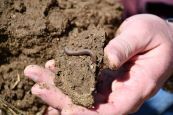
Our lives are dependent on healthy soil. Healthy soil gives us clean air and water, bountiful crops and forests, productive grazing lands, diverse wildlife and beautiful landscapes. It’s the reason why USDA’s Natural Resources Conservation Service experts are in your community and across the nation.
Soil is composed of air, water, organic matter and minerals. A community of organisms – functioning as a soil food web – lives all or parts of their lives in soil. More individual organisms are in a teaspoon of soil than there are people on earth. Increasing soil organic matter typically improves soil health, since organic matter improves several critical functions of soil.
To improve the health of their soil, more and more farmers and ranchers are keeping soil covered, reducing disturbance activities such as tilling, keeping plants growing throughout the year, and diversifying the crops they’re planting in a rotation. Taking these steps allow farmers and ranchers to help reduce erosion while increasing the soil’s ability to provide nutrients and water to the plant at critical times during the growing season.
When producers focus on improving soil health, they often have larger harvests, lower input costs, optimized nutrient use, and improved crop resilience during drought years like last year. In heavy rainfall years, healthy soil holds more water, reducing runoff that helps avert flooding downstream.
And because healthy soil allows for greater water infiltration and less erosion, nutrients and pesticides stay on the farm where they benefit crops, and are far less likely to be carried off the farm into streams and lakes where they can cause harm.
NRCS helps farmers install conservation practices such as cover crops to maintain and improve soil health – all of which can lead to productive, profitable and sustainable farming and ranching operations for generations to come.
For more information, contact your Clay County USDA Service Center at 218-233-7773, Norman County USDA Service Center at 218-784-4000, or visit nrcs.usda.gov.
|

Flowing grain in a storage bin or gravity-flow wagon is like quicksand — it can kill quickly. It takes less than five seconds for a person caught in flowing grain to be trapped.
The mechanical operation of grain handling equipment also presents a real danger. Augers, power take offs, and other moving parts can grab people or clothing.
These hazards, along with pinch points and missing shields, are dangerous enough for adults; not to mention children. It is always advisable to keep children at a safe distance from operating farm equipment. Always use extra caution when backing or maneuvering farm machinery. Ensure everyone is visibly clear and accounted for before machinery is engaged.
FSA wants all farmers to have a productive crop year and that begins with putting safety first.
|
Farmers can use USDA farm ownership microloans to buy and improve property. These microloans are especially helpful to beginning or underserved farmers, U.S. veterans looking for a career in farming, and those who have small and mid-sized farming operations. Microloans have helped farmers and ranchers with operating costs, such as feed, fertilizer, tools, fencing, equipment, and living expenses since 2013.
Microloans can also help with farmland and building purchases and soil and water conservation improvements. FSA designed the expanded program to simplify the application process, expand eligibility requirements and expedite smaller real estate loans to help farmers strengthen their operations. Microloans provide up to $50,000 to qualified producers and can be issued to the applicant directly from the USDA Farm Service Agency (FSA).
To learn more about the FSA microloan program, contact your Clay County USDA at 218-233-7773, Norman County USDA Service Center at 218-784-4000, or visit fsa.usda.gov/microloans.
|
Top of page
Clay County USDA Service Center
1615 30th Avenue South
Moorhead, MN 56560
Phone: 218-233-7773
Fax: 855-765-7523
FSA Office Email Address: mnmoorhead-fsa@usda.gov
NRCS Office Email Address: mnmoorhead-nrcs@usda.gov
Norman County USDA Service Center
10 East 2nd Avenue South
Ada, MN 56510
Phone: 218-784-4000
Fax: 855-719-7946
FSA Office Email Address: mnada-fsa@usda.gov
NRCS Office Email Address: mnada-nrcs@usda.gov
FSA County Executive Director
James Kruize - 218-233-7773 / 218-784-4000
james.kruize@usda.gov
Radio Program
KRJB 106.5 FM - Second Tuesday of Each Month at 9:00 am
|
|
USDA Service Center Locator
|
Clay County USDA Service Center
|
|
FSA Farm Loan Manager
Brian Christensen - 218-739-4694 brian.christensen@usda.gov
FSA Program Analysts
Ashley Deabenderfer
Dustin Ernst
Breanna Marthaler
Tia Wallner
FSA Farm Loan Staff
Micah Bengtson, Farm Loan Officer
Jason Winkels, Farm Loan Officer
Shelby Bengtson, Farm Loan Analyst
FergusFallsFarmLoan@usda.gov
Farm Loan Staff will be in Clay County on Tuesdays and Wednesdays
FSA District Director
Mark Bertram - 218-739-4694 mark.bertram@usda.gov
|
NRCS Team Lead
Robert Guetter - 218-530-3295 robert.guetter@usda.gov
NRCS Staff
Travis Doeden - 218-233-7773 travis.doeden@usda.gov
Kate Volk - 218-233-7773 kate.volk@usda.gov
Bryan Delaney - 218-233-7773 bryan.delaney@usda.gov
FSA County Committee
Trent Eidem - Chairperson
Chris Bang - Vice Chairperson
Nathan Anderson - Member
Ashley Heng - Advisor
Next FSA County Committee Meeting
To Be Determined
Next Clay SWCD Meeting
2nd Thursday of each month at 4:00 pm
|
Norman County USDA Service Center
|
|
FSA Farm Loan Manager
Matthew Voxland - 218-281-2809 matthew.voxland@usda.gov
FSA Program Analysts
Nikie Ambuehl
Sal Gullekson
Darci Kitchell
FSA Farm Loan Staff
Tiffany Page, Farm Loan Officer
Sam Hogstad, Sr Farm Loan Officer
Kennedy Rockstad, Farm Loan Officer
Mia Hunsberger, Farm Loan Analyst
CrookstonFarmLoan@usda.gov
Farm Loan Staff will be in Norman County on Thursdays (9:00 - Noon) and afternoons by appointment.
FSA District Director
Mark Bertram - 218-739-4694 mark.bertram@usda.gov
|
NRCS Team Lead
Luther Newton - 218-281-2809 luther.newton@usda.gov
NRCS Staff
Luke Klawitter - 218-784-4000 luke.klawitter@usda.gov
Eric Sele - 218-784-4000 eric.sele@usda.gov
FSA County Committee
Glen Alexander - Chairperson
Eugene Hanson - Vice Chairperson
John Jossund - Member
Denise Sirjord - Advisor
Next FSA County Committee Meeting
To Be Determined
|
|
Persons with disabilities who require accommodations to attend or participate in any meeting should contact James Kruize at 218-233-7773 or 218-784-4000 or
dial 7-1-1 to access telecommunication relay services.
|
|






