
Connecticut FPAC Newsletter - September 23, 2024.
In This Issue:
 Each year, we at USDA observe National Hispanic Heritage Month from September 15 to October 15 by celebrating the histories, cultures and contributions of Americans whose ancestors came from Spain, Mexico, the Caribbean and Central and South America.
The observation started in 1968 as Hispanic Heritage Week under President Lyndon Johnson and was expanded by President Ronald Reagan in 1988 to cover a 30-day period starting on September 15 and ending on October 15. It was enacted into law on August 17, 1988.
The day of September 15 is significant because it is the anniversary of independence for Latin American countries Costa Rica, El Salvador, Guatemala, Honduras, and Nicaragua. In addition, Mexico and Chile celebrate their independence days on September 16 and September 18, respectively. Finally, Day of the Races or Día de la Raza, which is October 9, falls within this 30-day period.
To learn more about Hispanic American Heritage month click here!
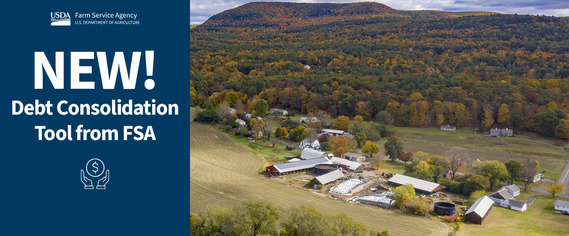 The U.S. Department of Agriculture (USDA) is announcing the launch of the Debt Consolidation Tool, an innovative online tool available through farmers.gov that allows agricultural producers to enter their farm operating debt and evaluate the potential savings that might be provided by obtaining a debt consolidation loan with USDA’s Farm Service Agency (FSA) or a local lender.
A debt consolidation loan is a new loan used to pay off other existing operating loans or lines of credit that might have unreasonable rates and terms. By combining multiple eligible debts into a single, larger loan, borrowers may obtain more favorable payment terms such as a lower interest rate or lower payments. Consolidating debt may also provide farmers and ranchers additional cash flow flexibilities.
The Debt Consolidation Tool is a significant addition to FSA’s suite of improvements designed to modernize its Farm Loan Programs. The tool enhances customer service and increases opportunities for farmers and ranchers to achieve financial viability by helping them identify potential savings that could be reinvested in their farming and ranching operation, retirement accounts, or college savings accounts.
Producers can access the Debt Consolidation Tool by visiting farmers.gov/debt-consolidation-tool. The tool is built to run on modern browsers including Chrome, Edge, Firefox, or the Safari browser. Producers do not need to create a farmers.gov account or access the authenticated customer portal to use the tool.
Additional Farm Loan Programs Improvements
FSA recently announced significant changes to Farm Loan Programs through the Enhancing Program Access and Delivery for Farm Loans rule. These policy changes, to take effect September 25, 2024, are designed to better assist borrowers to make strategic investments in the enhancement or expansion of their agricultural operations.
FSA also has a significant initiative underway to streamline and automate the Farm Loan Program customer-facing business process. For the over 26,000 producers who submit a direct loan application annually, FSA has made several impactful improvements including:
- The Loan Assistance Tool that provides customers with an interactive online, step-by-step guide to identifying the direct loan products that may be a fit for their business needs and to understanding the application process.
- The Online Loan Application, an interactive, guided application that is paperless and provides helpful features including an electronic signature option, the ability to attach supporting documents such as tax returns, complete a balance sheet, and build a farm operating plan.
- An online direct loan repayment feature that relieves borrowers from the necessity of calling, mailing, or visiting a local USDA Service Center to pay a loan installment.
- A simplified direct loan paper application, reduced from 29 pages to 13 pages.
- A new educational hub with farm loan resources and videos.
USDA encourages producers to reach out to their local FSA farm loan staff to ensure they fully understand the wide range of loan and servicing options available to assist with starting, expanding, or maintaining their agricultural operation. To conduct business with FSA, please contact your local USDA Service Center.
 2024 CRP signups successfully bring CRP nearer to acreage cap
The U.S. Department of Agriculture (USDA) is accepting offers for more than 2.2 million acres from agricultural producers and private landowners through this year’s Grassland, General, and Continuous Conservation Reserve Program (CRP) signups administered by USDA’s Farm Service Agency (FSA). With these accepted acres, enrollment is very near the 27 million CRP acreage cap.
Grassland CRP
Including the nearly 1.44 million acres recently accepted in Grassland CRP for offers received in 2024, producers will have enrolled more than 10 million acres in this popular working-lands program.
Grassland CRP allows producers and landowners to continue grazing and haying practices while protecting grasslands and further CRP’s impacts. Grassland CRP leverages working lands practices to improve biodiversity and conserve environmentally sensitive land.
Enrolled acres help sequester carbon in vegetation and soil, while enhancing resilience to drought and wildfire. Meanwhile, producers can still conduct common grazing practices, such as haying, mowing or harvesting seed from the enrolled land, which supports agricultural production.
Top states for this year’s Grassland CRP signup include:
-
Nebraska with 237,853 acres accepted
-
Colorado with 218,145 acres accepted
-
New Mexico with 185,619 acres accepted
Additionally, to target conservation in key geographies, USDA prioritizes land within two National Priority Zones: The Greater Yellowstone Ecosystem and the Dust Bowl area. The 2024 Grassland CRP enrollment has added more than 560,000 acres in the Priority Zones, bringing the total acres to 3.8 million. By conserving working grasslands and other lands that underpin iconic big game migrations, land enrolled in these zones contributes to broader USDA conservation efforts through Working Lands for Wildlife.
General and Continuous CRP
FSA also has accepted nearly 200,000 acres through the General signup, bringing total acres enrolled in General CRP to 7.9 million acres. As one of the largest private lands conservation programs in the United States, CRP offers a range of conservation options to farmers, ranchers and landowners. It has been an especially strong opportunity for farmers with less productive or marginal cropland, helping them re-establish valuable land cover to help improve water quality, prevent soil erosion and support wildlife habitat.
In January 2024, FSA opened enrollment for Continuous CRP. Under this enrollment, producers and landowners can enroll in CRP throughout the year. Offers are automatically accepted provided the producer and land meet the eligibility requirements and the enrollment levels do not exceed the statutory cap. To date, in 2024, more than 565,000 acres have been offered through Continuous CRP bringing the total acres enrolled to 8.5 million.
Producers can still make an offer to participate in CRP through the Continuous CRP signup, which is ongoing, by contacting FSA at their local USDA Service Center.

Don’t know much about Federal crop insurance, but you want to learn more?
Crop insurance is a risk management strategy that farmers use to protect their livelihoods. By purchasing a policy through a crop insurance agent, farmers are financially protected if there are losses due to a covered cause of loss. It’s not so different from car or homeowners insurance.
Start your journey out right by reading RMA’s Beginners Guide to Crop Insurance.
|
 The U.S. Department of Agriculture (USDA) today announces changes to the Farm Service Agency’s (FSA) Farm Loan Programs, effective Sept. 25, 2024 — changes that are intended to increase opportunities for farmers and ranchers to be financially viable. These improvements, part of the Enhancing Program Access and Delivery for Farm Loans rule, demonstrate USDA’s commitment to improving farm profitability through farm loans designed to provide important financing options used by producers to cover operating expenses and purchase land and equipment.
Farm loan policy changes outlined in the Enhancing Program Access and Delivery for Farm Loans rule, are designed to better assist borrowers to make strategic investments in the enhancement or expansion of their agricultural operations.
The three most notable policy changes include:
- Establishing a new low-interest installment set-aside program for financially distressed borrowers. Eligible financially distressed borrowers can defer up to one annual loan installment per qualified loan at a reduced interest rate, providing a simpler and expedited option to resolve financial distress in addition to FSA’s existing loan servicing programs.
- Providing all eligible loan applicants access to flexible repayment terms that can increase profitability and help build working capital reserves and savings. By creating upfront positive cash flow, borrowers can find opportunities in their farm operating plan budgets to include a reasonable margin for increased working capital reserves and savings, including for retirement and education.
- Reducing additional loan security requirements to enable borrowers to leverage equity. This reduces the amount of additional security required for direct farm loans, including reducing the frequency borrowers must use their personal residence as additional collateral for a farm loan.
Additional Farm Loan Program Improvements
Under the Biden-Harris Administration, USDA’s FSA has embarked on a comprehensive and systemic effort to ensure equitable delivery of Farm Loan Programs and improve access to credit for small and mid-size family farms.
FSA has also included additional data in its annual report to Congress to provide information that Congress, stakeholders, and the general public need to hold USDA accountable on the progress that has been made in improving services to underserved producers. This year’s report shows FSA direct and guaranteed loans were made to a greater percentage of young and beginning farmers and ranchers, as well as improvements in the participation rates of minority borrowers. The report also highlights FSA’s microloan program’s new focus on urban agriculture operations and niche market lending, as well as increased support for producers seeking direct loans for farm ownership in the face of increasing land values across the country.
FSA has a significant initiative underway to streamline and automate the Farm Loan Program customer-facing business process. For the over 26,000 producers who submit a direct loan application annually, FSA has made several impactful improvements including:
- The Loan Assistance Tool that provides customers with an interactive online, step-by-step guide to identifying the direct loan products that may be a fit for their business needs and to understanding the application process.
- The Online Loan Application, an interactive, guided application that is paperless and provides helpful features including an electronic signature option, the ability to attach supporting documents such as tax returns, complete a balance sheet, and build a farm operating plan.
- An online direct loan repayment feature that relieves borrowers from the necessity of calling, mailing, or visiting a local USDA Service Center to pay a loan installment.
- A simplified direct loan paper application, reduced from 29 pages to 13 pages.
USDA encourages producers to reach out to their local FSA farm loan staff to ensure they fully understand the wide range of loan and servicing options available to assist with starting, expanding, or maintaining their agricultural operation. To conduct business with FSA, please contact your local USDA Service Center.
FSA helps America’s farmers, ranchers and forest landowners invest in, improve, protect and expand their agricultural operations through the delivery of agricultural programs for all Americans. FSA implements agricultural policy, administers credit and loan programs, and manages conservation, commodity, disaster recovery and marketing programs through a national network of state and county off ices and locally elected county committees. For more information, visit, www.fsa.usda.gov.
 The U.S. Department of Agriculture (USDA) is asking for public input on how best to implement the SUSTAINS Act, which authorizes USDA to accept private contributions to channel through several existing USDA conservation programs. The public should submit comments to the Request for Information via the Federal Register by September 16, 2024.
The SUSTAINS Act, signed into law as part of the Consolidated Appropriations Act of 2023, provides USDA with the authority to accept contributions of private funds that can be channeled through its existing conservation programs and provides additional guidelines for those contributions. Specifically, the SUSTAINS Act provides an opportunity for the private sector to partner with USDA to engage farmers, ranchers, and forest landowners in supporting conservation initiatives, including to expand implementation of conservation practices to sequester carbon, improve wildlife habitat, protect sources of drinking water and address other natural resource priorities.
NRCS is asking for public input and recommendations to determine how the agency can utilize private funds to target specific natural resource concerns associated with agricultural production. NRCS is interested in supporting program implementation and improving program delivery, including by effectively leveraging additional funds to increase outreach and expand access to financial and technical assistance for underserved producers. NRCS will use the input to determine the next steps to implement this legislation, which could include a proposed rule.
Public comments should be submitted through this Federal Register notice by September 16, 2024.
Anyone with questions can contact NRCS by sending an email to: NRCS.SUSTAINS.Input@usda.gov. Please specify the Docket ID: NRCS-2024-0014 in the subject line.
To learn more about NRCS programs, producers can contact their local USDA Service Center. Producers can also apply for NRCS programs, manage conservation plans and contracts, and view and print conservation maps by logging into their farmers.gov account. Producers without an account can sign up today.
 Nutrients can help or harm, either leading to bountiful harvests or contributing to water quality issues. How we manage nutrients affects how much is taken up by plants and how much is lost from our farm fields. Farmers and ranchers play an important role in finding solutions to prevent nutrients from making their way into our streams, rivers and other water bodies, including the Connecticut River.
You can help improve water quality by managing nutrients, using the right kind, the right amount, applied at the right time, and using the proper method of application. NRCS can help you use nutrients wisely – through a conservation practice called nutrient management. Nutrient management allows you to achieve optimal agricultural and economic outcomes while improving the quality of air, soil and water.
Through nutrient management, you perform a soil or plant tissue test to determine nutrient needs and apply only the amount needed to optimize crop yields. To improve timing, nutrients should be applied when plants can best absorb them, while considering factors like weather, irrigation events and crops that will follow. Sometimes it’s best to split nutrient applications to increase the chances of nutrient uptake by the crop while minimizing losses through runoff and leaching.
Managing nutrients comes with benefits for you, too. You can see cost savings from lower inputs and potential yield increases, thus creating a win-win situation. For more information, contact your local USDA Service Center or visit nrcs.usda.gov.

Producers are encouraged to call their local FSA office to schedule an appointment to ensure maximum use of their time and to make sure FSA staff is available to tend to their important business needs. Please call your local FSA office ahead to set an appointment and to discuss any records or documentation that might be needed during your appointment. To find your local FSA office, visit farmers.gov/working-with-us/service-center-locator.
|
 Agriculture offers a major potential to support water quality improvements nationwide. At USDA’s Natural Resources Conservation Service (NRCS), we deliver science and data, one-on-one technical support, and cost share opportunities to ensure this potential is realized.
This blog by Chief Terry Cosby details some of the key ways NRCS supports producers and conservation partners in improving water quality and strengthening agricultural operations through voluntary conservation.
Read Chief Cosby’s Blog
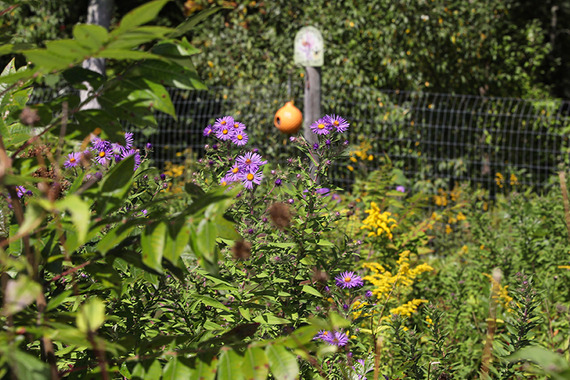 When it comes to sprucing up the farm or yard, native plants are a great option. These plants are indigenous to a particular area and provide advantages when used in the right place. Native plants are typically low maintenance and resistant to pests if planted in a place similar to their natural surroundings.
Many farmers recognize the benefits of native plants and are incorporating them into working lands, a practice commonly called “farmscaping.” Farmers incorporate natives into field borders, hedgerows and buffer strips – all conservation activities that help agricultural production and the environment. On farms, native trees, shrubs and plants help:
- Reduce the need for pesticides because native plants attract beneficial insects and birds that eat agricultural pests and also help pollinate
- Protect farmsteads, crops and livestock from wind and dust
- Keep soil in place, enabling it to become healthier and not wash into and pollute waterways;
- Provide wildlife habitat
- Increase the beauty of the farm landscape
Our community has a variety of wildflowers, such as aster, goldenrod, ironweed, and deer tongue.
For more information, contact your local USDA Service Center or visit nrcs.usda.gov.
The U.S. Department of Agriculture (USDA) is encouraging agricultural producers and forest landowners to participate in voluntary conservation programs and adopt climate-smart practices in fiscal year 2024 as part of President Biden’s Investing in America agenda. USDA’s Natural Resources Conservation Service (NRCS) is accepting applications for the Environmental Quality Incentives Program (EQIP), Conservation Stewardship Program (CSP) and Agricultural Conservation Easement Program (ACEP), which help a wide variety of producers, including urban and organic producers.
For fiscal year 2024, NRCS has $3 billion in Inflation Reduction Act funds to invest in climate-smart mitigation activities. This year, NRCS expanded the list of those activities as well as expanded priority areas for ACEP for grasslands, wetlands and farmlands at risk of conversion. Learn more about those expansions in our Sept. 28, 2023 news release.
Additionally, for fiscal year 2024, NRCS has over $2 billion in Farm Bill funding available to producers for priorities like organic and urban agriculture, soil health, water quality and quantity and wildlife habitat development. This extensive amount of funding will be used to meet producer demand for our oversubscribed programs, maximize climate benefits and help producers address their natural resource challenges.
NRCS accepts producer applications for its conservation programs year-round. To apply for fiscal year 2024 funding, apply by your state’s ranking date by contacting your local NRCS office.
Producers are encouraged to call their local NRCS office to schedule an appointment to ensure maximum use of their time and to make sure NRCS staff is available to tend to their important business needs. Please call your local NRCS office ahead to set an appointment and to discuss any records or documentation that might be needed during your appointment. To find your local NRCS office, visit: farmers.gov/service-center-locator.
Connecticut State NRCS Office
344 Merrow Road, Suite A
Tolland, CT 06084-3917
Phone: 860-871-4029
Connecticut State FSA Office
344 Merrow Road, Suite B
Tolland, CT 06084-3917
Phone: 860-871-4090
Fax: 855-934-2463
State Executive Director:
Emily J. Cole, PhD
|
|
Connecticut FSA State Website
|
|
State Office Staff:
Nathan Wilson, District Director
Jule Dybdahl, Administrative Officer
Rebecca Palmer, Program Specialist
A.J. Bellagamba, Program Specialist
Claire Vaterlaus-Staby, Outreach Coordinator
Keith Durao, Administrative Specialist
|
State Committee Chair:
Mary Concklin
State Committee Members:
Amy Chesmer
Shawn Joseph
Will O’Meara
|
Top of page
|






