
Rhode Island Service Center Newsletter - September 17, 2024
In This Issue:

USDA's FSA is here to help!
The United States Department of Agriculture (USDA) Farm Service Agency (FSA) administers many segments of the farm bill. FSA's responsibilities are organized into five areas: Farm Programs, Farm Loans, Commodity Operations, Management, and State Operations. The agency provides America's farmers with a strong safety net through the administration of farm commodity programs. FSA also implements ad hoc disaster programs. Here in Rhode Island, we are working closely with our two ‘sister’ agencies to reach all of our producers but as we see a growing number of farms, I fear that many of those new producers don’t know who we are and how we can help them.
Along with the Natural Resources Conservation Service (NRCS) and Rural Development (RD) we are hoping to increase awareness and promote program participation to underserved segments within out vibrant farming community such as veteran farmers, new and beginning farmers, women farmers, minority farmers, and specialty crop producers. I have been attending listening sessions to hear directly from producers about their concerns and needs, and one thing I heard many times (from farmers young and old) is the time it takes to run a farm - often between 70 and 100 hours a week! So, whether you are a full-time farmer or part-time farmer we value your time and hard work and understand that how we reach out to you is vitally important to getting you the services you need. One way we hope will help you save time is through the new Farmers.gov portal (read more below in “Conduct Business Online Through the Farmers.gov Portal”) and though SMS texting. To sign up for SMS text messages from the Rhode Island Service center text RIKent to 372-669 (standard text messaging rates apply).
FSA has many farm programs and loans programs that may be of great help to you today or in the future. So, I invite you to take a break from your busy schedules and look through the attached articles. If anything applies to you or you would like to learn more about us, call our offices (see contact info at the bottom) to set up a time and place for us to talk with you about your needs.
Have a safe and healthy fall!
J. Eric Scherer
Rhode Island FSA State Executive Director
|
 Each year, we at AgLearn observe National Hispanic Heritage Month from September 15 to October 15 by celebrating the histories, cultures and contributions of Americans whose ancestors came from Spain, Mexico, the Caribbean and Central and South America. The theme for 2024 is “Pioneers of Change: Shaping the Future Together.” The observation began in 1968 as Hispanic Heritage Week under President Lyndon Johnson and was expanded by President Ronald Reagan in 1988 to cover a month starting on September 15 and ending on October 15. September 15 is significant because it is the anniversary of independence for the Latin American countries of Costa Rica, El Salvador, Guatemala, Honduras, and Nicaragua. In addition, Mexico and Chile celebrate their independence days on September 16 and September 18, respectively. Learn more...

Looking for ways to do business with USDA that saves you time? Look no further than farmers.gov.
When you create an account for the farmers.gov authenticated customer portal, you have access to self-service features through a secure login. Managing your business with USDA’s Farm Service Agency (FSA) and Natural Resources Conservation Service (NRCS) is faster than ever. From e-signing documents, viewing, printing, and exporting maps and receiving notifications of payment disbursements, a farmers.gov authenticated account makes doing business with USDA easy and secure.
What can you do with your farmers.gov account?
- View FSA Farm Loan information including interest payments, loan advances, payment history and paid-in-full/restructured loans.
- Make USDA direct farm loan payments using the Pay My Loan feature.
- Access the Online Loan Application portal.
- View, print and export detailed FSA farm records and farm/tract maps.
- Import precision agriculture planting boundaries, create labels containing crop information, and print both on farm tract maps.
- View and print your FSA-156EZ with farm details
- View and print your Producer Farm Data Report
- View NRCS Disbursements and Farm Loans financial activity from the past 180 days.
- View your land, access NRCS data on your conservation plans, contracts, and planning land units through the Conservation Land Area page.
- View, upload, download and e-sign NRCS documents.
- Request NRCS conservation and financial assistance, including submitting a program application.
- View detailed information on all previous and ongoing NRCS contracts, including the amount of cost- share assistance received and anticipated; and even request contract modifications, report practice completion and request practice certification.
- “Switch Profiles” to act on behalf of your entity or another individual when you have active representative authority on file
If you’d like to see the features in action and learn more about how to use them, check out the 3-5 minute farmers.gov account video tutorials.
How do you create a farmers.gov account?
Visit ffarmers.gov/account to access information about farmers.gov accounts and sign in to the site’s authenticated portal. You will need a Login.gov account linked to your USDA customer record to access your farmers.gov authenticated site. Customers who are new to USDA should visit Get Started at Your USDA Service Center, then go to farmers.gov/account to create a farmers.gov account to create a farmers.gov account.
To create a farmers.gov account you will need:
- A USDA individual customer record — A customer record contains information you have given to USDA to do business with them, like your name, address, phone number, and any legal representative authority relationships. Contact your local USDA Service Center to make sure you have an individual USDA customer record on file and your information is up to date.
- A Login.gov account — Login.gov is a sign-in service that gives people secure online access to participating government programs. You can create a Login.gov account linked to your customer record by following the directions on farmers.gov/account.
- Identity Verification — You can choose to verify your identity with Login.gov or in-person at a USDA Service Center.
In addition to the self-service features, farmers.gov also has information on USDA programs, farm loans, disaster assistance, conservation programs and crop insurance.
^ back to top
|
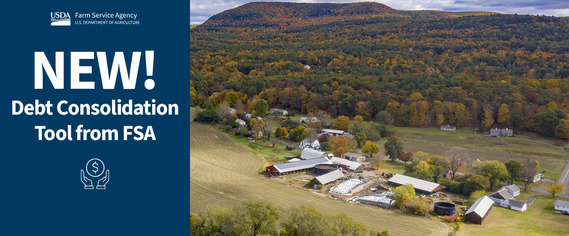 The U.S. Department of Agriculture (USDA) is announcing the launch of the Debt Consolidation Tool, an innovative online tool available through farmers.gov that allows agricultural producers to enter their farm operating debt and evaluate the potential savings that might be provided by obtaining a debt consolidation loan with USDA’s Farm Service Agency (FSA) or a local lender.
A debt consolidation loan is a new loan used to pay off other existing operating loans or lines of credit that might have unreasonable rates and terms. By combining multiple eligible debts into a single, larger loan, borrowers may obtain more favorable payment terms such as a lower interest rate or lower payments. Consolidating debt may also provide farmers and ranchers additional cash flow flexibilities.
The Debt Consolidation Tool is a significant addition to FSA’s suite of improvements designed to modernize its Farm Loan Programs. The tool enhances customer service and increases opportunities for farmers and ranchers to achieve financial viability by helping them identify potential savings that could be reinvested in their farming and ranching operation, retirement accounts, or college savings accounts.
Read more here....
^ back to top

The U.S. Department of Agriculture (USDA) is expanding the Food Safety Certification for Specialty Crops (FSCSC) program to now include medium-sized businesses in addition to small businesses. Eligible specialty crop growers can apply for assistance for expenses related to obtaining or renewing a food safety certification. The program has also been expanded to include assistance for 2024 and 2025 expenses. Producers can apply for assistance on their calendar year 2024 expenses beginning July 1, 2024, through Jan. 31, 2025. For program year 2025, the application period will be Jan. 1, 2025, through Jan. 31, 2026.
Program Details
FSCSC assists specialty crop operations that incurred eligible on-farm food safety certification and expenses related to obtaining or renewing a food safety. FSCSC covers a percentage of the specialty crop operation’s cost of obtaining or renewing its certification, as well as a portion of related expenses.
Eligible FSCSC applicants must be a specialty crop operation; meet the definition of a small or medium-size business and have paid eligible expenses related to certification.
Read more here....
^ back to top
|

The U.S. Department of Agriculture (USDA) today announces changes to the Farm Service Agency’s (FSA) Farm Loan Programs, effective Sept. 25, 2024 — changes that are intended to increase opportunities for farmers and ranchers to be financially viable. These improvements, part of the Enhancing Program Access and Delivery for Farm Loans rule, demonstrate USDA’s commitment to improving farm profitability through farm loans designed to provide important financing options used by producers to cover operating expenses and purchase land and equipment.
Farm loan policy changes outlined in the Enhancing Program Access and Delivery for Farm Loans rule, are designed to better assist borrowers to make strategic investments in the enhancement or expansion of their agricultural operations.
Reade more here....
^ back to top
|
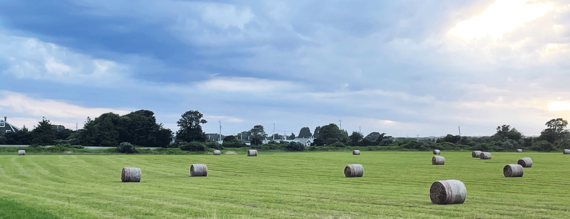 Even though the 2024 growing season isn’t over yet, it’s not too early to look forward to next year! NRCS offers technical and financial assistance to all eligible producers through a variety of programs – from urban and small-scale farms to larger operations on rented, leased, or owned land. Not sure if any of these programs are right for you?
- Do you want to conserve soil, water, or energy, or handle water quality, air quality, or animal waste issues?
- Do you want to create or improve pollinator or wildlife habitat, soil health or forest health?
- Do you want to extend your growing season or improve your pasture management?
- Do you want to make your farm more resilient to climate change or improve overall conservation on your land?
If you answered yes to any of these, you may be eligible for NRCS technical and/or financial assistance. Rhode Island farmers, forest landowners, oyster growers, ranchers and urban growers can apply by October 4, 2024, for our first round of FY 2025 conservation program funding.
Funds are available through the Environmental Quality Incentives Program (EQIP), Conservation Stewardship Program (CSP), Agricultural Management Assistance Program (AMA), National Water Quality Initiative (NWQI), and Agricultural Conservation Easement Program (ACEP). Learn more...
^ back to top

NRCS in Rhode Island is using the Act Now process to deliver conservation contracting faster. Act Now allows NRCS to quickly approve and obligate a ranked application in a designated ranking pool when that application meets or exceeds a minimum threshold ranking score. Act Now allows qualifying applications to be automatically approved and move forward in the process without waiting for all applications to be ranked during a given period.
For fiscal year 2025, NRCS is offering Act Now through the Environmental Quality Incentives Program (EQIP Classic and EQIP-IRA) starting Oct 4, 2024, and ending June 6, 2025, for two options:
- The EQIP Classic and EQIP IRA Combustion System and Energy Initiative and
- The EQIP Comprehensive Nutrient Management Plan (CNMP) Implementation
Qualified Act Now applications will be pre-approved while funds remain available and then moved forward to contracting with your local NRCS Field Office. Learn more...
^ back to top
|
Building on years of work to assist flood-prone residents in the Pocasset River Watershed, NRCS in Rhode Island has received authorization from Chief Terry Cosby for federal assistance to implement the Pocasset River Flood Damage Reduction Project as laid out in the Pocasset River Watershed Plan.
The Pocasset River floods portions of the Town of Johnston and the City of Cranston regularly, with flooding becoming more frequent and widespread in recent years. Property damages are recurrent and costly where severe flooding occurs. This project aims to reduce flood damages resulting from floods on the Pocasset River for magnitudes up to and including the 100-year flood event.
The total authorized project cost is estimated at $48.5 million to help prevent and mitigate damage to homes within critical flooding areas along the Pocasset River. An initial tranche of $12 million was made available this year thanks to Congressionally directed funding secured by Senator Reed in fiscal year 2022, 2023, and 2024 appropriations laws.
“Floodplains can provide significant protection from flood damages to downstream landowners,” said Phou Vongkhamdy, Rhode Island State Conservationist for NRCS. “This project would significantly limit future uses of land in the floodplain to make it available to store flood water and provide open space and other community benefits.”
Learn more...
^ back to top
|

NRCS announces that the RI Forest Health Works Regional Conservation Partnership Program (RCPP) Project is now accepting applications for funding for fiscal year 2025. The project is an agreement between NRCS, the RI DEM Division of Forest Environment, the Rhode Island Association of Conservation Districts, and numerous other partners to leverage over $3.9 million in 5 years to protect critical forests in the Ocean State.
^ back to top
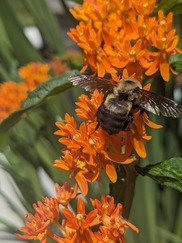
In the U.S., one third of all agriculture depends on pollinators. Three-fourths of the world's flowering plants depend on pollinators to reproduce. Some scientists estimate that one out of every three bites of food we eat exists because of animal pollinators like bees, butterflies and moths, birds and bats, and beetles and other insects.
To help our Ocean State farmers, forest landowners, gardeners, and urban growers plant pollinator habitat to conserve native pollinator species, Rhode Island NRCS has developed a Pollinator Gardens Design Guide that provides sample layouts and native plant species for dry, wet and typical soil conditions – Download it here: Rhode Island Pollinator Garden Design Guide (1.66 MB). Learn more...
^ back to top
|
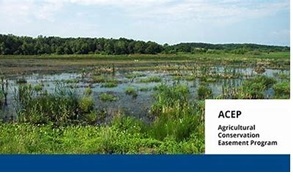
USDA announces funding for the Agricultural Conservation Easement Program (ACEP) provided by the Inflation Reduction Act for fiscal year 2025.
NRCS accepts applications year-round for ACEP Agricultural Land Easements (ACEP-ALE) and Wetland Reserve Easements (ACEP-WRE). Interested farmers, landowners, and partners should apply by the next two ranking dates, Oct. 4, 2024, or Dec. 20, 2024, at their local NRCS office, to be considered for these two state-led funding cycles. In addition, any application submitted to NRCS that was unfunded in fiscal year 2024 will be automatically re-considered during the October 4 funding cycle.
In fiscal year 2025, states will receive Inflation Reduction Act funding and all eligible applications within a state will compete. The current ACEP priorities for the Inflation Reduction Act funding are unchanged from last fiscal year and are available in all states. Depending on location, NRCS may also have a state-specific priority. The Inflation Reduction Act funding is in addition to the funding authorized and available under the Farm Bill. Learn more...
^ back to top
|

The Rhode Island State Office welcomes new executive assistant, Angela Phillip.
Angela joins NRCS from the Department of Veterans Affairs, where she provided advance medical support assistance. She is a military professional with over 10 years experience in supply management and administrative accountability. She even owned and operated her own trucking firm! Angela is a proud grandmother and very family and people-oriented. Please join us in welcoming her to the NRCS team.
^ back to top
|
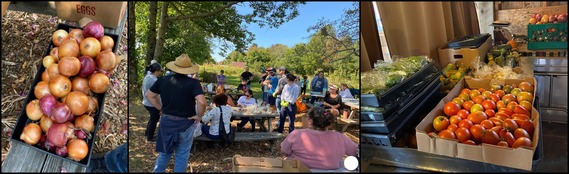 On Wednesday, September 11th, 2024, the USDA Rural Development (RD) Southern New England (SNE) team joined volunteers from Overlook Farm in Rutland, MA, for a full day of gleaning activities to help support local families in need and to help fight hunger in the community.
Overlook Farm is a working farm with deep roots in the community that teaches the value of sustainable agriculture and promotes food justice to grow a healthy world. For 35 years, people have been coming to the farm to volunteer, experience agricultural programming, and meet other people who care about farming and food. The farm allows the tradition of agricultural education, improving food access and stability, and understanding of food production to continue and grow in a new way.
This year’s 44 RD volunteers from throughout Connecticut, Massachusetts and Rhode Island helped glean vegetables and other produce from Overlook Farm’s 3,000 square foot garden; activities also included mulching, composting, weeding, organizing spaces, raking the grounds, planting, harvesting, assembling a storage shed and many other tasks. This garden helps to provide healthy food choices to the less fortunate and to surrounding local food pantries.
By the end of the day, nearly 450 pounds of organic produce were collected, contributing to this year’s total of 2,468 pounds and exceeding last year’s total of 2,362 pounds.
Overall, during this year’s Feds Feeding Families Campaign the USDA Rural Development team throughout Southern New England contributed 306 items. At USDA Rural Development, we are committed to not only improving the economy and the quality of life in rural communities – but we are also committed to finding ways to partner, standing side by side with our rural ag producers and identifying ways that these individuals and communities may thrive. Because we believe that when rural America thrives, all of America thrives. We look forward to next year’s Feds Feeding Families Campaign and, in the meantime, continuing our commitment to providing support through a suite of 70 programs across rural Southern New England!
To learn more about USDA Rural Development’s 70+ programs, visit us online at any time at: https://www.rd.usda.gov/programs-services.
^ back to top
USDA – Rhode Island
60 Quaker Lane
Warwick, RI 02886
|
|
Farm Service Agency (FSA)
State Executive Director - Eric Scherer
www.fsa.usda.gov/state-offices/Rhode-Island/
|
RI FSA County Office, Suite 49
RI FSA Farm Loan Team, Suite 62
RI FSA State Office, Suite 62
|
401-828-3120 Option 1
401-828-3120 Option 2
401-828-3120 Option 3
|
|
County Committee
|
Joseph Polseno, Chairperson
Erin Cabot, Member
Gilbert Rathbun Jr., Member
|
John Sousa, Vice Chairperson
William Coulter, Member
Dawn M Spears, SDA Member
|
|
State Committee
|
Al Bettencourt, Chairperson
Albert Brandon, Member
Michelle Garman, Member
|
Maggie Cole, Member
Cristina Cabrera, Member
|
|
Natural Resources Conservation Service (NRCS)
State Conservationist - Pooh Vongkhamdy
401-828-1300 | www.RI.nrcs.usda.gov
|
|
Eastern RI – Serving Newport and Bristol counties
|
NRCS Field Office
Ghyllian Alger, District Conservationist
401-822-8835 or Ghyllian.Alger@usda.gov
|
|
|
Northern RI – Serving Providence County
|
NRCS Field Office
Kate Bousquet, District Conservationist
401-822-8814 or Kate.Bousquet@usda.gov
|
|
|
Southern RI – Serving Kent and Washington counties
|
NRCS Field Office
Jameson Long, District Conservationist
401-822-8837 or Jameson.Long@usda.gov
|
Conservation District Office
401-661-5761 or sricd.info@gmail.com
|
|
Rural Development (RD)
https://www.rd.usda.gov/ct-ma-ri
(401) 826-0842
|
|
Risk Management Agency (RMA)
https://rma.usda.gov/en/RMALocal/Rhode-Island
919-875-4880
|
|






