NRCS-NJ Accepting Applications for Wetland Reserve Easements and Agricultural Land Easements
 Hamilton Square, N.J., Sept. 4, 2024 – The U.S. Department of Agriculture's (USDA) Natural Resources Conservation Service in New Jersey (NRCS-NJ) is currently accepting applications for the Fiscal Year 2025 Inflation Reduction Act (IRA) and 2018 Farm Bill funding through the Agricultural Conservation Easements Program (ACEP). This includes eligible parcels for both Agricultural Land Easements (ALE) and Wetland Reserve Easements (WRE) for this sign-up period.
While applications for ACEP-ALE and ACEP-WRE are taken on a continuous basis, the batching dates to be considered for Fiscal Year 2025 funding are Oct. 4, 2024, for the first round of applications batching, and Dec. 20, 2024, for the second round of applications batching. NRCS-NJ may be offering additional signup dates for ALE.
The Inflation Reduction Act (IRA), Pub. L. No. 117-169, passed by the 117th United States Congress, authorized the use of ACEP funds for easements or interests in land most likely to reduce, capture, avoid, or sequester carbon dioxide, methane, or nitrous oxide emissions on program-eligible land.
Agricultural Land Easements
ACEP-ALE provides cost-share financial assistance to eligible partners for purchasing perpetual Agricultural Land Easements that protect the agricultural use and conservation values of eligible land. In the case of working farms, the program helps farmers and ranchers keep their land in agricultural production. The program also protects grazing uses and related conservation values by conserving grassland, including rangeland, pastureland, and shrubland. Eligible partners include American Indian tribes, state and local governments, and non-governmental organizations that have farmland, rangeland, or grassland protection programs.
For Fiscal Year 2025, lands that are prioritized include cropland or grassland where NRCS has identified a high threat of conversion to a nonagricultural use. Prioritized lands also include those that are classified as grassland or native vegetation (e.g., sagebrush, tall grass prairie) where NRCS has identified a high threat of conversion to a non-grassland use.”
Wetland Reserve Easements
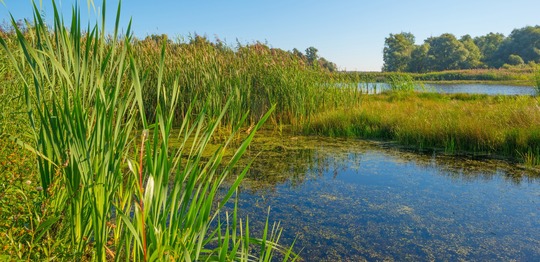
Through ACEP-WRE, NRCS helps landowners and tribes restore, enhance, and protect wetland ecosystems. NRCS and the landowner work together to develop a plan for the restoration and maintenance of the easement.
Wetland Reserve Easements component of the Agricultural Conservation Easement Program provides habitat for migratory waterfowl and other wetland dependent wildlife, including threatened and endangered species; improves water quality by filtering sediments and chemicals; reduces flooding; recharges groundwater; protects biological diversity; provides resilience to climate change; and provides opportunities for educational, scientific and limited recreational activities.
All ACEP–WRE applications are ranked according to the potential for protecting and enhancing habitat for migratory birds, fish, and other wildlife. Compensation with a payment rate is based on an annual Area Wide Market Analysis (AWMA) established by the Geographic Area Rate Cap (GARC), or landowner offer, whichever is less. It is important that applicants provide accurate records of ownership. All landowners listed on the deed must work with their local FSA to ensure all required documents are filed (including Form CCC–902, Farm Operating Plan, as well as the adjusted gross income and conservation compliance forms).
How to Apply
Landowners interested in ACEP-WRE can apply through their local USDA Service Center.
Landowners interested in ACEP-ALE must work with a cooperating entity who will submit the required application materials. NRCS does not accept ACEP-ALE applications directly from producers. State and local governments, non-governmental organizations that have farmland or grassland protection programs, and several New Jersey land trusts are eligible to help interested landowners apply.
For more information about ACEP-ALE and ACEP-WRE, please refer to the NRCS-New Jersey ACEP Program Webpage or the NRCS ACEP national webpage. Questions about the program can be emailed to NRCS-NJ’s easement specialist, katelyn.colon@usda.gov.
To learn how to get started with NRCS, click here, or visit your local USDA service center. To learn how to sign up for free email alerts about the latest NRCS program and national funding opportunities, click here.
|






