|
 
Still Celebrating National Water Quality Month? Us Too! Here Are 4 Resources to Support Water Quality Wins All Year.
USDA's Conservation Effects Assessment Project (CEAP) offers data-driven resources to support water quality wins year-round through voluntary conservation.
New Webinar Recording: Conservation Insights from the USDA Legacy Phosphorus Assessment
Mitigating legacy phosphorus requires targeted conservation in fields, at the edges of fields, and in watersheds. Our August Conservation Outcomes Webinar features Dr. Peter Kleinman sharing insights from USDA's Legacy Phosphorus Assessment Project. You may access the webinar recording below.
Dr. Kleinman coordinates this collaborative effort between NRCS and USDA's Agricultural Research Service to advance the science, innovation, and forecasting of legacy phosphorus mitigation strategies and ultimately support water quality improvements. Findings are presented from CEAP watersheds within the Chesapeake Bay, Lake Champlain, Lake Erie, Mississippi River, and Snake River. Producers, conservationists, and researchers may use the conservation insights shared to strengthen legacy phosphorus mitigation efforts and improve water quality nationwide.
|
Chief's Blog: Can Agriculture Improve Water Quality? With Data-Driven Voluntary Conservation, the Answer is Yes.
All life depends on clean water, and how we manage our land affects surrounding waterbodies. With nearly 40% of U.S. land in farms, agriculture offers a major potential to support water quality improvements nationwide.
NRCS delivers science and data, one-on-one technical support, and cost share opportunities to ensure this potential is realized. This blog by NRCS Chief Terry Cosby highlights some of the key ways NRCS supports voluntary conservation efforts to deliver wins for water quality and working lands.
|
You're Invited! Save the Date for our October 24 Conservation Outcomes Webinar.
CEAP Watershed Assessment Studies provide in-depth evaluation of water quality, water availability, and soil concerns at the watershed scale and within. What have we learned about managing for water quality outcomes and watershed health through CEAP? Our next Conservation Outcomes Webinar, scheduled for October 24 at 2:00 p.m. eastern, will answer this question and more.
Dr. Deanna Osmond will share lessons learned, synthesized from 13 watershed-scale studies of conservation effects conducted under CEAP by universities in partnership with NRCS and USDA's National Institute of Food and Agriculture. This free, one-hour webinar is open to all and will highlight the effects of cropland and pastureland conservation practices on water quality outcomes at the watershed scale. Visit our Webinar Series webpage for additional details and instructions to join.
|
About CEAP Watershed Assessments
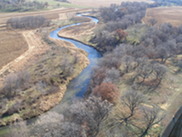
Water quality concerns related to agriculture affect private landowners, governments, and communities. Through CEAP, NRCS works with agricultural producers and partners including other agencies, universities, conservation districts, and watershed groups to quantify the effects of voluntary conservation on factors such as water quality, water availability, and soil health in select small watersheds across the nation. Visit our CEAP Watershed Assessments webpage to learn more and access CEAP Watershed publications and other relevant resources.
|
|
|
|
|