
Gilliam/Wheeler County Wildfire Recovery Meetings - August 9, 2024
In This Issue:

Please be aware of the upcoming Deadlines & Important Dates:
The Gilliam/Wheeler County FSA Staff would like to remind producers to stay safe this wildfire season. Please report losses to FSA and/or your insurance agent for disaster related events
-
August 13, 2024: Community Meeting for producers affected by the fires. Two meetings will be held: Fossil High School Gym at 2:00pm and at the Lone Rock Communities Center at 6:00pm.
-
August 14, 2024: ERP- 2022: (Emergency Relief Program- 2022): Tracks 1 and 2 are available at this time for losses incurred in the 2022 crop year. Please call the Gilliam/Wheeler FSA to schedule an appointment to apply. Deadline to apply is August 14, 2024.
-
September 30, 2024: Deadline for ALL signatures to be received and enrollment complete for late-filed ARCPLC Contracts
-
CREP Now Accepting CREP Sign-ups
-
LIP/ELAP Losses: Please contact the FSA office to report your losses within 30 days of the event for the Livestock Indemnity Program or Emergency Assistance for Livestock, Honeybees and Farm-raised Fish Program.
-
NAP (Noninsured Crop Disaster Assistance Program): Report losses within 15 days of event. Notify FSA of event within 72 hours for hand-harvested crops.
|
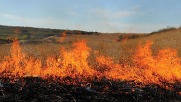
The Gilliam/Wheeler and Morrow County FSA, NRCS, SWCD, and OSU Extension Office will be hosting a Community Meeting for producers affected by the wildfires. Two meetings will be held on Tuesday, August 13th, with one at the Fossil High School Gym at 2:00pm and another at the Lone Rock Communities Center at 6:00pm.
We will be discussing all of the available Wildfire recovery programs that we now have to offer, the process for getting signed up and who to contact for more information. Please feel free to attend both meetings if you would like. We will be going over the same material at both meetings. We look forward to meeting with as many of you as we can. Affected landowners who have never participated with USDA programs, you may still be eligible. Please let everyone know, if they believe they have been affected to please attend or call our office for more information.
If you are unable to attend either of the meetings and were impacted by the fires, please call the Gilliam/Wheeler County FSA office at 541-384-4251 ext. 160, and information/assistance will be provided to get you started.
|
Top of page
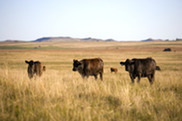
Agricultural producers impacted by wildfires in Oregon can now request grazing on Conservation Reserve Program (CRP) acres, while still receiving their full rental payment for the land.
In response to wildfires occurring in Oregon, DAFP is authorizing CRP participants from all counites in the state to donate grazing rights through March 1, 2025, to livestock producers affected by the wildfires.
To ensure emergency grazing of CRP is only being utilized by those producers whose livestock grazing land was adversely impacted by wildfire, producers must file a CCC-576 (Notice of Loss) or provide a written certification. CRP can only be utilized for up to 90 consecutive days for grazing.
Producers interested in emergency haying or grazing of CRP acres must notify their Gilliam/Wheeler County FSA office at 541-384-4251 ext 2, before starting any activities. This includes producers accessing CRP acres held by someone else. To maintain contract compliance, producers must have their conservation plan modified by USDA’s Natural Resources Conservation Service.
|
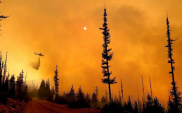
If you’ve suffered excessive livestock death losses and grazing or feed losses due to recent wildfires, you may be eligible for disaster assistance programs through the USDA Farm Service Agency (FSA).
The Livestock Indemnity Program (LIP) offers payments to you for livestock death losses in excess of normal mortality due to adverse weather and the Emergency Assistance for Livestock, Honeybees, and Farm-Raised Fish Program (ELAP) provides emergency relief for losses due to feed or water shortages, disease, adverse weather, or other conditions, which are not adequately addressed by other disaster programs.
To participate in LIP, you will be required to provide verifiable documentation of death losses resulting from an eligible adverse weather event, and you must submit a notice of loss to your local FSA by the application deadline, February 28, 2025. To participate in ELAP, you must submit a notice of loss to your local FSA office by the application deadline, January 30, 2025, and should maintain documentation and receipts.
You should record all pertinent information regarding livestock losses due to the eligible adverse weather or loss condition, including:
- Documentation of the number, kind, type, and weight range of livestock that have died, supplemented if possible by photographs or video records of ownership and losses;
- Rendering truck receipts by kind, type and weight - important to document prior to disposal;
- Beginning inventory supported by birth recordings or purchase receipts;
- Documentation from Animal Plant Health Inspection Service, Department of Natural Resources, or other sources to substantiate eligible death losses due to an eligible loss condition;
- Documentation that livestock were removed from grazing pastures due to an eligible adverse weather or loss condition;
- Costs of transporting livestock feed to eligible livestock, such as receipts for equipment rental fees for hay lifts and snow removal;
- Feed purchase receipts if feed supplies or grazing pastures are destroyed;
- Number of gallons of water transported to livestock due to water shortages.
For more information on these programs and documentation requirements, contact your Gilliam/Wheeler County USDA Service Center at 541-384-4251 ext 2 or visit fsa.usda.gov/disaster.
|
If you’ve suffered livestock feed or grazing losses or losses associated with Water, Feed or Livestock Transportation due to recent wildfires, you could be eligible for assistance through the Emergency Assistance for Livestock, Honeybees, and Farm-Raised Fish Program (ELAP).
ELAP covers physically damaged or destroyed livestock feed that was purchased, or mechanically harvested forage or feedstuffs intended for use as feed for your eligible livestock. In order to be considered eligible, harvested forage must be baled. Forage that is only cut, raked or windrowed is not eligible.
ELAP also covers costs associated with transportation of Water, Feed and Livestock due to Fires. You must submit a notice of loss by the application deadline, January 30, following the program year in which the loss occurred.
ELAP also covers up to 180 lost grazing days in instances when you’ve been forced to remove livestock from a grazing pasture due to wildfire.
You should maintain records and receipts documenting that livestock were removed from the grazing pasture due to wildfire, costs of transporting livestock feed to eligible livestock, receipts for equipment rental fees for hay lifts, feed purchase receipts and the number of gallons of water transported to livestock due to water shortages.
For beekeepers, ELAP covers beehive losses (the physical structure) in instances where the hive has been destroyed by a natural disaster including wildfire. For honeybee losses, you must notify FSA within 15 calendar days of when a loss occurs or from when the loss is apparent.
For more information regarding ELAP, contact your Gilliam/Wheeler County USDA Service Center at 541-384-4251 ext 2 or visit fsa.usda.gov/disaster.
Top of page
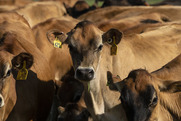
The Livestock Indemnity Program (LIP) provides assistance to you for livestock deaths in excess of normal mortality caused by adverse weather (including wildfires), disease and attacks by animals reintroduced into the wild by the federal government or protected by federal law.
For disease losses, FSA county committees can accept veterinarian certifications that livestock deaths were directly related to adverse weather and unpreventable through good animal husbandry and management.
For 2024 livestock losses, you must file a notice of loss and provide the following supporting documentation to your local FSA office no later than 60 calendar days after the end of the calendar year in which the eligible loss condition occurred.
- Proof of death documentation
- Copy of grower’s contracts
- Proof of normal mortality documentation
USDA has established normal mortality rates for each type and weight range of eligible livestock, i.e. Adult Beef Cow = 1.5% and Non-Adult Beef Cattle = 5%. These established percentages reflect losses that are considered expected or typical under “normal” conditions.
In addition to filing a notice of loss, you must also submit an application for payment for 2024 calendar year losses by March 3, 2025.
For more information about LIP, contact your Gilliam/Wheeler County USDA Service Center at 541-384-4251 ext 2 or visit fsa.usda.gov.
|
Top of page
Gilliam/Wheeler USDA Service Center
234 S Main Street
PO Box 467
Condon, OR 97823
Phone: 541-384-4251
Fax: 855-824-6183
|
|
Office Hours Monday-Friday 8am – 4:30pm
|
|
FSA County Executive Director - Acting
Kara Lanthorn 541-384-4251 ext 105 Kara.Lanthorn@usda.gov
County Executive Director
Adrianna Salutregui 541-384-4251 ext 105 Adrianna.Salutregui@usda.gov
FSA Program Technician
Kayla Mims 541-384-4251 ext 100 Kayla.Mims@usda.gov
Kaycee Rogers 541-84-4251 ext 103 kaycee.rogers@usda.gov
FSA County Committee Members
LAA 1 – Heidi Lane
LAA 2 – Mary Reser
LAA 3 – Lisa Greene
FSA Farm Loan Officer
Jane Harrison, Morrow County FSA Office (541) 676-9011 ext 103
|
NRCS District Conservationist
DelRae Ferguson 541-384-4251 ext 107 Delrae.Ferguson@usda.gov
NRCS Rangeland Management Specialist Jessica Jones 541-384-4251 ext 114 Jessica.Jones2@usda.gov
NRCS Resource Specialist Joel Verkruyse 541-384-2281 ext 102 Joel.Verkruyse@usda.gov
|
|
Upcoming Meetings:
-
Gilliam/Wheeler County Committee Meeting: August 15, 2024 at 10am at the USDA Service Center 234 S Main, Condon, OR
If you would need to request an accommodation, please contact Kara Lanthorn at 541-384-4251 ext 105 or Kara.Lanthorn@usda.gov by August 13, 2024 to request accommodations (e.g., an interpreter, translator, seating arrangements, etc.) or materials in an alternative format (e.g., Braille, large print, audiotape – captioning, etc.).
|
|






