Idaho State Office FSA Newsletter - August 9, 2024
In This Issue:
-
August 14: Emergency Relief Program (ERP)
-
September 2: Labor Day - Office Closed
Click here to learn more about local deadlines and ongoing programs.
Top of page
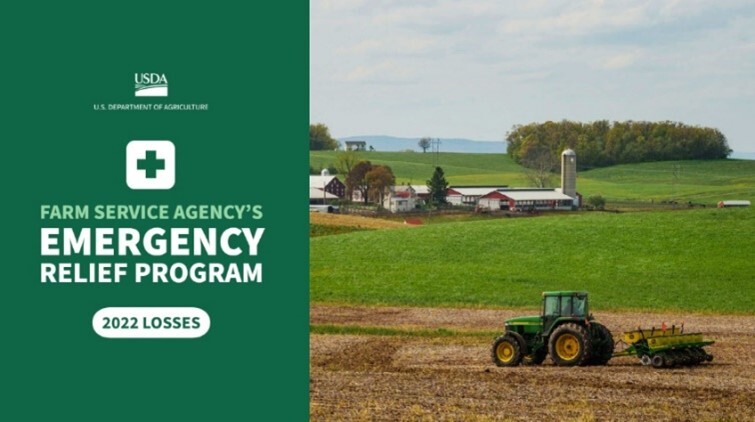
The U.S. Department of Agriculture (USDA) today announced the deadline for commodity and specialty crop producers to apply for the Emergency Relief Program (ERP) for 2022 natural disaster losses is Aug. 14, 2024. USDA’s Farm Service Agency (FSA) began accepting ERP 2022 applications in October 2023.
Background
Through the Disaster Relief Supplemental Appropriations Act, 2023 (P.L. 117-328) Congress allocated $3.2 billion in funding to cover an estimated $10 billion in uncovered crop losses.
ERP 2022 covers losses to crops, trees, bushes and vines due to qualifying calendar year 2022 natural disaster events including wildfires, hurricanes, floods, derechos, excessive heat, tornadoes, winter storms, freeze (including a polar vortex), smoke exposure, excessive moisture, qualifying drought and related conditions.
ERP 2022 Application Process – Track 1
ERP 2022 Track 1 leverages existing federal crop insurance or Noninsured Crop Disaster Assistance Program (NAP) data as the basis for calculating payments for eligible crop producers who received indemnities through these risk management programs.
In fall 2023, FSA began issuing pre-filled ERP 2022 Track 1 application forms to producers who had crop insurance and NAP data already on file with USDA. Receipt of a pre-filled application is not confirmation that a producer is eligible to receive an ERP 2022 Track 1 payment.
ERP 2022 Application Process – Track 2
Track 2 is a revenue-based certification program designed to assist producers who suffered an eligible decrease in revenue resulting from 2022 calendar year disaster events when compared with revenue in a benchmark year using revenue information that is readily available from most tax records.
In cases where revenue does not reasonably reflect a normal year’s revenue, Track 2 provides an alternative method for establishing revenue. Likewise, Track 2 affords producers of crops that are used within an operation and do not generate revenue from the sale of the crop a method for establishing revenue for the purpose of applying for ERP 2022 benefits. Producers are not required to submit tax records to FSA unless requested by the County Committee if required for an FSA compliance spot check.
Although not required when applying for ERP 2022 Track 2, applicants might find the following documents useful to the process:
- Schedule F (Form 1040)
- Profit or Loss from Farming or similar tax documents for tax years 2018, 2019, 2022 and 2023.
Track 2 targets gaps in emergency relief assistance for eligible producers whose eligible losses were not covered by crop insurance or NAP, including revenue losses too small (shallow loss) to be covered by crop insurance.
It’s important to note that disaster-impacted producers may be eligible for ERP 2022 assistance under one or both tracks (ERP 2022 Track 1 and Track 2). To avoid duplicative benefits, if a producer applies for both tracks, the Track 2 payment calculation will take into account any payments received through Track 1.
Additional Required Forms
For both ERP 2022 tracks, all producers must have certain required forms on file with FSA within 60 days of the Aug. 14 application deadline. If not already on file, producers can update, complete and submit required forms to FSA by Tuesday, Oct. 15, 2024.
Required forms:
- Form AD-2047, Customer Data Worksheet.
- Form CCC-902, Farm Operating Plan for an individual or legal entity.
- Form CCC-901, Member Information for Legal Entities (if applicable).
- Form FSA-510, Request for an Exception to the $125,000 Payment Limitation for Certain Programs (if applicable).
- Form CCC-860, Socially Disadvantaged, Limited Resource, Beginning and Veteran Farmer or Rancher Certification, if applicable, for the 2022 program year.
- Note: Currently, there is a Federal court injunction that prohibits USDA from “making or increasing payments, or providing any additional relief, based on its ‘socially disadvantaged farmer or rancher’ designation” under ERP 2022. This may impact certain payments.
- A highly erodible land conservation (sometimes referred to as HELC) and wetland conservation certification (Form AD-1026 Highly Erodible Land Conservation (HELC) and Wetland Conservation (WC) Certification) for the ERP producer and applicable affiliates.
Most producers, especially those who have previously participated in FSA programs, will likely have these required forms on file. However, those who are uncertain or want to confirm the status of their forms can contact their local FSA county office.
Future Insurance Coverage Requirements
All producers who receive ERP 2022 payments must purchase crop insurance, or NAP coverage where crop insurance is not available, in the next two available crop years as determined by the Secretary. Purchased coverage must be at the 60/100 coverage level or higher for insured crops or at the catastrophic coverage level or higher for NAP crops.
More Information
ERP 2022 eligibility details and payment calculation factor tables are available on FSA’s Emergency Relief webpage, in the ERP Track 1 and ERP Track 2 fact sheets and through the FSA at your local USDA Service Center.
The U.S. Department of Agriculture (USDA) Animal and Plant Health Inspection Service (APHIS) has confirmed the detection of Highly Pathogenic Avian Influenza (HPAI), also known as H5N1, in dairy cattle in 12 states including Colorado, Idaho, Iowa, Kansas, Michigan, Minnesota, North Carolina, New Mexico, Ohio, South Dakota, Texas and Wyoming. To protect the U.S. livestock industry from the threat posed by HPAI H5N1 USDA is taking a number of actions with our federal partners.
On April 24, APHIS announced a federal order that includes mandatory testing for interstate movement of dairy cattle and mandatory reporting of influenza A detections in livestock. In addition to the Federal Order mandates, USDA provides several voluntary testing and monitoring options, including the HPAI Dairy Herd Status Program announced on May 31, 2024. APHIS has released a list of requirements and recommendations that apply to interstate moving of lactating dairy cattle, testing guidance for livestock, and answers to frequently asked questions. Producers are encouraged to visit the APHIS HPAI Livestock Detection website for information about these programs and requirements, as well as the most comprehensive and timely updates about this rapidly evolving situation.
Assistance for Milk Loss
Confirmed H5N1 Positive Test Results Required for Recovery Assistance
Producers who incur milk losses in their dairy herds due to HPAI H5N1 can now apply for financial assistance through the USDA’s updated Emergency Assistance for Livestock, Honeybees, and Farm-raised Fish Program (ELAP). USDA’s Farm Service Agency (FSA) expanded ELAP policy through the rule-making process to assist with financial losses resulting from reduced milk production when cattle are removed from commercial milking in dairy herds having a confirmed positive H5N1 test. Positive tests must be confirmed through the USDA’s APHIS’ National Veterinary Services Laboratories (NVSL).
To apply, producers need to submit the following to FSA:
- Proof of herd infection through a confirmed positive H5N1 test (based on USDA’s APHIS H5N1 case definition) on individual animal or bulk tank samples confirmed by APHIS’ NVSL;
- A notice of loss indicating the date when the loss is apparent, which is the sample collection date for the positive H5N1 test; and
- An application for payment certifying the number of eligible adult dairy cows removed from production, the month the cows were removed from production, and the producer’s share in the milk production.
The final date to file a notice of loss and application for payment for eligible losses is 30 days after the end of the prior calendar year, which is January 30.
Note: To determine livestock and producer eligibility for ELAP H5N1 assistance, to submit an application or if you’ve not previously conducted business with FSA, contact your local FSA county office for details. Find your local office. Other online resources include frequently asked questions and a fact sheet.
Loans for Biosecurity Implementation
FSA also provides direct and guaranteed loans for farmers and ranchers that can assist with implementation of biosecurity measures for their operations. Loans can assist with:
Installing physical barriers to facilitate quarantine, to prevent livestock interaction with wildlife, and to prevent unauthorized access by visitors
- Purchase of disinfectant, footbaths, and disposable footwear and clothing;
- Veterinary costs related to vaccination and general animal health;
- Testing of feed and water sources for toxins and other disease;
- Costs associated with responsible manure disposal and management;
- Costs associated with cleaning and disinfecting livestock transportation equipment; and
- Other biosecurity measures recommended by USDA or other applicable agencies.
To learn more about loans, producers can use the:
-
Loan Assistance Tool – helps producers better navigate the farm loan process. The online Loan Assistance Tool provides producers needing agricultural financing with an interactive, step-by-step guide.
-
Farm Loans Overview Factsheet – provides an overview of all FSA direct and guaranteed loans, and eligibility requirements.
-
Farm Loans Homepage – gives in-depth farm loan information, including fact sheets, for those who don’t want to use the online Loan Assistance Tool.
To learn more about ELAP or farm loans, producers should contact the FSA at the local USDA Service Center.
To learn more about APHIS requirements and resources, visit APHIS’ Highly Pathogenic Avian Influenza (HPAI) Detections in Livestock webpage.
|
Agriculture Secretary Tom Vilsack announced the U.S. Department of Agriculture (USDA) will invest $400 million with at least 18 irrigation districts to help farmers continue commodity production while also conserving water across the West. This funding – which will support irrigation districts and producers in using innovative water savings technologies and farming practices while producing water-saving commodities in the face of continued drought – is expected to conserve up to 50,000 acre-feet in water use across 250,000 acres of irrigated land in production, while expanding and creating new, sustainable market opportunities.
This historic funding builds on the Biden-Harris Administration’s work to conserve water, increase the efficiency of water use, upgrade existing infrastructure, and overall strengthen water security in the West. With historic water conservation enabled by President Biden’s Investing in America agenda, the Department of the Interior’s Bureau of Reclamation announced in May 2024 it had staved off the immediate possibility of the Colorado River System’s reservoirs from falling to critically low elevations that would threaten water deliveries and power production. Due to record conservation investments as well as improved hydrology, Lake Mead levels today, at elevation 1075 feet, are the highest since May 2021, when they were at 1073 feet. The Administration is now working to ensure the long-term sustainability and resilience by focusing on long-term water conservation in several basins across the west.
Partnering with Irrigation Districts to Support Water Conservation, Produce Water-Saving Commodities
USDA worked to select irrigation districts based on several commodity production and water management-related criteria in order to maximize the ability to achieve program objectives, leveraging available data from the Department of the Interior’s Bureau of Reclamation to ensure close alignment and partnership. USDA’s Economic Research Service (ERS) provided data and analysis to support the preliminary selections. Districts that have been preliminarily selected for potential inclusion in this program include:
- Black Canyon Irrigation District, Idaho
- Brooklyn Canal Company, Utah
- Central Oregon Irrigation District, Ore.
- Central Arizona Irrigation and Drainage District, Ariz.
- Corcoran Irrigation District, Calif.
- East Columbia Basin Irrigation District, Wash.
- Elephant Butte Irrigation District, N.M.
- Glenn – Colusa Irrigation District, Calif.
- Greybull Valley Irrigation District, Wyo.
- Hidalgo & Cameron Counties Irrigation District 9, Texas
- Huntley Project Irrigation District, Mont.
- Imperial Irrigation District, Calif.
- Maricopa – Stanfield Irrigation and Drainage District, Ariz.
- Palisade Irrigation District, Colo.
- Quincy Columbia Basin Irrigation District, Wash.
- Solano Irrigation District, Calif.
- Sutter Mutual Water Company, Calif.
- Truckee-Carson Irrigation District, Nev.
The preliminary selected districts may receive up to $15 million each in the awards and will enter into sub-agreements with the producers participating within the district. Depending on available funding, awards to additional districts may be possible.
Producers who participate will receive payments for voluntarily reducing water consumption while maintaining commodity production. The needs of producers will determine the specific strategies for water conservation, including irrigation improvements, shifts in management practices, shifts in cropping systems, and other innovative strategies. USDA will learn from the diversity of strategies used and identify additional opportunities to maintain and expand water-saving commodity production in the future.
Participating producers and irrigation districts will commit to ensuring continued commodity production in the areas where water consumption is reduced. USDA is working to finalize agreements with the preliminarily selected districts, which will include the details of each individual district’s water-saving strategies, commodities to be produced, and specific budgets. Following the finalization of those awards, producers within the participating districts will work directly through their irrigation districts to participate. USDA and the preliminarily selected districts will provide more details on the agreements and opportunities for producers to directly enroll.
Investing in Water Conservation in Tribal Communities and Acequias
In addition to the preliminarily selected districts announced today, USDA is also announcing a Tribal set-aside within the program, targeting up to $40 million in funding for additional awards within Indian Country. USDA will work with the Department of the Interior’s Bureau of Indian Affairs (BIA), Tribes, and Tribal producers to reduce water consumption and maintain land in agricultural production – supporting the production of water-saving commodities. USDA is partnering with BIA to use available data and ensure meaningful engagement with Tribes to establish selection criteria that reflect the specific needs and water management systems within Indian Country. Additional information for further engagement and selections will be provided in the weeks ahead.
USDA will also include targeted assistance to support water-saving commodity production for acequias, recognizing that many irrigators in the Southwest are formed under the community-based acequia model instead of the irrigation district model. Additional information regarding targeted assistance to acequias that reflects the historical nature of their water distribution structure will follow.
Additional information for further engagement with Tribes and acequias will be provided in the weeks ahead.
Historic Investments in Western Water Complement Water-Saving Commodities Program
USDA’s Natural Resources Conservation Service (NRCS) is working to help producers and communities conserve water, manage and prepare for the effects of climate change and build drought resilience in the West through its Western Water and Working Lands Framework for Conservation Action (Western Water Framework), which was launched in 2023. The Western Water Framework describes how NRCS assistance is used to address water resource related issues in 17 states in the West. In fiscal year 2023, NRCS provided $2.3 billion in conservation investments that help producers and communities in Western states better steward water resources, including investments that also support climate change mitigation. This total includes a boost of 9.7 percent or $213.3 million from the Inflation Reduction Act.
The Western Water Framework includes key NRCS conservation programs, including the Environmental Quality Incentives Program (EQIP), Conservation Stewardship Program (CSP) and Agricultural Conservation Easement Program (ACEP). Within EQIP NRCS has created a WaterSMART Initiative (WSI), to coordinate investments with the Bureau of Reclamation’s WaterSMART investments in priority areas.
For Fiscal Year 2024, NRCS selected 9 new priority areas and is continuing to offer funding in 36 prior approved areas, making $29.7 million in EQIP funding available through the WSI across 16 states.
EQIP and CSP provide conservation planning and funding to help with implementation of conservation practices. Practices like irrigation water management improve irrigation efficiency and mitigate climate change. Meanwhile, practices like conservation crop rotation, cover crop, residue and tillage management, no-till, and nutrient management help producers build resilience to future drought. ACEP gives producers and landowners tools to protect wetlands, grasslands and agricultural lands which can be used to conserve water.
Together, these efforts by FSA and NRCS advance USDA’s efforts to create more, new, and better market opportunities, sustainably grow agricultural productivity to feed a growing population, and help farmers and natural resource managers manage and prepare for the effects of climate change.
Learn more about the Western Water Framework.
Top of page

The USDA Farm Service Agency (FSA) made several policy updates to acreage reporting and prevented planted acres.
Prevented Planted Acres
In order to certify prevented planted acreage due to drought, all of the following must apply:
- The area that is prevented from being planted has insufficient soil moisture for germination of seed on the final planting date for non-irrigated acreage
- Prolonged precipitation deficiencies that meet the D3 o4 D4 level as determined by the U.S. Drought Monitor
- Verifiable information must be collected from sources whose business or purpose is recording weather conditions as determined by FSA and the sources include, but are not limited to:
- S. National Weather Service
- Bureau of Reclamation
- S. Army Corps of Engineers
- National Institute of Food and Agriculture
- Natural Resources Conservation Service
- Local irrigation authorities responsible for water allocations
- State Department of Water Resources
- National Institute of Food and Agriculture
- Other sources responsible for the collection of water data or regulation of water resources (water allocations).
FSA reminds producers to report prevented planted and failed acres in order to establish or retain FSA program eligibility for some programs. You should report crop acreage you intended to plant, but due to natural disaster, were prevented from planting. Prevented planting acreage must be reported on form CCC-576, Notice of Loss, no later than 15 calendar days after the final planting date as established by FSA and the Risk Management Agency (RMA).
Late-Filed Acreage Reports
FSA can now accept late-filed acreage reports without a field visit if the producer can provide proof of existence and disposition. Producers are required to pay the late filed fee.
Proof of existence of the crop includes, but is not limited to:
- seed receipts showing the amount, variety, and date purchased;
- receipts for cleaning, treating, etc., for seed planted on the farm;
- a written contract or documentation of an oral contract to produce a specific crop;
- evidence that was accepted and approved by the RMA or another USDA agency;
- precision planting, spraying, or harvesting geospatial data or maps;
- drone photos with location and notable physical boundaries;
- other aerial or ground imagery with the ability to determine date, acres, and crop.
Proof of disposition of the crop includes, but is not limited to:
- receipts showing number and units sold if the sale can be positively identified as sale of the crop for the farm for the year represented;
- a written contract or documentation of an oral contract to produce a specific crop;
- records showing the crop was fed to livestock;
- documentation of payment for custom harvesting indicating acreage, location, and crop year;
evidence that was accepted and approved by another USDA agency.
|
Farm loan borrowers who have pledged real estate as security for their Farm Service Agency (FSA) direct or guaranteed loans are responsible for maintaining loan collateral. Borrowers must obtain prior consent or approval from FSA or the guaranteed lender for any transaction that affects real estate security. These transactions include, but are not limited to:
- Leases of any kind
- Easements of any kind
- Subordinations
- Partial releases
- Sales
Failure to meet or follow the requirements in the loan agreement, promissory note, and other security instruments could lead to nonmonetary default which could jeopardize your current and future loans.
It is critical that borrowers keep an open line of communication with their FSA loan staff or guaranteed lender when it comes to changes in their operation. For more information on borrower responsibilities, read Your FSA Farm Loan Compass.
Top of page
Idaho FSA State Office
9173 West Barnes Drive, Ste. B
Boise, Idaho 83655
Phone: 208-378-5650
Fax: 855-516-8875
|
|
|
|
State Executive Director
Arnold Hernandez ~ 208-278-5656 arnold.hernandez@usda.gov
Farm Program Chief
Kyla Pearson ~ 208-378-5667 kyla.pearson@usda.gov
|
Administrative Officer
Brandi May ~ 208-378-5670 brandi.may@usda.gov
Farm Loan Chief
Susan R. Smith ~ 208-378-5664 susan.r.smith@usda.gov
|
|
Idaho FSA State Committee
Roy Bunderson ~ Committee Chair
Marie Linehan, Member
Next State Committee Meeting: September 18, 2024
Note: To check the status of your FSA Farm Loan (FLP) account, call 1-888-518-4983 or check with your local office. To find contact information for your local office go to www.fsa.usda.gov/id
|
|