
Washington State FSA Newsletter - September 1, 2024
In This Issue:
September 2, 2024 - Labor Day. Offices will be closed.
September 3, 2024 – Deadline to obtain 2025 crop year NAP coverage for cabbage (for seed or fresh); canola; carrots (for seed); cauliflower (for seed or fresh); onions (for seed, fresh, or processing); rapeseed; rutabaga (for seed or fresh); turnips (for seed or fresh); and any other fall planted crops not mentioned in other closing dates.
September 4, 2024 - Organic and Food Safety Certification Cost Share Webinar
September 30, 2024 - Deadline to complete all changes to farming operations for FY2024 that result in succession of interest ARC/PLC contracts
September 30, 2024 - Deadline to update eligibility documentation for FY2024. This includes the CCC-902 and the AD-1026.
September 30, 2024 - Deadline for all CRP contracts to be approved by FSA. This includes all types of CRP such as General, Continuous, CREP, TIP, etc.
September 30, 2024 - Acreage reporting deadline for aquaculture.
September 30, 2024 - NAP application closing date for aquaculture, beets (for stecklings), Christmas trees, floriculture, garlic, mint, mushrooms, turf grass sod, and biennial & perennial forages and mixed forages for hay, seed, or grazing.
October 14, 2024 – Columbus/Indigenous Peoples’ Day. USDA Service Centers will be closed.
October 31, 2024 – OCCSP application deadline.
November 11, 2024 - Veterans Day. USDA Service Centers will be closed.
November 20, 2024 - Deadline obtain 2025 NAP coverage for asparagus, berries, grapes, hops, tree fruits, nuts, and other perennial crops (not including biennial/perennial forages and mixed forages for hay, seed, or grazing).
November 28, 2024 – Thanksgiving Day. USDA Service Centers will be closed.
SPOKANE VALLEY, Wash. – The U.S. Department of Agriculture’s (USDA) Natural Resources Conservation Service in Washington (NRCS-WA) announced the following application batching dates for programs for Fiscal Year 2025 funding:
Environmental Quality Incentives Program Classic
Applications batching date Oct. 22, 2024
Read the full announcement here.
Conservation Stewardship Program Classic
Applications batching date is Jan. 17, 2025
Read the full announcement here.
Agricultural Conservation Easements Program – Agricultural Land Easements
The first round of applications batching is Oct. 4, 2024, and the second round of applications batching is Dec. 20, 2024.
Read the full announcement here.
Agricultural Conservation Easement Program - Wetland Reserve Easements
The first round of applications batching is Oct. 4, 2024, and the second round of applications batching is Dec. 20, 2024.
Read the full announcement here.
To learn how to get started with NRCS, click here, or visit your local USDA service center. To learn how to sign up for free email and text alerts about the latest NRCS program and national funding opportunities, click here.
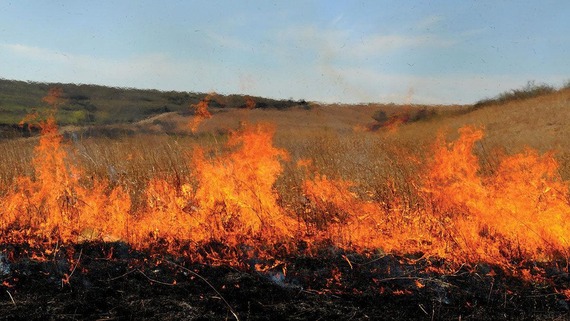 Washington Farmers and ranchers know all too well that wildfires can be a common and costly variable to their operation. The Farm Service Agency (FSA) has emergency programs to provide assistance when disasters strike, and for some of those programs, a disaster designation may be the eligibility trigger. When natural disaster occurs, there is a process for requesting disaster programs for a county. You play a vital role in this process.
“We urge all farmers and ranchers who have been affected by the 2024 wildfire season to report their losses to their county office as soon as possible,” says Jon Wyss, the State Executive Director for Washington FSA. “Your report could be the tipping point that saves somebody’s livelihood.”
If you have experienced production loss as a result of a natural disaster, submitting your loss information to your local FSA county office can help you and your neighbors qualify for relief. The county office will collect your disaster data and create a Loss Assessment Report. The County Committee will review the Loss Assessment Report and determine if a recommendation is sent forward to the State Committee, and potentially U. S. Secretary of Agriculture for approval to implement disaster programs.
Relief options that require local producer reports include Emergency Haying and Grazing on land enrolled in the Conservation Reserve Program (CRP). Emergency Haying and Grazing provides livestock producers with much needed pasture and forage when a county has at least a 40% loss in forage production. Your reports are also needed to request the Emergency Conservation Program (ECP) which provides technical and financial assistance to replace infrastructure like permanent fences when they are damaged by disaster. Learn about more relief options through the Disaster Assistance Discovery Tool.
Call or email your county office and report your loss today.
 When you create an account for the farmers.gov authenticated customer portal, you have access to self-service features through a secure login. Managing your business with USDA’s Farm Service Agency (FSA) and Natural Resources Conservation Service (NRCS) is faster than ever. From e-signing documents, viewing, printing, and exporting maps and receiving notifications of payment disbursements, a farmers.gov authenticated account makes doing business with USDA easy and secure.
What can you do with your farmers.gov account?
- View FSA Farm Loan information including interest payments, loan advances, payment history and paid-in-full/restructured loans.
- Make USDA direct farm loan payments using the Pay My Loan feature.
- Access the Online Loan Application portal.
- View, print and export detailed FSA farm records and farm/tract maps.
- Import precision agriculture planting boundaries, create labels containing
crop information, and print both on farm tract maps.
- View and print your FSA-156EZ with farm details.
- View and print your Producer Farm Data Report.
- View NRCS Disbursements and Farm Loans financial activity from the past
180 days.
- View your land, access NRCS data on your conservation plans, contracts, and planning land units through the Conservation Land Area page.
- View, upload, download and e-sign NRCS documents.
- Request NRCS conservation and financial assistance, including submitting a
program application.
- View detailed information on all previous and ongoing NRCS contracts,
including the amount of cost- share assistance received and anticipated;
and even request contract modifications, report practice completion and
request practice certification.
- “Switch Profiles” to act on behalf of your entity or another individual when
you have active representative authority on file.
If you’d like to see the features in action and learn more about how to use them, check out the 3-5 minute farmers.gov account video tutorials.
How do you create a farmers.gov account?
Visit farmers.gov/account to access information about farmers.gov accounts and sign in to the site’s authenticated portal. You will need a Login.gov account linked to your USDA customer record to access your farmers.gov authenticated site. Customers who are new to USDA should visit Get Started at Your USDA Service Center, then go to farmers.gov/account to create an account.
To create a farmers.gov account you will need:
- A USDA individual customer record — A customer record contains information you have given to USDA to do business with them, like your name, address, phone number, and any legal representative authority relationships. Contact your local USDA Service Center to make sure you have an individual USDA customer record on file and your information is up to date.
- A Login.gov account — Login.gov is a sign-in service that gives people secure online access to participating government programs. You can create a Login.gov account linked to your customer record by following the directions on farmers.gov/account.
- Identity Verification — You can choose to verify your identity with Login.gov or in-person at a USDA Service Center.
In addition to the self-service features, farmers.gov also has information on USDA programs, farm loans, disaster assistance, conservation programs and crop insurance.
Policy changes support building equity, saving for long-term needs and making strategic operational investments
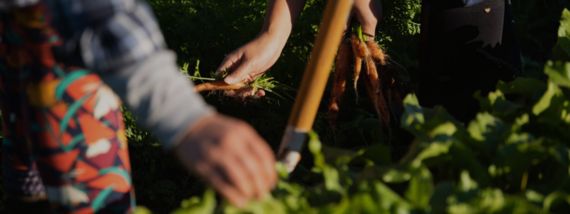 The U.S. Department of Agriculture (USDA) today announces changes to the Farm Service Agency’s (FSA) Farm Loan Programs, effective Sept. 25, 2024 — changes that are intended to increase opportunities for farmers and ranchers to be financially viable. These improvements, part of the Enhancing Program Access and Delivery for Farm Loans rule, demonstrate USDA’s commitment to improving farm profitability through farm loans designed to provide important financing options used by producers to cover operating expenses and purchase land and equipment.
The three most notable policy changes include:
-
Establishing a new low-interest installment set-aside program for financially distressed borrowers. Eligible financially distressed borrowers can defer up to one annual loan installment per qualified loan at a reduced interest rate, providing a simpler and expedited option to resolve financial distress in addition to FSA’s existing loan servicing programs.
-
Providing all eligible loan applicants access to flexible repayment terms that can increase profitability and help build working capital reserves and savings. By creating upfront positive cash flow, borrowers can find opportunities in their farm operating plan budgets to include a reasonable margin for increased working capital reserves and savings, including for retirement and education.
-
Reducing additional loan security requirements to enable borrowers to leverage equity. This reduces the amount of additional security required for direct farm loans, including reducing the frequency borrowers must use their personal residence as additional collateral for a farm loan.
Additional Investments for Water-Saving Commodities and Record $2.3 Billion in Investments under the Western Water Framework
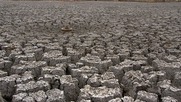
Agriculture Secretary Tom Vilsack announced the U.S. Department of Agriculture (USDA) will invest $400 million with at least 18 irrigation districts to help farmers continue commodity production while also conserving water across the West. This funding – which will support irrigation districts and producers in using innovative water savings technologies and farming practices while producing water-saving commodities in the face of continued drought – is expected to conserve up to 50,000 acre-feet in water use across 250,000 acres of irrigated land in production, while expanding and creating new, sustainable market opportunities.
This historic funding builds on the Biden-Harris Administration’s work to conserve water, increase the efficiency of water use, upgrade existing infrastructure, and overall strengthen water security in the West. With historic water conservation enabled by President Biden’s Investing in America agenda, the Department of the Interior’s Bureau of Reclamation announced in May 2024 it had staved off the immediate possibility of the Colorado River System’s reservoirs from falling to critically low elevations that would threaten water deliveries and power production. Due to record conservation investments as well as improved hydrology, Lake Mead levels today, at elevation 1075 feet, are the highest since May 2021, when they were at 1073 feet. The Administration is now working to ensure the long-term sustainability and resilience by focusing on long-term water conservation in several basins across the west.
Partnering with Irrigation Districts to Support Water Conservation, Produce Water-Saving Commodities
USDA worked to select irrigation districts based on several commodity production and water management-related criteria in order to maximize the ability to achieve program objectives, leveraging available data from the Department of the Interior’s Bureau of Reclamation to ensure close alignment and partnership. USDA’s Economic Research Service (ERS) provided data and analysis to support the preliminary selections. Districts that have been preliminarily selected for potential inclusion in this program include:
- Black Canyon Irrigation District, Idaho
- Brooklyn Canal Company, Utah
- Central Oregon Irrigation District, Ore.
- Central Arizona Irrigation and Drainage District, Ariz.
- Corcoran Irrigation District, Calif.
- East Columbia Basin Irrigation District, Wash.
- Elephant Butte Irrigation District, N.M.
- Glenn – Colusa Irrigation District, Calif.
- Greybull Valley Irrigation District, Wyo.
- Hidalgo & Cameron Counties Irrigation District 9, Texas
- Huntley Project Irrigation District, Mont.
- Imperial Irrigation District, Calif.
- Maricopa – Stanfield Irrigation and Drainage District, Ariz.
- Palisade Irrigation District, Colo.
- Quincy Columbia Basin Irrigation District, Wash.
- Solano Irrigation District, Calif.
- Sutter Mutual Water Company, Calif.
- Truckee-Carson Irrigation District, Nev.
The preliminary selected districts may receive up to $15 million each in the awards and will enter into sub-agreements with the producers participating within the district. Depending on available funding, awards to additional districts may be possible.
Producers who participate will receive payments for voluntarily reducing water consumption while maintaining commodity production. The needs of producers will determine the specific strategies for water conservation, including irrigation improvements, shifts in management practices, shifts in cropping systems, and other innovative strategies. USDA will learn from the diversity of strategies used and identify additional opportunities to maintain and expand water-saving commodity production in the future.
Participating producers and irrigation districts will commit to ensuring continued commodity production in the areas where water consumption is reduced. USDA is working to finalize agreements with the preliminarily selected districts, which will include the details of each individual district’s water-saving strategies, commodities to be produced, and specific budgets. Following the finalization of those awards, producers within the participating districts will work directly through their irrigation districts to participate. USDA and the preliminarily selected districts will provide more details on the agreements and opportunities for producers to directly enroll.
Investing in Water Conservation in Tribal Communities and Acequias
In addition to the preliminarily selected districts announced today, USDA is also announcing a Tribal set-aside within the program, targeting up to $40 million in funding for additional awards within Indian Country. USDA will work with the Department of the Interior’s Bureau of Indian Affairs (BIA), Tribes, and Tribal producers to reduce water consumption and maintain land in agricultural production – supporting the production of water-saving commodities. USDA is partnering with BIA to use available data and ensure meaningful engagement with Tribes to establish selection criteria that reflect the specific needs and water management systems within Indian Country. Additional information for further engagement and selections will be provided in the weeks ahead.
USDA will also include targeted assistance to support water-saving commodity production for acequias, recognizing that many irrigators in the Southwest are formed under the community-based acequia model instead of the irrigation district model. Additional information regarding targeted assistance to acequias that reflects the historical nature of their water distribution structure will follow.
Additional information for further engagement with Tribes and acequias will be provided in the weeks ahead.
Historic Investments in Western Water Complement Water-Saving Commodities Program
USDA’s Natural Resources Conservation Service (NRCS) is working to help producers and communities conserve water, manage and prepare for the effects of climate change and build drought resilience in the West through its Western Water and Working Lands Framework for Conservation Action (Western Water Framework), which was launched in 2023. The Western Water Framework describes how NRCS assistance is used to address water resource related issues in 17 states in the West. In fiscal year 2023, NRCS provided $2.3 billion in conservation investments that help producers and communities in Western states better steward water resources, including investments that also support climate change mitigation. This total includes a boost of 9.7 percent or $213.3 million from the Inflation Reduction Act.
The Western Water Framework includes key NRCS conservation programs, including the Environmental Quality Incentives Program (EQIP), Conservation Stewardship Program (CSP) and Agricultural Conservation Easement Program (ACEP). Within EQIP NRCS has created a WaterSMART Initiative (WSI), to coordinate investments with the Bureau of Reclamation’s WaterSMART investments in priority areas.
For Fiscal Year 2024, NRCS selected 9 new priority areas and is continuing to offer funding in 36 prior approved areas, making $29.7 million in EQIP funding available through the WSI across 16 states.
EQIP and CSP provide conservation planning and funding to help with implementation of conservation practices. Practices like irrigation water management improve irrigation efficiency and mitigate climate change. Meanwhile, practices like conservation crop rotation, cover crop, residue and tillage management, no-till, and nutrient management help producers build resilience to future drought. ACEP gives producers and landowners tools to protect wetlands, grasslands and agricultural lands which can be used to conserve water.
Together, these efforts by FSA and NRCS advance USDA’s efforts to create more, new, and better market opportunities, sustainably grow agricultural productivity to feed a growing population, and help farmers and natural resource managers manage and prepare for the effects of climate change.
Learn more about the Western Water Framework.
|
Top of page
Washington State FSA Office
11707 E. Sprague Ave
Suite 303
Spokane Valley, WA 99206
Phone: 509-323-3000
Fax: 855-843-1172
|
|
Find Your Service Center
|
|
State Executive Director
Jon Wyss
|
State Committee
Bernard "Butch" Ogden, Chair
Brett Blakenship, Member
Jose Ramirez, Member
Jackie Richter, Member
Sam Ledgerwood, Member
|
| |
|







