
Hello to my fellow agricultural enthusiasts!
It is one of our busiest times of the year for us farmers and ranchers. Specialty crop producers are busy in the garden prepping for the farmers markets, hay producers are waiting for the perfect amount of moisture, and educators are prepping for another school year. Participation in the agriculture industry can go well beyond the production and marketing aspects-- similar to participation with the FSA goes beyond program sign ups.
Nominations are now being accepted for farmers and ranchers to serve on local U.S. Department of Agriculture (USDA) Farm Service Agency (FSA) county committees. These committees make important decisions about how federal farm programs are administered locally. All nomination forms for the 2024 election must be postmarked or received in the local FSA office by Aug. 1, 2024.
All nomination forms for the 2024 election must be postmarked or received in the local USDA Service Center by the Aug.1, 2024, deadline. Election ballots will be mailed to eligible voters in November 2024.
Please contact your county office directly for information on the eligible LAA and more information regarding the nomination process.
Happy farming!
- Steve Kouplen
|
The U.S. Department of Agriculture (USDA) today announced the deadline for commodity and specialty crop producers to apply for the Emergency Relief Program (ERP) for 2022 natural disaster losses is Aug. 14, 2024. USDA’s Farm Service Agency (FSA) began accepting ERP 2022 applications in October 2023.
Through the Disaster Relief Supplemental Appropriations Act, 2023 (P.L. 117-328) Congress allocated $3.2 billion in funding to cover an estimated $10 billion in uncovered crop losses.
ERP 2022 covers losses to crops, trees, bushes and vines due to qualifying calendar year 2022 natural disaster events including wildfires, hurricanes, floods, derechos, excessive heat, tornadoes, winter storms, freeze (including a polar vortex), smoke exposure, excessive moisture, qualifying drought and related conditions.
ERP 2022 Application Process – Track 1
ERP 2022 Track 1 leverages existing federal crop insurance or Noninsured Crop Disaster Assistance Program (NAP) data as the basis for calculating payments for eligible crop producers who received indemnities through these risk management programs.
In fall 2023, FSA began issuing pre-filled ERP 2022 Track 1 application forms to producers who had crop insurance and NAP data already on file with USDA. Receipt of a pre-filled application is not confirmation that a producer is eligible to receive an ERP 2022 Track 1 payment.
ERP 2022 Application Process – Track 2
Track 2 is a revenue-based certification program designed to assist producers who suffered an eligible decrease in revenue resulting from 2022 calendar year disaster events when compared with revenue in a benchmark year using revenue information that is readily available from most tax records.
In cases where revenue does not reasonably reflect a normal year’s revenue, Track 2 provides an alternative method for establishing revenue. Likewise, Track 2 affords producers of crops that are used within an operation and do not generate revenue from the sale of the crop a method for establishing revenue for the purpose of applying for ERP 2022 benefits. Producers are not required to submit tax records to FSA unless requested by the County Committee if required for an FSA compliance spot check.
Although not required when applying for ERP 2022 Track 2, applicants might find the following documents useful to the process:
- Schedule F (Form 1040)
- Profit or Loss from Farming or similar tax documents for tax years 2018, 2019, 2022 and 2023.
Track 2 targets gaps in emergency relief assistance for eligible producers whose eligible losses were not covered by crop insurance or NAP, including revenue losses too small (shallow loss) to be covered by crop insurance.
It’s important to note that disaster-impacted producers may be eligible for ERP 2022 assistance under one or both tracks (ERP 2022 Track 1 and Track 2). To avoid duplicative benefits, if a producer applies for both tracks, the Track 2 payment calculation will take into account any payments received through Track 1.
Additional Required Forms
For both ERP 2022 tracks, all producers must have certain required forms on file with FSA within 60 days of the Aug. 14 application deadline. If not already on file, producers can update, complete and submit required forms to FSA by Tuesday, Oct. 15, 2024.
Required forms:
- Form AD-2047, Customer Data Worksheet.
- Form CCC-902, Farm Operating Plan for an individual or legal entity.
- Form CCC-901, Member Information for Legal Entities (if applicable).
- Form FSA-510, Request for an Exception to the $125,000 Payment Limitation for Certain Programs (if applicable).
- Form CCC-860, Socially Disadvantaged, Limited Resource, Beginning and Veteran Farmer or Rancher Certification, if applicable, for the 2022 program year.
-
Note: Currently, there is a Federal court injunction that prohibits USDA from “making or increasing payments, or providing any additional relief, based on its ‘socially disadvantaged farmer or rancher’ designation” under ERP 2022. This may impact certain payments.
- A highly erodible land conservation (sometimes referred to as HELC) and wetland conservation certification (Form AD-1026 Highly Erodible Land Conservation (HELC) and Wetland Conservation (WC) Certification) for the ERP producer and applicable affiliates.
Most producers, especially those who have previously participated in FSA programs, will likely have these required forms on file. However, those who are uncertain or want to confirm the status of their forms can contact their local FSA county office.
Future Insurance Coverage Requirements
All producers who receive ERP 2022 payments must purchase crop insurance, or NAP coverage where crop insurance is not available, in the next two available crop years as determined by the Secretary. Purchased coverage must be at the 60/100 coverage level or higher for insured crops or at the catastrophic coverage level or higher for NAP crops.
More Information
ERP 2022 eligibility details and payment calculation factor tables are available on FSA’s Emergency Relief webpage, in the ERP Track 1 and ERP Track 2 fact sheets and through the FSA at your local USDA Service Center.

Outside of the primary nesting season, emergency haying and grazing of CRP acres may be authorized to provide relief to livestock producers in areas affected by a severe drought or similar natural disaster. The primary nesting season for State ended Month Day. Counties are approved for emergency haying and grazing due to drought conditions on a county-by-county basis when a county is designated as level “D2 Drought - Severe” according to the U.S. Drought Monitor. FSA provides a weekly, online update of eligible counties.
Producers can use the CRP acreage under the emergency grazing provisions for their livestock or may grant another livestock producer use of the CRP acreage.
Producers interested in emergency haying or grazing of CRP acres must notify their FSA county office before starting any activities. This includes producers accessing CRP acres held by someone else. To maintain contract compliance, producers must have their conservation plan modified by USDA’s Natural Resources Conservation Service.
Emergency CRP Haying and Grazing Option
CRP emergency haying and grazing is available in eligible counties as long as stand condition can support grazing and a modified conservation plan is in place. In eligible counties, hay may be cut once each program year (Oct. 1-Sept. 30). According to an approved conservation plan, haying must conclude prior to Aug. 31 to allow time for regrowth prior to winter conditions.
CRP emergency grazing is available in eligible counties as long as it does not exceed 90 days each program year (Oct. 1-Sept. 30) and must stop when the minimum grazing height is reached, as established within the modified CRP conservation plan or when the county is no longer eligible for emergency haying and grazing.
Non-Emergency CRP Haying and Grazing Option
For producers not in an eligible county, there are options available under non-emergency haying and grazing provisions outside of the primary nesting season, including:
- Haying of all CRP practices, except for CP12 Wildlife Food Plots and several tree practices not more than once every three years for a 25% payment reduction. For non-emergency haying requests, 25% of the requested acreage must be left unhayed.
- Grazing of CRP acres not more than every other year for a 25% payment reduction.
Livestock Forage Disaster Program Provisions If the Livestock Forage Disaster Program (LFP) triggers in a county for 2023 grazing losses due to drought, the provisions for CRP emergency haying and grazing change. There may be restrictions on grazing carrying capacity and which CRP practices can be hayed. State currently has X counties where LFP has triggered and where certain CRP emergency grazing and haying restrictions might apply. Additional Drought Assistance
Other drought assistance programs are available for livestock producers. Producers who experience livestock deaths and feed losses due to natural disasters may be eligible for the Emergency Assistance for Livestock, Honeybees, and Farm-Raised Fish Program. This program also provides eligible producers with compensation for feed losses as well as water hauling expenses and above normal expenses for hauling feed to livestock and hauling livestock to forage or other grazing acres.
Additional disaster assistance information can be found on farmers.gov, including the farmers.gov Drought Webpage, Disaster Assistance Discovery Tool, Disaster-at-a-Glance fact sheet, and Loan Assistance Tool.
For assistance with a crop insurance claim, producers and landowners should contact their crop insurance agent. For FSA and NRCS programs, they should contact their local USDA Service Center.
|
 |
USDA’s Partnerships for Climate-Smart Commodities effort is expanding markets for America’s climate-smart commodities, leveraging the greenhouse gas benefits of climate-smart commodity production, and providing direct, meaningful benefits to production agriculture, including for small and underserved producers. Learn more about expanded markets, premiums and incentives for producing climate-smart commodities as well as cost share and technical assistance to implement climate-smart practices. Find a project near you and get started today!

The new customer kiosks from USDA’s Farm Service Agency are now available at every county office nationwide. These kiosks help to streamline your visit to your local county office and easily access a variety of features such as signing FSA documents, utilizing the Loan Assistance Tool, browsing USDA programs, accessing the internet, accessing necessary personal information, and signing up for a Login.gov account, which provides access to farmers.gov level two features and other USDA and U.S. Government web resources. Future kiosk functionality enhancements include a customer check-in application, self-service option for FSA program applications and documents, financial inquiries and more.
Learn more about how FSA is modernizing our customer experience.
|
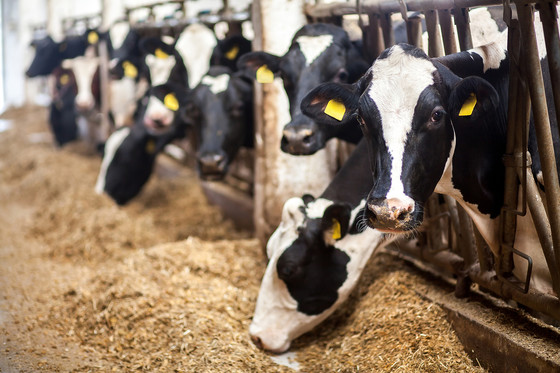 The U.S. Department of Agriculture (USDA) Animal and Plant Health Inspection Service (APHIS) has confirmed the detection of Highly Pathogenic Avian Influenza (HPAI), also known as H5N1, in dairy cattle in 12 states including Colorado, Idaho, Iowa, Kansas, Michigan, Minnesota, North Carolina, New Mexico, Ohio, South Dakota, Texas and Wyoming. To protect the U.S. livestock industry from the threat posed by HPAI H5N1 USDA is taking a number of actions with our federal partners.
On April 24, APHIS announced a federal order that includes mandatory testing for interstate movement of dairy cattle and mandatory reporting of influenza A detections in livestock. In addition to the Federal Order mandates, USDA provides several voluntary testing and monitoring options, including the HPAI Dairy Herd Status Program announced on May 31, 2024. APHIS has released a list of requirements and recommendations that apply to interstate moving of lactating dairy cattle, testing guidance for livestock, and answers to frequently asked questions. Producers are encouraged to visit the APHIS HPAI Livestock Detection website for information about these programs and requirements, as well as the most comprehensive and timely updates about this rapidly evolving situation.
Assistance for Milk Loss
Confirmed H5N1 Positive Test Results Required for Recovery Assistance
Producers who incur milk losses in their dairy herds due to HPAI H5N1 can now apply for financial assistance through the USDA’s updated Emergency Assistance for Livestock, Honeybees, and Farm-raised Fish Program (ELAP). USDA’s Farm Service Agency (FSA) expanded ELAP policy through the rule-making process to assist with financial losses resulting from reduced milk production when cattle are removed from commercial milking in dairy herds having a confirmed positive H5N1 test. Positive tests must be confirmed through the USDA’s APHIS’ National Veterinary Services Laboratories (NVSL).
To apply, producers need to submit the following to FSA:
- Proof of herd infection through a confirmed positive H5N1 test (based on USDA’s APHIS H5N1 case definition) on individual animal or bulk tank samples confirmed by APHIS’ NVSL;
- A notice of loss indicating the date when the loss is apparent, which is the sample collection date for the positive H5N1 test; and
- An application for payment certifying the number of eligible adult dairy cows removed from production, the month the cows were removed from production, and the producer’s share in the milk production.
The final date to file a notice of loss and application for payment for eligible losses is 30 days after the end of the prior calendar year, which is January 30.
Note: To determine livestock and producer eligibility for ELAP H5N1 assistance, to submit an application or if you’ve not previously conducted business with FSA, contact your local FSA county office for details. Find your local office. Other online resources include frequently asked questions and a fact sheet.
Loans for Biosecurity Implementation
FSA also provides direct and guaranteed loans for farmers and ranchers that can assist with implementation of biosecurity measures for their operations. Loans can assist with:
- Installing physical barriers to facilitate quarantine, to prevent livestock interaction with wildlife, and to prevent unauthorized access by visitors
- Purchase of disinfectant, footbaths, and disposable footwear and clothing;
- Veterinary costs related to vaccination and general animal health;
- Testing of feed and water sources for toxins and other disease;
- Costs associated with responsible manure disposal and management;
- Costs associated with cleaning and disinfecting livestock transportation equipment; and
- Other biosecurity measures recommended by USDA or other applicable agencies.
To learn more about loans, producers can use the:
-
Loan Assistance Tool – helps producers better navigate the farm loan process. The online Loan Assistance Tool provides producers needing agricultural financing with an interactive, step-by-step guide.
-
Farm Loans Overview Factsheet – provides an overview of all FSA direct and guaranteed loans, and eligibility requirements.
-
Farm Loans Homepage – gives in-depth farm loan information, including fact sheets, for those who don’t want to use the online Loan Assistance Tool.
To learn more about ELAP or farm loans, producers should contact the FSA at the local USDA Service Center.
To learn more about APHIS requirements and resources, visit APHIS’ Highly Pathogenic Avian Influenza (HPAI) Detections in Livestock webpage.
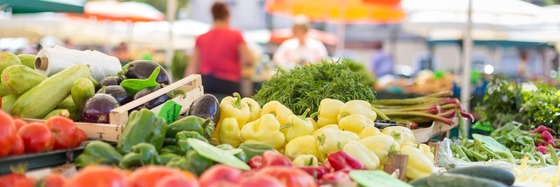 The U.S. Department of Agriculture (USDA) is expanding the Food Safety Certification for Specialty Crops (FSCSC) program to now include medium-sized businesses in addition to small businesses. Eligible specialty crop growers can apply for assistance for expenses related to obtaining or renewing a food safety certification. The program has also been expanded to include assistance for 2024 and 2025 expenses. Producers can apply for assistance on their calendar year 2024 expenses beginning July 1, 2024, through Jan. 31, 2025. For program year 2025, the application period will be Jan. 1, 2025, through Jan. 31, 2026.
Program Details
FSCSC assists specialty crop operations that incurred eligible on-farm food safety certification and expenses related to obtaining or renewing a food safety. FSCSC covers a percentage of the specialty crop operation’s cost of obtaining or renewing its certification, as well as a portion of related expenses.
Eligible FSCSC applicants must be a specialty crop operation; meet the definition of a small or medium-size business and have paid eligible expenses related to certification.
- A small business has an average annual monetary value of specialty crops sold by the applicant during the three-year period preceding the program year of no more than $500,000.
- A medium size business has an average annual monetary value of specialty crops the applicant sold during the three-year period preceding the program year of at least $500,001 but no more than $1,000,000.
Specialty crop operations can receive the following cost assistance:
- Developing a food safety plan for first-time food safety certification.
- Maintaining or updating an existing food safety plan.
- Food safety certification.
- Certification upload fees.
- Microbiological testing for products, soil amendments and water.
FSCSC payments are calculated separately for each eligible cost category. Details about payment rates and limitations are available at farmers.gov/food-safety.
Applying for Assistance
Interested applicants have until Jan. 31, 2025, to apply for assistance for 2024 eligible expenses. FSA will issue payments as applications are processed and approved. For program year 2025, the application period will be January 1, 2025, through January 31, 2026. FSA will issue 50% of the calculated payment for program year 2025 following application approval, with the remaining amount to be paid after the application deadline. If calculated payments exceed the amount of available funding, payments will be prorated.
Specialty crop producers can apply by completing the FSA-888-1, Food Safety Certification for Specialty Crops Program (FSCSC) for Program Years 2024 and 2025 application. The application, along with the AD-2047, Customer Data Worksheet and SF-3881, ACH Vendor/Miscellaneous Payment Enrollment Form, if not already on file with FSA, can be submitted to the FSA office at any USDA Service Center nationwide by mail, fax, hand delivery or via electronic means. Alternatively, producers with an eAuthentication account can apply for FSCSC online. Producers interested in creating an eAuthentication account should visit farmers.gov/sign-in.
Specialty crop producers can also call 877-508-8364 to speak directly with a FSA employee ready to assist. Visit farmers.gov/food-safety for additional program details, eligibility information and forms needed to apply.
More Information
To learn more about FSA programs, producers can contact their local USDA Service Center. Producers can also prepare maps for acreage reporting as well as manage farm loans and view other farm records data and customer information by logging into their farmers.gov account. Producers without an account can sign up today.
If you are a grazing or forest landowner or manager, you may be asked this summer to participate in a survey designed to help the Natural Resources Conservation Service (NRCS) improve the financial and technical services it offers grazing and forest landowners.
A joint project between NRCS and the National Agricultural Statistics Service (NASS), the Conservation Practice Adoption Motivations Survey (CPAMS) is aimed at understanding why people choose to use or not use different conservation practices.
“By responding to this survey, you also help document the ongoing stewardship of America’s agricultural producers and forest land managers,” said NRCS Chief Terry Cosby.
NASS began surveying more than 40,000 grazing and forest operations in June 2024. Respondents are encouraged to participate online but may also respond through the mail or by sending a fax. You can learn more about CPAMS by watching this short video.
Learn More about CPAMS
|






