In This Issue:
The new customer kiosks from USDA’s Farm Service Agency are now available at every county office nationwide. These kiosks help to streamline your visit to your local county office and easily access a variety of features such as signing FSA documents, utilizing the Loan Assistance Tool, browsing USDA programs, accessing the internet, accessing necessary personal information, and signing up for a Login.gov account, which provides access to farmers.gov level two features and other USDA and U.S. Government web resources. Future kiosk functionality enhancements include a customer check-in application, self-service option for FSA program applications and documents, financial inquiries and more.
|
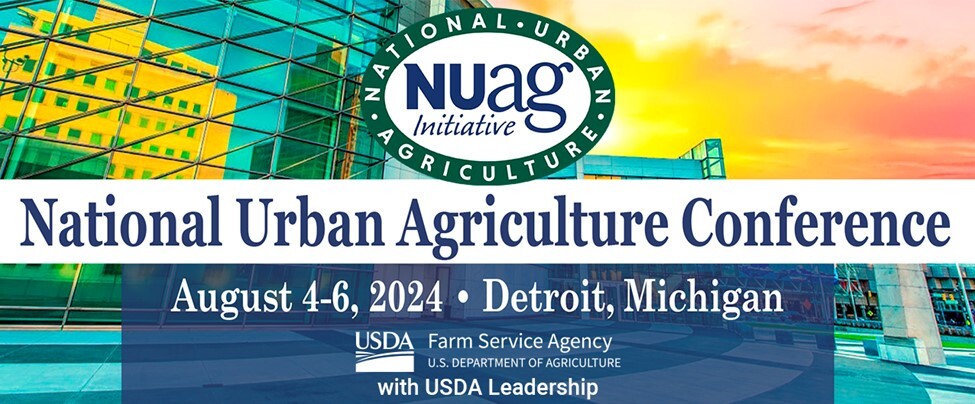
Have you heard about the National Urban Agriculture Conference happening Aug. 4-6 in Detroit, MI? Through the conference, USDA’s Farm Service Agency and lead organizer NUag Initiative seek to build stronger connections between USDA programs and urban growers. The conference features bus tours of urban farms in Detroit; information on USDA resources; listening sessions and presentations; and information on beneficial tools, training, resources, and efforts to expand local and regional food systems. Approximately 500 attendees are expected, including USDA employees, urban farmers; educators and administrators; business and nonprofit leaders; and retail and wholesale companies.
To learn more and sign up, see the website for conference registration.
USDA’s Partnerships for Climate-Smart Commodities effort is expanding markets for America’s climate-smart commodities, leveraging the greenhouse gas benefits of climate-smart commodity production, and providing direct, meaningful benefits to production agriculture, including for small and underserved producers. Learn more about expanded markets, premiums and incentives for producing climate-smart commodities as well as cost share and technical assistance to implement climate-smart practices. Find a project near you and get started today!
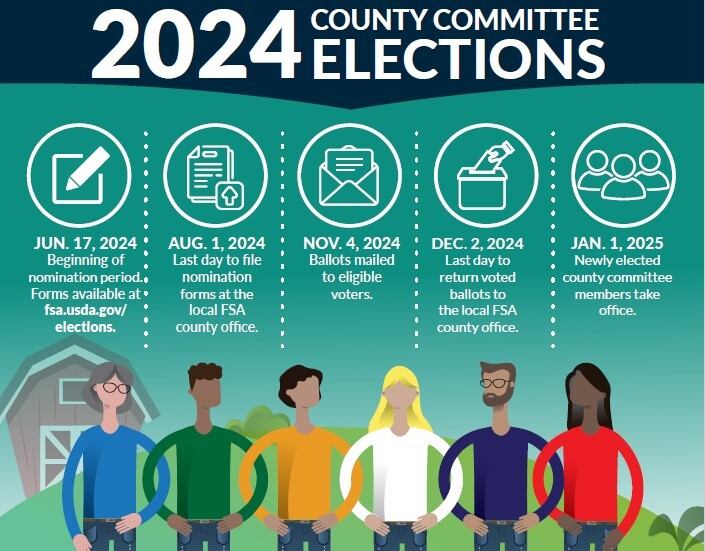
Nominations are now being accepted for farmers and ranchers to serve on local U.S. Department of Agriculture (USDA) Farm Service Agency (FSA) county committees. These committees make important decisions about how federal farm programs are administered locally. All nomination forms for the 2024 election must be postmarked or received in the local FSA office by Aug. 1, 2024.
Elections for committee members will occur in certain Local Administrative Areas (LAA). LAAs are elective areas for FSA committees in a single county or multi-county jurisdiction and may include LAAs that are focused on an urban or suburban area.
Customers can locate their LAA through a geographic information system locator tool available at fsa.usda.gov/elections and determine if their LAA is up for election by contacting their local FSA office.
Agricultural producers may be nominated for candidacy for the county committee if they:
- Participate or cooperate in a USDA program.
- Reside in the LAA that is up for election this year.
A cooperating producer is someone who has provided information about their farming or ranching operation to FSA, even if they have not applied or received program benefits.
Individuals may nominate themselves or others and qualifying organizations may also nominate candidates. USDA encourages minority, women, urban and beginning farmers or ranchers to nominate, vote and hold office.
Nationwide, more than 7,700 dedicated members of the agricultural community serve on FSA county committees. The committees are made up of three to 11 members who serve three-year terms. Committee members are vital to how FSA carries out disaster recovery, conservation, commodity and price support programs, as well as making decisions on county office employment and other agricultural issues.
Urban and Suburban County Committees
The 2018 Farm Bill directed USDA to form urban county committees and make other advancements related to urban agriculture, including the establishment of the Office of Urban Agriculture and Innovative Production. FSA established county committees specifically focused on urban agriculture that work to encourage and promote urban, indoor and other emerging agricultural production practices. Additionally, the county committees may address food access, community engagement, support of local activities to promote and encourage community compost and food waste reduction.
Urban committee members are nominated and elected to serve by local urban producers in the same jurisdiction. Urban county committee members provide outreach to ensure urban producers understand USDA programs, serve as the voice of other urban producers and assist in program implementation that support the needs of the growing urban community.
The 27 cities with urban county committees are listed at fsa.usda.gov/elections and farmers.gov/urban. Of these, ten urban county committees will hold an inaugural election this cycle.
More Information
Producers should contact their local FSA office today to register and find out how to get involved in their county’s election, including if their LAA is up for election this year. To be considered, a producer must be registered and sign an FSA-669A nomination form. This form and other information about FSA county committee elections are available at fsa.usda.gov/elections.
All nomination forms for the 2024 election must be postmarked or received in the local USDA Service Center by the Aug.1, 2024, deadline. Election ballots will be mailed to eligible voters in November 2024.
|
The U.S. Department of Agriculture (USDA) is accepting applications for Composting and Food Waste Reduction (CFWR) pilot projects for fiscal year 2024. The cooperative agreements, using remaining funds from the American Rescue Plan Act, are jointly administered by USDA’s Office of Urban Agriculture and Innovative Production and the National Institute of Food and Agriculture (NIFA). Selected projects will develop and test strategies for planning and implementing municipal compost plans and food waste reduction plans and are part of USDA’s broader efforts to support urban agriculture.
USDA’s Office of Urban Agriculture and Innovative Production (OUAIP) – led by USDA’s Natural Resources Conservation Service (NRCS) – will accept applications on Grants.gov until 11:59 p.m. Eastern Time on Sept. 4, 2024. Projects must be two years in duration with an estimated start date of June 1, 2025.
“Uneaten food makes up approximately 4% of U.S. greenhouse gas emissions,” said Terry Cosby, Chief of NRCS, which houses the Office of Urban Agriculture and Innovative Production. “Turning food waste into valuable compost is an important climate solution and benefits both farmers and communities. Local strategies and tools like the cooperative agreements are important climate solutions and also contribute to food security at the community level, and we encourage communities to apply.”
Cooperative agreements support projects led by local and tribal governments, schools or other eligible entities that:
- Generate compost.
- Increase access to compost for agricultural producers.
- Reduce reliance on and limit the use of fertilizer.
- Improve soil quality.
- Encourage waste management and permaculture business development.
- Increase rainwater absorption.
- Reduce municipal food waste.
- Divert food waste from landfills.
OUAIP will prioritize projects that anticipate or demonstrate economic benefits; incorporate plans to make compost easily accessible to farmers, including community gardeners; integrate other food waste strategies, including food recovery efforts, and collaborate with multiple partners. Additional details are available in the Grants.gov notice.
This is the fifth year that OUAIP has offered this funding opportunity. Examples of past investments include Geneva Compost and Food Waste Diversion, from the Town of Geneva, New York, which diverted food waste and other biodegradables from the waste stream to generate nutrient-rich compost, improving soil quality, reducing reliance on fertilizers, and engaging in food recovery efforts that take “extra” food and get it to community members in need.
Another example of a past recipient is the Composting and Food Waste Reduction Pilot Project by Tucson Unified School District in Tucson, Arizona. The project built infrastructure to provide compost to school and community gardens, improve soil quality, reduce food waste, and demonstrate the economic benefits of including food reclamation education as an integral part of a school garden and nutrition programs for students, their families and the community.
Webinar
A pre-recorded webinar will provide an overview of the cooperative agreements’ purpose, project types, eligibility and basic requirements for submitting applications. The webinar will be posted at usda.gov/urban.
More Information
Earlier today, USDA, the U.S. Environmental Protection Agency, the U.S. Food and Drug Administration, and the White House announced the National Strategy for Reducing Food Loss and Waste and Recycling Organics as part of President Biden’s whole-of-government approach to tackle climate change, feed people, address environmental justice, and promote a circular economy.
OUAIP was established through the 2018 Farm Bill. It is led by NRCS and works in partnership with numerous USDA agencies that support urban agriculture and innovative production. Other efforts include:
- Administering the People’s Garden Initiative, which celebrates collaborative gardens across the country and worldwide that benefit their communities by growing fresh, healthy food and supporting resilient, local food systems using sustainable practices and providing greenspace.
- Creating and managing a Federal Advisory Committee for Urban Agriculture and Innovative Production to advise the Secretary on the development of policies and outreach relating to urban agriculture.
- Investing $9.1 million for Urban Agriculture and Innovative Production competitive grants in fiscal year 2023.
- Investing $40 million, made possible by President Biden’s American Rescue Plan, into partnerships with community-based organizations that will conduct outreach, education and technical assistance to support urban producers.
- Investing in risk management education to broaden the reach of crop insurance among urban producers.
- Organizing 27 FSA urban and suburban county committees to make important decisions about how FSA farm programs are administered locally. Urban farmers who participate in USDA programs in the areas selected are encouraged to participate by nominating and voting for county committee members.
- Establishing 17 new Urban Service Centers staffed by FSA and NRCS employees where urban producers can access farm loan, conservation, disaster assistance and risk management programs.
- Partnering with the Vermont Law and Graduate School Center for Agriculture and Food Systems to develop resources that help growers understand and work through local policies.
Learn more about Composting and Food Waste Cooperative Agreements at usda.gov/urban and view a complete list of 2023 cooperative agreement recipients and project summaries. In 2023, USDA awarded $11.5 million in 38 cooperative agreements. For additional resources available to producers, download the Urban Agriculture at a Glance brochure or visit farmers.gov/urban.
NIFA is building a better future by nurturing innovation in the food and agricultural sciences and cultivating equitable change in communities across the nation. Through investment in science as a solution to our greatest challenges, USDA NIFA collaborates with partners to drive research, education and Extension — improving lives, supporting livelihoods and sustaining the planet. In FY 2023, NIFA’s total investment was $2.5 billion.
USDA touches the lives of all Americans each day in so many positive ways. Under the Biden-Harris administration, USDA is transforming America’s food system with a greater focus on more resilient local and regional food production, fairer markets for all producers, ensuring access to safe, healthy, and nutritious food in all communities, building new markets and streams of income for farmers and producers using climate smart food and forestry practices, making historic investments in infrastructure and clean energy capabilities throughout America, and committing to equity across the Department by removing systemic barriers and building a workforce more representative of America. To learn more, visit usda.gov.
|