|
Agricultural producers in Edgecombe NC who have not yet completed their crop acreage reports after planting should make an appointment with their U.S. Department of Agriculture (USDA) Farm Service Agency (FSA) service center before the applicable deadline.
An acreage report documents a crop grown on a farm or ranch and its intended uses. Filing an accurate and timely acreage report for all crops and land uses, including failed acreage and prevented planted acreage, can prevent the loss of benefits.
How to File a Report
The following acreage reporting dates are applicable in Edgecombe NC:
07/15/2024 Soybeans, Corn, Peanuts,
Cotton, Tobacco, Sweet Potatoes
Acreage reporting dates vary by crop and by county. Contact your local FSA office for a list of acreage reporting deadlines by crop.
To file a crop acreage report, producers need to provide:
- Crop and crop type or variety.
- Intended use of the crop.
- Number of acres of the crop.
- Map with approximate boundaries for the crop.
- Planting date(s).
- Planting pattern, when applicable.
- Producer shares.
- Irrigation practice(s).
- Acreage prevented from planting, when applicable.
- Other information as required.
Acreage Reporting Details
The following exceptions apply to acreage reporting dates:
- If the crop has not been planted by the acreage reporting date, then the acreage must be reported no later than 15 calendar days after planting is completed.
- If a producer acquires additional acreage after the acreage reporting date, then the acreage must be reported no later than 30 calendar days after purchase or acquiring the lease. Appropriate documentation must be provided to the county office.
- If crops are covered by the Noninsured Crop Disaster Assistance Program, acreage reports should be submitted by the applicable state, county, or crop-specific reporting deadline or 15 calendar days before grazing or harvesting of the crop begins.
Producers should also report crop acreage they intended to plant, but due to natural disaster, were unable to because of a natural disaster.
Prevented planting acreage must be reported on form CCC-576, Notice of Loss, no later than 15 calendar days after the final planting date as established by FSA and USDA’s Risk Management Agency.
FSA offers continuous certification for perennial forage. This means after perennial forage is reported once and the producer elects continuous certification, the certification remains in effect until a change is made. Check with FSA at the local USDA Service Center for more information on continuous certification.
New Option to View, Print and Label Maps on Farmers.gov
Producers with an eAuth account linked to their USDA customer record can now access their FSA farm records, maps and common land units by logging into farmers.gov. A new feature will allow producers to export field boundaries as shapefiles and import and view other shapefiles, such as precision agriculture boundaries. This will allow producers to view, print and label their own maps for acreage reporting purposes.
Producers who have authority to act on behalf of another customer as a grantee via form FSA-211 Power of Attorney, Business Partner Signature Authority, along with other signature types, or as a member of a business can now access information in the farmers.gov portal.
Producers can learn how to use the farmers.gov Farm Records Mapping functionality with this fact sheet and these video tutorials.
More Information
Producers can make an appointment to report acres by contacting their local USDA Service Center.

Landowners and operators are reminded that in order to receive payments from USDA, compliance with Highly Erodible Land (HEL) and Wetland Conservation (WC) provisions are required. Farmers with HEL determined soils are reminded of tillage, crop residue, and rotation requirements as specified per their conservation plan. Producers are to notify the USDA Farm Service Agency prior to breaking sod, clearing land (tree removal), and of any drainage projects (tiling, ditching, etc.) to ensure compliance. Failure to update certification of compliance, with form AD-1026, triggering applicable HEL and/or wetland determinations, for any of these situations, can result in the loss of FSA farm program payments, FSA farm loans, NRCS program payments, and premium subsidy to Federal Crop Insurance administered by RMA.
|

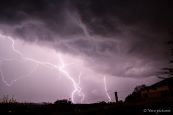
Hurricane season is quickly approaching, officially starting June 1 and lasting until November 30. Researchers are predicting that the 2024 hurricane season is going to be extremely active. The National Oceanic and Atmospheric Association (NOAA) predicts above-normal hurricane activity in 2024, with 17 to 25 named storms.
USDA encourages producers to prepare and protect their family and agricultural operations.
-
Develop an Emergency Plan - Ensure your household and employees know your hurricane plan, including meeting points, emergency contact lists, and alternate evacuation routes in case infrastructure is damaged.
-
Remove Debris and Secure Large Objects - Clean out culverts, ditches, and other drainage areas, especially before and during peak hurricane season to reduce water damage. Most injuries to animals, people, or structures during a hurricane are caused by flying objects. To lessen the risk, minimize the presence of equipment, supplies, and debris that may become airborne during high winds or encountered in floodwaters.
-
Secure Important Records and Documents - Pre- and post-hurricane documentation is extremely important for insurance compensation and recovery assistance. You’ll want to have thorough records of damages and losses sustained on your farm as well as documentation of your cleanup and recovery efforts.
- It is critical to document inventory of farm buildings, vehicles, equipment, and livestock before a disaster occurs. Take photos, videos, or make written lists with descriptions. Keep copies of this inventory in multiple places: computer, off-site in a safe location, and on a cloud-based server where information is transmitted and saved weekly.
-
Know Your Insurance Options - Regularly review your insurance policies with your agent to be sure you have adequate coverage, including flood insurance, for your facilities, vehicles, farm buildings, crops and livestock. Note, there are limitations on how soon insurance coverage will take effect. Generally, insurance policies will not cover damage if the policy was not in place before a disaster.
-
Gather Supplies - Have drinking water, canned food, a generator, batteries, a flashlight, and fuel available in case you lose power. For widespread outages, credit and debit cards may not work, so have cash handy.
-
Access Real-time Emergency Information - Download the Federal Emergency Management Agency smartphone app for free on the App Store and Google Play for safety tips on what to do before, during, and after disasters. Subscribe to our text message and email service to receive real-time, local operational and recovery information from the Farm Service Agency, Natural Resources Conservation Service and Risk Management Agency.
On farmers.gov, the Hurricane Webpage, Disaster Assistance Discovery Tool, Disaster-at-a-Glance fact sheet, and Loan Assistance Tool can help producers and landowners determine program or loan options. For assistance with a crop insurance claim, producers and landowners should contact their crop insurance agent. For FSA and NRCS programs, they should contact their local USDA Service Center.
|

The U.S. Department of Agriculture (USDA) Farm Service Agency (FSA) reminds foreign investors with an interest in agricultural land in the United States that they are required to report their land holdings and transactions to USDA.
The Agricultural Foreign Investment Disclosure Act (AFIDA) requires foreign investors who buy, sell or hold an interest in U.S. agricultural land to report their holdings and transactions to the USDA. Foreign investors must file AFIDA Report Form FSA-153 with the FSA county office in the county where the land is located. Large or complex filings may be handled by AFIDA headquarters staff in Washington, D.C.
According to CFR Title 7 Part 781, any foreign person who holds an interest in U.S. agricultural land is required to report their holdings no later than 90 days after the date of the transaction.
Foreign investors should report holdings of agricultural land totaling 10 acres or more used for farming, ranching or timber production, and leaseholds on agricultural land of 10 or more years. Tracts totaling 10 acres or less in the aggregate, and which produce annual gross receipts in excess of $1,000 from the sale of farm, ranch, forestry or timber products, must also be reported. AFIDA reports are also required when there are changes in land use, such as from agricultural to nonagricultural use. Foreign investors must also file a report when there is a change in the status of ownership.
The information from AFIDA reports is used to prepare an annual report to Congress. These annual reports to Congress, as well as more information, are available on the FSA AFIDA webpage.
Assistance in completing the FSA-153 report may be obtained from the local FSA office. For more information regarding AFIDA or FSA programs, contact the Edgecombe County FSA office at phone or visit farmers.gov.
|
|
Edgecombe County USDA Service Center
201 St Andrew St
STE # 144
Tarboro, NC 27886
Phone: 252-823-8187 ext. 2
Fax: 844-325-6880
|
Farm Service Agency (FSA)
County Executive Director (CED)
William A Whitehurst II
252-823-8187 ext. 2
art.whitehurst@usda.gov
|
Natural Resource and Conservation Service (NRCS)- Resource Conservationist
Jazmarkey Wiggins
252-823-8187 ext. 3
jazmarkey.wiggins@usda.gov
|
|
FSA Farm Loan
Senior Farm Loan Officer/acting Manager
Lynette Howard 252-823-8187
lynette.howard@usda.gov
|
FSA District Director
District 6, Director (DD)
David McBryde 252-237-5147 ext. 2
david.mcbryde@usda.gov
|
|
FSA County Office Committee (COC):
Jess Lancaster, COC Chair
Jordan Norris, Vice-Chair
Ben Shelton, Member
John C Vinson, Advisor
|
FSA Program Technicians:
Crystal Morris
Stefanie Howard
Staton Dupree
Kimberly Penwell
|
|
County Committee Meeting Date:
1st Thursday of each month at 9am, if applicable
USDA is an Equal Opportunity Provider
|
Sign Up for Text Messages: In addition to email alerts, you can also subscribe to receive text messages on your cell phone from the Edgecombe County USDA Service Center. To subscribe to text message alerts, text NCEdgecombe FSANOW to 372-669. Standard text messaging rates apply, and you can unsubscribe at any time. On average, we will send you no more than two text messages each month.
|
If you would need to request an accommodation, please contact Kim Penwell at 252-823-8187 ext. 2 to request accommodations (e.g., an interpreter, translator, seating arrangements, etc.) or materials in an alternative format (e.g., Braille, large print, audiotape – captioning, etc.).
|




