Oregon Farm Service Agency Newsletter June 2024

View as a webpage / Share

Oregon Farm Service Agency  -  June 4, 2024


USDA Reminds Oregon Producers to File Crop Acreage Reports

Agricultural producers in Oregon who have not yet completed their crop acreage reports after planting should make an appointment with their U.S. Department of Agriculture (USDA) Farm Service Agency (FSA) service center before the applicable deadline.

An acreage report documents a crop grown on a farm or ranch and its intended uses. Filing an accurate and timely acreage report for all crops and land uses, including failed acreage and prevented planted acreage, can prevent the loss of benefits.

The following acreage reporting dates are applicable in Oregon:

July 15, 2024 Alfalfa, Barley, Cabbage, Canola, Corn, Dry Beans, Dry Peas, Mint, Mustard, Oats, Onions, Potatoes, Processing Beans, Sugar Beets, Sweet Corn, Wheat.

Acreage reporting dates vary by crop and by county. Contact your local FSA office for a list of acreage reporting deadlines by crop.

How to File a Report

To file a crop acreage report, producers need to provide:

· Crop and crop type or variety.

· Intended use of the crop.

· Map with acreage and approximate boundaries for the crop.

· Planting date(s).

· Planting pattern, when applicable.

· Producer shares.

· Irrigation practice(s).

· Acreage prevented from planting, when applicable.

· Other information as required.

Acreage Reporting Details

The following exceptions apply to acreage reporting dates:

· If the crop has not been planted by the acreage reporting date, then the acreage must be reported no later than 15 calendar days after planting is completed.

· If a producer acquires additional acreage after the acreage reporting date, then the acreage must be reported no later than 30 calendar days after purchase or acquiring the lease. Appropriate documentation must be provided to the county office.

· If crops are covered by the Noninsured Crop Disaster Assistance Program, acreage reports should be submitted by the applicable state, county, or crop-specific reporting deadline or 15 calendar days before grazing or harvesting of the crop begins.

Producers should also report crop acreage they intended to plant, but due to natural disaster, were unable to because of a natural disaster.

Prevented planting acreage must be reported on form CCC-576, Notice of Loss, no later than 15 calendar days after the final planting date as established by FSA and USDA’s Risk Management Agency.

FSA offers continuous certification for perennial forage. This means after perennial forage is reported once and the producer elects continuous certification, the certification remains in effect until a change is made. Check with FSA at the local USDA Service Center for more information on continuous certification.

New Option to View, Print and Label Maps on Farmers.gov

Producers with an eAuth account linked to their USDA customer record can now access their FSA farm records, maps and common land units by logging into farmers.gov. A new feature will allow producers to export field boundaries as shapefiles and import and view other shapefiles, such as precision agriculture boundaries. This will allow producers to view, print and label their own maps for acreage reporting purposes.

Producers who have authority to act on behalf of another customer as a grantee via form FSA-211 Power of Attorney, Business Partner Signature Authority, along with other signature types, or as a member of a business can now access information in the farmers.gov portal.

Producers can learn how to use the farmers.gov Farm Records Mapping functionality with this fact sheet and these video tutorials.

More Information

Producers can make an appointment to report acres by contacting their local USDA Service Center.


USDA Encourages You to Consider NAP Risk Protection Coverage Before Crop Sales Deadlines

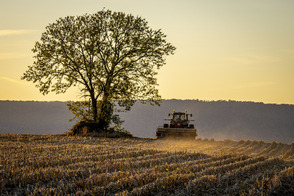
Image of a tree with a tractor fall seeding at a farm

The Farm Service Agency encourages you to examine available USDA crop risk protection options, including federal crop insurance and Noninsured Crop Disaster Assistance Program (NAP) coverage, before the applicable crop sales deadline. 


Federal crop insurance covers crop losses from natural adversities such as drought, hail and excessive moisture. NAP covers losses from natural disasters on crops for which no permanent federal crop insurance program is available. You can determine if crops are eligible for federal crop insurance or NAP by visiting the RMA website 


NAP offers higher levels of coverage, from 50 to 65 percent of expected production in 5 percent increments, at 100 percent of the average market price. Producers of organics and crops marketed directly to consumers also may exercise the “buy-up” option to obtain NAP coverage of 100 percent of the average market price at the coverage levels of between 50 and 65 percent of expected production. Buy-up levels of NAP coverage are available if the producer can show at least one year of previously successfully growing the crop for which coverage is being requested. NAP basic coverage is available at 55 percent of the average market price for crop losses that exceed 50 percent of expected production.    


For all coverage levels, the NAP service fee is the lesser of $325 per crop or $825 per producer per county, not to exceed a total of $1,950 for a producer with farming interests in multiple counties.   


Beginning, underserved, veterans and limited resource farmers are now eligible for free catastrophic level coverage. 


Deadlines for coverage vary by state and crop. contact your local USDA Service Center or visit fsa.usda.gov. 


Federal crop insurance coverage is sold and delivered solely through private insurance agents. Agent lists are available at all USDA Service Centers or at USDA’s online Agent Locator. You can use the USDA Cost Estimator to predict insurance premium costs. 


Farm Service Agency Call Center

FSA Program Technician - USDA Flickr

Farmers and ranchers can contact a call center to receive one-on-one assistance from USDA Farm Service Agency (FSA) employees ready to help. By calling 877-508-8364, customers can ask questions about FSA programs.

The call center was created as a way to better serve customers, especially those who have not worked with FSA previously.

Customers who contact the call center can expect to receive the same great service they would receive as if they were in their FSA county office.

FSA Call Center staff can also provide service to non-English speaking customers. Customers using the call center will still call 877-508-8364 and select 1 for English and 2 to speak with a Spanish-speaking employee. For other languages, customers select 1 and indicate their language to the call center staff.

The call center is just one of many ways USDA has adjusted and added flexibilities to meet the needs of our customers. One thing remains the same, USDA stands committed to offering exceptional customer service to our nation’s farmers and ranchers.


Oregon Farm Service Agency

7620 SW Mohawk
Tualatin, OR 97062

Phone: 503-692-3688
Fax: 866-824-6185

Sign up for important text message alerts from your local county FSA office! To subscribe, text FSANOW (372-669).


USDA is an equal opportunity provider, employer and lender. To file a complaint of discrimination, write: USDA, Office of the Assistant Secretary for Civil Rights, Office of Adjudication, 1400 Independence Ave., SW, Washington, DC 20250-9410 or call (866) 632-9992 (Toll-free Customer Service), (800) 877-8339 (Local or Federal relay), (866) 377-8642 (Relay voice users).