
|
|
Arkansas NRCS Second Quarterly Newsletter
|
|
|
In This Issue:
|
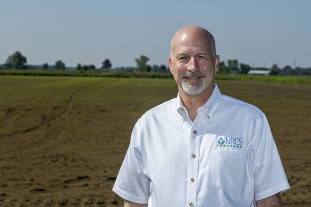
Greetings!
This quarter has been a special time for reflection, celebration, and gratitude as we recognize the invaluable roles of individuals in our underserved communities within and outside of Natural Resources Conservation Service (NRCS). February provided an opportunity to celebrate the vast contributions of generations of Black Americans whose courage, advocacy, and patriotism have enriched our communities and strengthened our country. Throughout March, we gave thanks to the women that have been catalysts for change, driving progress in society, and shaping a more equitable future for all.
As we conclude Asian American, Native Hawaiian, and Pacific Islander (AANHPI) Heritage Month, NRCS is honoring the history, culture, and the countless contributions of Asian Americans, Native Hawaiians, and Pacific Islanders.
May was designated Asian American, Native Hawaiian and Pacific Islander (AANHPI) History and Heritage Month by Congress in 1992 following the creation of Pacific/Asian American Heritage Week in 1978 and its first celebration in May 1979. May was chosen for the observance to honor the arrival of the first Japanese immigrant to America on May 7, 1843, and the completion of the transatlantic railroad, which was largely built by Chinese immigrants, on May 10, 1869. This year the Federal Asian Pacific American Council calls on everyone to commit to working together to build a better future through their theme “Advancing Leaders Through Opportunity.”
Arkansas NRCS has financial and technical resources available to support Asian, Pacific Islanders and native Hawaiians producers. Farmers and private forestland owners in those communities may qualify for priority consideration on Environmental Quality Incentives Program (EQIP) applications, which enables them to address natural resource concerns on their land. Members of historically underserved communities may also be eligible for a higher payment rate and advanced payments to help with the implementation of conservation practices.
Please join us as we honor the continued contributions of Asian Americans, Native Hawaiians and Pacific Islanders.
Regards,
Mike Sullivan
NRCS Arkansas State Conservationist
How does conservation planning work? NRCS is here to provide one-on-one support to our customers at our 61 USDA Service Centers statewide. NRCS staff can help guide farmers to the best USDA assistance based on their conservation goals. You will meet with your local NRCS district conservationist, or conservation planning technician, for a science-based evaluation of the problems and opportunities on your land. NRCS staff members then analyze the findings and recommend the best strategies to address your issues and achieve valuable conservation opportunities and objectives.
Farmers who work with us at their local USDA Service Center can:
- Verify eligibility for USDA programs
- Discuss their business and conservation goals
- Create a conservation plan
- Learn how to meet conservation compliance provisions
A conservation plan is critical to maintain and improve your operation’s productivity. Plans of any kind are important as they set goals and outline how to reach them. Conservation plans are roadmaps for improving your operation while conserving natural resources. They provide proven strategies that landowners can use to solve identified natural resource concerns and take advantage of conservation opportunities.
If you’re interested in finding out more about conservation planning, I encourage you to contact your local USDA Service Center to discuss your operation’s needs.
See what other landowners are doing –
Learn more about the benefits of conservation practices directly from the farmers, ranchers, and forest landowners applying them with our Conservation at Work series. Explore the different types of conservation practices by watching these 90-second videos.
Important Date to Remember:
- July 2, 2024: Proposal deadline for Regional Conservation Partnership Program (RCPP)
|
NRCS & conservation partners will help underserved producers improve wetland health on agricultural lands and help mitigate climate change
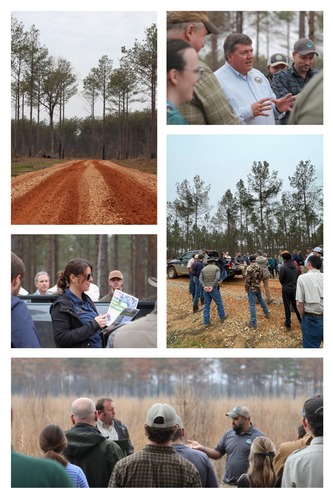
Conservation delivery networks (CDNs) are a collaboration of conservation partners, resulting in increased support for priority actions. There are two CDNs in Arkansas: one in the Mississippi Alluvial Valley (MAV), and the second is the West Gulf Coastal Plain (WGCP). This year, the two CDNs held a joint field day at Little Bayou WMA on March 7th for the first time since their inception.
The focus of this field day was to highlight forest management techniques that benefit priority birds such as the Northern Bobwhite, Red Cockaded Woodpecker, Henslow's Sparrow, and Eastern Wild Turkey. Much of the discussion centered around treatments to provide to the different habitats needed by each bird species. The types of management needed to benefit quail and other priority birds were shown through two perspectives: the public land and private landowners.
Public land management is conducted to meet specific needs for Northern Bobwhite for the benefit of the public. Little Bayou WMA is one of the Arkansas Game and Fish Commission (AGFC) quail focal areas and has received intensive quail management since 2017. This work was wildly successful and has resulted in the most significant increase in quail numbers across AGFC focal areas during the past 7 years among all AGFC quail focal areas.
The private lands management included a similar approach to managing priority birds, with quail as a primary interest. Arkansas is 90% privately-owned, so to make measurable impacts on wildlife, management must be tailored to private lands, as well.
When managing these specific wildlife needs, there are tradeoffs involved in implementing them. The CDNs are working to manage forests, but removing timber comes at the expense of reduced future timber harvest. In turn, some bird species, such as quail, benefit more from reduced timber levels.
The CDNs are committed to using this information to further develop tools to assist landowners in making informed decisions on their lands according to their objectives.
|
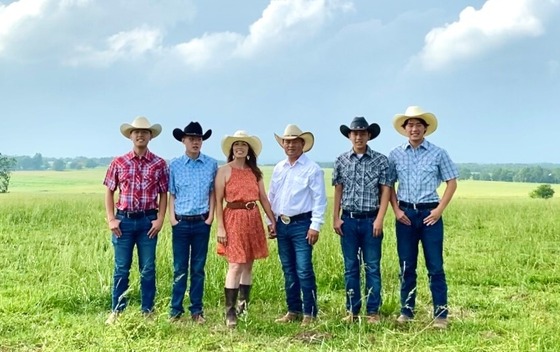
Meet Tou Chou Vang and his family
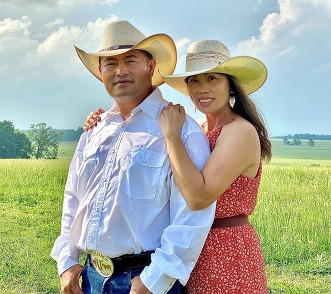
Spring has been an eventful season for many, and for Tou Chou Vang, it has also been a time of reflection and gratitude. May 4th marked twenty years of Vang Ranch, a livestock operation in Summers, Arkansas. But Vang’s story doesn't start in Arkansas.
He grew up in Wisconsin where his family worked in the paper mill industry. However, when those jobs became increasingly unpredictable and unstable, Vang’s father knew something needed to change and decided to move to Arkansas to pursue agriculture, with Vang, his wife, and their first-born son following suite.
“It was a big shock to all of us, but like my parents and some of my other family in Laos, I’ve always had an interest in agriculture and raising livestock," says Vang. "We have such a strong passion for caring for animals. To this day, it doesn't feel like a chore. It feels like a way of life."
In the next twenty years, Vang has managed his ranch, alongside his wife and four sons, all while serving as a police officer, graduating from law school, and teaching and practicing criminal law. Though wearing so many hats has been challenging, he says that his passion for learning and the help he has received the Natural Resources Conservation Service (NRCS) has helped make it all possible.
“It’s amazing. I’ll read up on a practice that interests me, and, sure enough, NRCS has the exact program I need to implement it quickly and easily. Time is a valuable resource and they’ve saved so much of it for me,” explains Vang.
|
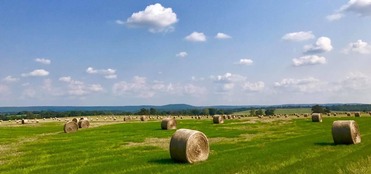
By partnering with NRCS, Vang has completed 2 EQIP contracts to establish the infrastructure to facilitate rotational grazing. The contracts consisted of cross-fencing, livestock pipeline, heavy use areas, tire tanks, and prescribed grazing. Vang raises cows and horses and as a result has been growing grass and hay, even claiming that it took him becoming proficient in raising hay to become the cattle rancher that he is today.
“I’m most proud of completing the cross-fencing because it changed the face of my farm," Vang explains. "Because of that practice, I’ve seen the quality of life of my cattle and the quality of my foliage improve.”
Vang’s operation has come a long way in the last twenty years, but he doesn’t intend on slowing that progress.
"I’ve always been a student of the study, researching new way to innovate my operation," says Vang. "Conservation is constantly evolving, and I plan to evolve with it.”
|
 |
|
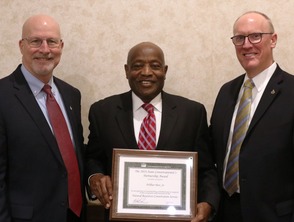
Wilbur Peer, Sr.
The 2024 State Conservationist's Partnership Award Winner
|
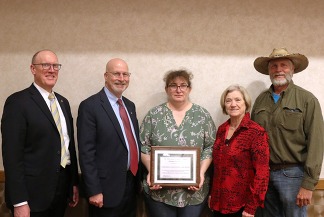
Independence County Conservation District
The 2024 State Conservationist's Partnership Award Winner
|
|
 |
 |
|
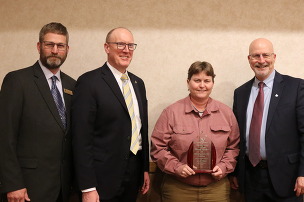
Wendy Hendrix
Outstanding Conservationist Professional Award Winner
|
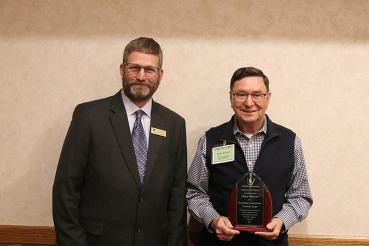
Gary Baxter
Outstanding Conservationist Community Leader Award Winner
|
|
 |
 |
|
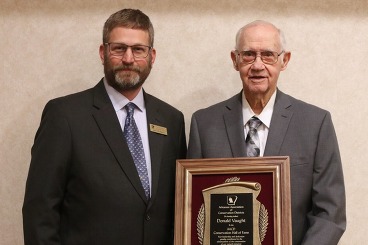
Donald Vaught
AACD Conservation Hall of Fame Inductee
|
Dr. Mark Bryan
AACD Conservation Hall of Fame Inductee
|
|
 |
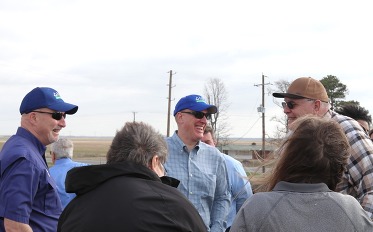
On February 27th, NRCS Associate Chief Louis Aspey toured several key conservation projects and engaged directly with the individuals making a difference on the ground. Aspey aimed to understand the unique challenges and successes of local conservation efforts and to gather insights to better support Arkansas from a federal perspective.
After the day began with a visit to the Hazen field office and a tour of the Grand Prairie Construction Warehouse, Aspey toured Grand Prairie Irrigation Project, a significant initiative aimed at improving water management for agriculture in the region. He then traveled to the Seidenstricker Farm, where he saw firsthand the innovative reservoir system used to sustain rice agriculture, demonstrating effective water conservation practices.
Aspey and staff also had the opportunity to tour the Bayou Meto Pumping Plant, an essential component of a larger project designed to provide water for agricultural irrigation and flood control. Here, Aspey met with local staff to discuss ongoing efforts and future plans.
After returning to Little Rock, Margie Raimondo led a tour of her Urbana Farmstead, an urban farm promoting sustainable agriculture and community engagement. The visit highlighted the growing importance of urban farming in conservation efforts.
The day concluded with a tour of the St. Joseph's Center farm, where Aspey observed various sustainable farming practices and community programs aimed at promoting agricultural education and conservation.
Throughout his visit, Aspey emphasized his commitment to supporting Arkansas's conservation efforts and ensuring that the needs and successes of the field offices are effectively communicated to staff and lawmakers in Washington, D.C.
|
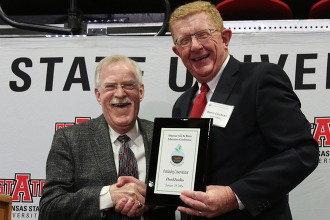
Arkansas Soil & Water Education Conference Irrigation Expo
January 29, 2024
|
|
 |
 |
|
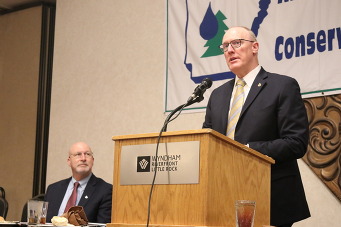
Arkansas Association of Conservation Districts (AACD) Annual Meeting
February 29, 2024
|
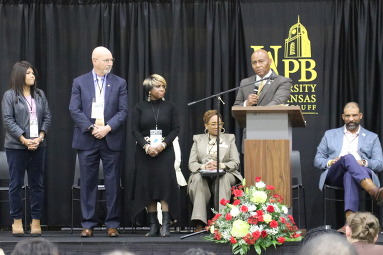
University of Arkansas at Pine Bluff (UAPB) 65th Annual Rural Life Conference
March 15, 2024
|
|
 |
 |
|
Conservation Planning (Part Two)
March 26, 2024
|
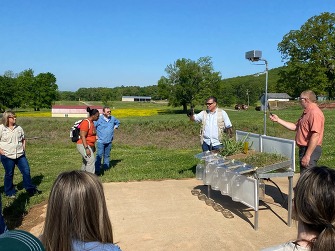
Arkansas NRCS Soil Health and Sustainability Training Course
April 23-25, 2024
|
|
 |
|
|
|
Arkansas Natural Resources Conservation Service
Room 3416, Federal Building, 700 West Capitol Avenue, Little Rock, AR 72201
Phone: 501-301-3100
Fax: 855-681-7044
www.ar.nrcs.usda.gov
NRCS AR State Conservationist Mike Sullivan
|
|






