|
Iowa farmers and ranchers are navigating a challenging season of extreme weather. My heart goes out to what are now hundreds of families who have lost property, lost significant parts of their livelihoods, lost records, mementos, family heirlooms, and farming operations generations in the making. We also hold the families who have lost loved ones in the storms in our thoughts and prayers and encourage those injured in their recovery.
At Iowa USDA, we are here to help farmers, rural businesses, and rural communities with their long-term recovery. We are a people centered department with staff in every county in Iowa. For those recovering from past storms and those who may yet experience extreme weather this year, our local staff are ready to serve. You can find more information online about Farm Service Agency, Natural Resources Conservation Service, and Rural Development.
Here are some suggestions for connecting with FSA staff in our county office service centers after a natural disaster.
- Attend to your immediate needs and do some documentation as you deal with debris, livestock, crop damage, property damage, and other immediate needs after the disaster.
- With some of our regular programs, you need to wait to do the work until you’ve applied and sometimes been approved for program participation. In a disaster situation, that is generally not the case. You can attend to your immediate needs without impacting your eligibility. The important step is that when you come in to consider how FSA could be helpful, you’ve got good documentation that shows your need.
- Photos are a great way to establish the loss and need. Receipts and copies of checks are also good to have. But even simple notations of things like time spent, work done, acres cleaned, amount of debris removed, and livestock lost will be helpful as our staff consider what programs could be helpful for your long-term recovery. Even using the recorder on your phone to dictate real time efforts could be a good resource for you when it’s time to apply for a program.
- Contact your local office. You can call. You can stop by. Don’t wait for us to reach out to you. When you’ve dealt with the immediate emergency and are ready to look at longer term recovery, reach out to us and let us know you’ve had some losses.
- Consider your farming/ranching losses as well other personal or non-farming business losses. While FSA can only help with your farming losses, there may be support from other agencies like NRCS, Rural Development, Small Business Administration (SBA), Federal Emergency Disaster Management Administration (FEMA) and state and local programs. Talking through all your losses is a helpful way for our staff to better understand how FSA could help and how that help might fit with other programs.
Our team will work with you on how our programs can work together to help you recover. Here is a resource providing an overview of many of our programs at both FSA and NRCS that can help in times of a disaster. We appreciate our partnership with Iowa media outlets who help us spread the word about how we can help when disaster strikes.
Communities are seeing many branches of the Biden-Harris Administration working together with each other as well as with local and state government. Last night I was in Harlan with our local staff at a local outreach event where FEMA, SBA, Iowa Legal Aid, and local and state government programs were on hand for families trying to navigate these diverse resources. We anticipate these groups will continue to partner as we provide services to Iowans hit by disasters in other communities.
When a natural disaster hits, there are multiple disaster declarations that are often made. The governor my declare a disaster. The president may declare one. The Secretary of Agriculture may also make a Secretarial Disaster declaration. All of these have their own unique rules and requirements. All levels of government are working together to provide assistance to Iowans impacted by natural disasters. At USDA, very few programs require a formal disaster declaration in order for producers to be eligible. For those that do, our local staff will be able to help you with what those are and when they are available.
In times of natural disasters, our local staff are ready to help you understand and access our programs to best serve your needs as you make a plan for long term recovery.
Matt
U.S. Department of Agriculture (USDA) Farm Service Agency (FSA) in Iowa is reminding producers who suffered impacts due to recent severe weather to reach out to their local service center to report losses and to learn more about programs and emergency credit available in their county, and how to apply for assistance, including understanding needed documentation, such as farm records, herd inventory, receipts and pictures of damages or losses. On farmers.gov, the Disaster Assistance Discovery Tool, Disaster-at-a-Glance fact sheet, and Farm Loan Discovery Tool can help producers and landowners determine other program or loan options.
Through the Organic Certification Cost Share Program (OCCSP), USDA’s Farm Service Agency (FSA) will cover up to 75% of organic certification costs at a maximum of $750 per certification category. FSA is now accepting applications, and organic producers and handlers should apply for OCCSP by the Oct. 31, 2024, deadline for eligible expenses incurred from Oct. 1, 2023, to Sept. 30, 2024. FSA will issue payments as applications are received and approved.
OCCSP was part of a broader organic announcement made by Agriculture Secretary Tom Vilsack on May 15, 2024, which also included the Organic Market Development Grant program and Organic Transition Initiative.
Eligible Applicants, Expenses and Categories
OCCSP provides cost-share assistance to producers and handlers of organic agricultural commodities for expenses incurred obtaining or maintaining organic certification under USDA’s National Organic Program. Eligible OCCSP applicants include any certified organic producers or handlers who have paid organic certification fees to a USDA-accredited certifying agent.
Cost share assistance covers expenses including application fees, inspection costs, fees related to equivalency agreement and arrangement requirements, inspector travel expenses, user fees, sales assessments and postage. OCCSP pays a maximum of $750 per certification category for crops, wild crops, livestock, processing/handling, and state organic program fees (California only).
To apply, producers and handlers should contact FSA at their local USDA Service Center and be prepared to provide documentation of organic certification and eligible expenses. OCCSP applications can also be submitted through participating state departments of agriculture. For more information, visit the OCCSP webpage.
To learn more about FSA programs, producers can contact their local USDA Service Center. Producers can also prepare maps for acreage reporting as well as manage farm loans and view other farm records data and customer information by logging into their farmers.gov account. If you don’t have an account, sign up today.
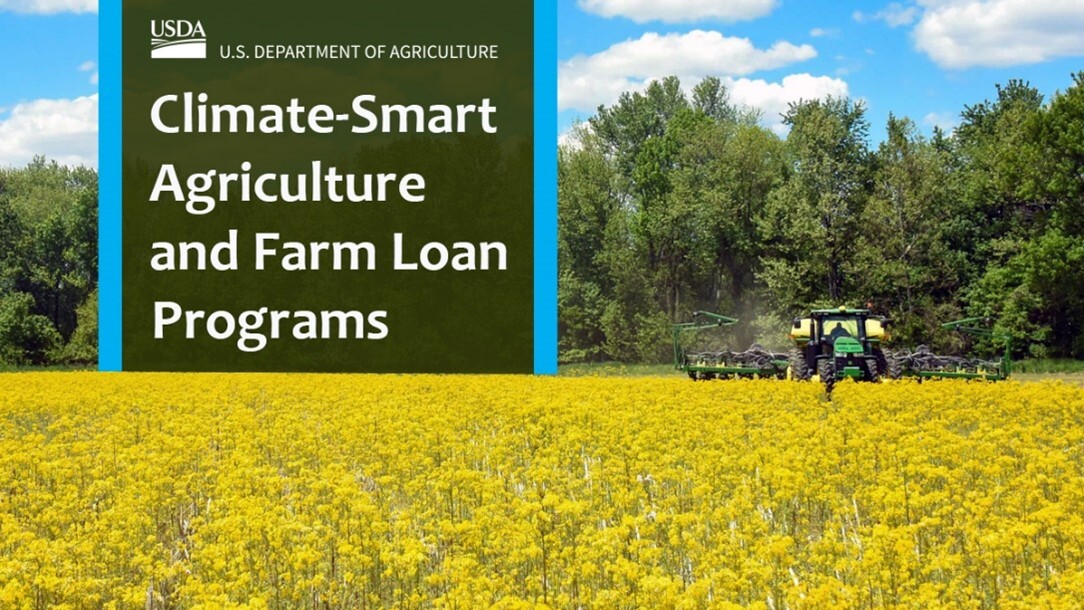
The U.S. Department of Agriculture’s Farm Service Agency (FSA) reminds agricultural producers that Farm Loan Programs can be used to support a variety of climate-smart agriculture practices, which build on many practices that farmers and ranchers already use, like cover cropping, nutrient management and conservation tillage.
Climate-smart agricultural practices generate significant environmental benefits by capturing and sequestering carbon, improving water management, restoring soil health and more. Farm loan funding complements other tools to help producers adopt climate-smart practices, such as FSA’s Conservation Reserve Program, crop insurance options that support conservation, and conservation programs offered by USDA’s Natural Resources Conservation Service (NRCS).
FSA offers multiple types of loans to help farmers and ranchers start, expand or maintain a family agricultural operation. These loans can provide the capital needed to invest in climate-smart practices and equipment including the establishment of rotational grazing systems, precision agriculture equipment or machinery for conversion to no-till residue management. Additionally, for programs like Conservation Reserve Program and NRCS conservation programs where USDA and the producer share the implementation cost, a farm loan could be used for the producer’s share, if consistent with the authorized loan purpose.
Some additional ways farm loans can be leveraged to invest in climate-smart agriculture practices or equipment include:
-
Precision Agriculture Equipment - Eligible producers could use a Term Operating Loan to purchase equipment like GPS globes, monitors, or strip till fertilizer equipment.
-
Cover Crops - Eligible producers could use an Annual Operating Loan for seed costs.
-
No/Reduced Till - Eligible producers could use a Term Operating Loan to purchase equipment.
-
Livestock Facility Air Scrubber or Waste Treatment - Eligible producers could use a Farm Ownership Loan for capital improvements to livestock facilities.
-
Cross Fencing - Eligible producers could use an Annual or Term Operating Loan to purchase fencing and installation equipment.
Visit the Climate-Smart Agriculture and Forestry webpage on farmers.gov to learn more and see detailed examples of how an FSA farm loan can support climate-smart agriculture practices.
USDA’s National Agricultural Statistics Service (NASS) is conducting major mid-year surveys that will collect information from farmers on 2024 planted acreage, current grain stocks, livestock inventories, and the value of land. Results on crop acreage and grain stocks will be published by NASS on June 28.
To obtain the most accurate data, NASS will be seeking input from over 4,500 producers across the state between May 20 and June 15 on the June Agricultural Survey and the June Area Survey. NASS gathers the data for the June Agricultural Survey online at agcounts.usda.gov, by mail, phone and in-person interview. For the June Area Survey, agency representatives visit randomly selected tracts of land and interview the operators of any farm or ranch on that land by phone or in-person.
By taking a few minutes to participate, selected producers will not only help NASS provide data that levels the playing field for all farmers as they develop marketing plans for the year - giving them access to the same information as grain buyers, packers, and input suppliers, but also help provide the information used by many USDA conservation, loan, and support programs that farmers rely on.
Information provided by producers is kept strictly confidential, as required by federal law. NASS safeguards the privacy of all responses and publishes only state-level and national-level results, ensuring that no individual producer can be identified.
Results from the mid-year surveys will be published in a series of USDA reports, including the annual Acreage report and quarterly Grain Stocks report, both released on June 28, 2024. All reports will be made available on the NASS website at www.nass.usda.gov.
If you have any questions about how to complete a survey from the NASS, please call 800-772-0825.
Farmers and ranchers rely on crop insurance to protect themselves from disasters and unforeseen events, but not all crops are insurable through the USDA’s Risk Management Agency. The Farm Service Agency’s (FSA) Noninsured Crop Disaster Assistance Program (NAP) provides producers another option to obtain coverage against disaster for these crops. NAP provides financial assistance to producers of non-insurable crops impacted by natural disasters that result in lower yields, crop losses, or prevents crop planting.
Commercially produced crops and agricultural commodities for which crop insurance is not available are generally eligible for NAP. Eligible crops include those grown specifically for food, fiber, livestock consumption, biofuel or biobased products, or value loss crops such as aquaculture, Christmas trees, ornamental nursery, and others. Contact your local FSA office to see which crops are eligible in your state and county.
Eligible causes of loss include drought, freeze, hail, excessive moisture, excessive wind or hurricanes, earthquake and flood. These events must occur during the NAP policy coverage period, before or during harvest, and the disaster must directly affect the eligible crop. For guidance on causes of loss not listed, contact your local FSA county office.
Interested producers apply for NAP coverage using FSA form CCC-471, “Application for Coverage,” and pay the applicable service fee at the FSA office where their farm records are maintained. These must be filed by the application closing date, which varies by crop. Contact your local FSA office to verify application closing dates and ensure coverage for eligible NAP crops.
At the time of application, each producer acknowledges they have received the NAP Basic Provisions, which describes NAP requirements for coverage. NAP participants must report crop acreage shortly after planting and provide verifiable or reliable crop production records when required by FSA.
Producers are required to pay service fees which vary depending on the number of crops and number of counties your operation is located in. The NAP service fee is the lesser of $325 per crop or $825 per producer per administrative county, not to exceed a total of $1,950 for a producer with farming interests in multiple counties. Premiums also apply when producers elect higher levels of coverage with a maximum premium of $15,750 per person or legal entity.
A producer’s certification on Form CCC-860 Socially Disadvantaged, Limited Resource, Beginning and Veteran Farmer or Rancher Certification may serve as an application for basic NAP coverage for all eligible crops beginning with crop year 2022. These producers will have all NAP-related service fees for basic coverage waived, in addition to a 50 percent premium reduction if higher levels of coverage are elected.
For more detailed information on NAP, download the NAP Fact Sheet. To get started with NAP, we recommend you contact your local USDA service center.
|
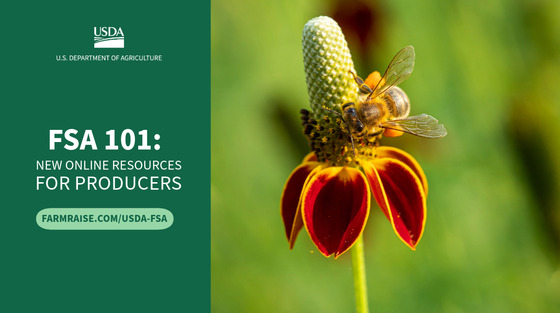
The U.S. Department of Agriculture, in partnership with FarmRaise, has launched a new, online Emergency Assistance for Livestock, Honey Bees and Farm-raised Fish Program (ELAP) Decision Tool. The USDA's Farm Service Agency (FSA) tool is designed to assist agricultural producers who have been impacted by natural disasters access available program support. This ELAP Decision Tool, a component of a broader disaster assistance program educational module, further expands the library of online FSA disaster and farm loan program reference resources and decision aids currently available to agricultural producers on the FarmRaise FSA educational hub. The Decision Tool is a resource only and is not an application for benefits or a determination of eligibility.
ELAP is designed to address losses not covered by other FSA disaster assistance programs. The program provides recovery assistance to eligible producers of livestock, honey bee, and farm-raised fish losses due to an eligible adverse weather or loss condition, including drought, blizzards, disease, water shortages and wildfires. ELAP covers grazing and feed losses, transportation of water and feed to livestock and hauling livestock to grazing acres due to an eligible loss condition. ELAP also covers certain mortality losses, due to an eligible condition, for livestock including honey bees and farm-raised fish as well as honey bee hive losses.
New FarmRaise Tools and Resources
FarmRaise, in partnership with FSA, recently launched their online, educational hub – the FarmRaise | FSA Educational Hub – comprised of videos, tools and interactive resources that enable USDA cooperators and agricultural producers to learn about and access major FSA programs.
A new addition to the hub, the ELAP Decision Tool helps eligible producers impacted by qualifying natural disasters and other eligible causes of loss better understand program eligibility and application requirements, learn about record-keeping and supporting loss documentation requirements and track the steps needed before applying for program benefits. The document generated by the ELAP Decision Tool can be used to support the ELAP application process, but it is not a program application. Producers will need to complete and submit the ELAP Application to their local FSA county office. Upon request, applicants may be asked to provide additional supporting documentation per the program requirements.
Through use of the ELAP Decision Tool, producers can segment by loss type (honey bee, farm-raised fish and livestock). This enables easier navigation, as guided by the tool, to assistance available to meet specific disaster recovery needs. After entering the type of loss, identifying the loss condition and entering their inventory and loss information, producers are guided through a worksheet that helps identify required loss documentation — documentation (i.e., pictures, receipts, truck logs, etc.) that can be uploaded through the ELAP tool and sent directly to the producer’s local FSA county office, or producers can provide a copy of the tool-generated worksheet summary document when they visit their local FSA county office to complete and submit the required ELAP application.
Additional FarmRaise Resources
The previously announced Livestock Indemnity Program (LIP) Decision Tool, also available through the FarmRaise | FSA Educational Hub, assists livestock producers who suffered losses from eligible adverse weather events and other causes of loss as well as cooperators who are helping disaster-impacted livestock producers navigate available federal disaster assistance programs. The LIP Decision Tool gives producers guidance on what is needed to gather and submit required loss documentation, reducing the amount of time needed to complete applications and enabling FSA county office staff to deliver much-needed assistance faster. Using the LIP Decision Tool is not an application for benefits or a determination of eligibility.
In addition to the new ELAP Decision Tool and the LIP Decision Tool, the FarmRaise | FSA Educational Hub offers several, easily navigated farm loan programs how-to videos designed to introduce producers to FSA’s many farm loan programs options and guide them through the application process.
More FSA program resources and tools will continue to be added to the FarmRaise | FSA Educational Hub. Cooperators and agricultural producers are encouraged to visit the FarmRaise | FSA Educational Hub often to access all available educational resources.
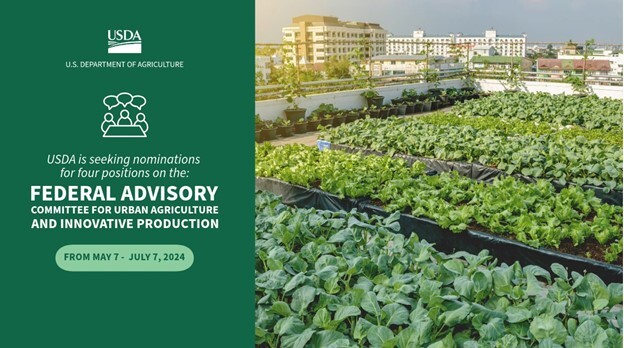 The U.S. Department of Agriculture (USDA) is seeking nominations for four positions on the Federal Advisory Committee for Urban Agriculture and Innovative Production. USDA will accept nominations from May 7, 2024, to July 7, 2024. The 12-member Committee, which first convened in March 2022, is part of USDA’s efforts to increase support for urban agriculture and innovative production. Members of the Committee provide input on policy development and help identify barriers to urban agriculture as USDA works to promote urban farming and the economic opportunities it provides in cities across the country.
Members of the Committe include representative from urban and innovative agricultural production, higher education or extension programs, non-profits, business and economic development, supply chain, and financing. Last year, Agriculture Secretary Tom Vilsack appointed four new members to the Committee to replace members whose terms expired. The Committee’s last public meeting was held in April 2024.
Nominations
USDA is seeking nominations for individuals representing a broad spectrum of expertise. Four positions are open for nominations including:
- One individual who is an agricultural producer or farmer using innovative technology.
- One individual representing an institution of higher education or extension program.
- One individual with supply chain experience, which may include a food aggregator, wholesale food distributor, food hub, or an individual who has direct-to-consumer market experience.
- One individual representing related experience in urban, indoor and other emerging agriculture production practices.
Individuals who wish to be considered for membership must submit a nomination package including the following:
- A completed background disclosure form (Form AD-755) signed by the nominee.
- A brief summary explaining the nominee’s interest in one or more open vacancies including any unique qualifications that address the membership composition and criteria described above.
- A resume providing the nominee's background, experience, and educational qualifications.
- Recent publications by the nominee relative to extending support for urban agriculture or innovative production (optional).
- Letter(s) of endorsement (optional).
Nomination packages must be submitted by email to UrbanAgricultureFederalAdvisoryCommittee@usda.gov or postmarked by July 7, 2024. If sending by mail, packages should be addressed to USDA NRCS, Attn: Brian Guse, 1400 Independence Avenue SW, Room 4083, Washington, DC 20250. Any interested person or organization may nominate qualified individuals for membership, including self-nominations. For special accommodations, contact Markus Holliday at UrbanAgricultureFederalAdvisoryCommittee@usda.gov.
Additional details are available in the Federal Register notice.
More Information
The Office of Urban Agriculture and Innovative Production was established through the 2018 Farm Bill. It is led by NRCS and works in partnership with numerous USDA agencies that support urban agriculture and innovative production. The Committee is part of a broad USDA investment in urban agriculture and innovative production. Other efforts include:
- Investing $9.1 million for Urban Agriculture and Innovative Production competitive grants in fiscal year 2023.
- Administering the People’s Garden Initiative, which celebrates collaborative gardens across the country and worldwide that benefit their communities by growing fresh, healthy food and supporting resilient, local food systems using sustainable practices and providing greenspace.
- Investing approximately $11.5 million in cooperative agreements that develop and test strategies for planning and implementing municipal compost plans and food waste reduction plans in fiscal year 2023.
- Investing $40 million, made possible by President Biden’s American Rescue Plan, into partnerships with community-based organizations to that will conduct outreach, education and technical assistance to support urban producers.
- Investing in risk management education to broaden reach of crop insurance among urban and innovative producers.
- Organizing 27 FSA urban county committees to make important decisions about how FSA farm programs are administered locally. Urban farmers who participate in USDA programs in the areas selected are encouraged to participate by nominating and voting for county committee members.
- Establishing 17 new Urban Service Centers staffed by FSA and NRCS employees where urban producers can access farm loan, conservation, disaster assistance and risk management programs.
- Partnering with the Vermont Law and Graduate School Center for Agriculture and Food Systems to develop resources that help growers understand and work through local policies.
Learn more at www.usda.gov/urban. For additional resources available to producers, download the Urban Agriculture at a Glance brochure or visit www.farmers.gov/urban.
USDA touches the lives of all Americans each day in so many positive ways. Under the Biden-Harris administration, USDA is transforming America’s food system with a greater focus on more resilient local and regional food production, fairer markets for all producers, ensuring access to safe, healthy, and nutritious food in all communities, building new markets and streams of income for farmers and producers using climate smart food and forestry practices, making historic investments in infrastructure and clean energy capabilities throughout America, and committing to equity across the Department by removing systemic barriers and building a workforce more representative of America. To learn more, visit usda.gov.

Orchardists and nursery tree growers who have experienced losses from natural disasters my be eligible for assistance through the Tree Assistance Program (TAP). Growers have 90 calendar days after the distaster event or when the loss becomes apparent to submit an application with supporting documentation.
TAP provides financial assistance to qualifying orchardists and nursery tree growers to replant or rehabilitate eligible trees, bushes and vines lost due to natural disasters. The loss must be in excess of 15 percent mortality (adjusted for normal mortality).
Nursery trees include ornamental, fruit, nut and Christmas trees produced for commercial sale. Growers must have owned the trees from the time of the disaster until the time that the TAP application is submitted but are not required to own the land on which the trees were planted.
Approved replacement and rehabilitation activities must be completed within 12 months from the date the application is approved.
For more information about TAP, visit fsa.usda.gov/tap or contact your local FSA office by visiting farmers.gov/service-locator. For more information on FSA disaster assistance programs, visit farmers.gov/recover.
 |
|
For their spring 2024 campaign, Iowa’s Center for Agricultural Safety and Health (I-CASH) focused on Radon- a dangerous gas that all Iowa residents need to be aware of. I-CASH has sent each FSA office multiple copies of Iowa Health and Human Services’ Radon and You booklet to distribute for free! This booklet contains important information on the risks of radon, how to test for it, and radon mitigation systems. Grab a Radon and You booklet the next time you stop by your local FSA, or go the I-CASH website (https://icash.public-health.uiowa.edu/spring-2024-radon-2/) to learn more and download the packet yourself! |
|






