|
Hello Friends,
The month of May is here and we here at FSA are happy to bring you our monthly updates. We look forward to assisting all of our producers as we move into a great summer!
We are seeking nominations for four positions on the Federal Advisory Committee for Urban Agriculture and Innovative Production. USDA will accept nominations from May 7 to July 7. The 12-member Committee, which first convened in March 2022, is part of USDA’s efforts to increase support for urban agriculture and innovative production. Members of the Committee provide input on policy development and help identify barriers to urban agriculture as USDA works to promote urban farming and the economic opportunities it provides in cities across the country.
The Conservation Reserve Program has been offered for many years. Just a reminder, there are many types of CRP programs between general and continuous signups. Please be mindful that while land is under a CRP contract, all parties on the contract must comply with the terms and conditions of the contract. General requirements of a contract are to report your CRP acreage by July 15, and ensure your conservation plan is being followed. This includes contacting the office anytime there is a protentional issue of noncompliance. If there are any questions or concerns regarding the rules or regulations of the program, please contact your local FSA Office.
As an update, the ranking for General CRP Signup 62 offers has not been completed. Once the results are received, all participants will be notified in writing. For Grasslands CRP, we are anxiously waiting on the announcement for the signup period. As soon as the announcement is made, information will be posted on our websites as well as included in state and county bulletins.
A routine reminder, www.farmers.gov is your one stop shop. Create an account to stay up to date with programs, manage your records, and so much more. Please also visit our public website, NM FSA Site, to view past month's newsletters, job listings, and news releases.
Thank you,
Jonas Moya
State Executive Director
OFFICE CLOSURE
- Memorial Day – May 27
- Juneteenth National Independence Day – June 19
- Independence Day – July 4
- Labor Day – September 2
- Columbus Day/Indigenous Peoples' Day – October 14
- Veteran's Day – November 11
- Thanksgiving Day – November 28
- Christmas Day – December 25
IMPORTANT DATES (Please check with your local office for other deadlines that may apply to your particular situation) Service Center Locator
-
Emergency Relief Program (ERP)
-
Acreage Certification Reporting
- May 15: Spring Barley, Onions, Pecans (trees), Potatoes (Curry, Lea and Roosevelt Counties Only), Spring Wheat
- July 15: All other crops, Perennial Forage, Potatoes (All New Mexico Counties, except Curry, Lea, and Roosevelt)
- July 31: Hemp
- August 15: Beans
 The U.S. Department of Agriculture’s Farm Service Agency (FSA) reminds agricultural producers that Farm Loan Programs can be used to support a variety of climate-smart agriculture practices, which build on many practices that farmers and ranchers already use, like cover cropping, nutrient management and conservation tillage.
Climate-smart agricultural practices generate significant environmental benefits by capturing and sequestering carbon, improving water management, restoring soil health and more. Farm loan funding complements other tools to help producers adopt climate-smart practices, such as FSA’s Conservation Reserve Program, crop insurance options that support conservation, and conservation programs offered by USDA’s Natural Resources Conservation Service (NRCS).
FSA offers multiple types of loans to help farmers and ranchers start, expand or maintain a family agricultural operation. These loans can provide the capital needed to invest in climate-smart practices and equipment including the establishment of rotational grazing systems, precision agriculture equipment or machinery for conversion to no-till residue management. Additionally, for programs like Conservation Reserve Program and NRCS conservation programs where USDA and the producer share the implementation cost, a farm loan could be used for the producer’s share, if consistent with the authorized loan purpose.
Some additional ways farm loans can be leveraged to invest in climate-smart agriculture practices or equipment include:
-
Precision Agriculture Equipment - Eligible producers could use a Term Operating Loan to purchase equipment like GPS globes, monitors, or strip till fertilizer equipment.
-
Cover Crops - Eligible producers could use an Annual Operating Loan for seed costs.
-
No/Reduced Till - Eligible producers could use a Term Operating Loan to purchase equipment.
-
Livestock Facility Air Scrubber or Waste Treatment - Eligible producers could use a Farm Ownership Loan for capital improvements to livestock facilities.
-
Cross Fencing - Eligible producers could use an Annual or Term Operating Loan to purchase fencing and installation equipment.
Visit the Climate-Smart Agriculture and Forestry webpage on farmers.gov to learn more and see detailed examples of how an FSA farm loan can support climate-smart agriculture practices.
Farmers and ranchers can contact a call center to receive one-on-one assistance from USDA Farm Service Agency (FSA) employees ready to help. By calling 877-508-8364, customers can ask questions about FSA programs.
The call center was created as a way to better serve customers, especially those who have not worked with FSA previously.
Customers who contact the call center can expect to receive the same great service they would receive as if they were in their FSA county office.
FSA Call Center staff can also provide service to non-English speaking customers. Customers using the call center will still call 877-508-8364 and select 1 for English and 2 to speak with a Spanish-speaking employee. For other languages, customers select 1 and indicate their language to the call center staff.
The call center is just one of many ways USDA has adjusted and added flexibilities to meet the needs of our customers. One thing remains the same, USDA stands committed to offering exceptional customer service to our nation’s farmers and ranchers.
USDA’s National Agricultural Statistics Service (NASS) conducts hundreds of surveys every year and prepares reports covering virtually every aspect of U.S. agriculture.
If you receive a survey questionnaire, please respond quickly and online if possible.
The results of the surveys help determine the structure of USDA farm programs, such as soil rental rates for the Conservation Reserve Program and prices and yields used for the Agriculture Risk Coverage and Price Loss Coverage programs. This county-level data is critical for USDA farm payment determinations. Survey responses also help associations, businesses and policymakers advocate for their industry and help educate others on the importance of agriculture.
NASS safeguards the privacy of all respondents and publishes only aggregate data, ensuring that no individual operation or producer can be identified.
NASS data is available online at nass.usda.gov/Publications and through the searchable Quick Stats database. Watch a video on how NASS data is used at youtube.com/watch?v=m-4zjnh26io&feature=youtu.be.
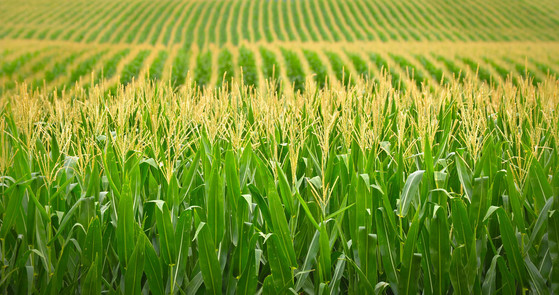 Agricultural producers in New Mexico who have not yet completed their crop acreage reports after planting should make an appointment with their U.S. Department of Agriculture (USDA) Farm Service Agency (FSA) service center before the applicable deadline.
An acreage report documents a crop grown on a farm or ranch and its intended uses. Filing an accurate and timely acreage report for all crops and land uses, including failed acreage and prevented planted acreage, can prevent the loss of benefits.
How to File a Report
The following acreage reporting dates are applicable in New Mexico:
| May 15 |
Spring Barley, Onions, Pecans (trees), Potatoes (Curry, Lea, and Roosevelt Counties only), Spring Wheat |
| July 15 |
All other crops, Perennial Forage, Potatoes (All Counties EXCEPT Curry, Lea, and Roosevelt Counties only), CRP Acreage (Mandatory under terms and conditions of CRP Contract) |
| July 31 |
Hemp |
| August 15 |
Beans |
Acreage reporting dates vary by crop and by county. Contact your local FSA office for a list of acreage reporting deadlines by crop.
To file a crop acreage report, producers need to provide:
- Crop and crop type or variety.
- Intended use of the crop.
- Number of acres of the crop.
- Map with approximate boundaries for the crop.
- Planting date(s).
- Planting pattern, when applicable.
- Producer shares.
- Irrigation practice(s).
- Acreage prevented from planting, when applicable.
- Other information as required.
Acreage Reporting Details
The following exceptions apply to acreage reporting dates:
- If the crop has not been planted by the acreage reporting date, then the acreage must be reported no later than 15 calendar days after planting is completed.
- If a producer acquires additional acreage after the acreage reporting date, then the acreage must be reported no later than 30 calendar days after purchase or acquiring the lease. Appropriate documentation must be provided to the county office.
- If crops are covered by the Noninsured Crop Disaster Assistance Program, acreage reports should be submitted by the applicable state, county, or crop-specific reporting deadline or 15 calendar days before grazing or harvesting of the crop begins.
Producers should also report crop acreage they intended to plant, but due to natural disaster, were unable to because of a natural disaster.
Prevented planting acreage must be reported on form CCC-576, Notice of Loss, no later than 15 calendar days after the final planting date as established by FSA and USDA’s Risk Management Agency.
FSA offers continuous certification for perennial forage. This means after perennial forage is reported once and the producer elects continuous certification, the certification remains in effect until a change is made. Check with FSA at the local USDA Service Center for more information on continuous certification.
New Option to View, Print and Label Maps on Farmers.gov
Producers with an eAuth account linked to their USDA customer record can now access their FSA farm records, maps and common land units by logging into farmers.gov. A new feature will allow producers to export field boundaries as shapefiles and import and view other shapefiles, such as precision agriculture boundaries. This will allow producers to view, print and label their own maps for acreage reporting purposes.
Producers who have authority to act on behalf of another customer as a grantee via form FSA-211 Power of Attorney, Business Partner Signature Authority, along with other signature types, or as a member of a business can now access information in the farmers.gov portal.
Producers can learn how to use the farmers.gov Farm Records Mapping functionality with this fact sheet and these video tutorials.
More Information
Producers can make an appointment to report acres by contacting their local USDA Service Center
Farmers can use USDA farm ownership microloans to buy and improve property. These microloans are especially helpful to beginning or underserved farmers, U.S. veterans looking for a career in farming, and those who have small and mid-sized farming operations. Microloans have helped farmers and ranchers with operating costs, such as feed, fertilizer, tools, fencing, equipment, and living expenses since 2013.
Microloans can also help with farmland and building purchases and soil and water conservation improvements. FSA designed the expanded program to simplify the application process, expand eligibility requirements and expedite smaller real estate loans to help farmers strengthen their operations. Microloans provide up to $50,000 to qualified producers and can be issued to the applicant directly from the USDA Farm Service Agency (FSA).
|