|
The National Environmental Policy Act (NEPA) requires Federal agencies to consider all potential environmental impacts for federally funded projects before the project is approved.
For all Farm Service Agency (FSA) programs, an environmental review must be completed before actions are approved, such as site preparation or ground disturbance. These programs include, but are not limited to, the Emergency Conservation Program (ECP), Farm Storage Facility Loan (FSFL) program and farm loans. If project implementation begins before FSA has completed an environmental review, the request will be denied. Although there are exceptions regarding the Stafford Act and emergencies, it’s important to wait until you receive written approval of your project proposal before starting any actions.
Applications cannot be approved until FSA has copies of all permits and plans. Contact your local FSA office early in your planning process to determine what level of environmental review is required for your program application so that it can be completed timely.
The Agricultural Foreign Investment Disclosure Act (AFIDA) requires foreign investors who buy, sell or hold an interest in U.S. agricultural land to report their holdings and transactions to the USDA. Foreign investors must file AFIDA Report Form FSA-153 with the FSA county office in the county where the land is located. Large or complex filings may be handled by AFIDA headquarters staff in Washington, D.C.
According to CFR Title 7 Part 781, any foreign person who holds an interest in U.S. agricultural land is required to report their holdings no later than 90 days after the date of the transaction.
Foreign investors should report holdings of agricultural land totaling 10 acres or more used for farming, ranching or timber production, and leaseholds on agricultural land of 10 or more years. Tracts totaling 10 acres or less in the aggregate, and which produce annual gross receipts in excess of $1,000 from the sale of farm, ranch, forestry or timber products, must also be reported. AFIDA reports are also required when there are changes in land use, such as from agricultural to nonagricultural use. Foreign investors must also file a report when there is a change in the status of ownership.
The information from AFIDA reports is used to prepare an annual report to Congress. These annual reports to Congress, as well as more information, are available on the FSA AFIDA webpage. .
When changes in farm ownership or operation take place, a farm reconstitution is necessary. The reconstitution — or recon — is the process of combining or dividing farms or tracts of land based on the farming operation.
To be effective for the current fiscal year, farm combinations and farm divisions must be requested by August 1 of the fiscal year for farms subject to the Agriculture Risk Coverage (ARC) and Price Loss Coverage (PLC) program. A reconstitution is considered to be requested when all of the required signatures are on FSA-155 and all other applicable documentation, such as proof of ownership, is submitted.
Total Conservation Reserve Program (CRP) and non-ARC/PLC farms may be reconstituted at any time.
The following are the different methods used when doing a farm recon:
-
Estate Method — the division of bases, allotments and quotas for a parent farm among heirs in settling an estate
-
Designation of Landowner Method — may be used when (1) part of a farm is sold or ownership is transferred; (2) an entire farm is sold to two or more persons; (3) farm ownership is transferred to two or more persons; (4) part of a tract is sold or ownership is transferred; (5) a tract is sold to two or more persons; or (6) tract ownership is transferred to two or more persons. In order to use this method, the land sold must have been owned for at least three years, or a waiver granted, and the buyer and seller must sign a Memorandum of Understanding
-
DCP Cropland Method — the division of bases in the same proportion that the DCP cropland for each resulting tract relates to the DCP cropland on the parent tract
-
Default Method — the division of bases for a parent farm with each tract maintaining the bases attributed to the tract level when the reconstitution is initiated in the system.
For questions on your farm reconstitution, contact your local County USDA Service Center.
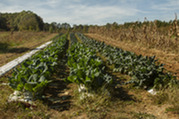
The USDA Farm Service Agency (FSA) recently made several policy updates for acreage reporting for cover crops, revising intended use, late-filed provisions, grazing allotments as well as updated the definitions of “idle” and “fallow.”
Reporting Cover Crops:
Cover crop types can be chosen from the following four categories:
- Cereals and other grasses
- Legumes
- Brassicas and other broadleaves
- Mixtures
If the cover crop is harvested for any use other than forage or grazing and is not terminated according to policy guidelines, then that crop will no longer be considered a cover crop and the acreage report must be revised to reflect the actual crop.
Permitted Revision of Intended use After Acreage Reporting Date:
New operators or owners who pick up a farm after the acreage reporting deadline has passed and the crop has already been reported on the farm, have 30 calendar days from the date when the new operator or owner acquired the lease on land, control of the land or ownership and new producer crop share interest in the previously reported crop acreage. Under this policy, appropriate documentation must be provided to the County Committee’s satisfaction to determine that a legitimate operator or ownership and producer crop share interest change occurred to permit the revision.
Acreage Reports:
In order to maintain program eligibility and benefits, you must timely file acreage reports. Failure to file an acreage report by the crop acreage reporting deadline may result in ineligibility for future program benefits. FSA will not accept acreage reports provided more than a year after the acreage reporting deadline.
Reporting Grazing Allotments:
FSA offices can now accept acreage reports for grazing allotments. You will use form “FSA-578” to report grazing allotments as animal unit months (AUMs) using the “Reporting Unit” field. Your local FSA office will need the grazing period start and end date and the percent of public land.
Definitions of Terms
FSA defines “idle” as cropland or a balance of cropland within a Common Land Unit (CLU) (field/subfield) which is not planted or considered not planted and does not meet the definition of fallow or skip row.
Fallow is considered unplanted cropland acres which are part of a crop/fallow rotation where cultivated land that is normally planted is purposely kept out of production during a regular growing season.
For more information, contact your local County USDA Service Center or visit fsa.usda.gov.
|
All producers are encouraged to contact their local FSA office for more information on the final planting date for specific crops. The final planting dates vary by crop, planting period and county so please contact your local FSA office for a list of county-specific planting deadlines. The timely planting of a crop, by the final planting date, may prevent loss of program benefits.
If you want to use the Noninsured Crop Disaster Assistance Program (NAP) organic price and you select the "organic" option on your NAP application, you must report your crops as organic.
When certifying organic acres, the buffer zone acreage must be included in the organic acreage. You must also provide a current organic plan, organic certificate or documentation from a certifying agent indicating an organic plan is in effect. Documentation must include:
- name of certified individuals
- address
- telephone number
- effective date of certification
- certificate number
- list of commodities certified
- name and address of certifying agent
- a map showing the specific location of each field of certified organic, including the buffer zone acreage
Certification exemptions are available for producers whose annual gross agricultural income from organic sales totals $5,000 or less. Although exempt growers are not required to provide a written certificate, they are still required to provide a map showing the specific location of each field of certified organic, transitional and buffer zone acreage.
For questions about reporting organic crops, contact your local County USDA Service Center.
Farm Service Agency (FSA) borrowers with farms located in designated primary or contiguous disaster areas who are unable to make their scheduled FSA loan payments should consider the Disaster Set-Aside (DSA) program.
DSA is available to producers who suffered losses as a result of a natural disaster and relieves immediate and temporary financial stress. FSA is authorized to consider setting aside the portion of a payment/s needed for the operation to continue on a viable scale.
Borrowers must have at least two years left on the term of their loan in order to qualify.
Borrowers have eight months from the date of the disaster designation to submit a complete application. The application must include a written request for DSA signed by all parties liable for the debt along with production records and financial history for the operating year in which the disaster occurred. FSA may request additional information from the borrower in order to determine eligibility.
All farm loans must be current or less than 90 days past due at the time the DSA application is complete. Borrowers may not set aside more than one installment on each loan.
The amount set-aside, including interest accrued on the principal portion of the set-aside, is due on or before the final due date of the loan.
For more information, contact your local County USDA Service Center or visit fsa.usda.gov.
The Farm Service Agency (FSA) assists beginning farmers to finance agricultural enterprises. Under these designated farm loan programs, FSA can provide financing to eligible applicants through either direct or guaranteed loans. FSA defines a beginning farmer as a person who:
- Has operated a farm for not more than 10 years
- Will materially and substantially participate in the operation of the farm
- Agrees to participate in a loan assessment, borrower training and financial management program sponsored by FSA
- Does not own a farm in excess of 30 percent of the county’s average size farm.
For more information contact, contact your local County USDA Service Center or visit fsa.usda.gov.
|
|






