A Message from Oklahoma State Executive Director
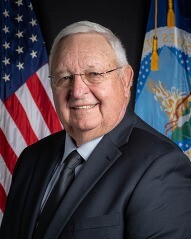
Hello Oklahoma agriculture enthusiasts!
Recently, Oklahoma has experienced wildfires in the western part of the state. Although I pray this year has limited damage caused by wildfires, it never hurts to prepare.
Ask your local FSA office about both the Livestock Indemnity Program (LIP) and the Emergency Conservation Program (ECP). Both of these programs are resources for the producers negatively impacted by natural disasters.
Before disaster strikes, here are some suggestions to prepare:
- Document livestock diligently
- Type, gender, weight, etc.
- Save sales receipts of any animal sold due to injury from the natural disaster or lack of forage thereafter
- Document property loss with photos and dates (burnt fence lines, equipment, etc.)
Consult with your FSA Office prior to making repairs to potentially receive cost share assistance for eligible losses on materials, services, labor, equipment and sales tax.
Happy farming!
Steve Kouplen
|
Agricultural producers who have not yet enrolled in the Agriculture Risk Coverage (ARC) or Price Loss Coverage (PLC) programs for the 2024 crop year have until March 15, 2024, to revise elections and sign contracts. Both safety net programs, delivered by USDA’s Farm Service Agency (FSA), provide vital income support to farmers who experience substantial declines in crop prices or revenues for the 2024 crop year.
Producers can elect coverage and enroll in ARC-County or PLC, which provide crop-by-crop protection, or ARC-Individual, which protects the entire farm. Although election changes for 2024 are optional, producers must enroll, with a signed contract, each year. If a producer has a multi-year contract on the farm, the contract will continue for 2024 unless an election change is made.
If producers do not submit their election revision by the March 15, 2024, deadline, the election remains the same as their 2023 election for eligible commodities on the farm. Also, producers who do not complete enrollment and sign their contract by the deadline will not be enrolled in ARC or PLC for the 2024 year and will not receive a payment if one is triggered. Farm owners can only enroll in these programs if they have a share interest in the commodity.
Producers are eligible to enroll farms with base acres for the following commodities: barley, canola, large and small chickpeas, corn, crambe, flaxseed, grain sorghum, lentils, mustard seed, oats, peanuts, dry peas, rapeseed, long grain rice, medium and short grain rice, safflower seed, seed cotton, sesame, soybeans, sunflower seed and wheat.
Web-Based Decision Tools
Many universities, offer web-based decision tools to help producers make informed, educated decisions using crop data specific to their respective farming operations. Producers are encouraged to use the tool of their choice to support their ARC and PLC elections.
Crop Insurance Considerations
Producers are reminded that enrolling in ARC or PLC programs can impact eligibility for some crop insurance products offered by USDA’s Risk Management Agency (RMA). Producers who elect and enroll in PLC also have the option of purchasing Supplemental Coverage Option (SCO) through their Approved Insurance Provider, but producers of covered commodities who elect ARC are ineligible for SCO on their planted acres.
Unlike SCO, RMA’s Enhanced Coverage Option (ECO) is unaffected by participating in ARC for the same crop, on the same acres. You may elect ECO regardless of your farm program election.
Upland cotton farmers who choose to enroll seed cotton base acres in ARC or PLC are ineligible for the stacked income protection plan, or STAX, on their planted cotton acres.
More Information
For more information on ARC and PLC, producers can visit the ARC and PLC webpage or contact their local USDA Service Center. Producers can also prepare maps for acreage reporting as well as manage farm loans and view other farm records data and customer information by logging into their farmers.gov account. If you don’t have an account, sign up today.
The U.S. Department of Agriculture (USDA) announced that agricultural producers and private landowners can begin signing up for the general Conservation Reserve Program (CRP) starting March 4 and running through March 29, 2024. The announcement was made earlier today by Zach Ducheneaux, Administrator of the USDA’s Farm Service Agency (FSA) at this year’s National Pheasant Fest, in Sioux Falls, SD.
On Nov. 16, 2023, President Biden signed into law H.R. 6363, the Further Continuing Appropriations and Other Extensions Act, 2024 (Pub. L. 118-22), which extended the Agriculture Improvement Act of 2018 (Pub. L. 115-334), more commonly known as the 2018 Farm Bill, through Sept. 30, 2024. This extension allows authorized programs, including CRP, to continue operating.
As one of the largest private lands conservation programs in the United States, CRP offers a range of conservation options to farmers, ranchers, and landowners. It has been an especially strong opportunity for farmers with less productive or marginal cropland, helping them re-establish valuable land cover to help improve water quality, prevent soil erosion, and support wildlife habitat.
Producers and landowners enrolled about 926,000 acres in General CRP in 2023, bringing the total of enrolled acres in General CRP to 7.78 million. This, combined with all other acres in CRP through other enrollment opportunities, such as Grassland and Continuous CRP, bring the current total of enrolled acres to 24.8 million.
General CRP
General CRP helps producers and landowners establish long-term, resource-conserving plant species, such as approved grasses or trees, to control soil erosion, improve water quality and enhance wildlife habitat on cropland. Additionally, General CRP includes a Climate-Smart Practice Incentive to help increase carbon sequestration and reduce greenhouse gas emissions by helping producers and landowners establish trees and permanent grasses, enhance wildlife habitat, and restore wetlands.
General CRP is one of several ways agricultural producers and private landowners can participate in the program.
Other CRP Options
This past January FSA began accepting applications for the Continuous CRP signup. Under this enrollment, producers and landowners can enroll in CRP throughout the year. Offers are automatically accepted provided the producer and land meet the eligibility requirements and the enrollment levels do not exceed the statutory cap.
The USDA also offers financial assistance to producers and landowners enrolled in CRP to improve the health of their forests through the Forest Management Incentive (FMI), which can help participants with forest management practices, such as brush management and prescribed burning.
FSA will announce the dates for Grassland CRP signup in the near future.
Producers with expiring CRP acres can use the Transition Incentives Program (TIP), which incentivizes producers who sell or enter a long-term lease with a beginning, veteran, or socially disadvantaged farmer or rancher who plans to sustainably farm or ranch the land.
How to Sign Up
Landowners and producers interested in CRP should contact their local USDA Service Center to learn more or to apply for the program before their deadlines.
Read more
The U.S. Department of Agriculture (USDA) Farm Service Agency (FSA) has authorized policy flexibilities for several key disaster assistance programs to aid agricultural producers who have experienced significant livestock, feed, forage and infrastructure loss from recent wildfires.
Livestock Disaster Assistance Flexibilities
The Livestock Indemnity Program (LIP) provides assistance for livestock losses due to wildfire in excess of normal mortality, including euthanized animals if the death is directly related to the wildfire. LIP also provides assistance to producers who sold livestock injured by the wildfire within 30 days of the end of the disaster event in cases where the sale price is lower than the LIP price.
To participate in LIP, producers will need to provide documentation of death losses and submit a notice of loss to FSA no later than March 3, 2025, for 2024 losses. Examples of acceptable records include but are not limited to documentation of beginning and ending inventory, financial records, pictures with dates, rendering receipts, vet records and third-party certifications in conjunction with documentation of beginning inventory. In the absence of acceptable records, FSA County Committees can provide further death loss documentation flexibilities.
The Emergency Assistance for Livestock, Honeybees, and Farm-Raised Fish Program (ELAP) provides compensation for grazing and feed losses, transportation of water and feed to livestock and hauling livestock to grazing acres. Additional feed purchased above normal due to wildfire is also eligible for ELAP assistance.
Producers are eligible for reimbursement, at $6.60/mile, for feed, forage and livestock hauled over 25 miles, one way, based on a comparison of hauling over loss period and hauling from the previous two years. ELAP reimbursement costs are limited to 1,000 miles not including the first 25 miles. For 2024, producers who haul water are eligible for 10 cents per gallon.
Conservation Reserve Program Haying/Grazing Flexibilities
FSA expanded authorization of emergency haying and grazing of Conservation Reserve Program (CRP) acres to support the relocation of livestock for grazing purposes. This includes all counties in Arkansas, Colorado, Iowa, Kansas, Louisiana, Nebraska, New Mexico, Missouri, Oklahoma, South Dakota, Texas and Wyoming.
Emergency haying and grazing is available until the beginning of the primary nesting season in each state. Expanding emergency haying and grazing of CRP to include a broader geographic area provides livestock producers access to additional eligible acres in advance of the primary nesting season.
Producers incurring increased costs associated with the transportation of livestock to and from CRP for emergency grazing purposes or transportation of CRP hay, one way, may also be eligible for ELAP transportation assistance.
To support areas affected by wildfires, FSA continues to evaluate flexibilities and expanded opportunities to authorize emergency haying and grazing of eligible CRP acres.
Additional Wildfire Recovery Assistance
FSA’s Emergency Conservation Program (ECP) provides landowners with financial and technical assistance to remove debris from farmland, replace watering facilities and repair or replace fences including livestock cross fences, boundary fences, cattle gates or wildlife exclusion fences on agricultural land. To help with implementation, landowners may request an advance payment of up to 25% of expected cost-share for approved ECP applications. ECP cost-share is 90% for underserved producers and 75% for all other producers.
The Noninsured Crop Disaster Assistance Program (NAP) helps producers of non-insurable forage and grazing acres to protect against natural disasters, including wildfires, that result in lower yields or crop losses. NAP coverage is available to producers who elected NAP coverage or filed form CCC-860, Socially Disadvantaged, Limited Resource, Veteran, or Beginning Farmer or Rancher Certification prior to the start of the disaster event. For forage losses, NAP provides a yield-based disaster payment and for grazed forage losses, NAP assists with the loss of expected animal unit grazing days.
Disaster Designations/Access to Affordable Financing
On March 1, 2024, an FSA Administrator’s Physical Loss Notification (APLN) designation for wildfires and excessive high winds was signed by Administrator Ducheneaux for the following counties:
- Texas Primary counties – Armstrong, Hemphill, Hutchinson, Oldham, Potter
- Texas Contiguous counties – Briscoe, Carson, Deaf Smith, Donley, Gray, Hansford, Hartley, Lipscomb, Moore, Randall, Roberts, Sherman, Swisher, Wheeler
- New Mexico Contiguous county – Quay
- Oklahoma Contiguous counties – Ellis, Roger Mills
The APLN allows producer in designated primary and contiguous counties to access FSA emergency loans. Physical loss loans can be used to repair or replace damaged or destroyed physical property essential to the success of the agricultural operation, including livestock losses. Examples of property commonly affected include essential farm buildings, fixtures to real estate, equipment, livestock, perennial crops, and harvested or stored crops and hay.
FSA continues to work with affected states to assemble crop loss information and State Emergency Board recommendations necessary to facilitate USDA Secretarial Disaster Designations for affected counties.
In addition to emergency loans, FSA offers a variety of direct and guaranteed farm loans. These loans can help producers replace essential property, purchase inputs like livestock, equipment, feed and seed, cover family living expenses or refinance farm-related debts and other needs.
FSA also offers several loan servicing options available for borrowers who are unable to make scheduled payments on their farm loan programs debt to the agency because of reasons beyond their control.
Interest rates for Operating and Ownership loans including Emergency Loans for March 2024:
Interest rates for FSA guaranteed loans through commercial lenders are set by the lenders.
Online Disaster Recovery Resources
On farmers.gov, the Disaster Assistance Discovery Tool, Disaster Assistance-at-a-Glance fact sheet, and Loan Assistance Tool can help producers and landowners determine program or loan options. For assistance with a crop insurance claim, producers and landowners should contact their crop insurance agent. For FSA and NRCS programs, they should contact their local USDA Service Center.
The award honors farmers, ranchers, and forestland owners who go above and beyond in their management of soil health, water quality and wildlife habitat on working land.
Marty, a farmer from Noble County, was revealed as the award recipient at the Oklahoma Association of Conservation Districts’ Annual Meeting on February 26. He and his wife Crystal receive $10,000 for being selected.
Sand County Foundation and national sponsor American Farmland Trust present the Leopold Conservation Award to private landowners in 27 states. In Oklahoma the award is presented annually with ITC Great Plains, Noble Research Institute, Oklahoma Conservation Commission, Oklahoma Farm Bureau Foundation for Agriculture, and the U.S. Department of Agriculture’s Natural Resources Conservation Service.
Given in honor of renowned conservationist Aldo Leopold, the award recognizes farmers and forestland owners who inspire others with their dedication to environmental improvement. In his influential 1949 book, A Sand County Almanac, Leopold called for “a land ethic,” an ethical relationship between people and the land they own and manage.
For more information on the award, visit www.leopoldconservationaward.org.
ABOUT MARTY WILLIAMS
Marty Williams’ journey has long been intertwined with his land ethic.
Growing up in Noble County, his father instilled in him the importance of sustainable agriculture. Marty’s academic pursuits in plant and soil science at Oklahoma State University further fueled his desire to make a difference as a sixth-generation farmer. His upbringing and education taught him that soil rich in biodiversity is good for both crops and a balanced ecosystem. Upon graduating, Marty and his wife Crystal rented land and equipment from his father and formed Frontier Farms. Early on, Marty made the bold and strategic choice to embrace no-till farming practices while growing a rotation of wheat, corn, soybeans, and grain sorghum. The traditional practice of tilling soil disrupts soil structure, exposes it to erosion, and releases carbon. Over time he coupled no-till with growing cover crops to further revitalize the soil. Instead of leaving the soil bare between traditional cash crops, the presence of cover crops like cow peas, oats, and canola provides a protective blanket to the soil that retains moisture and prevents erosion, while enriching it with organic matter.
Marty’s commitment to enhancing soil health goes beyond traditional measures. His envisions a future where soil teems with life, from the largest worms to the smallest microbes each playing its role in a nutrient cycle. This belief has led him to convert marginal farmland back to its indigenous grassy state. Beef cattle are grazed at Frontier Farms. After Crystal saw an opportunity to begin selling beef directly to customers, she headed up that effort and grew it into an important diversified revenue stream - further proof that innovation and adaptability are more than just buzzwords for the Williamses.
One achievement that stands out at Frontier Farms is the conversion of 320 acres of farmland into a protected wetland. By collaborating with the Natural Resources Conservation Service to reestablish native flora, the wetland provides habitat for waterfowl and other wildlife. This transformation reveals Marty’s understanding that conservation is not just about preserving, but regenerating nature to its most functional form. Marty’s integration of state-of-the-art precision agriculture technology allows him to assess plant health in real time and apply nutrients with incredible accuracy, ensuring that crops receive just what they need and nothing more. His farming practices and strategies have piqued the interest of agricultural experts from as far away as China.
From the start of his career in agriculture, Marty’s leadership was evident. He has served notable stints with the Noble County Conservation District Board and the Oklahoma Farm Bureau. He donates his land, equipment, and time to research with Oklahoma State University’s Department of Soil Sciences where he mentors the next generation of agriculturalists. Marty also serves as a strategic advisor for the Gulch Foundation’s Rainmaker Farm, which documents the benefits of implementing regenerative practices on 160 acres of diverse crops, rotationally grazed pastures, and pollinator gardens. Perhaps what’s most telling about his true nature is the unique support group he helped form for fellow farmers and ranchers dealing with the fiscal and mental struggles caused by turbulent commodity markets and unpredictable weather.
Marty admits his own path has not been without challenges, yet he has positively shaped the contours of Oklahoma’s landscape with his farming practices while touching countless lives through his teachings, guidance, and a commitment to better his community.
“These award recipients are examples of how Aldo Leopold’s land ethic is alive and well today. Their dedication to conservation shows how individuals can improve the health of the land while producing food and fiber,” said Kevin McAleese, Sand County Foundation President and CEO.
“Frontier Farms has gone above and beyond in their implementation of conservation practices and contributions to conservation education,” said Jeanne Hamilton, Oklahoma State Conservationist for the USDA-Natural Resources Conservation Service. “Marty and Crystal Williams’ dedication to exploring new conservation practices is inspiring, and their willingness to host hands-on demonstration events at their farm is helping Oklahoma farmers and ag students alike see the value of these conservation programs in practice.”
Click Here to watch a video about Leopold awardee Marty Williams. Video and news release courtesy of Sand County Foundation.
|