|
Upcoming important dates & deadlines:
-
March 15: ARCPLC (Agricultural Risk Coverage/Price Loss Coverage): Deadline to sign contract for 2024 is March 15, 2024. Please call to make your election now.
-
March 29: Last day to apply for CSP for this funding round with NRCS.
-
April 29: Last day to sign up for 2024 Dairy Margin Coverage (DMC).
-
May 27: Offices closed for Memorial Day, a federal holiday.
Click here to learn more about local deadlines and ongoing programs.
Make an Appointment with FSA or NRCS - Producers are encouraged to call the office to schedule an appointment to ensure maximum use of their time and to make sure staff is available to tend to their important business needs.

Producers who received an Emergency Relief Program (ERP) payment need to meet ERP insurance linkage requirements by purchasing crop insurance, or Noninsured Crop Disaster Assistance Program (NAP) coverage where crop insurance is not available.
Purchase coverage must be at the 60/100 coverage level or higher for insured crops or at the catastrophic coverage level or higher for NAP crops for the next two available crop years, which will be determined from the date you received an ERP payment and may vary depending on the timing and availability of coverage. The insurance coverage requirement applies to the physical location of the county where the crop was located and for which an ERP payment was issued.
Contact your crop insurance agent or local FSA county office as soon as possible to ask about coverage options. Producers who do not obtain the applicable coverage by the sales/application closing date will be required to refund the ERP benefits received on the applicable crop, plus interest. To determine which crops are eligible for federal crop insurance or NAP, visit the RMA website.
For more information, contact your local USDA Service Center or visit fsa.usda.gov.
|

Dairy producers can now enroll for 2024 Dairy Margin Coverage (DMC), an important safety net program offered through the U.S. Department of Agriculture (USDA) that provides producers with price support to help offset milk and feed price differences. This year’s DMC signup began Feb. 28, 2024, and ends April 29, 2024. For those who sign up for 2024 DMC coverage, payments may begin as soon as March 4, 2024, for any payments that triggered in January 2024.
USDA’s Farm Service Agency (FSA) has revised the regulations for DMC to allow eligible dairy operations to make a one-time adjustment to established production history. This adjustment will be accomplished by combining previously established supplemental production history with DMC production history for those dairy operations that participated in Supplemental Dairy Margin Coverage during a prior coverage year. DMC has also been authorized through calendar year 2024. Congress passed a 2018 Farm Bill extension requiring these regulatory changes to the program.
DMC is a voluntary risk management program that offers protection to dairy producers when the difference between the all-milk price and the average feed price (the margin) falls below a certain dollar amount selected by the producer. In 2023, Dairy Margin Coverage payments triggered in 11 months including two months, June and July, where the margin fell below the catastrophic level of $4.00 per hundredweight, a first for Dairy Margin Coverage or its predecessor Margin Protection Program.
2024 DMC Coverage and Premium Fees
FSA has revised DMC regulations to extend coverage for calendar year 2024, which is retroactive to Jan. 1, 2024, and to provide an adjustment to the production history for dairy operations with less than 5 million pounds of production. In previous years, smaller dairy operations could establish a supplemental production history and receive Supplemental Dairy Margin Coverage. For 2024, dairy producers can establish one adjusted base production history through DMC for each participating dairy operation to better reflect the operation’s current production.
For 2024 DMC enrollment, dairy operations that established supplemental production history through Supplemental Dairy Margin Coverage for coverage years 2021 through 2023, will combine the supplemental production history with established production history for one adjusted base production history.
For dairy operations enrolled in 2023 DMC under a multi-year lock-in contract, lock-in eligibility will be extended until Dec. 31, 2024. In addition, dairy operations enrolled in multi-year lock-in contracts are eligible for the discounted DMC premium rate during the 2024 coverage year. To confirm 2024 DMC lock-in coverage or opt out in favor of an annual contract for 2024, dairy operations having lock-in contracts must enroll during the 2024 DMC enrollment period.
DMC offers different levels of coverage, even an option that is free to producers, minus a $100 administrative fee. The administrative fee is waived for dairy producers who are considered limited resource, beginning, socially disadvantaged or a military veteran. To determine the appropriate level of DMC coverage for a specific dairy operation, producers can use the online dairy decision tool.
DMC Payments
DMC payments are calculated using updated feed and premium hay costs, making the program more reflective of actual dairy producer expenses. These updated feed calculations use 100% premium alfalfa hay.
More Information
USDA also offers other risk management tools for dairy producers, including the Dairy Revenue Protection (DRP) plan that protects against a decline in milk revenue (yield and price) and the Livestock Gross Margin (LGM) plan, which provides protection against the loss of the market value of milk minus the feed costs. Both DRP and LGM livestock insurance policies are offered through the Risk Management Agency. Producers should contact their local crop insurance agent for more information.
For more information on DMC, visit the DMC webpage or contact the Jackson/Josephine County office at 541-423-6156.
|

USDA is accepting applications from agricultural producers and forest landowners from Oregon for the Conservation Stewardship Program (CSP). Agricultural producers and forest landowners looking to build on conservation efforts while strengthening their operation can apply for technical and financial assistance through CSP.
While USDA’s Natural Resources Conservation Service (NRCS) accepts CSP applications year-round, Oregon producers and landowners should apply by March 29th to be considered for funding in the current cycle.
State Technical Committees, composed of conservation and agricultural-related agency and organization representatives, work with NRCS to identify resource priorities and how best to address them. NRCS then sets state-specific, ranking dates to evaluate applications for funding that account for producer needs, staff workload and ensure potential participants have ample opportunities to apply. Find Oregon’s ranking dates for CSP and other conservation programs at nrcs.usda.gov/ranking-dates.
NRCS offers CSP in all 50 states and the Pacific and Caribbean areas through continuous signups. The program provides many benefits, including increased crop yields, decreased inputs, wildlife habitat improvements and increased resilience to adverse weather. CSP is for working lands, including cropland, pastureland, rangeland, nonindustrial private forest land and agricultural land under Indian tribe jurisdiction.
Additionally, existing CSP participants may have an opportunity to renew their contracts in the first half of the fifth year of their five-year contract through a competitive application process.
Special provisions are available for historically underserved producers, which include those considered beginning, socially disadvantaged and limited resource as well as military veterans. These producers are targeted funds.
Find eligible practices in Oregon and practice payment amounts. <go to map, click state and embed link under the previous sentence:Payment Schedules by State. Payment rates for conservation practices are reviewed and set each fiscal year for the state.
To apply for CSP, contact NRCS at your Jackson USDA Service Center at 541-423-6157.
|
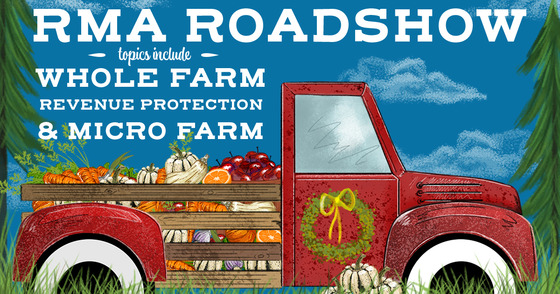 Don’t wait! USDA’s Risk Management Agency may have the coverage you need if you are running a smaller operation. The Whole-Farm Revenue Protection and Micro Farm are great risk management options for urban, organic and/or innovative producers.
RMA Whole Farm Revenue Protection provides a risk management safety net for all commodities on the farm under one insurance. This covers farms with specialty or organic commodities and or those marketing to local, regional, specialty, and direct markets, and allows diversified farms to insure all their crops under one policy. Check out Frequently Asked Questions on Whole-Farm Revenue Protection. Sales closing dates vary by region, and upcoming sales closing dates are Feb. 28 and March 31, 2024! To purchase before your sales closing date, speak to a crop insurance agent as soon as possible.
RMA’s Micro Farm Program gives smaller operations (up to $350,000 in approved revenue) a more cost-effective way to insure all or most of their commodities under one policy. This is ideal for producers who participate in farmers markets and local food networks because post-production operations, such as canning, freezing, and processing can be used to calculate your farm’s insurance guarantee. Check out Frequently Asked Questions on Micro Farm. Sales closing dates vary by region, and are Feb. 28, March 31, and April 15, 2024! To purchase before your sales closing date, speak to a crop insurance agent as soon as possible.
Crop insurance is sold and delivered solely through private crop insurance agents. A list of crop insurance agents is available at all USDA Service Centers and online at the RMA Agent Locator. Learn more about crop insurance and the modern farm safety net at rma.usda.gov or by contacting your RMA Regional Office.
Learn more about crop insurance for urban farmers and innovative producers.

The Farm Loan team in Jackson/Josephine County is already working on operating loans for spring 2024 and asks potential borrowers to submit their requests early so they can be timely processed. The farm loan team can help determine which loan programs are best for applicants.
FSA offers a wide range of low-interest loans that can meet the financial needs of any farm operation for just about any purpose. The traditional farm operating and farm ownership loans can help large and small farm operations take advantage of early purchasing discounts for spring inputs as well expenses throughout the year.
Microloans are a simplified loan program that will provide up to $50,000 for both Farm Ownership and Operating Microloans to eligible applicants. These loans, targeted for smaller and non-traditional operations, can be used for operating expenses, starting a new operation, purchasing equipment, and other needs associated with a farming operation. Loans to beginning farmers and members of underserved groups are a priority.
Other types of loans available include:
Marketing Assistance Loans allow producers to use eligible commodities as loan collateral and obtain a 9-month loan while the crop is in storage. These loans provide cash flow to the producer and allow them to market the crop when prices may be more advantageous.
Farm Storage Facility Loans can be used to build permanent structures used to store eligible commodities, for storage and handling trucks, or portable or permanent handling equipment. A variety of structures are eligible under this loan, including bunker silos, grain bins, hay storage structures, and refrigerated structures for vegetables and fruit. A producer may borrow up to $500,000 per loan.
|
|