In This Issue:
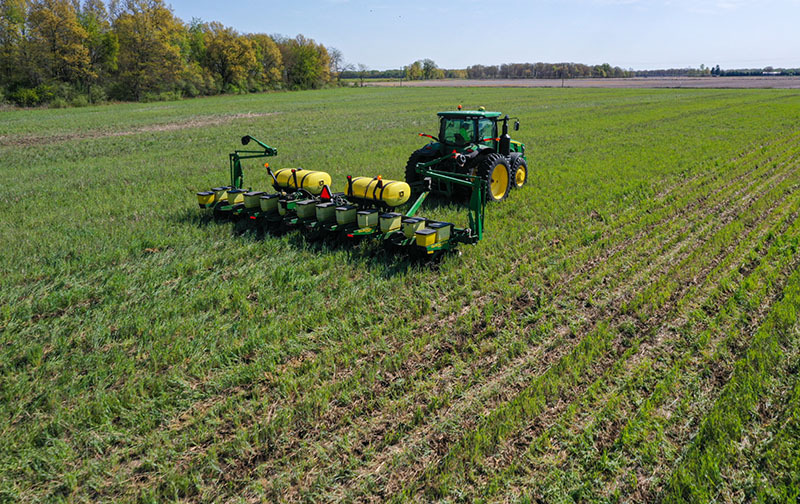
USDA’s Natural Resources Conservation Service (NRCS) is seeking public comment on proposed revisions to eight national conservation practice standards. Comments are due March 4, 2024.
Proposed revisions to the national conservation practice standards include:
- Field Border (Code 386);
- Filter Strip (Code 393);
- Grazing Management (Code 528);
- Hedgerow Planting (Code 422);
- Mulching (Code 484);
- Seasonal Water Management for Wildlife (Code 646);
- Structure for Water Control (Code 587); and
- Wetland Restoration (Code 657).
Proposed text can be found on this NRCS webpage. Changes are included in this notice on the Federal Register. Comments should be submitted via regulations.gov or via mail by March 4, 2024.
NRCS regularly reviews all national conservation practices to seek opportunities to increase flexibility and incorporate new technologies to help the nation’s farmers, ranchers, and private forest landowners better protect natural resources on their working lands. NRCS’s conservation practices offer guidelines for planning, installing, operating and maintaining conservation practices nationwide.
|
 |
The U.S. Department of Agriculture (USDA) today announced that agricultural producers can now enroll in the Farm Service Agency’s (FSA) Agriculture Risk Coverage (ARC) and Price Loss Coverage (PLC) programs for the 2024 crop year. Producers can enroll and make election changes for the 2024 crop year starting Dec. 18, 2023. The deadline to complete enrollment and any election change is March 15, 2024.
On Nov. 16, 2023, President Biden signed into law H.R. 6363, the Further Continuing Appropriations and Other Extensions Act, 2024 (Pub. L. 118-22), which extended the Agriculture Improvement Act of 2018 (Pub. L. 115-334), more commonly known as the 2018 Farm Bill, through September 30, 2024. This extension allows authorized programs, including ARC and PLC, to continue operating.
2024 Elections and Enrollment
Producers can elect coverage and enroll in ARC-County (ARC-CO) or PLC, which provide crop-by-crop protection, or ARC-Individual (ARC-IC), which protects the entire farm. Although election changes for 2024 are optional, producers must enroll through a signed contract each year. Also, if a producer has a multi-year contract on the farm it will continue for 2024 unless an election change is made.
If producers do not submit their election revision by the March 15, 2024, deadline, their election remains the same as their 2023 election for commodities on the farm. Farm owners cannot enroll in either program unless they have a share interest in the cropland.
Covered commodities include barley, canola, large and small chickpeas, corn, crambe, flaxseed, grain sorghum, lentils, mustard seed, oats, peanuts, dry peas, rapeseed, long grain rice, medium grain rice, safflower seed, seed cotton, sesame, soybeans, sunflower seed and wheat.
2022 Crop Year Payments
This fall, FSA issued payments totaling more than $267 million to agricultural producers who enrolled in the 2022 ARC-CO option and the ARC ARC-IC option for covered commodities that triggered a payment. Payments through the PLC option did not trigger for the 2022 crop year.
ARC and PLC payments for a given crop year are paid out the following fall to allow actual county yields and the Market Year Average prices to be finalized. These payments help mitigate fluctuations in either revenue or prices for certain crops. Payments for crops that may trigger for the 2023 crop year will be issued in the fall of 2024.
Crop Insurance Considerations
ARC and PLC are part of a broader USDA safety net that also includes crop insurance and marketing assistance loans.
Producers are reminded that ARC and PLC elections and enrollments can impact eligibility for some crop insurance products.
Producers on farms with a PLC election can purchase Supplemental Coverage Option (SCO) through their Approved Insurance Provider; however, producers on farms where ARC is the election are ineligible for SCO on their planted acres for that crop on that farm.
Unlike SCO, the Enhanced Coverage Option (ECO) is unaffected by an ARC election. Producers may add ECO regardless of the farm program election.
Upland cotton farmers who choose to enroll seed cotton base acres in ARC or PLC are ineligible for the stacked income protection plan (STAX) on their planted cotton acres for that farm.
Web-Based Decision Tools
Many universities offer web-based decision tools to help producers make informed, educated decisions using crop data specific to their respective farming operations. Producers are encouraged to use the tool of their choice to support their ARC and PLC elections.
More Information
For more information on ARC and PLC, producers can visit the ARC and PLC webpage or contact their local USDA Service Center. Producers can also make elections and complete enrollment online with level 2 eAuth.
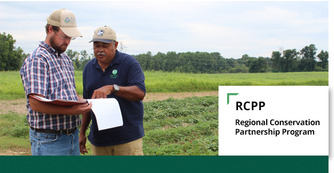
The U.S. Department of Agriculture (USDA) reminds specialty crop growers that assistance is available for producers who incur eligible on-farm food safety program expenses to obtain or renew a food safety certification through the Food Safety Certification for Specialty Crops (FSCSC) program. Producers can apply for assistance on their calendar year 2023 expenses through Jan. 31, 2024.
Program Details
FSCSC assists specialty crop operations that incurred eligible on-farm food safety certification and related expenses pertaining to obtaining or renewing a food safety certification in calendar year 2023. FSCSC covers a percentage of the specialty crop operation’s cost of obtaining or renewing its certification, as well as a portion of related expenses.
To be eligible for FSCSC, the applicant must be a specialty crop operation; meet the definition of a small business or very small business; and have paid eligible expenses related to the 2023 certification.
Specialty crop operations may receive assistance for the following costs:
- Developing a food safety plan for first-time food safety certification.
- Maintaining or updating an existing food safety plan.
- Food safety certification.
- Certification upload fees.
- Microbiological testing for products, soil amendments and water.
FSCSC payments are calculated separately for each category of eligible costs. A higher payment rate has been set for socially disadvantaged, limited resource, beginning and veteran farmers and ranchers. Details about the payment rates and limitations can be found at farmers.gov/food-safety.
Applying for Assistance
The FSCSC application period for 2023 closes Jan. 31, 2024. FSA will issue payments after the application period closes. If calculated payments exceed the amount of available funding, payments will be prorated.
Interested specialty crop producers can apply by completing the FSA-888, Food Safety Certification for Specialty Crops Program (FSCSC) application. The application, along with other required documents, can be submitted to the FSA office at any USDA Service Center nationwide by mail, fax, hand delivery or via electronic means.
Specialty crop producers can also call 877-508-8364 to speak directly with a USDA employee ready to assist. Visit farmers.gov/food-safety for additional program details, eligibility information and forms needed to apply.
|
The U.S. Department of Agriculture (USDA) has waived certain notice of loss requirements for 2023 for the Emergency Assistance for Livestock, Honeybees, and Farm-raised Fish (ELAP) and Livestock Indemnity Program (LIP). In an effort to streamline assistance to support access to critical 2023 natural disaster recovery assistance, USDA’s Farm Service Agency (FSA) is waiving the requirement to submit ELAP or LIP notices of loss within a pre-determined number of days for 2023. Instead, producers have the flexibility to submit 2023 notices of loss as soon as possible, once losses are realized, following a natural disaster event or no later than the established annual program application for payment deadlines for each program. FSA county committees are also being asked to re-evaluate 2023 ELAP and LIP late-filed notices of loss to determine if the waiver applies.
Emergency Assistance for Livestock, Honeybees, and Farm-raised Fish
ELAP provides recovery assistance to eligible producers of livestock, honeybee, and farm-raised fish losses due to an eligible adverse weather or loss condition, including blizzards, disease, water shortages and wildfires. ELAP covers grazing and feed losses, transportation of water and feed to livestock and hauling livestock to grazing acres. ELAP also covers certain mortality losses for livestock including honeybees and farm-raised fish as well as honeybee hive losses. ELAP is designed to address losses not covered by other FSA disaster assistance programs.
For 2023, FSA is waiving the regulatory requirement for producers who are eligible for ELAP to file a notice of loss with FSA within 30 calendar days from when the loss first became apparent for livestock and farm-raised fish and 15 calendar days for honeybees. Under this waiver, notices of loss are to be completed by the eligible producer and submitted to FSA no later than the annual program application deadline of January 30 following the program year in which the loss occurred. Therefore, producers who incurred ELAP-eligible losses in 2023, will need to submit a notice of loss by Jan. 30, 2024.
Livestock Indemnity Program
LIP provides disaster recovery assistance to livestock owners and contract growers who experience livestock deaths, in excess of normal mortality caused by eligible loss conditions including adverse weather, disease and attacks by animals reintroduced into the wild by the federal government or protected by federal law, including wolves and avian predators. LIP also helps livestock owners who must sell livestock at a reduced price because of an injury from certain loss conditions.
For 2023, FSA is waiving the regulatory requirement for producers who are eligible for LIP to file a notice of loss within 30 calendar days from when the loss first became apparent. Under this waiver, producers are still required to complete and submit the notice of loss to FSA no later than the annual program payment application date, which is 60 calendar days following the program year in which the loss occurred. The LIP payment application and notice of loss deadline is Feb. 29, 2024, for the 2023 program year.
2023 Disapproved Applications
FSA county committees will review all notices of loss for both ELAP and LIP that were previously disapproved for the 2023 program year due to late filing and re-evaluate them to determine if the waiver applies. To receive ELAP and LIP benefits, producers will still need to file an application for payment by the established program deadline for the 2023 program year. Producers who are unsure about the status of their notice of loss or application for payment, should contact their local FSA county office as soon as possible.
Supporting Documentation
Accurate records and loss documentation are critical following disaster events and are required when filing notices of loss with FSA. Acceptable loss documentation includes:
- Documentation of the number, kind, type, and weight range of livestock that have died, supplemented, if possible, by photographs or video records of ownership and losses.
- Rendering truck receipts by kind, type, and weight - important to document prior to disposal.
- Beginning inventory supported by birth recordings or purchase receipts.
- Documentation from Animal Plant Health Inspection Service, Department of Natural Resources, or other sources to substantiate eligible death losses due to an eligible loss condition.
- Documentation that livestock were removed from grazing pastures due to an eligible adverse weather or loss condition.
- Costs of transporting livestock feed to eligible livestock, such as receipts for equipment rental fees for hay lifts and snow removal.
- Feed purchase receipts if feed supplies or grazing pastures are destroyed.
- Number of gallons of water transported to livestock due to water shortages.
More Information
The improvements to ELAP and LIP build on others made since 2021. This includes ELAP benefits for above normal costs for hauling feed and water to livestock and transporting livestock to other grazing acres during a qualifying drought. FSA also expanded eligible livestock under ELAP, LIP, and the Livestock Forage Disaster Assistance Program, and increased the LIP payment rate for beef, beefalo, bison, and dairy animals less than 250 pounds and most recently beef calves over 800 pounds. Learn about USDA disaster assistance programs on farmers.gov.
On farmers.gov, the Disaster Assistance Discovery Tool, Disaster-at-a-Glance fact sheet and Loan Assistance Tool can help producers and landowners determine disaster protection and recovery program or loan options. For more information about FSA programs, contact your local USDA Service Center.
|
Access local data to assist with your farming operation including weather forecasts and up-to-date commodity pricing
Farmers in ALABAMA can now access county specific farming data and USDA resources all in one place via the new farmers.gov local dashboard. Your new farmers.gov local dashboard includes farming data and USDA resources including USDA news, commodity pricing, weather forecasts, historical climate data, past storm events, USDA service center locator and additional state resources for ALABAMA and your county The dashboard transforms complex data sets into easy-to-read charts and graphs to help you quickly find information that matters to you. Find Your Local ALABAMA Dashboard
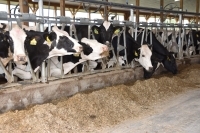 Starting next Wednesday, dairy producers will be able to enroll for 2024 Dairy Margin Coverage (DMC), an important safety net program offered through the U.S. Department of Agriculture (USDA) that provides producers with price support to help offset milk and feed price differences. This year’s DMC signup begins Feb. 28, 2024, and ends April 29, 2024. For those who sign up for 2024 DMC coverage, payments may begin as soon as March 4, 2024, for any payments that triggered in January 2024.
USDA’s Farm Service Agency (FSA) has revised the regulations for DMC to allow eligible dairy operations to make a one-time adjustment to established production history. This adjustment will be accomplished by combining previously established supplemental production history with DMC production history for those dairy operations that participated in Supplemental Dairy Margin Coverage during a prior coverage year. DMC has also been authorized through calendar year 2024. Congress passed a 2018 Farm Bill extension requiring these regulatory changes to the program.
DMC is a voluntary risk management program that offers protection to dairy producers when the difference between the all-milk price and the average feed price (the margin) falls below a certain dollar amount selected by the producer. In 2023, Dairy Margin Coverage payments triggered in 11 months including two months, June and July, where the margin fell below the catastrophic level of $4.00 per hundredweight, a first for Dairy Margin Coverage or its predecessor Margin Protection Program.
2024 DMC Coverage and Premium Fees
FSA has revised DMC regulations to extend coverage for calendar year 2024, which is retroactive to Jan. 1, 2024, and to provide an adjustment to the production history for dairy operations with less than 5 million pounds of production. In previous years, smaller dairy operations could establish a supplemental production history and receive Supplemental Dairy Margin Coverage. For 2024, dairy producers can establish one adjusted base production history through DMC for each participating dairy operation to better reflect the operation’s current production.
For 2024 DMC enrollment, dairy operations that established supplemental production history through Supplemental Dairy Margin Coverage for coverage years 2021 through 2023, will combine the supplemental production history with established production history for one adjusted base production history.
For dairy operations enrolled in 2023 DMC under a multi-year lock-in contract, lock-in eligibility will be extended until Dec. 31, 2024. In addition, dairy operations enrolled in multi-year lock-in contracts are eligible for the discounted DMC premium rate during the 2024 coverage year. To confirm 2024 DMC lock-in coverage or opt out in favor of an annual contract for 2024, dairy operations having lock-in contracts must enroll during the 2024 DMC enrollment period.
DMC offers different levels of coverage, even an option that is free to producers, minus a $100 administrative fee. The administrative fee is waived for dairy producers who are considered limited resource, beginning, socially disadvantaged or a military veteran. To determine the appropriate level of DMC coverage for a specific dairy operation, producers can use the online dairy decision tool.
DMC Payments
DMC payments are calculated using updated feed and premium hay costs, making the program more reflective of actual dairy producer expenses. These updated feed calculations use 100% premium alfalfa hay.
More Information
USDA also offers other risk management tools for dairy producers, including the Dairy Revenue Protection (DRP) plan that protects against a decline in milk revenue (yield and price) and the Livestock Gross Margin (LGM) plan, which provides protection against the loss of the market value of milk minus the feed costs. Both DRP and LGM livestock insurance policies are offered through the Risk Management Agency. Producers should contact their local crop insurance agent for more information.
For more information on DMC, visit the DMC webpage or contact your local USDA Service Center.

|