|
Iowans are all about the weather. I didn’t realize everyone wasn’t like this until after college when I lived outside of the state for a couple of years. Often someone would say something like “You’re from Iowa? All you guys talk about is the weather.”
Iowans do talk a lot about the weather. We’ve got four seasons, our fair share of extreme weather in all four, a few “perfect days” throughout the year, and our biggest industry, farming, absolutely depends on the weather.
In the last few weeks, I’ve heard lots of people say, “Can you believe this beautiful weather?” I’m generally not hearing that from farmers. As a farmer, I’m certainly not saying this is beautiful weather. While I do in fact love a day of mid-70s temps in Iowa, it’s important that those days are at the right time of the year. It’s alarming when it’s almost 80 degrees in Iowa in February.
These dry, hot, windy days of February are even more reason to make sure you’re getting into your USDA service center. I’m honored to be part of the Biden-Harris Administration helping USDA provide a wide range of support, risk management tools, conservation practices, and loans to help Iowa farmers navigate the challenges of growing crops, raising livestock, and managing land. The alarmingly “beautiful” weather this month is a good reminder that USDA programs can make a difference between profitability and economic disaster.
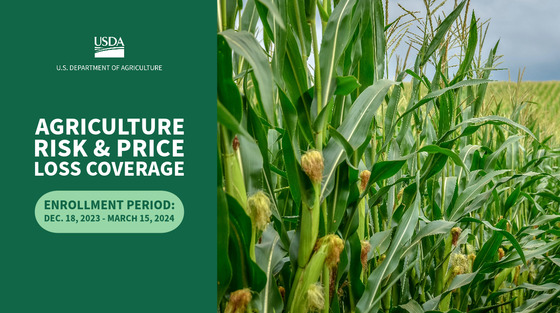
We are in the final weeks to enroll in USDA’s Key Commodity Safety Net Programs for the 2024 Crop Year. Farmers have until March 15 to revise elections and sign contracts for Agriculture Risk Coverage (ARC) or Price Loss Coverage (PLC) programs for the 2024 crop year.
March 15 is also the deadline for Risk Management Agency crop insurance sold through a private crop insurance agent. For many crops not covered by federal crop insurance, FSA has the Noninsured Crop Disaster Assistance Program (NAP). Farmers interested in this risk management tool can talk to their local county office. We’re also in the sign-up period for the 2024 Dairy Margin Coverage (DMC), an important safety net program that provides milk producers with price support to help offset milk and feed price differences.
Your local office may also be able to help you with a variety of loans to meet the needs of your farming operation especially if you’re impacted by challenges like extreme weather or volatile markets.
If like me, you are concerned about beautiful June weather showing up in February, make sure you are connecting with your local FSA staff. The Iowa FSA team is ready to help you access a wide variety of programs that can help Iowa farmers overcome the challenges you may face this year.
Starting next Wednesday, dairy producers will be able to enroll for 2024 Dairy Margin Coverage (DMC), an important safety net program offered through the U.S. Department of Agriculture (USDA) that provides producers with price support to help offset milk and feed price differences. This year’s DMC signup begins Feb. 28, 2024, and ends April 29, 2024. For those who sign up for 2024 DMC coverage, payments may begin as soon as March 4, 2024, for any payments that triggered in January 2024.
USDA’s Farm Service Agency (FSA) has revised the regulations for DMC to allow eligible dairy operations to make a one-time adjustment to established production history. This adjustment will be accomplished by combining previously established supplemental production history with DMC production history for those dairy operations that participated in Supplemental Dairy Margin Coverage during a prior coverage year. DMC has also been authorized through calendar year 2024. Congress passed a 2018 Farm Bill extension requiring these regulatory changes to the program.
DMC is a voluntary risk management program that offers protection to dairy producers when the difference between the all-milk price and the average feed price (the margin) falls below a certain dollar amount selected by the producer. In 2023, Dairy Margin Coverage payments triggered in 11 months including two months, June and July, where the margin fell below the catastrophic level of $4.00 per hundredweight, a first for Dairy Margin Coverage or its predecessor Margin Protection Program.
2024 DMC Coverage and Premium Fees
FSA has revised DMC regulations to extend coverage for calendar year 2024, which is retroactive to Jan. 1, 2024, and to provide an adjustment to the production history for dairy operations with less than 5 million pounds of production. In previous years, smaller dairy operations could establish a supplemental production history and receive Supplemental Dairy Margin Coverage. For 2024, dairy producers can establish one adjusted base production history through DMC for each participating dairy operation to better reflect the operation’s current production.
For 2024 DMC enrollment, dairy operations that established supplemental production history through Supplemental Dairy Margin Coverage for coverage years 2021 through 2023, will combine the supplemental production history with established production history for one adjusted base production history.
For dairy operations enrolled in 2023 DMC under a multi-year lock-in contract, lock-in eligibility will be extended until Dec. 31, 2024. In addition, dairy operations enrolled in multi-year lock-in contracts are eligible for the discounted DMC premium rate during the 2024 coverage year. To confirm 2024 DMC lock-in coverage or opt out in favor of an annual contract for 2024, dairy operations having lock-in contracts must enroll during the 2024 DMC enrollment period.
DMC offers different levels of coverage, even an option that is free to producers, minus a $100 administrative fee. The administrative fee is waived for dairy producers who are considered limited resource, beginning, socially disadvantaged or a military veteran. To determine the appropriate level of DMC coverage for a specific dairy operation, producers can use the online dairy decision tool.
DMC Payments
DMC payments are calculated using updated feed and premium hay costs, making the program more reflective of actual dairy producer expenses. These updated feed calculations use 100% premium alfalfa hay.
More Information
USDA also offers other risk management tools for dairy producers, including the Dairy Revenue Protection (DRP) plan that protects against a decline in milk revenue (yield and price) and the Livestock Gross Margin (LGM) plan, which provides protection against the loss of the market value of milk minus the feed costs. Both DRP and LGM livestock insurance policies are offered through the Risk Management Agency. Producers should contact their local crop insurance agent for more information.
For more information on DMC, visit the DMC webpage or contact your local USDA Service Center.
Call Today to Make Your Appointment
Agricultural producers who have not yet enrolled in the Agriculture Risk Coverage (ARC) or Price Loss Coverage (PLC) programs for the 2024 crop year have until March 15, 2024, to revise elections and sign contracts. Both safety net programs, delivered by USDA’s Farm Service Agency (FSA), provide vital income support to farmers who experience substantial declines in crop prices or revenues for the 2024 crop year. In Iowa, producers have completed 61,996 contracts to date, representing 38% of the more than 163,000 expected contracts.
Producers can elect coverage and enroll in ARC-County or PLC, which provide crop-by-crop protection, or ARC-Individual, which protects the entire farm. Although election changes for 2024 are optional, producers must enroll, with a signed contract, each year. If a producer has a multi-year contract on the farm, the contract will continue for 2024 unless an election change is made.
If producers do not submit their election revision by the March 15, 2024, deadline, the election remains the same as their 2023 election for eligible commodities on the farm. Also, producers who do not complete enrollment and sign their contract by the deadline will not be enrolled in ARC or PLC for the 2024 year and will not receive a payment if one is triggered. Farm owners can only enroll in these programs if they have a share interest in the commodity.
Producers are eligible to enroll farms with base acres for the following commodities: barley, canola, large and small chickpeas, corn, crambe, flaxseed, grain sorghum, lentils, mustard seed, oats, peanuts, dry peas, rapeseed, long grain rice, medium and short grain rice, safflower seed, seed cotton, sesame, soybeans, sunflower seed and wheat.
Web-Based Decision Tools
Many universities, including Iowa State, offer web-based decision tools to help producers make informed, educated decisions using crop data specific to their respective farming operations. Producers are encouraged to use the tool of their choice to support their ARC and PLC elections.
Crop Insurance Considerations
Producers are reminded that enrolling in ARC or PLC programs can impact eligibility for some crop insurance products offered by USDA’s Risk Management Agency (RMA). Producers who elect and enroll in PLC also have the option of purchasing Supplemental Coverage Option (SCO) through their Approved Insurance Provider, but producers of covered commodities who elect ARC are ineligible for SCO on their planted acres.
Unlike SCO, RMA’s Enhanced Coverage Option (ECO) is unaffected by participating in ARC for the same crop, on the same acres. You may elect ECO regardless of your farm program election.
Upland cotton farmers who choose to enroll seed cotton base acres in ARC or PLC are ineligible for the stacked income protection plan, or STAX, on their planted cotton acres.
More Information
For more information on ARC and PLC, producers can visit the ARC and PLC webpage or contact their local USDA Service Center. Producers can also prepare maps for acreage reporting as well as manage farm loans and view other farm records data and customer information by logging into their farmers.gov account. If you don’t have an account, sign up today.
The U. S Department of Agriculture (USDA) is issuing final Emergency Relief Program (ERP) payments totaling approximately $306 million to eligible commodity and specialty crop producers who incurred losses due to natural disasters in 2020 and 2021. USDA’s Farm Service Agency (FSA) will begin issuing these additional payments to eligible producers this week.
Recipients of the additional payment are limited to those producers who received ERP Phase One payments from FSA that were calculated based on crop insurance indemnities. Initially, ERP Phase One payments to producers who were indemnified through Federal crop insurance, were subject to a 75% payment factor. FSA has since determined that adequate funding exists to provide an additional 3.5% ERP Phase One payment to producers who had crop insurance increasing the overall payment factor to 78.5%. These additional ERP Phase One payments are subject to FSA payment limitation provisions as outlined in the ERP Phase One fact sheet.
Because ERP Phase One payments to producers of noninsured crops covered by FSA NAP policies were originally paid at 100%, there will be no additional payments issued to these producers for 2020 and 2021 losses.
The Extending Government Funding and Delivering Emergency Assistance Act, 2021 (P.L. 117-43) provided $10 billion in assistance to agricultural producers impacted by wildfires, droughts, hurricanes, winter storms and other eligible disasters experienced during calendar years 2020 and 2021. In 2022, FSA implemented ERP Phase One, which delivered $7.5 billion in payments to commodity and specialty crop producers. For Phase One, ERP used a streamlined process with pre-filled application forms, leveraging crop insurance indemnities or Noninsured Crop Disaster Assistance Program (NAP) payments on file with USDA.
Separately, through the Disaster Relief Supplemental Appropriations Act, 2023 (P.L. 117-328) Congress allocated approximately $3.2 billion in funding to cover necessary expenses related to losses of revenue, quality or production losses of crops. Enrollment is ongoing for ERP 2022, which covers losses to crops, trees, bushes and vines due to qualifying, calendar year 2022 natural disaster events including wildfires, hurricanes, floods, derechos, excessive heat, tornadoes, winter storms, freeze (including a polar vortex), smoke exposure, excessive moisture, qualifying drought and related conditions.
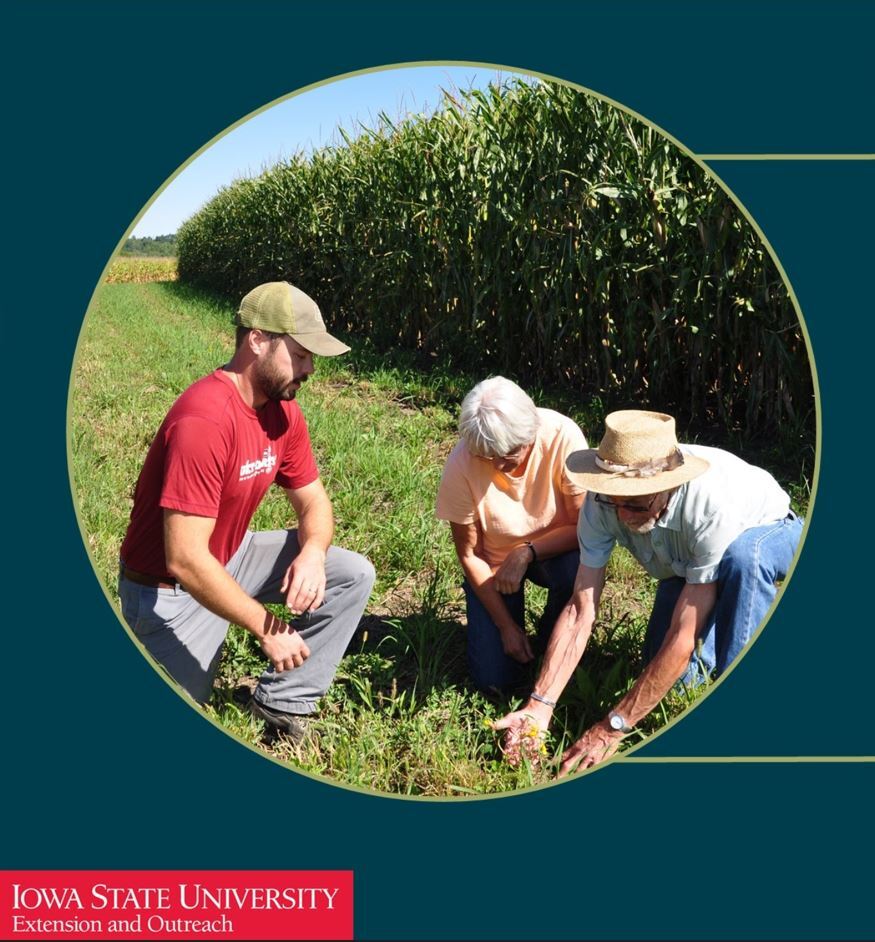
Iowa State University Extension and Outreach is launching a new program to help Iowa landowners improve soil health on their farmland.
The program will provide a unique learning experience by providing landowners the opportunity to learn from ISU experts with a small group of fellow landowners.
The program is targeted to landowners in the Des Moines River Watershed.
USDA has announced that most farm loan borrowers can make payments to their direct loans online through the Pay My Loan feature on Farmers.gov. Pay My Loan is part of a broader effort by USDA’s Farm Service Agency (FSA) to streamline its processes, especially for producers who may have limited time during the planting or harvest seasons to visit a local FSA office; modernize and improve customer service; provide additional customer self-service tools; and expand credit access to assist more producers.
On average, local USDA Service Centers process more than 215,000 farm loan payments each year. Pay My Loan gives most borrowers an online repayment option and relieves them from needing to call, mail, or visit a Service Center to pay their loan installment. Farm loan payments can now be made at the borrower’s convenience, on their schedule and outside of FSA office hours.
Pay My Loan also provides time savings for FSA’s farm loan employees by minimizing manual payment processing activities. This new service for producers means that farm loan employees will have more time to focus on reviewing and processing new loans or servicing requests.
The Pay My Loan feature can be accessed at Farmers.gov. To use the payment feature, producers must establish a USDA customer account and a USDA Level 2 eAuthentication (“eAuth”) account or a Login.gov account. This initial release only allows borrowers operating as individuals to make online payments. For now, borrowers with jointly payable checks will need to continue to make loan payments through their local office.
FSA has a significant initiative underway to streamline and automate the Farm Loan Program customer-facing business process. For the over 26,000 producers who submit a Direct Loan application annually, FSA has made various improvements including:
- The Online Loan Application, an interactive, guided application that is paperless and provides helpful features including an electronic signature option, the ability to attach supporting documents such as tax returns, complete a balance sheet, and build a farm operating plan.
- The Loan Assistance Tool that provides customers with an interactive online, step-by-step guide to identifying the direct loan products that may be a fit for their business needs and to understanding the application process.
- A simplified direct loan paper application, which reduced loan applications by more than half, from 29 pages to 13 pages.
The Farm Service Agency (FSA) is accepting offers for specific conservation practices under the Conservation Reserve Program (CRP) Continuous Signup.
In exchange for a yearly rental payment, farmers enrolled in the program agree to remove environmentally sensitive land from agricultural production and to plant species that will improve environmental health and quality. The program’s long-term goal is to re-establish valuable land cover to improve water quality, prevent soil erosion, and reduce loss of wildlife habitat. Contracts for land enrolled in CRP are 10-15 years in length.
Under continuous CRP signup, environmentally sensitive land devoted to certain conservation practices can be enrolled in CRP at any time. Offers for continuous enrollment are not subject to competitive bidding during specific periods. Instead they are automatically accepted provided the land and producer meet certain eligibility requirements and the enrollment levels do not exceed the statutory cap.
For more information, including a list of acceptable practices, contact your local USDA Service Center or visit fsa.usda.gov/crp.
Farmers can use USDA farm ownership microloans to buy and improve property. These microloans are especially helpful to beginning or underserved farmers, U.S. veterans looking for a career in farming, and those who have small and mid-sized farming operations. Microloans have helped farmers and ranchers with operating costs, such as feed, fertilizer, tools, fencing, equipment, and living expenses since 2013.
Microloans can also help with farmland and building purchases and soil and water conservation improvements. FSA designed the expanded program to simplify the application process, expand eligibility requirements and expedite smaller real estate loans to help farmers strengthen their operations. Microloans provide up to $50,000 to qualified producers and can be issued to the applicant directly from the USDA Farm Service Agency (FSA).
To learn more about the FSA microloan program, contact your local USDA Service Center or visit fsa.usda.gov/microloans.
The U.S. Department of Agriculture (USDA) is investing almost $1.8 million in cooperative agreements with six partner organizations for outreach and technical assistance to promote awareness and understanding of the Conservation Reserve Program-Transition Incentives Program among agricultural communities. USDA’s Farm Service Agency (FSA) offers the program as an important tool to help beginning, veteran and socially disadvantaged farmers access land, as well as keep agricultural lands in production. These partnerships build on other efforts by USDA to increase equity in program delivery and broaden the reach of its programs to underserved producers.
The Conservation Reserve Program-Transition Incentives Program provides assistance for landowners or operators to transition land expiring from the Conservation Reserve Program to a beginning, veteran or socially disadvantaged farmer or rancher for sustainable grazing or transition to crop production. The program pays owners or operators of land enrolled in an expiring Conservation Reserve Program contract up to two additional annual Conservation Reserve Program payments if they sell or lease their expiring Conservation Reserve Program land to an eligible non-family member. The producer gaining access or ownership to the land must return the land to production using sustainable grazing or crop production methods and be provided the opportunity to re-enroll some or all of the land into Conservation Reserve Program or enroll in the Natural Resource Conservation Service’s Conservation Stewardship Program or Environmental Quality Incentives Program.
A beginning farmer or rancher is one who has farmed or ranched 10 years or less, and materially and substantially participates in the operation.
A socially disadvantaged farmer or rancher is a farmer or rancher who is a member of a group whose members have historically been subjected to racial or ethnic prejudice because of their identity as a member of that group without regard to their individual qualities. For this program, gender is not included among these groups.
A veteran farmer or rancher is a person who served in the Armed Forces and who has obtained status as a veteran during the most recent 10-year period, or who has not operated a farm or ranch, or operated a farm or ranch for no more than 10 years.
Conservation Reserve Program-Transition Incentives Program Partnership Projects
In addition to the outreach and technical assistance focused proposals, FSA prioritized project proposals that analyze the Conservation Reserve Program-Transition Incentives Program, building upon prior studies of barriers to Transition Incentives Program participation. These projects will provide recommendations for improving the program and the identification of best practices.
-
Center for Rural Affairs – This project has the primary goal of connecting landowners and land seekers interested in program participation. This project will span the states of Iowa and Nebraska, with emphasis on areas of the state with upcoming or expiring Conservation Reserve Program contracts. Iowa and Nebraska have hundreds of thousands of acres enrolled in the Conservation Reserve Program. This, combined with the increasing age of landowners and producers, will create an opportunity for Conservation Reserve Program-Transition Incentives Program enrollment in upcoming years. Outreach materials, media pieces, and relationships built through this project will stay relevant and will be shared and made available online beyond the project term. Their website and social media platforms reach tens of thousands of individuals every year. Producers and landowners who are not at the end of their Conservation Reserve Program contract will be educated on the benefits of enrolling in the Conservation Reserve Program-Transition Incentives Program when the time comes. The project will have an impact for years to come.
-
Trustees of Indiana University – The project will build a clearer national understanding of the Transition Incentives Program’s social and agro-ecological effects on the ground, and opportunities to dissolve barriers to participation for underserved farmers and farmers interested in ecologically sustainable farming practices. The project will focus on 18 priority Transition Incentives Program states: Alabama, Colorado, Idaho, Illinois, Iowa, Kansas, Maryland, Mississippi, Missouri, Montana, New Mexico, North Carolina, North Dakota, Oklahoma, South Dakota, Texas, Virginia and Washington. The project will look at who participates in the Transition Incentives Program, what takes place on Transition Incentives Program land, how lands convert from the Conservation Reserve Program to production, and how the Transition Incentives Program affects participating farmers’ and ranchers’ entry into – and success in – agriculture. It will also clarify impediments to the Transition Incentives Program in places where the Conservation Reserve Program is prevalent, and opportunities to dissolve those impediments, by learning directly from farmers who do not participate in the Transition Incentives Program.
Federally recognized Indian tribal organizations, state governments, local governments, nonprofit organizations, and institutions of higher education were eligible to submit proposals for cooperative agreements.
Landowners enrolled in the Conservation Reserve Program are encouraged to contact FSA through their local USDA Service Center to learn more about the Conservation Reserve Program -Transition Incentives Program. Beginning, veteran and socially disadvantaged producers interested in learning more about the Conservation Reserve Program-Transition Incentives Program or other resources to help them start or grow their farm operation are also encouraged to contact FSA at their local USDA Service Center.
If you’re interested in starting a career with USDA, subscribe to receive free email alerts on select positions within the USDA Farm Service Agency, Natural Resources Conservation Service, Risk Management Agency and Farm Production and Conservation Business Center.
All federal job vacancies within USDA are posted on usajobs.gov. In order to further promote employment opportunities, we are going to start sending emails that highlight select positions.
If you want to keep up with vacancy announcements via email, you can subscribe to “Careers” by visiting farmers.gov/subscribe and completing the following steps.
- Select “email” as your subscription type
- Enter your email address
- Click “submit”
- Select the “Careers” topic under “Connect with us”
- Click “submit” to verify your subscription topic choice at the bottom of the page
Not all job vacancy announcements will be shared via email, but you can view a current list of all job openings at any time by visiting usajobs.gov.
For additional information or assistance with your subscription, contact your local USDA Service Center by visiting farmers.gov/service-center-locator.
|