|
As we prepare for another crop season, we can look back on a busy year at Iowa FSA investing in Iowa farmers. We delivered almost $1.5 billion in payments and loans to help Iowa farmers and ranchers deliver what the world needs including investments in conservation on our farms.
Now is the time to implement your plan for 2024. Make sure your plan includes checking in with your county FSA service center. Our staff is ready to help you make the most of the programs that can invest in you and your operation.
On Nov. 16, 2023, President Biden signed into law H.R. 6363, the Further Continuing Appropriations and Other Extensions Act, 2024 (Pub. L. 118-22), which extended the Agriculture Improvement Act of 2018 (Pub. L. 115-334), more commonly known as the 2018 Farm Bill, through Sept. 30, 2024. This extension allows authorized programs to continue operating.
We’re helping producers sign up for two programs right now. Producers can enroll and make election changes for the 2024 crop year in either the Agriculture Risk Coverage (ARC) or the Price Loss Coverage (PLC). The deadline to complete enrollment and any election change is March 15, 2024. Many universities Iowa State University Extension offer web-based decision tools to help producers make informed decisions. https://www.extension.iastate.edu/agdm/crops/html/a1-33.html
Iowa FSA also began accepting applications for the Continuous Conservation Reserve Program (Continuous CRP) signup on Jan. 12, 2024. To submit an offer, farmers should contact the FSA at their local USDA Service Center by July 31, 2024, in order to have an offer effective by Oct. 1, 2024. To ensure enrollment acreages do not exceed the statutory cap, FSA will accept offers from producers on a first-come, first-served basis and will return offers for approval in batches throughout the year.
Additionally, producers with acres enrolled in Continuous CRP set to expire Sept. 30, 2024, can offer acres for re-enrollment beginning Jan.12, 2024. A producer can both enroll new acres into Continuous CRP and re-enroll any acres expiring Sept.30, 2024.
In addition to programs, many of our county offices are also hiring agricultural leaders to help deliver the investments USDA will make in Iowa farmers in the coming year. I’m proud to be part of the Biden-Harris Administration, which continues to invest in these local leaders by backfilling positions when people retire or leave for other opportunities. In Iowa, sometimes those opportunities involve our staff advancing to positions in the national office. Stop by your local office to see if they are hiring, or if a neighboring county has a job opening. Continue to share news of openings with your friends and family.
Good luck as you dive into all that your farm will do in 2024. And thank you for allowing the team at Iowa FSA to be your partner.
Matt
The U.S. Department of Agriculture (USDA) announced today that most farm loan borrowers will soon be able to make payments to their direct loans online through the Pay My Loan feature on farmers.gov in early February. Pay My Loan is part of a broader effort by USDA’s Farm Service Agency (FSA) to streamline its processes, especially for producers who may have limited time during the planting or harvest seasons to visit a local FSA office; modernize and improve customer service; provide additional customer self-service tools; and expand credit access to assist more producers.
On average, local USDA Service Centers process more than 225,000 farm loan payments each year. Pay My Loan gives most borrowers an online repayment option and relieves them from needing to call, mail, or visit a Service Center to pay their loan installment. Farm loan payments can now be made at the borrower’s convenience, on their schedule and outside of FSA office hours.
Pay My Loan also provides time savings for FSA’s farm loan employees by minimizing manual payment processing activities. This new service for producers means that farm loan employees will have more time to focus on reviewing and processing new loans or servicing requests.
The Pay My Loan feature can be accessed at farmers.gov/loans. To use the payment feature, producers must establish a USDA customer account and a USDA Level 2 eAuthentication (“eAuth”) account or a Login.gov account. This initial release only allows individuals with loans to make online payments. For now, borrowers with jointly payable checks will need to continue to make loan payments through their local office.
FSA has a significant initiative underway to streamline and automate the Farm Loan Program customer-facing business process. For the over 26,000 producers who submit a direct loan application annually, FSA has made various improvements including:
- The Online Loan Application, an interactive, guided application that is paperless and provides helpful features including an electronic signature option, the ability to attach supporting documents such as tax returns, complete a balance sheet, and build a farm operating plan.
- The Loan Assistance Tool that provides customers with an interactive online, step-by-step guide to identifying the direct loan products that may be a fit for their business needs and to understanding the application process.
- A simplified direct loan paper application, which reduced loan applications by more than half, from 29 pages to 13 pages.
More Information
USDA touches the lives of all Americans each day in so many positive ways. In the Biden-Harris administration, USDA is transforming America’s food system with a greater focus on more resilient local and regional food production, fairer markets for all producers, ensuring access to safe, healthy and nutritious food in all communities, building new markets and streams of income for farmers and producers using climate smart food and forestry practices, making historic investments in infrastructure and clean energy capabilities in rural America, and committing to equity across the Department by removing systemic barriers and building a workforce more representative of America. To learn more, visit www.usda.gov.
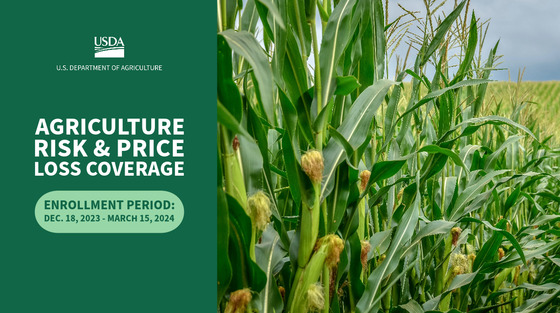 The U.S. Department of Agriculture (USDA) today announced that agricultural producers can now enroll in the Farm Service Agency’s (FSA) Agriculture Risk Coverage (ARC) and Price Loss Coverage (PLC) programs for the 2024 crop year. Producers can enroll and make election changes for the 2024 crop year starting Dec. 18, 2023. The deadline to complete enrollment and any election change is March 15, 2024.
On Nov. 16, 2023, President Biden signed into law H.R. 6363, the Further Continuing Appropriations and Other Extensions Act, 2024 (Pub. L. 118-22), which extended the Agriculture Improvement Act of 2018 (Pub. L. 115-334), more commonly known as the 2018 Farm Bill, through September 30, 2024. This extension allows authorized programs, including ARC and PLC, to continue operating.
2024 Elections and Enrollment
Producers can elect coverage and enroll in ARC-County (ARC-CO) or PLC, which provide crop-by-crop protection, or ARC-Individual (ARC-IC), which protects the entire farm. Although election changes for 2024 are optional, producers must enroll through a signed contract each year. Also, if a producer has a multi-year contract on the farm it will continue for 2024 unless an election change is made.
If producers do not submit their election revision by the March 15, 2024, deadline, their election remains the same as their 2023 election for commodities on the farm. Farm owners cannot enroll in either program unless they have a share interest in the cropland.
Covered commodities include barley, canola, large and small chickpeas, corn, crambe, flaxseed, grain sorghum, lentils, mustard seed, oats, peanuts, dry peas, rapeseed, long grain rice, medium grain rice, safflower seed, seed cotton, sesame, soybeans, sunflower seed and wheat.
2022 Crop Year Payments
This fall, FSA issued payments totaling more than $267 million to agricultural producers who enrolled in the 2022 ARC-CO option and the ARC ARC-IC option for covered commodities that triggered a payment. Payments through the PLC option did not trigger for the 2022 crop year.
ARC and PLC payments for a given crop year are paid out the following fall to allow actual county yields and the Market Year Average prices to be finalized. These payments help mitigate fluctuations in either revenue or prices for certain crops. Payments for crops that may trigger for the 2023 crop year will be issued in the fall of 2024.
Crop Insurance Considerations
ARC and PLC are part of a broader USDA safety net that also includes crop insurance and marketing assistance loans.
Producers are reminded that ARC and PLC elections and enrollments can impact eligibility for some crop insurance products.
Producers on farms with a PLC election can purchase Supplemental Coverage Option (SCO) through their Approved Insurance Provider; however, producers on farms where ARC is the election are ineligible for SCO on their planted acres for that crop on that farm.
Unlike SCO, the Enhanced Coverage Option (ECO) is unaffected by an ARC election. Producers may add ECO regardless of the farm program election.
Upland cotton farmers who choose to enroll seed cotton base acres in ARC or PLC are ineligible for the stacked income protection plan (STAX) on their planted cotton acres for that farm.
Web-Based Decision Tools
Many universities offer web-based decision tools to help producers make informed, educated decisions using crop data specific to their respective farming operations. Producers are encouraged to use the tool of their choice to support their ARC and PLC elections.
More Information
For more information on ARC and PLC, producers can visit the ARC and PLC webpage or contact their local USDA Service Center. Producers can also make elections and complete enrollment online with level 2 eAuth.
The U.S. Department of Agriculture (USDA) is offering financial assistance to agricultural producers and private landowners enrolled in its Conservation Reserve Program (CRP) to improve the health of their forests. The Forest Management Incentive, available through USDA’s Farm Service Agency (FSA), can help participants with forest management practices, such as brush management and prescribed burning.
The Forest Management Incentive is available to participants with active CRP contracts with forest cover that are not within two years of expiring. The incentive is a payment to eligible CRP participants who properly completed authorized forest management practice activities to improve the condition of resources, promote forest management and enhance wildlife habitat.
Forest management practices include brush management, herbaceous weed control, prescribed burning, firebreaks, development of early successional habitat and forest stand improvement. Additional information is available in our Forest Management Incentive fact sheet.
Participants can now submit offers for the Forest Management Incentive. Interested producers should contact the FSA at their local USDA Service Center.
The Inflation Reduction Act of 2022 (Pub. L. 117-169) and the Further Continuing Appropriations and Other Extensions Act, 2024 (Pub. L. 118-22), extended the authority and provided funding for the Forest Management Incentive until 2031.
The Forest Management Incentive was launched in 2020 and is one of the many natural resource conservation options available through CRP. Currently, the Forest Management Incentive has participants in 27 states.
Producers not currently participating in CRP can now submit offers for Continuous CRP. Learn more.
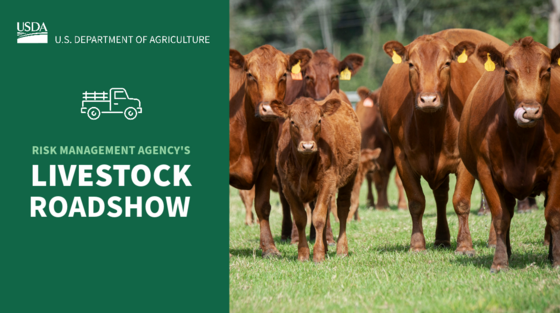
The U.S. Department of Agriculture (USDA) has been hosting more than a dozen in-person and virtual workshops this winter for producers to learn about new and expanded livestock risk management products. The “Livestock Roadshow,” hosted by USDA’s Risk Management Agency (RMA), highlights policy improvements based on feedback from America’s livestock producers, part of the agency’s broader outreach and education efforts. The Illinois Livestock Roadshow will be held on February 13, 2024, from 9:30 to 11:30 am CT at the Knox County Farm Bureau, 180 S. Soangetaha Rd. in Galesburg.
Learn more.
The U.S. Department of Agriculture (USDA) is offering financial assistance to agricultural producers and private landowners enrolled in its Conservation Reserve Program (CRP) to improve the health of their forests. The Forest Management Incentive, available through USDA’s Farm Service Agency (FSA), can help participants with forest management practices, such as brush management and prescribed burning.
The Forest Management Incentive is available to participants with active CRP contracts with forest cover that are not within two years of expiring. The incentive is a payment to eligible CRP participants who properly completed authorized forest management practice activities to improve the condition of resources, promote forest management and enhance wildlife habitat.
Forest management practices include brush management, herbaceous weed control, prescribed burning, firebreaks, development of early successional habitat and forest stand improvement. Additional information is available in our Forest Management Incentive fact sheet.
Participants can now submit offers for the Forest Management Incentive. Interested producers should contact the FSA at their local USDA Service Center.
The Inflation Reduction Act of 2022 (Pub. L. 117-169) and the Further Continuing Appropriations and Other Extensions Act, 2024 (Pub. L. 118-22), extended the authority and provided funding for the Forest Management Incentive until 2031.
The Forest Management Incentive was launched in 2020 and is one of the many natural resource conservation options available through CRP. Currently, the Forest Management Incentive has participants in 27 states.
Producers not currently participating in CRP can now submit offers for Continuous CRP. Learn more.
In this Ask the Expert, Toni Williams answers questions about how Farm Storage Facility Loans (FSFLs) provide low-interest financing to help producers build or upgrade commodity storage facilities. Toni is the Agricultural Program Manager for FSFLs at the Farm Service Agency (FSA).
Toni has worked for FSA for more than 32 years and is responsible for providing national policy and guidance for Farm Storage Facility Loans.
What are Farm Storage Facility Loans?
Farm Storage Facility Loans provide low-interest financing for eligible producers to build or upgrade facilities to store commodities.
The FSFL program was created in May 2000 to address an existing grain shortage. Historically, FSFLs benefitted grain farmers, but a change in the 2008 Farm Bill extended the program to fruit and vegetable producers for cold storage. An additional change extended the program to washing and packing sheds, where fresh produce is washed, sorted, graded, labeled, boxed up, and stored before it heads to market. Since May 2000, FSA has made more than 40,000 loans for on-farm storage.
Eligible facility types include grain bins, hay barns, bulk tanks, and facilities for cold storage. Drying and handling and storage equipment including storage and handling trucks are also eligible. Eligible facilities and equipment may be new or used, permanently affixed or portable.
To read the full blog visit farmers.gov/blog/ask-the-expert-qa-on-farm-storage-facility-loans-with-toni-williams.
|