Looking to Grow Your Business?
Consider becoming an NRCS Technical Service Provider
Participants will learn about the application process and qualifications needed to become a certified TSP, and also learn about NRCS private lands financial assistance programs that are supported by the TSP program.
Who is this for?
- Foresters
- Farmers
- Land managers
- Environmental consultants
- Conservation district staff
- Professionals that work with landowners/farmers
- Farm consultants
- Seed consultants
- Soil scientists/consultants
What will you learn?
- All about USDA’s Natural Resources Conservation Service (NRCS) Technical Service Provider (TSP) Program
- The benefits and opportunities that come with being a TSP
- NRCS private lands financial assistance programs that are supported by the TSP program
- The application process and qualifications needed to become a certified TSP
Alaska TSP Contact:
Chris Tcimpidis, NRCS Alaska State Forester
Email: Christopher.Tcimpidis@usda.gov
Phone: 907-982-5296
Back to Top
This is a historic time in the history of NRCS for funding available to private landowners and Tribes in Alaska!
The passing of the Inflation Reduction Act (IRA) has brought unprecedented funding to NRCS nationwide with $19.5 billion that will supplement our existing conservation programs through 2027. IRA nearly doubled the agency’s budget and represents a once-in-a-lifetime investment in conservation.
The IRA funds are in addition to otherwise available program funds; however, IRA funds are only available for specific conservation practices that reduce greenhouse gas emissions and increase storage of carbon in soil and trees.
This year, we have an additional $15 million in IRA-EQIP on top of our normal EQIP allocation, plus additional IRA funds for our other Farm Bill programs such as the Conservation Stewardship Program. There is tremendous opportunity in Alaska for producers, Tribes, and other entities to implement conservation projects with IRA funding.
NRCS is actively building partnerships to support our programs including new grants and agreements. We are always looking for new and creative ways to partner with various organizations including Tribes, Soil and Water Conservation Districts, Tribal Conservation Districts, non-governmental organizations and more.
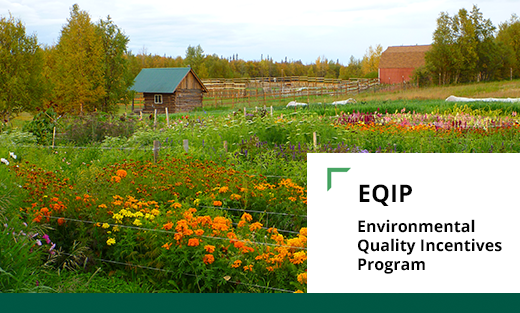
EQIP is our most commonly-used program in Alaska. EQIP provides agricultural producers (Tribes, entities and landowners) with financial assistance and conservation planning services to implement improvements on their land using what NRCS calls "conservation practices." Using these practices can lead to cleaner water and air, healthier soil and better wildlife habitat, all while improving agricultural operations. Through EQIP, you can voluntarily implement conservation practices, and NRCS co-invests in these practices with you.
Here are a few examples of things you can do with EQIP!
- Install a high tunnel to extend your growing season and grow better quality crops
- Install an irrigation system to maximize water efficiency
- Plant cover crops to improve soil health and reduce erosion
- Apply soil nutrients properly to improve crop health and reduce excess inputs
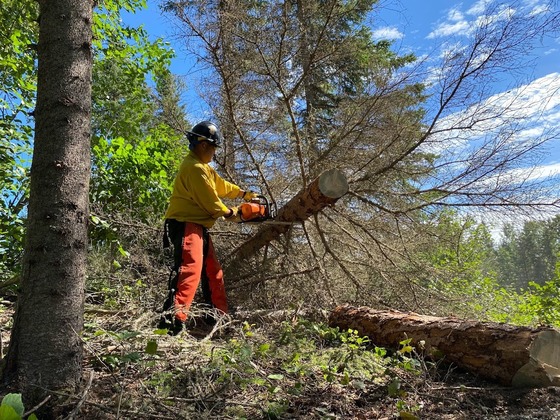
- Thin your forestland to reduce wildfire risk and improve wildlife habitat
- Plant native trees/shrubs on your land to improve water quality and habitat
- Replace or remove undersized culverts to improve salmon habitat
- ....and much, much more!
Apply for EQIP in Alaska
Fiscal Year 2024 EQIP application ranking deadlines: Starting December 8, 2023, eligible and ranked applications will be evaluated for funding every second and fourth Friday of the month with the last funding evaluation on June 21, 2024.
Fiscal Year 2024 EQIP application deadline: Applications received by close of business on April 19, 2024, and are eligible and ranked by June 21, 2024, will be considered for funding. All applications must be obligated by August 23, 2024.
Learn more on the Alaska EQIP webpage!
Back to Top
Back to Top
Extend Your Growing Season with a High Tunnel!
Funding Available through the Environmental Quality Incentives Program
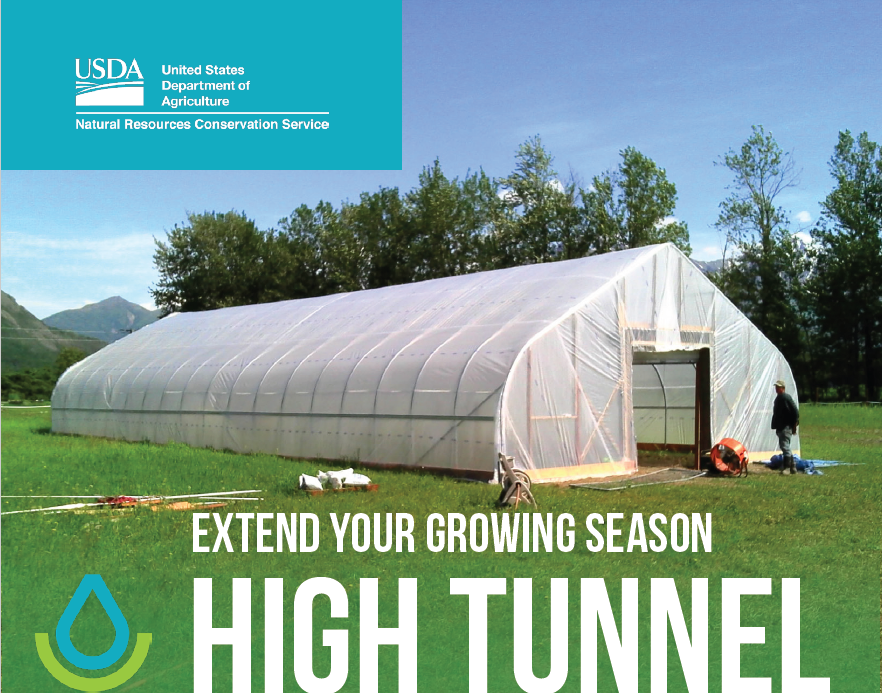 The USDA Natural Resources Conservation Service (NRCS) offers financial assistance to help Alaskans install high tunnels through the Environmental Quality Incentives Program (EQIP). Contact your local NRCS Field Office to learn more and to submit your EQIP application!
A high tunnel, also called a hoop house, provides a controlled environment that protect crops from wind and frost. It can extend your growing season and allow you to grow a wider diversity of crops in a warmer micro-climate. Other environmental benefits include:
- Reduced pesticide use
- Improved soil quality
- Reduced nutrient run-off and leaching
- Improved crop health and vigor
- Localized source of produce
More Information:
Back to Top
Know Your Land Talks Coming Up In-Person and Virtual
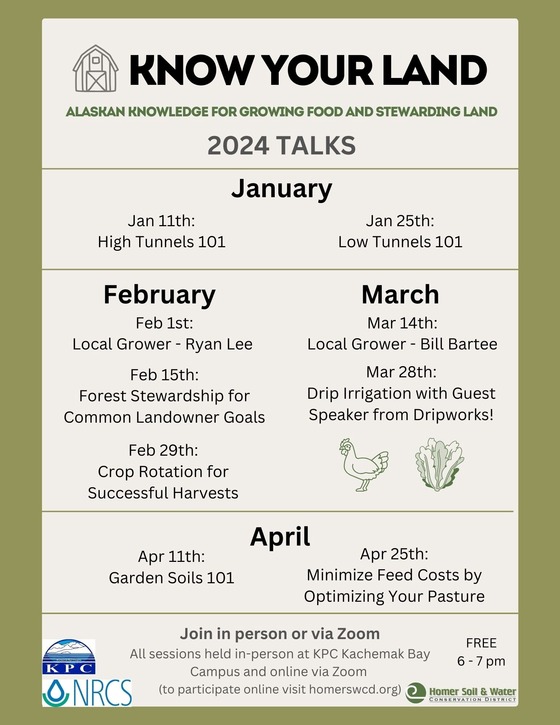 The winter/spring 2024 KNOW YOUR LAND talks are all lined up!
Alaskan knowledge for growing food and stewarding land. 🤩 All sessions are FREE and happen every other Thursday from 6 - 7 pm.
Got property? Got garden ambitions? Speakers will share Alaskan knowledge for growing food and stewarding land. We've made it easy to attend in person (Homer/Anchor Point area) or join us online via Zoom from anywhere around Alaska!
🥦 Low Tunnels 101 - Jan 25
👨🌾 Local Grower Spotlight w/ Ryan Lee - Feb 1
🌲 Forest Stewardship for Common Landowner Goals - Feb 15
🌿 Crop Rotation for Successful Harvests - Feb 29
🧄🥕 🧑🌾 Local Grower Spotlight w/ Bill Bartee - Mar 14
💦 Efficient Irrigation Systems w/ Experts from Dripworks - Mar 28
🌱 Garden Soils 101 - Apr 11
🐔 Minimize Feed Costs By Optimizing Your Pasture - Apr 25
To participate: In person - join us at the KPC Kachemak Bay Campus, 533 E. Pioneer Ave., Homer, AK Via Zoom - register online at https://www.homerswcd.org/
Detailed descriptions of each session's topics and our lineup of speakers will be shared via Facebook events. Keep an eye out for those.
This free series is brought to you by the Homer Soil & Water Conservation District, the Alaska USDA-NRCS Homer field office, and the KPC Kachemak Bay Campus. We would like to thank the National Association of Conservation Districts for providing the funding to make the series possible.
Back to Top
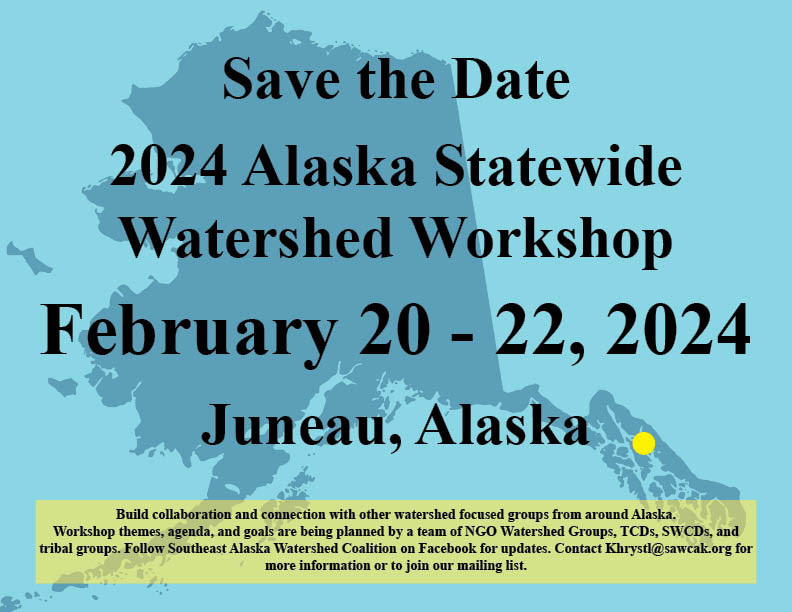
2024 Alaska Statewide Watershed Workshop Feb. 20 - 22 in Juneau
The Southeast Alaska Watershed Coalition is hosting the 2024 Alaska Statewide Watershed Workshop: Strategic Collaboration for the Future.
The in-person/virtual workshop will be held at the Juneau Yacht Club February 20 - 22, 2024.
After the great success of the Southeast Alaska regional watershed workshop last March,there was a need to include other watershed-minded groups from around Alaska in a similar workshop.
To that end, SAWC is working with a phenomenal team to put together the agenda for this statewide workshop - individuals from around Alaska will ensure content is useful, timely, impactful, and most of all, helps achieve our common goals.
This workshop is aimed towards non-governmental and tribal organizations, and these groups will have priority if space is limited.
The major themes of the workshop are;
-
Communications and Collaboration - How do we keep our communities connected when they’re geographically dispersed? How can we effectively communicate with decision makers on climate change? How can we communicate with each other -and keep this communication open long term? Attendees will enter the room as strangers and leave as allies.
-
The Organizational Development - We’ll hear what techniques organizations use to retain and build high quality staff. Then, we’ll put the “FUN” in funding - a discussion on all things money: how can we deal with a BIL funding hangover, how to accomplish your organization's priorities when it’s hard to fit into agency requirements…and how to deal with everything in between without losing your mind.
-
Data Support and Field Techniques - provides a platform for showcasing boots-on-the-ground efforts. We’ll have an overview of the different data collection methods used across the state, and a poster session with an interactive showcase featuring GIS programs from across the state. Then, get ready for Fish Passage Bootcamp - everything you need to know when planning a fish passage project. This session will be tailored to a broad audience - from experts to individuals just getting their feet wet. This will give a snapshot of how we get work done, and build partnerships.
Workshop registration and the agenda will be available in January. Email khrystl@sawcak.org to be added to the workshop mailing list and receive the registration link when it’s live.
If you’re interested in attending but need travel funding assistance, fill out our pre-registration form here.
A huge THANK YOU to the planning team: Copper River Watershed Project, Tyonek Tribal Conservation District, Kenai Watershed Forum, Yukon River Inter Tribal Watershed Council, Anchorage Waterways Council, Tanana Valley Waterways Association, AHTNA Intertribal Resource Commission, Southeast Alaska Fish Habitat Partnership, The Nature Conservancy, and Trout Unlimited. Funded by NRCS.
Back to Top
Thanks for reading!
You are receiving this email because you are subscribed to NRCS Alaska's "Partner Updates" list on Gov Delivery. To modify your subscription, go here.
USDA is an equal opportunity provider, employer, and lender.
|