USDA is hosting a virtual workshop on January 17 for producers to learn about new and expanded livestock risk management products. The “Livestock Roadshow” will highlight policy improvements based on feedback from America’s livestock producers, part of the Risk Management Agency’s (RMA) broader outreach and education efforts. Learn more, get login information, and add it to your calendar here. Additionally, MN FSA is partnering with RMA to hold an in-person version of the “Livestock Roadshow” on February 27 in Worthington. Presentations will include details on federal livestock insurance programs, FSA resources, and farm succession/estate planning. Registration is not required, but additional information can be found at this link.
As a reminder, FSA is taking applications for the Emergency Relief Program 2022 Track 2. Track 2 is a revenue-based certification program that provides assistance for crops not assisted through Track 1 that suffered a loss due to a qualifying disaster in 2022. More information about how you can apply can be found here, and by contacting your local service center.
In partnership with the University of Minnesota Extension, we are hosting the 2024 Women in Agriculture Conference on February 6. This year’s theme is “Planting Possibilities: Shaping the Future of Farming”. The conference will provide insightful discussions and dynamic presentations specifically geared toward farmers on the pivotal role of planning – a cornerstone of any farm business. Please consider joining us! Register now to secure your spot.
March 15 is the last date to purchase crop insurance for spring-seeded crops and Whole Farm Revenue Protection, which is also the same deadline to enroll and make elections in the Agriculture Risk Coverage and Price Loss Coverage (ARC/PLC) Programs. Visit with your insurance agent to review your coverage options. The deadline to purchase coverage under the MicroFarm Program for 2024 has been extended to April 15. As a reminder, crop insurance costs the same no matter which agent you work with, so choose one that works the best for your farm. Additionally, Minnesota FSA will be holding a Zoom webinar in conjunction with Extension on February 14 at 12:00 p.m. (CST) for producers to learn more about the ARC/PLC programs and factors to consider when making elections for the 2024 crop year. Register to attend here.
The Minnesota Agriculture Rural Leadership (MARL) Program application is open until March 31 for 2024-2026 submissions. This is a competitive program that will accept 30 leaders for MARL Class 13. MARL is a two-year educational experience that features seminars all across Minnesota, a national seminar in Washington, DC, and an international seminar. The mission is to develop Minnesota’s agricultural and rural leaders to maximize their impact locally and beyond. More information about the program and the link to the application process can be found at this link.
As a reminder, FSA services are free of charge to U.S. farmers and ranchers. Our local service center staff can guide farmers through the process of preparing and submitting required paperwork on their own with no need to hire a paid preparer. Farmers can choose to engage in paid assistance for different processes through FSA, but it is certainly not required.
Respectfully,
Whitney Place, State Executive Director
|
The Farm Service Agency (FSA) is an exciting and rewarding place to start, build, and/or continue your career. Be part of our team and support the well-being of Minnesota agriculture and the American public.
FSA's diverse culture and benefits allow for a healthy balance between your career and home life. In addition to a generous salary, FSA offers a friendly and professional working environment with a diverse workforce, flexible hours/work schedules, and other family-friendly benefits such as: paid vacation and sick leave, paid holidays, retirement and supplemental savings plan, a wide array of health, dental, vision, and life insurance plans, flexible spending accounts, twelve weeks of paid parental leave with FMLA eligibility, and long-term care insurance. Working for the U.S. Department of Agriculture (USDA) will afford you the opportunity to contribute to projects that positively impact the lives of over 300 million people. Explore a career with the USDA at www.usajobs.gov.
New job openings are posted on a regular basis. Interested individuals can search for career opportunities based upon keywords and/or specific locations as well as create search profiles and job announcement notifications. Currently, Minnesota FSA is seeking candidates to perform work in support of Minnesota agriculture and farmers in a number of locations across the state. Individuals who are interested in applying for these job opportunities will need to apply on-line at www.usajobs.gov. Applicants may enter the appropriate job announcement number below into the keyword search or click on the applicable link(s).
Program Technician:
Farm Loan Analyst:
Farm Loan Officer Trainee:
Questions? Please visit the job posting linked above for additional information.
Farmers in Minnesota Should Apply by Jan. 13, 2024
January 13 is the deadline for Minnesota farmers, ranchers and forest landowners to submit applications for assistance through the Discrimination Financial Assistance Program for those who experienced discrimination in USDA farm lending programs prior to January 2021.
If you think you may be eligible, we encourage you to check out the program website: https://22007apply.gov. You’ll find various assistance to help learn about the program and help you apply. Borrowers have the option to apply for assistance online via 22007apply.gov or through a paper-based form. FSA offices in Minnesota are not managing the program and cannot help with applications. As directed by Congress, USDA is working with third-party vendors to administer this program.
We’ve been made aware of some lawyers and groups spreading misleading information about the discrimination assistance process, pressuring people to sign retainer agreements, and asking people to fill out forms with private and sensitive information. The official application process and filling out an application is FREE and does not require a lawyer.
To apply or learn more about the Discrimination Financial Assistance Program, please visit 22007apply.gov or call the free call center at 1-800-721-0970 before January 13, 2024.
|
Farm Loan teams across Minnesota are already working on operating loans for spring 2024 and ask potential borrowers to submit their requests early so they can be timely processed. Farm loan teams can help determine which loan programs are best for applicants.
FSA offers a wide range of low-interest loans that can meet the financial needs of any farm operation for just about any purpose. The traditional farm operating and farm ownership loans can help large and small farm operations take advantage of early purchasing discounts for spring inputs as well expenses throughout the year.
Microloans are a simplified loan program that will provide up to $50,000 for both Farm Ownership and Operating Microloans to eligible applicants. These loans, targeted for smaller and non-traditional operations, can be used for operating expenses, starting a new operation, purchasing equipment, and other needs associated with a farming operation. Loans to beginning farmers and members of underserved groups are a priority.
Other types of loans available include:
Marketing Assistance Loans allow producers to use eligible commodities as loan collateral and obtain a 9-month loan while the crop is in storage. These loans provide cash flow to the producer and allow them to market the crop when prices may be more advantageous.
Farm Storage Facility Loans can be used to build permanent structures used to store eligible commodities, for storage and handling trucks, or portable or permanent handling equipment. A variety of structures are eligible under this loan, including bunker silos, grain bins, hay storage structures, and refrigerated structures for vegetables and fruit. A producer may borrow up to $500,000 per loan.
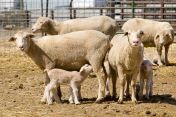
Marketing Assistance Loans (MALs) and Loan Deficiency Payments (LDPs) are available for producers of graded and non-graded wool, mohair and unshorn pelts. The final loan/LDP application date for wool sheared or unshorn lambs slaughtered in 2023 is Jan. 31, 2024.
MALs and LDPs are marketing tools available during shearing and provide interim financing to help producers meet cash flow needs without having to sell their commodities when market prices are low; enabling producers to delay selling until more favorable marketing conditions emerge. LDPs are payments made to producers who, although eligible to obtain an MAL, agree to forgo the loan in return for a payment on the eligible commodity.
To be eligible for a wool or mohair MAL or LDP, producers must produce and shear eligible mohair and wool in the U.S. during the applicable crop year and must:
- comply with conservation and wetland protection requirements;
- report all cropland acreage on applicable farms where the eligible commodity is produced;
- have and retain beneficial interest in the commodity until the MAL is repaid or the Commodity Credit Corporation (CCC) takes title to the commodity, and;
- meet Adjusted Gross Income (AGI) limitations.
Unshorn pelts are eligible for LDPs only. In addition to the criteria above, producers of unshorn pelts must have sold the unshorn lamb for immediate slaughter or slaughter the lambs for personal use.
LDPs and marketing loan gains are not subject to payment limitation, including actively engaged in farming and cash rent tenant provisions.
In addition to producer eligibility, the loan commodity must have been produced and shorn from live animals by an eligible producer, be in storable condition, and meet specific CCC minimum grade and quality standards. Producers are responsible for any loss in quantity or quality of the wool or mohair pledged as loan collateral.
To retain beneficial interest, the producer must have control and title of the wool, mohair or unshorn pelt. If beneficial interest in the commodity is lost, the commodity loses eligibility for an MAL or LDP and remains ineligible even if the producer later regains beneficial interest. The producer must be able to make all decisions affecting the commodity including movement, sale and the request for an MAL or LDP.
Producers may repay an MAL any time during the loan period at the lesser of the loan rate plus accrued interest and other charges or an alternative loan repayment rate, the national posted price, which is announced weekly. Visit the Farm Service Agency (FSA) website for posted loan and LDP rates.
|
The U. S Department of Agriculture (USDA) will provide more than $3 billion to commodity and specialty crop producers impacted by natural disaster events in 2022. Eligible impacted producers can apply for financial assistance through the Emergency Relief Program (ERP) 2022. The program will help offset the financial impacts of crop yield and value losses from qualifying disasters occurring in 2022.
Background
On Dec. 29, 2022, President Biden signed into law the Disaster Relief Supplemental Appropriations Act, 2023 (P.L. 117-328) that provides about $3.7 billion in financial assistance for agricultural producers impacted by eligible natural disasters that occurred in calendar year 2022.
ERP 2022 covers losses to crops, trees, bushes and vines due to qualifying, calendar year 2022 natural disaster events including wildfires, hurricanes, floods, derechos, excessive heat, tornadoes, winter storms, freeze (including a polar vortex), smoke exposure, excessive moisture, qualifying drought and related conditions.
ERP 2022 program benefits will be delivered to eligible producers through a two-track process. FSA intends to make both tracks available to producers at the same time. This two-track approach enables USDA to:
- Streamline the application process.
- Reduce the paperwork burden on producers.
- Proactively include provisions for underserved producers who have not been well served by past emergency relief efforts.
- Encourage producer participation in existing risk management programs to mitigate the impacts of future severe weather events.
It’s important to note that disaster-impacted producers may be eligible for ERP 2022 assistance under one or both tracks. To avoid duplicative benefits, if a producer applies for both tracks, the Track 2 payment calculation will take into account any payments received through Track 1.
ERP 2022 Application Process – Track 1
ERP 2022 Track 1 leverages existing federal crop insurance or Noninsured Crop Disaster Assistance Program (NAP) data as the basis for calculating payments for eligible crop producers who received indemnities through these risk management programs.
Although FSA is sending pre-filled ERP 2022 Track 1 application forms to producers who have crop insurance and NAP data already on file with USDA, producers indemnified for losses resulting from 2022 natural disasters do not have to wait to receive the application before requesting ERP 2022 assistance. Effective Oct. 31, 2023, producers can apply for ERP 2022 benefits whether they have received the pre-filled application or not. Receipt of a pre-filled application is not confirmation that a producer is eligible to receive an ERP 2022 Track 1 payment.
USDA estimates that ERP Track 1 benefits will reach more than 206,000 producers who received indemnities for losses covered by federal crop insurance and more than 4,500 producers who obtained NAP coverage for the 2022 crop year.
ERP 2022 Application Process – Track 2
Track 2 is a revenue-based certification program designed to assist eligible producers who suffered an eligible decrease in revenue resulting from 2022 calendar year disaster events when compared with revenue in a benchmark year using revenue information that is readily available from most tax records. In cases where revenue does not reasonably reflect a normal year’s revenue, Track 2 provides an alternative method for establishing revenue. Likewise, Track 2 affords producers of crops that are used within an operation and do not generate revenue from the sale of the crop a method for establishing revenue for the purpose of applying for ERP 2022 benefits. Producers are not required to submit tax records to FSA unless requested by the County Committee if required for an FSA compliance spot check.
Although not required when applying for ERP 2022 Track 2, applicants might find the following documents useful to the process:
- Schedule F (Form 1040)
-
Profit or Loss from Farming or similar tax documents for tax years 2018, 2019, 2022 and 2023.
Track 2 targets gaps in emergency relief assistance for eligible producers whose eligible losses were not covered by crop insurance or NAP including revenue losses too small (shallow loss) to be covered by crop insurance.
Producers interested in applying for ERP 2022 Track 2, should contact their local FSA county office. Additional reference resources can be found on FSA’s emergency relief website.
Additional Required Forms
For both ERP 2022 tracks, all producers must have certain required forms on file with FSA within 60 days of the ERP 2022 deadline. FSA started accepting applications on Oct. 31, 2023. The application deadline has not yet been determined and will be announced at a later date. If not already on file, producers can update, complete and submit required forms to FSA at any time.
Required forms:
- Form AD-2047, Customer Data Worksheet.
- Form CCC-902, Farm Operating Plan for an individual or legal entity.
- Form CCC-901, Member Information for Legal Entities (if applicable).
- Form FSA-510, Request for an Exception to the $125,000 Payment Limitation for Certain Programs (if applicable).
- Form CCC-860, Socially Disadvantaged, Limited Resource, Beginning and Veteran Farmer or Rancher Certification, if applicable, for the 2022 program year.
- A highly erodible land conservation (sometimes referred to as HELC) and wetland conservation certification (Form AD-1026 Highly Erodible Land Conservation (HELC) and Wetland Conservation (WC) Certification) for the ERP producer and applicable affiliates.
Most producers, especially those who have previously participated in FSA programs, will likely have these required forms on file. However, those who are uncertain or want to confirm the status of their forms can contact their local FSA county office.
Future Insurance Coverage Requirements
All producers who receive ERP 2022 payments must purchase crop insurance, or NAP coverage where crop insurance is not available, in the next two available crop years as determined by the Secretary. Purchased coverage must be at the 60/100 coverage level or higher for insured crops or at the catastrophic coverage level or higher for NAP crops.
More Information
ERP 2022 eligibility details and payment calculation factor tables are available on the emergency relief website, in the ERP Track 1 and ERP Track 2 fact sheets and through your local FSA county office.
Severe weather events create significant challenges and often result in catastrophic loss for agricultural producers. Despite every attempt to mitigate risk, your operation may suffer losses. USDA offers several programs to help with recovery.
Risk Management
For producers who have risk protection through Federal Crop Insurance or the Noninsured Crop Disaster Assistance Program (NAP), we want to remind you to report crop damage to your crop insurance agent or the local Farm Service Agency (FSA) office.
If you have crop insurance, contact your agency within 72 hours of discovering damage and be sure to follow up in writing within 15 days. If you have NAP coverage, file a Notice of Loss (also called Form CCC-576) within 15 days of loss becoming apparent, except for hand-harvested crops, which should be reported within 72 hours.
Disaster Assistance
USDA also offers disaster assistance programs, which is especially important to livestock, fruit and vegetable, specialty and perennial crop producers who have fewer risk management options.
First, the Livestock Indemnity Program (LIP) and Emergency Assistance for Livestock, Honeybee and Farm-raised Fish Program (ELAP) reimburses producers for a portion of the value of livestock, poultry and other animals that died as a result of a qualifying natural disaster event or for loss of grazing acres, feed and forage. And, the Livestock Forage Disaster Program (LFP) provides assistance to producers of grazed forage crop acres that have suffered crop loss due to a qualifying drought. Livestock producers suffering the impacts of drought can also request Emergency Haying and Grazing on Conservation Reserve Program (CRP) acres.
Next, the Tree Assistance Program (TAP) provides cost share assistance to rehabilitate and replant tree, vines or shrubs loss experienced by orchards and nurseries. This complements NAP or crop insurance coverage, which cover the crop but not the plants or trees in all cases.
For LIP and ELAP, you will need to file a Notice of Loss for livestock and grazing or feed losses by the application deadline for each program. For TAP, you will need to file a program application within 90 days.
Documentation
It’s critical to keep accurate records to document all losses following this devastating cold weather event. Livestock producers are advised to document beginning livestock numbers by taking time and date-stamped video or pictures prior to after the loss.
Other common documentation options include:
- Purchase records
- Production records
- Vaccination records
- Bank or other loan documents
- Third-party certification
Other Programs
The Emergency Conservation Program and Emergency Forest Restoration Program can assist landowners and forest stewards with financial and technical assistance to restore damaged farmland or forests.
Additionally, FSA offers a variety of loans available including emergency loans that are triggered by disaster declarations and operating loans that can assist producers with credit needs. You can use these loans to replace essential property, purchase inputs like livestock, equipment, feed and seed, or refinance farm-related debts, and other needs.
Meanwhile, USDA’s Natural Resources Conservation Service (NRCS) provides financial resources through its Environmental Quality Incentives Program to help with immediate needs and long-term support to help recover from natural disasters and conserve water resources. Assistance may also be available for emergency animal mortality disposal from natural disasters and other causes.
Additional Resources
Additional details – including payment calculations – can be found on our NAP, ELAP, LIP, and TAP fact sheets. On farmers.gov, the Disaster Assistance Discovery Tool, Disaster-at-a-Glance fact sheet, and Farm Loan Discovery Tool can help you determine program or loan options.
While we never want to have to implement disaster programs, we are here to help. To file a Notice of Loss or to ask questions about available programs, contact your local USDA Service Center. All USDA Service Centers are open for business, including those that restrict in-person visits or require appointments because of the pandemic.
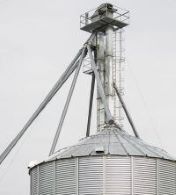
The Farm Service Agency’s (FSA) Farm Storage Facility Loan (FSFL) program provides low-interest financing to help you build or upgrade storage facilities and to purchase portable (new or used) structures, equipment and storage and handling trucks.
Eligible commodities include corn, grain sorghum, rice, soybeans, oats, peanuts, wheat, barley, minor oilseeds harvested as whole grain, pulse crops (lentils, chickpeas and dry peas), hay, honey, renewable biomass, fruits, nuts and vegetables for cold storage facilities, floriculture, hops, maple sap, rye, milk, cheese, butter, yogurt, meat and poultry (unprocessed), eggs, and aquaculture (excluding systems that maintain live animals through uptake and discharge of water). Qualified facilities include grain bins, hay barns and cold storage facilities for eligible commodities.
Loans up to $50,000 can be secured by a promissory note/security agreement, loans between $50,000 and $100,000 may require additional security, and loans exceeding $100,000 require additional security.
You do not need to demonstrate the lack of commercial credit availability to apply. The loans are designed to assist a diverse range of farming operations, including small and mid-sized businesses, new farmers, operations supplying local food and farmers markets, non-traditional farm products, and underserved producers.
For more information, contact your local USDA Service Center or visit fsa.usda.gov/pricesupport.
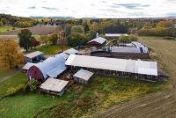
Farm loan borrowers who have pledged real estate as security for their Farm Service Agency (FSA) direct or guaranteed loans are responsible for maintaining loan collateral. Borrowers must obtain prior consent or approval from FSA or the guaranteed lender for any transaction that affects real estate security. These transactions include, but are not limited to:
- Leases of any kind
- Easements of any kind
- Subordinations
- Partial releases
- Sales
Failure to meet or follow the requirements in the loan agreement, promissory note, and other security instruments could lead to nonmonetary default which could jeopardize your current and future loans.
It is critical that borrowers keep an open line of communication with their FSA loan staff or guaranteed lender when it comes to changes in their operation. For more information on borrower responsibilities, read Your FSA Farm Loan Compass.
|
If you’re an orchardist or nursery tree grower whose experienced losses from natural disasters during calendar year 2023, you must submit a TAP application either 90 calendar days after the disaster event or the date when the loss is apparent.
TAP provides financial assistance to help you replant or rehabilitate eligible trees, bushes and vines damaged by natural disasters.
Eligible tree types include trees, bushes or vines that produce an annual crop for commercial purposes. Nursery trees include ornamental, fruit, nut and Christmas trees that are produced for commercial sale. Trees used for pulp or timber are ineligible.
To qualify for TAP, orchardists must suffer a qualifying tree, bush or vine loss in excess of 15 percent mortality from an eligible natural disaster, plus an adjustment for normal mortality. The eligible trees, bushes or vines must have been owned when the natural disaster occurred; however, eligible growers are not required to own the land on which the eligible trees, bushes and vines were planted.
If the TAP application is approved, the eligible trees, bushes and vines must be replaced within 12 months from the date the application is approved. The cumulative total quantity of acres planted to trees, bushes or vines, for which you can receive TAP payments, cannot exceed 1,000 acres annually.
The National Environmental Policy Act (NEPA) requires Federal agencies to consider all potential environmental impacts for federally funded projects before the project is approved.
For all Farm Service Agency (FSA) programs, an environmental review must be completed before actions are approved, such as site preparation or ground disturbance. These programs include, but are not limited to, the Emergency Conservation Program (ECP), Farm Storage Facility Loan (FSFL) program and farm loans. If project implementation begins before FSA has completed an environmental review, the request will be denied. Although there are exceptions regarding the Stafford Act and emergencies, it’s important to wait until you receive written approval of your project proposal before starting any actions.
Applications cannot be approved until FSA has copies of all permits and plans. Contact your local FSA office early in your planning process to determine what level of environmental review is required for your program application so that it can be completed timely.
|
In this Ask the Expert, Gwen Uecker answers a few questions about USDA’s farmers.gov customer portal. Gwen serves as the Team Lead for the Program Delivery Division (PDD), Common Processes Branch for the Deputy Administrator of Farm Program within Farm Service Agency (FSA). She helps lead PDD’s effort to provide personalized customer information via farmers.gov.
A farmers.gov account provides self-service opportunities to FSA and Natural Resources Conservation Service (NRCS) customers via a secure authenticated access process.
What is the value of Customer Farm Records Mapping and why should producers use farmers.gov?
Customer Farm Records Mapping (cFRM) provides you with self-help options and access to FSA data from home 24/7. For example, you do not have to wait for FSA to mail out maps for acreage reporting or make a special trip to the office to pick up your maps. You can print farm tract maps directly from farmers.gov.
New features include the ability to import precision agriculture planting boundaries and create labels containing crop information that can be printed on-farm tract maps. The maps can then be provided to FSA at the local USDA Service Center for completing the annual crop acreage report. You can use the draw tools to determine acres in a drawn area. The drawn area can be printed on a map and provided to the Service Center, a third party such as a chemical applicator, or exported as a feature file for use in other geospatial applications.
In addition, you can “Switch Profile” to view cFRM data for individuals or entities you are authorized to act on behalf of. This means you can view and print maps for your entity’s farms. Producers can also view and print farm records details, including base and yield information (FSA-156EZ).
The FSA Farm Records Mapping page is accessed by clicking the blue “View Farm Records” button from the farmers.gov LAND tab.
To read the full blog visit Ask the Expert: Customer Farm Records Mapping Q&A with Gwen Uecker | Farmers.gov.
The Agricultural Foreign Investment Disclosure Act (AFIDA) requires all foreign owners of U.S. agricultural land to report their holdings to the Secretary of Agriculture. Foreign persons who have purchased or sold agricultural land in the county are required to report the transaction to FSA within 90 days of the closing. Failure to submit the AFIDA form could result in civil penalties of up to 25 percent of the fair market value of the property. County government offices, realtors, attorneys and others involved in real estate transactions are reminded to notify foreign investors of these reporting requirements. The data gained from these disclosures is used in the preparation of periodic reports to the President and Congress concerning the effect of such holdings upon family farms and rural communities. Click here for more information on AFIDA.
|