
First, a very Happy and Prosperous New Year to you all. May your New Year resolutions be achievable and not too onerous!
The beginning of the year is always the time to pay attention to program sign-up deadlines, both for FSA and NRCS. It is always frustrating, and can be costly to miss a deadline, so I urge you to check with your local county service center and make sure you are timely.
A lot is going on in FSA, a couple of important items that will be of direct interest to Vermont’s farmers are the task force working on the NAP program, or Non-insured Crop Disaster Assistance Program, which is focused on specialty crops. NAP is very important to our vegetable farmers and fruit producers, amongst other crops as well. The task force is in the process of reviewing, updating and simplifying the program. Making it more responsive to our producers and the crops they grow. If you, as a producer, have any suggestions or concerns you would like to relay to the task force please send me an email at John.Roberts2@usda.gov and I will forward them to the task force.
The second item is working through the process of program relief for the excessive flooding and rain which started in July 2023, and just seems to continue. Our staff is working diligently to make sure eligible producers receive assistance.
Lastly, producers with Conservation Reserve Enhancement Program (CREP) contracts set to expire on 9/30/2024 can now start the process to re-enroll their land in CREP. Please contact your county office for more information.
|
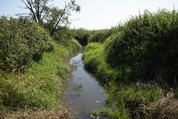
The Farm Service Agency (FSA) is accepting offers for specific conservation practices under the Conservation Reserve Program (CRP) Continuous Signup.
In exchange for a yearly rental payment, farmers enrolled in the program agree to remove environmentally sensitive land from agricultural production and to plant species that will improve environmental health and quality. The program’s long-term goal is to re-establish valuable land cover to improve water quality, prevent soil erosion, and reduce loss of wildlife habitat. Contracts for land enrolled in CRP are 10-15 years in length.
Under continuous CRP signup, environmentally sensitive land devoted to certain conservation practices can be enrolled in CRP at any time. Offers for continuous enrollment are not subject to competitive bidding during specific periods. Instead, they are automatically accepted provided the land and producer meet certain eligibility requirements and the enrollment levels do not exceed the statutory cap.
For more information, including a list of acceptable practices, contact your County USDA Service Center or visit fsa.usda.gov/crp.
|
The U.S. Department of Agriculture (USDA) launched a new online tool to help farmers and ranchers better navigate the farm loan application process. This uniform application process will help to ensure all farm loan applicants receive equal support and have a consistent customer experience with USDA’s Farm Service Agency (FSA) regardless of their individual circumstances.
USDA experiences a high rate of incomplete or withdrawn applications, particularly among underserved customers, due in part to a challenging and lengthy paper-based application process. The Loan Assistance Tool is available 24/7 and gives customers an online step-by-step guide that supplements the support they receive when working in person with a USDA employee, providing materials that may help an applicant prepare their loan application in one tool.
Farmers can access the Loan Assistance Tool by visiting farmers.gov/farm-loan-assistance-tool and clicking the ‘Get Started’ button. From here they can follow the prompts to complete the Eligibility Self-Assessment and start the farm loan journey. The tool is built to run on any modern browser like Chrome, Edge, Firefox, or the Safari browser, and is fully functional on mobile devices. It does not work in Internet Explorer.
The Loan Assistance Tool is the first of multiple farm loan process improvements that will be available to USDA customers on farmers.gov in the future. Other improvements and tools that are anticipated to launch in 2023 include:
- A streamlined and simplified direct loan application, reduced from 29 pages to 13 pages.
- An interactive online direct loan application that gives customers a paperless and electronic signature option, along with the ability to attach supporting documents such as tax returns.
- An online direct loan repayment feature that relieves borrowers from the necessity of calling, mailing, or visiting a local Service Center to pay a loan installment.

The Farm Service Agency (FSA) assists beginning farmers to finance agricultural enterprises. Under these designated farm loan programs, FSA can provide financing to eligible applicants through either direct or guaranteed loans. FSA defines a beginning farmer as a person who:
- Has operated a farm for not more than 10 years
- Will materially and substantially participate in the operation of the farm
- Agrees to participate in a loan assessment, borrower training and financial management program sponsored by FSA
- Does not own a farm in excess of 30 percent of the county’s average size farm.
For more information contact, contact your County USDA Service Center or visit fsa.usda.gov.
|
The U.S. Department of Agriculture (USDA) reminds specialty crop growers that assistance is available for producers who incur eligible on-farm food safety program expenses to obtain or renew a food safety certification through the Food Safety Certification for Specialty Crops (FSCSC) program. Producers can apply for assistance on their calendar year 2023 expenses through Jan. 31, 2024.
Program Details
FSCSC assists specialty crop operations that incurred eligible on-farm food safety certification and related expenses pertaining to obtaining or renewing a food safety certification in calendar year 2023. FSCSC covers a percentage of the specialty crop operation’s cost of obtaining or renewing its certification, as well as a portion of related expenses.
To be eligible for FSCSC, the applicant must be a specialty crop operation; meet the definition of a small business or very small business; and have paid eligible expenses related to the 2023 certification.
Specialty crop operations may receive assistance for the following costs:
- Developing a food safety plan for first-time food safety certification.
- Maintaining or updating an existing food safety plan.
- Food safety certification.
- Certification upload fees.
- Microbiological testing for products, soil amendments and water.
- Training
FSCSC payments are calculated separately for each category of eligible costs. A higher payment rate has been set for socially disadvantaged, limited resource, beginning and veteran farmers and ranchers. Details about the payment rates and limitations can be found at farmers.gov/food-safety.
Applying for Assistance
The FSCSC application period for 2023 closes Jan. 31, 2024. FSA will issue payments after the application period closes. If calculated payments exceed the amount of available funding, payments will be prorated.
Interested specialty crop producers can apply by completing the FSA-888, Food Safety Certification for Specialty Crops Program (FSCSC) application. The application, along with other required documents, can be submitted to the FSA office at any USDA Service Center nationwide by mail, fax, hand delivery or via electronic means.
Specialty crop producers can also call 877-508-8364 to speak directly with a USDA employee ready to assist. Visit farmers.gov/food-safety for additional program details, eligibility information and forms needed to apply.
Navigating filing taxes can be challenging, especially if you are new to running a farm business, participating in disaster programs for first time, or trying to forecast the farm’s tax bill. Receiving funds from USDA through activities such as a conservation program payment or a disaster program is considered farm income that includes a tax liability for farm businesses. USDA technical assistance is free and creates no tax implications.
At the end of the tax year, USDA issues tax forms 1098 and 1099 forms for farm loans, conservation programs administered by the Farm Service Agency and Natural Resource Conservation Service including the Conservation Reserve Program and Environmental Quality Incentives Program, crop disaster payments, and the Market Facilitation Program. USDA also issues tax forms for recipients of assistance for distressed borrowers, including through Section 22006 of the Inflation Reduction Act.
If you have received tax forms related to your operation, USDA cannot and does not provide tax advice but wants you to be aware of options that may help manage your tax liability. USDA has partnered with experts to provide resources to help you make the right tax decisions for your operation. Monthly webinars are available for registration and to view on demand at https://www.farmers.gov/working-with-us/taxes.
The Tax Estimator Tool is an interactive spreadsheet that producers can download to estimate tax liability. It is for informational and educational purposes and should not considered tax or legal advice. Producers may need to work with a tax professional to determine the correct information to be entered in the Tax Estimator Tool.
We encourage you to visit https://www.farmers.gov/working-with-us/taxes for more information on how to find and work with a tax preparer as well as instructions on how to request copies of USDA documents and links to other helpful tax resources.
|