December Logan/Oklahoma County USDA Service Center Newsletter

View as a webpage / Share

US Department of Agriculture

December Logan/Okla. Co. USDA Service Center Newsletter -  December 28, 2023

Agriculture Risk Coverage and Price Loss Coverage Programs Receive 2018 Farm Bill One Year Extension, Farmers Can Now Enroll for the 2024 Crop Year

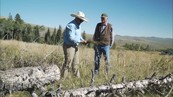
Image of Brush Management depicting two people in a field

The U.S. Department of Agriculture (USDA) today announced that agricultural producers can now enroll in the Farm Service Agency’s (FSA) Agriculture Risk Coverage (ARC) and Price Loss Coverage (PLC) programs for the 2024 crop year. Producers can enroll and make election changes for the 2024 crop year starting Dec. 18, 2023. The deadline to complete enrollment and any election change is March 15, 2024.  


On Nov. 16, 2023, President Biden signed into law H.R. 6363, the Further Continuing Appropriations and Other Extensions Act, 2024 (Pub. L. 118-22), which extended the Agriculture Improvement Act of 2018 (Pub. L. 115-334), more commonly known as the 2018 Farm Bill, through September 30, 2024. This extension allows authorized programs, including ARC and PLC, to continue operating.


“Having the Farm Bill extension in place means business as usual for Agriculture Risk Coverage and Price Loss Coverage program implementation for the 2024 crop year— nothing has changed from previous years,” said FSA Administrator Zach Ducheneaux. “These programs provide critical financial protections against commodity market volatilities for many American farmers so don’t delay enrollment. Avoid the rush and contact your local FSA office for an appointment because even if you are not changing your program election for 2024, you still need to sign a contract to enroll.” 


2024 Elections and Enrollment    

Producers can elect coverage and enroll in ARC-County (ARC-CO) or PLC, which provide crop-by-crop protection, or ARC-Individual (ARC-IC), which protects the entire farm. Although election changes for 2024 are optional, producers must enroll through a signed contract each year. Also, if a producer has a multi-year contract on the farm it will continue for 2024 unless an election change is made.     


If producers do not submit their election revision by the March 15, 2024, deadline, their election remains the same as their 2023 election for commodities on the farm. Farm owners cannot enroll in either program unless they have a share interest in the cropland.      


Covered commodities include barley, canola, large and small chickpeas, corn, crambe, flaxseed, grain sorghum, lentils, mustard seed, oats, peanuts, dry peas, rapeseed, long grain rice, medium grain rice, safflower seed, seed cotton, sesame, soybeans, sunflower seed and wheat.     


2022 Crop Year Payments  

This fall, FSA issued payments totaling more than $267 million to agricultural producers who enrolled in the 2022 ARC-CO option and the ARC ARC-IC option for covered commodities that triggered a payment. Payments through the PLC option did not trigger for the 2022 crop year.  


ARC and PLC payments for a given crop year are paid out the following fall to allow actual county yields and the Market Year Average prices to be finalized. These payments help mitigate fluctuations in either revenue or prices for certain crops. Payments for crops that may trigger for the 2023 crop year will be issued in the fall of 2024.   


Crop Insurance Considerations    

ARC and PLC are part of a broader USDA safety net that also includes crop insurance and marketing assistance loans.    


Producers are reminded that ARC and PLC elections and enrollments can impact eligibility for some crop insurance products.    


Producers on farms with a PLC election can purchase Supplemental Coverage Option (SCO) through their Approved Insurance Provider; however, producers on farms where ARC is the election are ineligible for SCO on their planted acres for that crop on that farm.    


Unlike SCO, the Enhanced Coverage Option (ECO) is unaffected by an ARC election.  Producers may add ECO regardless of the farm program election.   


Upland cotton farmers who choose to enroll seed cotton base acres in ARC or PLC are ineligible for the stacked income protection plan (STAX) on their planted cotton acres for that farm.     


Web-Based Decision Tools    

Many universities offer web-based decision tools to help producers make informed, educated decisions using crop data specific to their respective farming operations. Producers are encouraged to use the tool of their choice to support their ARC and PLC elections. 


More Information     

For more information on ARC and PLC, producers can visit the ARC and PLC webpage or contact their local USDA Service Center. Producers can also make elections and complete enrollment online with level 2 eAuth.  


USDA touches the lives of all Americans each day in so many positive ways. In the Biden-Harris administration, USDA is transforming America’s food system with a greater focus on more resilient local and regional food production, fairer markets for all producers, ensuring access to safe, healthy and nutritious food in all communities, building new markets and streams of income for farmers and producers using climate-smart food and forestry practices, making historic investments in infrastructure and clean energy capabilities in rural America, and committing to equity across the Department by removing systemic barriers and building a workforce more representative of America. To learn more, visit usda.gov.   


USDA Reminds Logan/Okla Co Producers to File Crop Acreage Reports

Placeholder image

Agricultural producers in Logan & Oklahoma Co who have not yet completed their crop acreage reports after planting should make an appointment with their U.S. Department of Agriculture (USDA) Farm Service Agency (FSA) service center before the applicable deadline.


An acreage report documents a crop grown on a farm or ranch and its intended uses. Filing an accurate and timely acreage report for all crops and land uses, including failed acreage and prevented planted acreage, can prevent the loss of benefits.


How to File a Report


The following acreage reporting dates are applicable in Logan & Oklahoma Co

January 2, 2024:  Apiculture

January 15, 2024: Fall-seeded Small Grains, Canola, Peaches

March 15, 2024:  Pecans

May 15, 2024:  Spring Oats

July 15, 2024:  All other crops, Perennial Forage

July 31, 2024:  Hemp


To file a crop acreage report, producers need to provide:

· Crop and crop type or variety.

· Intended use of the crop.

· Number of acres of the crop.

· Map with approximate boundaries for the crop.

· Planting date(s).

· Planting pattern, when applicable.

· Producer shares.

· Irrigation practice(s).

· Acreage prevented from planting, when applicable.

· Other information as required.


Acreage Reporting Details


The following exceptions apply to acreage reporting dates:


· If the crop has not been planted by the acreage reporting date, then the acreage must be reported no later than 15 calendar days after planting is completed.


· If a producer acquires additional acreage after the acreage reporting date, then the acreage must be reported no later than 30 calendar days after purchase or acquiring the lease. Appropriate documentation must be provided to the county office.


· If crops are covered by the Noninsured Crop Disaster Assistance Program, acreage reports should be submitted by the applicable state, county, or crop-specific reporting deadline or 15 calendar days before grazing or harvesting of the crop begins.

Producers should also report crop acreage they intended to plant, but due to natural disaster, were unable to because of a natural disaster.


Prevented planting acreage must be reported on form CCC-576, Notice of Loss, no later than 15 calendar days after the final planting date as established by FSA and USDA’s Risk Management Agency.


FSA offers continuous certification for perennial forage. This means after perennial forage is reported once and the producer elects continuous certification, the certification remains in effect until a change is made. Check with FSA at the local USDA Service Center for more information on continuous certification.


Producers can make an appointment to report acres by contacting their local USDA Service Center.


Tax Resources for USDA Program Participants

Placeholder image

Navigating filing taxes can be challenging, especially if you are new to running a farm business, participating in disaster programs for first time, or trying to forecast the farm’s tax bill. Receiving funds from USDA through activities such as a conservation program payment or a disaster program is considered farm income that includes a tax liability for farm businesses. USDA technical assistance is free and creates no tax implications. 


At the end of the tax year, USDA issues tax forms 1098 and 1099 forms for farm loans, conservation programs administered by the Farm Service Agency and Natural Resource Conservation Service including the Conservation Reserve Program and Environmental Quality Incentives Program, crop disaster payments, and the Market Facilitation Program. USDA also issues tax forms for recipients of assistance for distressed borrowers, including through Section 22006 of the Inflation Reduction Act. 


If you have received tax forms related to your operation, USDA cannot and does not provide tax advice but wants you to be aware of options that may help manage your tax liability. USDA has partnered with experts to provide resources to help you make the right tax decisions for your operation. Monthly webinars are available for registration and to view on demand at  https://www.farmers.gov/working-with-us/taxes.  


The Tax Estimator Tool is an interactive spreadsheet that producers can download to estimate tax liability. It is for informational and educational purposes and should not considered tax or legal advice. Producers may need to work with a tax professional to determine the correct information to be entered in the Tax Estimator Tool. 


We encourage you to visit https://www.farmers.gov/working-with-us/taxes for more information on how to find and work with a tax preparer as well as instructions on how to request copies of USDA documents and links to other helpful tax resources.  


FSA Offers Joint Financing Option on Direct Farm Ownership Loans

Placeholder image

The USDA Farm Service Agency’s (FSA) Direct Farm Ownership loans can help farmers and ranchers become owner-operators of family farms, improve and expand current operations, increase agricultural productivity, and assist with land tenure to save farmland for future generations.


There are three types of Direct Farm Ownership Loans: regular, down payment and joint financing. FSA also offers a Direct Farm Ownership Microloan option for smaller financial needs up to $50,000.


Joint financing allows FSA to provide more farmers and ranchers with access to capital. FSA lends up to 50 percent of the total amount financed. A commercial lender, a State program or the seller of the property being purchased, provides the balance of loan funds, with or without an FSA guarantee. The maximum loan amount for a joint financing loan is $600,000, and the repayment period for the loan is up to 40 years.


The operation must be an eligible farm enterprise. Farm Ownership loan funds cannot be used to finance nonfarm enterprises and all applicants must be able to meet general eligibility requirements. Loan applicants are also required to have participated in the business operations of a farm or ranch for at least three years out of the 10 years prior to the date the application is submitted. The applicant must show documentation that their participation in the business operation of the farm or ranch was not solely as a laborer.


For more information about farm loans, contact your Kingfisher County USDA Service Center at 405-375-3200 ext 4 or visit fsa.usda.gov.


Logan/Oklahoma Co USDA Service Center


2227 Iron Mound Road
Guthrie, OK  73044

Phone: 405-282-1695
Fax: 855-407-0362

FSA Farm Loan Manager

Aaron Muzny 405-375-3200
aaron.muzny@usda.gov

NRCS District Conservationist

Brandon Burns 405-375-3200
brandon.burns@usda.gov

FSA County Executive Director

Chris Sala 405-282-1695
chris.sala@usda.gov

FSA County Program Technicians

Amy Shenold 405-282-1695

Ryan Stults  405-282-1695

Logan/Oklahoma County FSA Committee Members

Meet 2nd Thursday of each month as needed

Jim Briscoe

Gaye Pfeiffer

Perry Sharp

Matt McRay

Dale Boyer