
Acreage Reporting Deadline:
December 15, 2023: Acreage Reporting Deadline for Fall-Seeded Small Grains and Mint
Farm Loan:
December 31, 2023: Inflation Reduction Act Assistance for Distressed Borrowers Assistance Request Deadline
More Information
The above information is for general awareness. Program deadlines may change or vary by county. Be sure to verify program deadlines for your land or operation by contacting your local USDA Service Center.
|
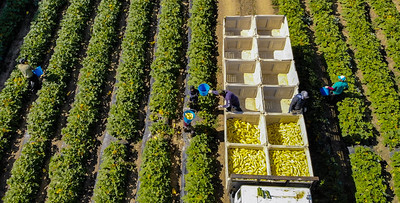
The Biden-Harris Administration announced that agricultural employers can begin to apply for a pilot program designed to improve the resiliency of the food and agricultural supply chain by addressing workforce challenges farmers and ranchers face. USDA, in coordination with other federal agencies, is announcing up to $65 million in grants available for the Farm Labor Stabilization and Protection Pilot Program (FLSP Program).
The program will help address workforce needs in agriculture, promote a safe and healthy work environment for farmworkers, and aims to support expansion of lawful migration pathways for workers, including for workers from Northern Central America, through the Department of Labor’s seasonal H-2A visa program.
The FLSP Program seeks to advance the following Administration priorities:
-
Address current workforce needs in agriculture: Based on stakeholder input, USDA identified that agricultural employers have experienced increased challenges finding an adequate supply of workers, which threatens our domestic capacity to produce a safe and robust food supply. This pilot program will help address these challenges by expanding the potential pool of workers, and enhancing employers’ competitiveness by improving the quality of the jobs they offer.
-
Reduce irregular migration, including from Northern Central America through the expansion of regular pathways: While U.S. agricultural operations seek additional workers, the Biden-Harris Administration has committed to promote the expansion of regular migration pathways, as part of the Los Angeles Declaration on Migration and Protection. The FLSP offers an opportunity to support this commitment, with economic benefits for foreign workers and their families, and professional and economic development opportunities for communities that send their workers to participate in the H-2A program.
-
Improve working conditions for farmworkers: A stable and resilient food and agricultural sector relies on attracting and retaining skilled agricultural workers, and strong working conditions are critical to achieve that goal. Through this pilot program, USDA will support efforts to improve working conditions for agricultural workers, both U.S. and H-2A workers. The pilot will help ensure that workers know their rights and the resources available for them, and will promote fair and transparent recruitment practices.
Eligibility for this competitive grant program is limited to domestic agricultural employers who 1) anticipate meeting all Department of Labor (DOL) and Department of Homeland Security (DHS) regulatory requirements for the H-2A program, including demonstrated effort to effectively recruit U.S.-based workers and hire all willing, able, and qualified U.S. workers; and 2) commit to, and indicate capacity to fulfill all Baseline Requirements, as well as any selected (supplemental) commitments that entail additive worker benefits and protections. Eligible employers include fixed-site employers, joint-employers, agricultural associations, and H-2A labor contractors.
The maximum award amount is $2,000,000 and the minimum amount is $25,000 per grant agreement (including any sub-awardees). Award amounts will be determined based on the projected number of full-time equivalent (FTE) agricultural employees, desired award level, as well as the competitive nature of the application. Consistent with the H-2A requirements, applicants must demonstrate insufficient availability of a U.S.-based workforce. The grant window for each recipient is 24 months, allowing producers to use the grant over the course of two agricultural production seasons.
Applications for the FLSP program must be received on or before 11:59 pm Eastern Time on November 28, 2023. More information about the application process can be found here: www.ams.usda.gov/flsp.
|
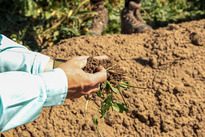
The National Environmental Policy Act (NEPA) requires Federal agencies to consider all potential environmental impacts for federally funded projects before the project is approved.
For all Farm Service Agency (FSA) programs, an environmental review must be completed before actions are approved, such as site preparation or ground disturbance. These programs include, but are not limited to, the Emergency Conservation Program (ECP), Farm Storage Facility Loan (FSFL) program and farm loans. If project implementation begins before FSA has completed an environmental review, the request will be denied. Although there are exceptions regarding the Stafford Act and emergencies, it’s important to wait until you receive written approval of your project proposal before starting any actions.
Applications cannot be approved until FSA has copies of all permits and plans. Contact your local FSA office early in your planning process to determine what level of environmental review is required for your program application so that it can be completed timely.
|

The U.S. Department of Agriculture (USDA) has issued more than $1.77 billion this year to agricultural producers and landowners through its Conservation Reserve Program (CRP), a critical piece of the Department’s efforts to support climate-smart agriculture and forestry on working lands. This year, CRP’s more than 667,000 participants received payments from USDA’s Farm Service Agency (FSA) for their voluntary conservation efforts on more than 23 million acres of private land. Since 2021, CRP has grown by 21% in terms of acres enrolled, testament to the Biden-Harris administration’s program improvement efforts.
Top five states for CRP participant payments:
- Iowa, $402,508,900
- Illinois, $172,723,800
- Minnesota, $150,773,400
- South Dakota, $129,545,200
- Missouri, $99,849,600
Improvements to CRP
Since 2021, FSA has made improvements to the program:
-
Introducing a new climate-smart practice incentive for CRP general and continuous signups designed to reward participants who implement conservation practices that increase carbon sequestration and reduce greenhouse gas emissions.
-
Enabling additional soil rental rate adjustments or rate flexibilities, including a possible increase in rates where appropriate.
-
Increasing payments for practice incentives from 20% to 50%. This incentive, in addition to cost share payments, for continuous CRP practices is based on establishment cost.
-
Increasing payments for water quality practices rates from 10% to 20% for certain water quality benefiting practices available through the CRP continuous signup, such as grassed waterways, riparian buffers and filter strips.
-
Establishing a Grassland CRP minimum rental rate benefitting more than 1,000 counties with rates currently below the $13 minimum.
Additionally, FSA made significant improvements to the Conservation Reserve Enhancement Program (CREP) that reduce barriers by making the partnership program more accessible to a broader cross-section of agricultural producers and new conservation partners. These program improvements include the flexibility for partners to provide matching funds in the form of cash, in-kind contributions, or technical assistance and the ability for FSA to invest in additional, full-time staff devoted to working directly with our CREP partners and program specialists in FSA’s state offices.
Since 2021, FSA has also entered into the first-ever Tribal Nations CREP agreements in partnership with the Cheyenne River, Rosebud, and Oglala Sioux Tribes. And in 2022, USDA entered into the Big Sioux River Watershed CREP agreement with the South Dakota Department of Game, Fish & Parks to assist farmers, ranchers and agricultural landowners to improve water quality, reduce soil erosion, enhance wildlife habitat, and create public hunting and fishing access. These CREP agreements reflect priorities and goals of USDA to broaden the scope and reach of its voluntary, incentive-based conservation programs to engage underserved producers.
FSA’s conservation programs had a strong showing in 2023. FSA partnered with producers and landowners to enroll 3.9 million CRP this year –including 927,000 enrolled acres through General CRP, 2.3 million acres enrolled in Grassland CRP and 694,000 acres enrolled in Continuous CRP. These results underscore the continued importance of CRP as a tool to help producers invest in the long-term health, sustainability, and profitability of their land and natural resources.
More Information
CRP is a voluntary program contract with agricultural producers through which environmentally sensitive agricultural land is devoted to conservation benefits. CRP participants establish long-term, resource-conserving plant species, such as approved grasses or trees to control soil erosion, improve water quality and develop wildlife habitat. In return, FSA provides participants with rental payments and cost-share assistance. Contract duration is between 10 and 15 years.
To learn more about CRP and other FSA programs, producers can contact their local USDA Service Center.
|

FSA is cleaning up our producer record database and needs your help. Please report any changes of address, zip code, phone number, email address or an incorrect name or business name on file to our office. You should also report changes in your farm operation, like the addition of a farm by lease or purchase. You should also report any changes to your operation in which you reorganize to form a Trust, LLC or other legal entity.
FSA and NRCS program participants are required to promptly report changes in their farming operation to the County Committee in writing and to update their Farm Operating Plan on form CCC-902.
To update your records, contact your local USDA Service Center.
|

Producers who received an Emergency Relief Program (ERP) payment need to meet ERP insurance linkage requirements by purchasing crop insurance or Noninsured Crop Disaster Assistance Program (NAP) coverage at the 60/100 level or higher for the next two available crop years, which will be determined from the date you received an ERP payment and may vary depending on the timing and availability of coverage. The insurance coverage requirement applies to the physical location of the county where the crop was located and for which an ERP payment was issued.
Contact your crop insurance agent or local FSA county office as soon as possible to ask about coverage options. Producers who do not obtain the applicable coverage by the sales/application closing date will be required to refund the ERP benefits received on the applicable crop, plus interest. To determine which crops are eligible for federal crop insurance or NAP, visit the RMA website.
For more information, contact your local USDA Service Center or visit fsa.usda.gov.
|
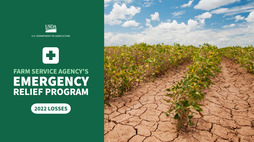
The U. S Department of Agriculture (USDA) will provide more than $3 billion to commodity and specialty crop producers impacted by natural disaster events in 2022. Eligible impacted producers can apply for financial assistance through the Emergency Relief Program (ERP) 2022. The program will help offset the financial impacts of crop yield and value losses from qualifying disasters occurring in 2022.
Background
On Dec. 29, 2022, President Biden signed into law the Disaster Relief Supplemental Appropriations Act, 2023 (P.L. 117-328) that provides about $3.7 billion in financial assistance for agricultural producers impacted by eligible natural disasters that occurred in calendar year 2022.
ERP 2022 covers losses to crops, trees, bushes and vines due to qualifying, calendar year 2022 natural disaster events including wildfires, hurricanes, floods, derechos, excessive heat, tornadoes, winter storms, freeze (including a polar vortex), smoke exposure, excessive moisture, qualifying drought and related conditions.
ERP 2022 program benefits will be delivered to eligible producers through a two-track process. FSA intends to make both tracks available to producers at the same time. This two-track approach enables USDA to:
- Streamline the application process.
- Reduce the paperwork burden on producers.
- Proactively include provisions for underserved producers who have not been well served by past emergency relief efforts.
- Encourage producer participation in existing risk management programs to mitigate the impacts of future severe weather events.
It’s important to note that disaster-impacted producers may be eligible for ERP 2022 assistance under one or both tracks. To avoid duplicative benefits, if a producer applies for both tracks, the Track 2 payment calculation will take into account any payments received through Track 1.
ERP 2022 Application Process – Track 1
ERP 2022 Track 1 leverages existing federal crop insurance or Noninsured Crop Disaster Assistance Program (NAP) data as the basis for calculating payments for eligible crop producers who received indemnities through these risk management programs.
Although FSA is sending pre-filled ERP 2022 Track 1 application forms to producers who have crop insurance and NAP data already on file with USDA, producers indemnified for losses resulting from 2022 natural disasters do not have to wait to receive the application before requesting ERP 2022 assistance. Effective Oct. 31, 2023, producers can apply for ERP 2022 benefits whether they have received the pre-filled application or not. Receipt of a pre-filled application is not confirmation that a producer is eligible to receive an ERP 2022 Track 1 payment.
USDA estimates that ERP Track 1 benefits will reach more than 206,000 producers who received indemnities for losses covered by federal crop insurance and more than 4,500 producers who obtained NAP coverage for the 2022 crop year.
ERP 2022 Application Process – Track 2
Track 2 is a revenue-based certification program designed to assist eligible producers who suffered an eligible decrease in revenue resulting from 2022 calendar year disaster events when compared with revenue in a benchmark year using revenue information that is readily available from most tax records. In cases where revenue does not reasonably reflect a normal year’s revenue, Track 2 provides an alternative method for establishing revenue. Likewise, Track 2 affords producers of crops that are used within an operation and do not generate revenue from the sale of the crop a method for establishing revenue for the purpose of applying for ERP 2022 benefits. Producers are not required to submit tax records to FSA unless requested by the County Committee if required for an FSA compliance spot check.
Although not required when applying for ERP 2022 Track 2, applicants might find the following documents useful to the process:
- Schedule F (Form 1040)
-
Profit or Loss from Farming or similar tax documents for tax years 2018, 2019, 2022 and 2023.
Track 2 targets gaps in emergency relief assistance for eligible producers whose eligible losses were not covered by crop insurance or NAP including revenue losses too small (shallow loss) to be covered by crop insurance.
Producers interested in applying for ERP 2022 Track 2, should contact their local FSA county office. Additional reference resources can be found on FSA’s emergency relief website.
Additional Required Forms
For both ERP 2022 tracks, all producers must have certain required forms on file with FSA within 60 days of the ERP 2022 deadline. Producers can apply for ERP 2022 starting Oct. 31, 2023. The application deadline has not yet been determined and will be announced at a later date. If not already on file, producers can update, complete and submit required forms to FSA at any time.
Required forms:
- Form AD-2047, Customer Data Worksheet.
- Form CCC-902, Farm Operating Plan for an individual or legal entity.
- Form CCC-901, Member Information for Legal Entities (if applicable).
- Form FSA-510, Request for an Exception to the $125,000 Payment Limitation for Certain Programs (if applicable).
- Form CCC-860, Socially Disadvantaged, Limited Resource, Beginning and Veteran Farmer or Rancher Certification, if applicable, for the 2022 program year.
- A highly erodible land conservation (sometimes referred to as HELC) and wetland conservation certification (Form AD-1026 Highly Erodible Land Conservation (HELC) and Wetland Conservation (WC) Certification) for the ERP producer and applicable affiliates.
Most producers, especially those who have previously participated in FSA programs, will likely have these required forms on file. However, those who are uncertain or want to confirm the status of their forms can contact their local FSA county office.
Future Insurance Coverage Requirements
All producers who receive ERP 2022 payments must purchase crop insurance, or NAP coverage where crop insurance is not available, in the next two available crop years as determined by the Secretary. Purchased coverage must be at the 60/100 coverage level or higher for insured crops or at the catastrophic coverage level or higher for NAP crops.
More Information
ERP 2022 eligibility details and payment calculation factor tables are available on the emergency relief website, in the ERP Track 1 and ERP Track 2 fact sheets and through your local FSA county office.
|
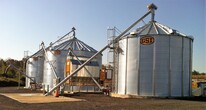
The Farm Service Agency’s (FSA) Farm Storage Facility Loan (FSFL) program provides low-interest financing to help you build or upgrade storage facilities and to purchase portable (new or used) structures, equipment and storage and handling trucks.
Eligible commodities include corn, grain sorghum, rice, soybeans, oats, peanuts, wheat, barley, minor oilseeds harvested as whole grain, pulse crops (lentils, chickpeas and dry peas), hay, honey, renewable biomass, fruits, nuts and vegetables for cold storage facilities, floriculture, hops, maple sap, rye, milk, cheese, butter, yogurt, meat and poultry (unprocessed), eggs, and aquaculture (excluding systems that maintain live animals through uptake and discharge of water). Qualified facilities include grain bins, hay barns and cold storage facilities for eligible commodities.
Loans up to $100,000 can be secured by a promissory note/security agreement, and loans exceeding $100,000 require additional security.
You do not need to demonstrate the lack of commercial credit availability to apply. The loans are designed to assist a diverse range of farming operations, including small and mid-sized businesses, new farmers, operations supplying local food and farmers markets, non-traditional farm products, and underserved producers.
For more information, contact your local USDA Service Center or visit fsa.usda.gov/pricesupport.
|

The application period is now open for a new financial assistance program under Section 22007 of the Inflation Reduction Act (IRA), for farmers, ranchers, and forest landowners who experienced discrimination in USDA farm lending programs prior to January 2021. The application process will close on January 13, 2024. Borrowers will have the option to apply for assistance online via 22007apply.gov or through a paper-based form.
Details about the program, including an application and e-filing portal, are available at 22007apply.gov. The website includes an English and Spanish language application that applicants can download or submit via an e-filing portal, information on how to obtain technical assistance in-person or virtually, and additional resources and details about the program. Applicants can also call the free call center at 1-800-721-0970 or visit one of several dozen brick-and-mortar offices the program has set up around the country. Locations are provided on the program website and vendors will update the local events schedule with more information as it becomes available. It is important to note that filing an application is FREE and does not require a lawyer.
If you want to get weekly updates on the program’s events and progress, you can go to https://22007apply.gov, and subscribe to a weekly newsletter.
|

The U.S. Department of Agriculture (USDA) encourages urban producers, innovative producers and other stakeholders to submit comments for and virtually attend the upcoming public meeting of the Federal Advisory Committee for Urban Agriculture and Innovative Production (Committee) on Nov. 29, 2023.
The Committee is part of USDA’s efforts to support urban and innovative agriculture, creating a network for feedback. Members include agricultural producers and representatives from higher education or extension programs, non-profits, business and economic development, supply chains and financing. The committee last met in August 2023.
About the Meeting
Topics for the upcoming meeting will include addressing public comments and discussing the following recommended topics:
- Federal crop insurance for innovative producers
- Research, extension and education in innovative production
- Access to technical assistance
- Urban soil health and safety
- Scholarship and education support
The Committee will deliberate and vote on proposed recommendations and address public comments during the meeting. USDA will share the agenda between 24 to 48 hours prior to the meeting on the Committee’s webpage.
The virtual meeting will run from 1 p.m. to 3 p.m. Eastern on Nov. 29, 2023. To attend virtually, register by Nov. 29, 2023, on the Committee’s webpage. To submit comments, send by 11:59 p.m. ET on Dec. 13, 2023, through the Federal eRulemaking Portal. Docket NRCS-2023-0019.
For special accommodations, contact Markus Holliday at UrbanAgricultureFederalAdvisoryCommittee@usda.gov.
Additional details are available in the Federal Register notice.
|

Accessing capital to begin, extend or support an agriculture operation can be especially challenging to new producers. Farm Service Agency’s “Beginning Farmer” direct and guaranteed loan programs provide an opportunity for qualified applicants to secure loans from funding set aside for producers who meet the following conditions:
- Has operated a farm for not more than 10 years
- Will materially and substantially participate in the operation of the farm
- Agrees to participate in a loan assessment, borrower training and financial management program sponsored by FSA
- Does not own a farm in excess of 30 percent of the county’s average size farm.
For more information contact, contact your local USDA Service Center or visit fsa.usda.gov.
|

USDA is beefing up crop insurance options for specialty crop and organic producers, including rolling out new and expanded options based on feedback from America’s agricultural producers. To achieve this, USDA’s Risk Management Agency (RMA) accelerated its outreach efforts to hear directly from producers across the country by hosting in-person and virtual roadshows and making investments in risk management education. These improvements are part of a comprehensive effort to improve risk management tools and other programs for a wide variety of producers as well as expand access to organic markets.
From 1990 to 2022, liabilities for insured specialty crops rose from $1 billion to more than $23 billion. Over the past 20 years, the number of individual specialty crops insured under crop insurance programs increased by 27%. Currently, there are over 70 individual specialty crops insured under crop insurance programs.
New Insurance Options:
-
Transitional and Organic Grower Assistance Program (TOGA): For 2022, RMA offered this new program reduce a producer’s overall crop insurance premium bill allowing them to continue using organic agricultural systems. Premium benefits for TOGA included: 10 percentage points of premium subsidy for all crops in transition, $5 per acre premium benefit for certified organic grain and feed crops, and 10 percentage points of premium subsidy for all Whole-Farm Revenue Protection (WFRP) policies covering any number of crops in transition to organic or crops with the certified organic practice.
-
Tropical Storm Coverage: For crop year 2023 and succeeding years, RMA added a new option to Hurricane Insurance Protection – Wind Index (HIP-WI) for named tropical storm weather events. The Tropical Storm Option covers damage caused by strong weather systems not categorized as hurricanes. Both a wind and precipitation trigger must occur for an indemnity to be paid. This new option helped many producers recover after Hurricane Idalia this year. About 60% of eligible policies elected this option.
-
Grapevine: Beginning in crop year 2024, producers can insure all types of grapevines in select counties in California, Idaho, Michigan, New York, Ohio, Oregon, Pennsylvania, Texas, and Washington. This policy complements the existing Grape crop insurance program that covers the fruit growing on the vine. The policy covers freeze, fire, hail, flood, failure of irrigation water supply, and other causes of loss.
-
Kiwifruit: Beginning in crop year 2024, producers in 12 California counties can insure their kiwifruit against unforeseen weather perils and other naturally occurring perils. The program covers three varietal group types: Hayward; Reds & Golds; and Mega. The Hayward variety currently makes up 92% of the California crop followed by non-Hayward varieties, including reds and golds and one green variety marketed as Mega Kiwi.
-
Pomegranate: Beginning in crop year 2023, pomegranate producers in select California counties can receive yield-based insurance coverage for standard weather, natural, and environmental perils as well as quality losses. Coverage is available for two varietal groups: “Early” and the ‘Wonderful’ varieties and all others. The program also recognizes the different utilization values of fresh fruit, arils, and juice.
-
Shellfish: Beginning in crop year 2024, producers can insure their commercially cultivated oysters that are grown using containerized methods. This program offers production-based coverage on an individual producer basis. This insurance option provides coverage against four perils including: named storms, excessive heat, freeze, and low salinity and will be available in select counties in Alabama, California, Florida, Maine, Maryland, Massachusetts, Mississippi, New York, North Carolina, Rhode Island, South Carolina, and Virginia.
-
Controlled Environment: Beginning in crop year 2024, producers can insure plants produced in a controlled environment against disease that occurs in their facility. This program will provide the following benefits: simple application and policy renewal process, like the Nursery Value Select program, and insurance for controlled environment producer-selected plant categories. In addition to specialty crop and organic producers, this policy will greatly benefit urban producers.
Improved Insurance Options:
-
Whole-Farm Revenue Protection Program (WFRP): Several improvements will begin in the 2024 policy year including: allowing all eligible producers to qualify for 80% and 85% coverage levels; allowing producers to purchase catastrophic coverage level policies for individual crops with WFRP; expanding yield history to a 10-year maximum (from four years) for all crops not covered by another federal crop insurance policy; making the policy more affordable for single commodity producers; and allowing producers to customize their coverage by choosing whether WFRP will consider other federal crop insurance policies as primary insurance when calculating premium and revenue to count during claim time.
-
Micro Farm: Several updates were made to Micro Farm including: moving the sales closing date to a less busy time of year to help agents dedicate time to marketing the program, allowing producers to purchase other federal crop insurance with Micro Farm, allowing vertically integrated entities to be eligible and making the Expanding Operations feature available.
-
Pistachios: Several revisions were made to the Pistachio policy including: allowing insurance for producers with fewer than four years of production records under the new Transitional Yields (T-Yields); clarifying simple average approved yield for APH databases containing T-Yields; clarifying variability adjustment requirements for actual production history databases; and allowing assigned yields and temporary yields if indicated in the Special Provisions.
-
Quality Loss Option (QLO): RMA is making the QLO available to several initial specialty crops, including avocados (California only), blueberries, cranberries, grapes, peaches, stone fruit, and table grapes. RMA plans to make the option available to additional specialty crops in the upcoming months after further review.
More Information
Specialty crop producers can learn more on RMA’s Specialty Crop Page or by contacting one of RMA’s specialty crop liaisons, who serve as points of contact for local specialty crop producers. Organic producers can learn more at RMA’s Organic webpage. Producers can receive the most up to date information about RMA insurance options for specialty crops by subscribing to GovDelivery.
|
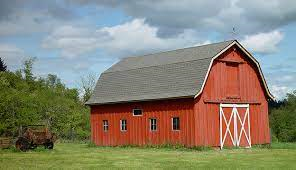
USDA’s Farm Service Agency (FSA) loans provide important access to capital to help agricultural producers start or expand their farming operation, purchase equipment and storage structures or meet cash flow needs.
|
|