 Hello Friends,
Happy Thanksgiving! The fall season is upon us! We have some updates to share with you as we move into the later months of the year.
We encourage urban producers, innovative producers and other stakeholders to submit comments for and virtually attend the upcoming public meeting of the Federal Advisory Committee for Urban Agriculture and Innovative Production (Committee) on
November 29. The Committee will deliberate and vote on proposed recommendations and address public comments during the meeting. USDA will share the agenda between 24 to 48 hours prior to the meeting on the Committee’s webpage.
Ballots have started to be sent out for the FSA county and urban county committee elections to all eligible agricultural producers and private landowners across the country. Elections are occurring in certain Local Administrative Areas for these committee members who make important decisions about how Federal farm programs are administered locally. Producers and landowners must return ballots to their local FSA county office or have their ballots postmarked by Dec. 4, 2023, for those ballots to be counted.
FSA is delivering the 2022 Emergency Relief Program which is intended to cover crop production, including certain quality losses, and losses of trees due to qualifying natural disaster events that occurred in calendar year 2022. For impacted producers, FSA will be administering emergency relief to eligible producers through a two-track process:
-
Track 1 is for producers who have crop insurance or NAP program data on file with FSA. ERP forms will be pre-filled based on information in our system and sent to producers. If one is not received, please contact your local FSA office.
-
Track 2 targets producers whose losses were not covered by crop insurance or NAP. Producers will need to contact our FSA county offices to apply.
This two-track approach enables USDA to streamline the application process to reduce the burden on producers, proactively include underserved producers who have been left out of past relief efforts and encourage participation in existing risk management tools that can help producers handle future extreme weather events. For more information on the program, click here.
Our county offices are working to ensure customer and farm records are accurate. Please contact your local office with any changes to your farming operation (this includes buying and selling of land, member changes), contact or banking information. Outdated information could cause delays in program payment delivery.
Jonas Moya
State Executive Director
OFFICE CLOSURE
- Thanksgiving – November 23
- Christmas Day – December 25
- New Year's Day – January 1
- Martin Luther King, Jr Day – January 15
- President's Day – February 19
IMPORTANT DATES (Please check with your local office for other deadlines that may apply to your particular situation) Service Center Locator
-
COC Elections
- Final date to postmark/return election ballots to the County Office
-
Emergency Relief Program (ERP)
- Acreage Certification Reporting
-
Noninsured Crop Assistance Program (NAP)
- December 1: Grass, Honey Lettuce
- January 31: Alfalfa, Cucumbers, Mixed Forage, Pecans, Peppers
-
Food Safety Certification for Specialty Crops Program (FSCSC)
Farmers in New Mexico can now access county specific farming data and USDA resources all in one place via the new farmers.gov local dashboard. Your new farmers.gov local dashboard includes farming data and USDA resources including USDA news, commodity pricing, weather forecasts, historical climate data, past storm events, USDA service center locator and additional state resources for New Mexico and your county The dashboard transforms complex data sets into easy-to-read charts and graphs to help you quickly find information that matters to you.
Farmers.gov gives you one place to do business with USDA’s Farm Service Agency (FSA) and the Natural Resources Conservation Service (NRCS), including accessing your farm records, maps, and common land units. You can create a farmers.gov account for the farmers.gov authenticated site, where you can access self-service features through a secure login.
In addition to the self-service features farmers.gov website also has information on USDA programs, farm loans, disaster assistance, conservation programs and crop insurance.
What can you do with your farmers.gov account?
- View FSA Farm loans including loan information, interest payments, loan advance and payment history, paid-in-full restructured loans, and account alerts.
- View NRCS Disbursements and Farm Loans financial activity from the past 180 days.
- View, print and export detailed farm records and farm/tract maps.
- Export common land unit (field) boundaries as ESRI and GeoJSON file types.
- Import precision agriculture planting boundaries, create labels containing crop information, and print both on farm tract maps.
- Use the draw tools to determine acres in an area of interest that can be printed on a map and provided to a third party or exported as a feature file for use in other geospatial applications.
- View, upload, download and e-sign NRCS documents.
- Request conservation and financial assistance, including submitting a program application.
- Access information on current and past conservation practices, report practice completion and request practice certification
- View detailed information on previous and ongoing contracts, including the amount of cost- share assistance received and request contract modifications.
How to create a farmers.gov account?
To create a farmers.gov account you will need:
- A USDA individual customer record - A customer record contains information you have given to USDA to do business with them, like your name, address, phone number, and any legal representative authority relationships.
- A login.gov account – Login.gov is a sign-in service that gives people secure online access to participating government programs.
The term “sodbusting” is used to identify the conversion of land from native vegetation to commodity crop production after December 23, 1985. As part of the conservation provisions of the Food Security Act of 1985, if you’re proposing to produce agricultural commodities (crops that require annual tillage including one pass planting operations and sugar cane) on land that has been determined highly erodible and that has no crop history prior to December 23, 1985, that land must be farmed in accordance with a conservation plan or system that ensures no substantial increase in soil erosion.
Eligibility for many USDA programs requires compliance with a conservation plan or system on highly erodible land (HEL) used for the production of agricultural commodities. This includes Farm Service Agency (FSA) loan, disaster assistance, safety net, price support, and conservation programs; Natural Resources Conservation Service (NRCS) conservation programs; and Risk Management Agency (RMA) Federal crop insurance.
Before you clear or prepare areas not presently under production for crops that require annual tillage, you are required to file Form AD-1026 “Highly Erodible Land Conservation and Wetland Conservation Certification,” with FSA indicating the area to be brought into production. The notification will be referred to NRCS to determine if the field is considered highly erodible land. If the field is considered HEL, you are required to implement a conservation plan or system that limits the erosion to the tolerable soil loss (T) for the predominant HEL soil on those fields.
In addition, prior to removing trees or conducting any other land manipulations that may affect wetlands, remember to update form AD-1026, to ensure you remain in compliance with the wetland conservation provisions.
Prior to purchasing or renting new cropland acres, it is recommended that you check with your local USDA Service Center to ensure your activities will be in compliance with the highly erodible land and wetland conservation provisions.
For additional information on highly erodible land conservation and wetland conservation compliance, contact your local USDA Service Center.
The USDA announced it will begin providing additional, automatic financial assistance for qualifying guaranteed Farm Loan Programs (FLP) borrowers who are facing financial risk. The announcement is part of the $3.1 billion to help certain distressed farm loan borrowers that was provided through Section 22006 of the Inflation Reduction Act.
Since the Inflation Reduction Act was signed into law by President Biden in August 2022, USDA has provided approximately $1.15 billion in assistance to more than 20,000 distressed borrowers as a part of an ongoing effort to keep borrowers farming, remove obstacles that currently prevent many borrowers from returning to their land, and improve the way that USDA approaches borrowing and loan servicing in the long-term. The financial assistance announced today will provide qualifying distressed guaranteed loan borrowers with financial assistance similar to what was already provided to distressed direct loan borrowers. Based on current analysis, the financial assistance announced today will assist an estimated approximately 3,500 eligible borrowers, subject to change as payments are finalized. An FLP guaranteed loan borrower is distressed if they qualify under one of the options below. FLP guaranteed borrowers who qualify under multiple options will receive a payment based on the option that provides the greatest payment amount:
Payment of any outstanding delinquency on all qualifying FLP guaranteed loans as of Oct. 18, 2022. This includes any guaranteed loan borrowers who did not receive an automatic payment in 2022 on that loan because they were not yet 60 days delinquent as of Sept. 30, 2022, as well as guaranteed borrowers that became delinquent on a qualifying FLP guaranteed loan between September 30, 2022, and Oct.18, 2022.
Payment on a qualifying FLP guaranteed loan for which a guaranteed loan borrower received a loan restructure, which modified the guaranteed loan maturity date, between March 1, 2020, and Aug. 11, 2023. The payment amount will be the lesser of the post-restructure annual installment or the amount required to pay the loan in full. The guaranteed loan must not have been paid in full prior to Aug. 11, 2023.
Payments on certain deferred amounts on qualifying FLP guaranteed loans, not to exceed $100,000, for guaranteed borrowers who received a deferral or another type of payment extension, for at least 45 days, between March 1, 2020, and Sept. 30, 2022, from their guaranteed lender on that qualifying guaranteed loan in response to COVID-19, disasters, or other revenue shortfalls. The Inflation Reduction Act payment amount will be the lesser of the most recent deferral or extension amount on the qualifying FLP guaranteed loan, or the amount required to pay that loan in full. The guaranteed loan must not have been paid in full prior to Aug. 11, 2023.
This assistance is only available for FLP guaranteed loan borrowers who did not or will not receive an initial payment on the same FLP guaranteed loan under Inflation Reduction Act assistance announced in October 2022. Distressed guaranteed borrowers qualifying for this assistance will receive a United States Department of the Treasury check that is jointly payable to the borrower and the lender. These borrowers will also receive a letter from FSA informing them of Inflation Reduction Act assistance they will receive as well as instructions to make an appointment with their lender to process the payment and apply it to their qualifying guaranteed loan accounts. Guaranteed lenders will receive an email in the coming days informing them of this assistance and any next steps. Lenders will also receive letters informing them which borrowers will receive assistance and the amount of assistance they will receive. Any distressed guaranteed borrowers who qualify for these forms of assistance and are currently in bankruptcy will be addressed using the same case-by-case review process announced in October 2022 for complex cases. FSA will also provide relief to qualifying FLP guaranteed loan borrowers determined to be distressed borrowers based on liability for remaining federal debt subject to debt collection and garnishment after the liquidation of their guaranteed loan account as of July 31, 2023. This will allow some borrowers to potentially return to farming. Guaranteed borrowers who qualify for this assistance will have their federal debt paid automatically by FSA and will receive a letter informing them of the payment made on their federal debt. All letters to qualifying guaranteed loan borrowers will contain instructions for opting out of assistance if a borrower chooses to do so.
Important Tax Information Similar to other USDA Inflation Reduction Act assistance, payments provided to borrowers and payments to be applied to FSA farm loan accounts will be reported to the Internal Revenue Service (IRS). Borrowers receiving this assistance will receive a 1099 form from FSA. Please note that payments over $600 are subject to Federal and State Income Taxes and will be reflected on your annual 1099 form. Borrowers are encouraged to consult a tax professional with all tax-related questions regarding any Inflation Reduction Act assistance received. USDA also has tax-related resources at farmers.gov/taxes. Individual Requests for Farmers Seeking Assistance
In addition to the automatic payments announced today for distressed guaranteed loan borrowers, FSA continues to accept and review individual distressed borrower assistance requests from direct loan borrowers who missed a recent installment or are unable to make their next scheduled installment on a qualifying direct FLP loan. All FSA direct borrowers should have received a letter detailing the eligibility criteria and process for seeking this type of assistance, which is available even before they become delinquent. As the letter details, borrowers who are within two months of their next installment may seek a cash flow analysis from FSA using a recent balance sheet and operating plan to determine their eligibility.
FSA direct borrowers also received a letter detailing an opportunity to receive assistance if they took certain extraordinary measures to avoid delinquency on their qualifying direct FLP loans, such as taking on or refinancing more debt, selling property, or cashing out retirement or college savings accounts.
Borrowers can submit requests for extraordinary measures or cash flow-based assistance in person at their local FSA office or by sending in a direct request using the farmers.gov 22006 assistance request portals at farmers.gov/loans/inflation-reduction-investments/assistance. All requests for assistance must be received by Dec. 31, 2023.
Farm Service Agency (FSA) is committed to providing our farm loan borrowers the tools necessary to be successful. FSA staff will provide guidance and counsel from the loan application process through the borrower’s graduation to commercial credit. While it is FSA’s commitment to advise borrowers as they identify goals and evaluate progress, it is crucial for borrowers to communicate with their farm loan staff when changes occur. It is the borrower’s responsibility to alert FSA to any of the following:
- Any proposed or significant changes in the farming operation
- Any significant changes to family income or expenses
- The development of problem situations
- Any losses or proposed significant changes in security
If a farm loan borrower can’t make payments to suppliers, other creditors, or FSA on time, contact your farm loan staff immediately to discuss loan servicing options.
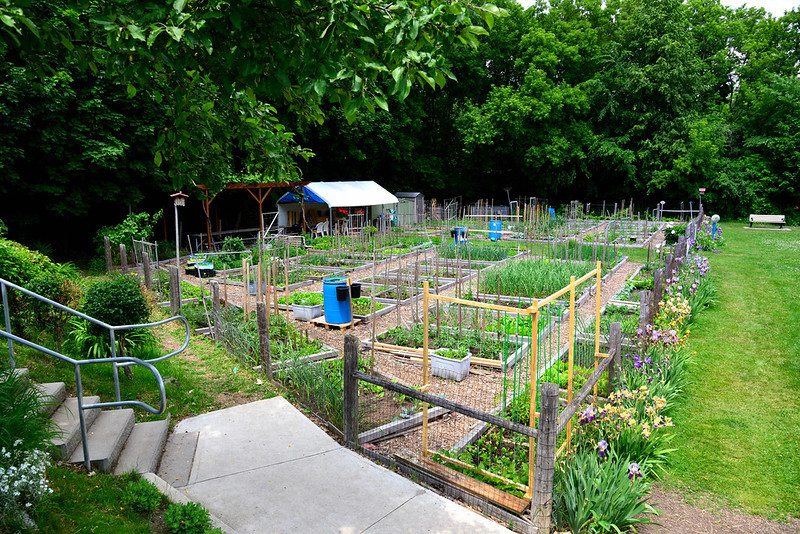 The U.S. Department of Agriculture (USDA) encourages urban producers, innovative producers and other stakeholders to submit comments for and virtually attend the upcoming public meeting of the Federal Advisory Committee for Urban Agriculture and Innovative Production (Committee) on Nov. 29, 2023.
The Committee is part of USDA’s efforts to support urban and innovative agriculture, creating a network for feedback. Members include agricultural producers and representatives from higher education or extension programs, non-profits, business and economic development, supply chains and financing. The committee last met in August 2023.
About the Meeting
Topics for the upcoming meeting will include addressing public comments and discussing the following recommended topics:
- Federal crop insurance for innovative producers
- Research, extension and education in innovative production
- Access to technical assistance
- Urban soil health and safety
- Scholarship and education support
The Committee will deliberate and vote on proposed recommendations and address public comments during the meeting. USDA will share the agenda between 24 to 48 hours prior to the meeting on the Committee’s webpage.
The virtual meeting will run from 1 p.m. to 3 p.m. Eastern on Nov. 29, 2023. To attend virtually, register by Nov. 29, 2023, on the Committee’s webpage. To submit comments, send by 11:59 p.m. ET on Dec. 13, 2023, through the Federal eRulemaking Portal. Docket NRCS-2023-0019.
For special accommodations, contact Markus Holliday at UrbanAgricultureFederalAdvisoryCommittee@usda.gov.
Additional details are available in the Federal Register notice.
Navigating filing taxes can be challenging, especially if you are new to running a farm business, participating in disaster programs for first time, or trying to forecast the farm’s tax bill. Receiving funds from USDA through activities such as a conservation program payment or a disaster program is considered farm income that includes a tax liability for farm businesses. USDA technical assistance is free and creates no tax implications.
At the end of the tax year, USDA issues tax forms 1098 and 1099 forms for farm loans, conservation programs administered by the Farm Service Agency and Natural Resource Conservation Service including the Conservation Reserve Program and Environmental Quality Incentives Program, crop disaster payments, and the Market Facilitation Program. USDA also issues tax forms for recipients of assistance for distressed borrowers, including through Section 22006 of the Inflation Reduction Act.
If you have received tax forms related to your operation, USDA cannot and does not provide tax advice but wants you to be aware of options that may help manage your tax liability. USDA has partnered with experts to provide resources to help you make the right tax decisions for your operation. Monthly webinars are available for registration and to view on demand at https://www.farmers.gov/working-with-us/taxes.
The Tax Estimator Tool is an interactive spreadsheet that producers can download to estimate tax liability. It is for informational and educational purposes and should not considered tax or legal advice. Producers may need to work with a tax professional to determine the correct information to be entered in the Tax Estimator Tool.
We encourage you to visit https://www.farmers.gov/working-with-us/taxes for more information on how to find and work with a tax preparer as well as instructions on how to request copies of USDA documents and links to other helpful tax resources.
|