|
Mississippi Farm Service Agency is happy to announce job opportunities for college students during the Summer 2024. Job announcements for the Pathways Student Trainee vacancies posted to USAjobs. Feel free to share with college students in good standings. We hope to recruit another good group of students majoring in finance, business, economics, agriculture, and related areas. Your assistance in spreading the word and referring good students for these opportunities are greatly appreciated.
Jobs opening from 10/12/2023 – 10/31/2023. The links are below.
VIN 12156859 Student Trainee (Farm Loans)
https://www.usajobs.gov/GetJob/ViewDetails/753077100
VIN 12157327 Student Trainee (Farm Loan Programs -STO)
https://www.usajobs.gov/GetJob/ViewDetails/753096900
VIN 12157398 Student Trainee (Admin)
https://www.usajobs.gov/GetJob/ViewDetails/753102000
FSA is cleaning up our producer record database and needs your help. Please report any changes of address, zip code, phone number, email address or an incorrect name or business name on file to our office. You should also report changes in your farm operation, like the addition of a farm by lease or purchase. You should also report any changes to your operation in which you reorganize to form a Trust, LLC or other legal entity.
FSA and NRCS program participants are required to promptly report changes in their farming operation to the County Committee in writing and to update their Farm Operating Plan on form CCC-902.
To update your records, contact your local County USDA Service Center.
If you have experienced delays in receiving Agriculture Risk Coverage (ARC) and Price Loss Coverage (PLC) payments, Loan Deficiency Payments (LDPs) and Market Gains on Marketing Assistance Loans (MALs), it may be because you have not filed form CCC-941, Adjusted Gross Income Certification.
If you don’t have a valid CCC-941 on file for the applicable crop year you will not receive payments, all farm operator/tenants/owners who have not filed a CCC-941 and have pending payments should IMMEDIATELY file the form with their recording county FSA office. Farm operators and tenants are encouraged to ensure that their landowners have filed the form.
FSA can accept the CCC-941 for 2018, 2019, 2020, 2021, and 2022: unlike the past, you must have the CCC-941 certifying your AGI compliance before any payments can be issued.
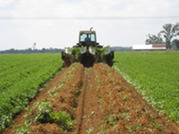
Accessing capital to begin, extend or support an agriculture operation can be especially challenging to new producers. Farm Service Agency’s “Beginning Farmer” direct and guaranteed loan programs provide an opportunity for qualified applicants to secure loans from funding set aside for producers who meet the following conditions:
- Has operated a farm for not more than 10 years
- Will materially and substantially participate in the operation of the farm
- Agree to participate in a loan assessment, borrower training and financial management program sponsored by FSA
- Does not own a farm in excess of 30 percent of the county’s average size farm.
For more information contact, contact your local County USDA Service Center or visit fsa.usda.gov.
|

ELAP provides emergency assistance to eligible livestock, honeybee, and farm-raised fish producers who have losses due to disease, adverse weather or other conditions, such as blizzards and wildfires, not covered by other agricultural disaster assistance programs.
Eligible losses include:
-
Livestock - grazing losses not covered under the Livestock Forage Disaster Program (LFP), loss of purchased feed and/or mechanically harvested feed due to an eligible adverse weather event, additional cost of transporting water because of an eligible drought and additional cost associated with gathering livestock to treat for cattle tick fever.
-
Honeybee - loss of purchased feed due to an eligible adverse weather event, cost of additional feed purchased above normal quantities due to an eligible adverse weather condition, colony losses in excess of normal mortality due to an eligible weather event or loss condition, including CCD, and hive losses due to eligible adverse weather.
-
Farm-Raised Fish - death losses in excess of normal mortality and/or loss of purchased feed due to an eligible adverse weather event.
If you’ve suffered eligible livestock, honeybee, or farm-raised fish losses during calendar year 2023, you must file:
- A notice of loss within 30 calendar days after the loss is apparent (15 days for honeybee losses)
- An application for payment by Jan. 30, 2024
|
In this Ask the Expert, Toni Williams answers questions about how Farm Storage Facility Loans (FSFLs) provide low-interest financing to help producers build or upgrade commodity storage facilities. Toni is the Agricultural Manager for FSFLs at the Farm Service Agency (FSA).
Toni has worked for FSA for more than 32 years and is responsible for providing national policy and guidance for Farm Storage Facility Loans.
What are Farm Storage Facility Loans?
Farm Storage Facility Loans provide low-interest financing for eligible producers to build or upgrade facilities to store commodities.
The FSFL program was created in May 2000 to address an existing grain shortage. Historically, FSFLs benefitted grain farmers, but a change in the 2008 Farm Bill extended the program to fruit and vegetable producers for cold storage. An additional change extended the program to washing and packing sheds, where fresh produce is washed, sorted, graded, labeled, boxed, and stored before it heads to market. Since May 2000, FSA has made more than 40,000 loans for on-farm storage.
Eligible facility types include grain bins, hay barns, bulk tanks, and facilities for cold storage. Drying, handling and storage equipment including storage and handling trucks are also eligible. Eligible facilities and equipment may be new or used, permanently affixed or portable.
To read the full blog visit farmers.gov/blog/ask-the-expert-qa-on-farm-storage-facility-loans-with-toni-williams
The Farm Loan team is already working on operating loans for spring 2024 and asks potential borrowers to submit their requests early so they can be timely processed. The farm loan team can help determine which loan programs are best for applicants.
FSA offers a wide range of low-interest loans that can meet the financial needs of any farm operation for just about any purpose. The traditional farm operating and farm ownership loans can help large and small farm operations take advantage of early purchasing discounts for spring inputs as well as expenses throughout the year.

Farm Service Agency (FSA) loans require applicants to have a satisfactory credit history. A credit report is requested for all FSA direct farm loan applicants. These reports are reviewed to verify outstanding debts, see if bills are paid timely and to determine the impact on cash flow.
Information on your credit report is strictly confidential and is used only as an aid in conducting FSA business.
Our farm loan staff will discuss options with you if you have an unfavorable credit report and will provide a copy of your report. If you dispute the accuracy of the information on the credit report, it is up to you to contact the issuing credit report company to resolve any errors or inaccuracies.
There are multiple ways to remedy an unfavorable credit score:
- Make sure to pay bills on time.
- Setting up automatic payments or automated reminders can be an effective way to remember payment due dates.
- Pay down existing debt.
- Keep your credit card balances low.
- Avoid suddenly opening or closing existing credit accounts.
FSA’s farm loan staff will guide you through the process, which may require you to reapply for a loan after improving or correcting your credit report.
For more information on FSA farm loan programs, contact your local County USDA Service Center or visit fsa.usda.gov.
|
|