|
USDA has several special provisions and resources for beginning farmers, including:
- Targeted funding through farm loans
- Crop insurance benefits
- Conservation program benefits
- Basically, the best way to get started is to find your local USDA Service Center and meet with local staff there.
- There are Service Centers in nearly every county in the United States.
- To find yours, visit farmers.gov/service-locator and insert your zip code.
- Often, NRCS and FSA offices are co-located, so you can handle business in one location.
- USDA has improved CRP for the nation’s natural resources as well as the agricultural producers and landowners with tools to sequester carbon, reduce greenhouse gas emissions and better quantify these efforts, while also bringing into the fold more Tribes and underserved producers.
- USDA is grateful to all CRP participants who are making a tremendous difference by proactively addressing climate change and conserving natural resources now and for future generations.
Two of the biggest challenges facing new farmers and ranchers are access to land and access to capital.
- Farm Ownership loans can provide access to land and capital.
- Farm Operating loans can assist beginning farmers by:
- helping to pay farm operating expenses,
- opening doors to new markets and marketing opportunities, and
- assisting with diversifying operations, and so much more.
- Microloans can provide an important source of financial assistance during the start-up years.
USDA’s Natural Resources Conservation Service (NRCS) has been given a once-in-a-generation opportunity to deliver $19.5 billion in conservation funding through Conservation Technical Assistance, the Environmental Quality Incentives Program, the Conservation Stewardship Program, the Regional Conservation Partnership Program, the Agricultural Conservation Easement Program, and for measuring the climate benefits that all this work will achieve. While we have been hard at work in the first year of implementation, we wouldn’t have been able to achieve our current level of success without the thoughtful feedback from our partners.
To that end, we released an Inflation Reduction Act Implementation Request for Information in November 2022. NRCS received over 450 comments that are helping improve our program delivery by removing administrative burdens, streamlining, and expediting program enrollment; building agency and partner capacity to deliver services more quickly; and providing more equitable services. We are using this feedback to expand climate-smart agriculture and forestry activities and refine our measuring, monitoring, reporting and verification of greenhouse gas reduction efforts.
These thoughtful suggestions have helped accelerate our implementation of the Inflation Reduction Act. So far in fiscal year 2023, NRCS is already implementing the majority of recommendations you submitted.
Your feedback and recommendations resulted in some quick wins for NRCS, including:
- Streamlining processes for the Regional Conservation Partnership Program (RCPP) and the Agricultural Conservation Easement Program (ACEP). The agency has begun an ongoing RCPP improvement effort, which includes program changes to improve our RCPP portal for partner use, simplifying agreements, and streamlining the reimbursement process. For ACEP, we raised the national appraisal review threshold and have added 22 new certified entities this year.
- Leveraging over $140 million in agreements with partners to deliver increased boots on the ground results, through conservation districts, state agencies, and many other conservation-focused organizations.
- Expanding connections with retired employees through the Association of Retired Conservation Service Employees to provide mentoring to the incoming workforce and added additional senior experienced workers for more workforce capacity.
- Supporting a newly staffed Technical Service Provider (TSP) branch to expedite review of applications and enhance customer service.
- Investing in training staff to increase competency around diversity, equity and inclusion principles.
- Expanding our outreach, resulting in welcoming over 60,000 new customers this year.
- Reviewing NRCS’ recognized Climate Smart Agriculture and Forestry practices and developing an expanded list of practices based on available scientific research.
These changes based on your suggestions are a large part of the reason that NRCS is in such a strong position as we look ahead to the next year of increased funding in fiscal year 2024.
Of course, we recognize that there is more we can do to improve, and we are committed to continuing to do so with your feedback. Additional recommendations you submitted that will significantly improve our delivery of the Inflation Reduction Act will be implemented in the upcoming fiscal years. Be looking for more improvements related to our Technical Service Provider program; our Measuring, Monitoring, Reporting and Verification to quantify carbon sequestration and greenhouse gas emission reductions from conservation investments; and our continuing efforts to streamline our programs.
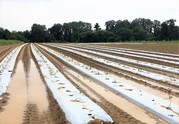
Farm Service Agency (FSA) borrowers with farms located in designated primary or contiguous disaster areas who are unable to make their scheduled FSA loan payments should consider the Disaster Set-Aside (DSA) program.
DSA is available to producers who suffered losses as a result of a natural disaster and relieves immediate and temporary financial stress. FSA is authorized to consider setting aside the portion of a payment/s needed for the operation to continue on a viable scale.
Borrowers must have at least two years left on the term of their loan in order to qualify.
Borrowers have eight months from the date of the disaster designation to submit a complete application. The application must include a written request for DSA signed by all parties liable for the debt along with production records and financial history for the operating year in which the disaster occurred. FSA may request additional information from the borrower in order to determine eligibility.
All farm loans must be current or less than 90 days past due at the time the DSA application is complete. Borrowers may not set aside more than one installment on each loan.
The amount set-aside, including interest accrued on the principal portion of the set-aside, is due on or before the final due date of the loan.
For more information, contact your local USDA Service Center at fsa.usda.gov.
|

Producers in certain Louisiana Parishes are eligible to apply for 2023 Livestock Forage Disaster Program (LFP) benefits on native pasture and improved pasture.
LFP provides compensation if you suffer grazing losses for covered livestock due to drought on privately owned or cash leased land or fire on federally managed land.
County Committees can only accept LFP applications after notification is received by the National Office of qualifying drought or if a federal agency prohibits producers from grazing normal permitted livestock on federally managed lands due to qualifying fire. You must complete a CCC-853 and the required supporting documentation no later than January 30, 2024, for 2023 losses.
For additional information about LFP, including eligible livestock and fire criteria, contact your local USDA Service Center or visit fsa.usda.gov.
|

Share what you’re harvesting this season on Farmers.gov social media.
As America’s farmers harvest the crops that feed, clothe, and fuel our world, let’s fill the Farmers.gov social media feed with their stories about this year’s harvest season. We’d also like to see how it’s going for farmers that participated in our #Plant2023 campaign in the spring.
To share your experience on @FarmersGov social media, follow these steps:
- Collect photos of what’s happening on your operation as you harvest.
- If you're comfortable, we’d love to see the people that make it happen, like friends and family.
- Write an email to FP.Social@usda.gov, attach your photos/video, and tell us:
- Your name, the location of your operation, and the name of your operation
- Your operation’s Facebook, Instagram, and/or Twitter pages, if you have them.
- What are you harvesting this year?
- Where does your harvest go? How is it used?
- What are your personal thoughts on this year’s harvest season?
Please note that by submitting your photo/video, you are granting USDA permission to use these materials for outreach and education purposes.
Remember to follow @FarmersGov on Facebook, X (formerly known as Twitter), and Instagram, and we look forward to sharing your story!
|
If you’ve suffered livestock feed or grazing losses due to recent wildfires, you could be eligible for assistance through the Emergency Assistance for Livestock, Honeybees, and Farm-Raised Fish Program (ELAP).
ELAP covers physically damaged or destroyed livestock feed that was purchased, or mechanically harvested forage or feedstuffs intended for use as feed for your eligible livestock. In order to be considered eligible, harvested forage must be baled. Forage that is only cut, raked or windrowed is not eligible. You must submit a notice of loss to their local FSA office within 30 calendar days of when the loss is apparent.
ELAP also covers up to 180 lost grazing days in instances when you’ve been forced to remove livestock from a grazing pasture due to wildfire.
You should maintain records and receipts documenting that livestock were removed from the grazing pasture due to wildfire, costs of transporting livestock feed to eligible livestock, receipts for equipment rental fees for hay lifts, feed purchase receipts and the number of gallons of water transported to livestock due to water shortages.
For beekeepers, ELAP covers beehive losses (the physical structure) in instances where the hive has been destroyed by a natural disaster including wildfire. For honeybee losses, you must notify FSA within 15 calendar days of when a loss occurs or from when the loss is apparent.
For more information regarding ELAP, contact your local Parish USDA Service Center or visit fsa.usda.gov/disaster.

The Biden-Harris Administration announced that agricultural employers can begin to apply for a pilot program designed to improve the resiliency of the food and agricultural supply chain by addressing workforce challenges farmers and ranchers face. USDA, in coordination with other federal agencies, is announcing up to $65 million in grants available for the Farm Labor Stabilization and Protection Pilot Program (FLSP Program).
The program will help address workforce needs in agriculture, promote a safe and healthy work environment for farmworkers, and aims to support expansion of lawful migration pathways for workers, including for workers from Northern Central America, through the Department of Labor’s seasonal H-2A visa program.
The FLSP Program seeks to advance the following Administration priorities:
-
Address current workforce needs in agriculture: Based on stakeholder input, USDA identified that agricultural employers have experienced increased challenges finding an adequate supply of workers, which threatens our domestic capacity to produce a safe and robust food supply. This pilot program will help address these challenges by expanding the potential pool of workers, and enhancing employers’ competitiveness by improving the quality of the jobs they offer.
-
Reduce irregular migration, including from Northern Central America through the expansion of regular pathways: While U.S. agricultural operations seek additional workers, the Biden-Harris Administration has committed to promote the expansion of regular migration pathways, as part of the Los Angeles Declaration on Migration and Protection. The FLSP offers an opportunity to support this commitment, with economic benefits for foreign workers and their families, and professional and economic development opportunities for communities that send their workers to participate in the H-2A program.
-
Improve working conditions for farmworkers: A stable and resilient food and agricultural sector relies on attracting and retaining skilled agricultural workers, and strong working conditions are critical to achieve that goal. Through this pilot program, USDA will support efforts to improve working conditions for agricultural workers, both U.S. and H-2A workers. The pilot will help ensure that workers know their rights and the resources available for them and will promote fair and transparent recruitment practices.
Eligibility for this competitive grant program is limited to domestic agricultural employers who 1) anticipate meeting all Department of Labor (DOL) and Department of Homeland Security (DHS) regulatory requirements for the H-2A program, including demonstrated effort to effectively recruit U.S.-based workers and hire all willing, able, and qualified U.S. workers; and 2) commit to, and indicate capacity to fulfill all Baseline Requirements, as well as any selected (supplemental) commitments that entail additive worker benefits and protections. Eligible employers include fixed-site employers, joint-employers, agricultural associations, and H-2A labor contractors.
The maximum award amount is $2,000,000 and the minimum amount is $25,000 per grant agreement (including any sub-awardees). Award amounts will be determined based on the projected number of full-time equivalent (FTE) agricultural employees, desired award level, as well as the competitive nature of the application. Consistent with the H-2A requirements, applicants must demonstrate insufficient availability of a U.S.-based workforce. The grant window for each recipient is 24 months, allowing producers to use the grant over the course of two agricultural production seasons.
Applications for the FLSP program must be received on or before 11:59 pm Eastern Time on November 28, 2023. More information about the application process can be found here: www.ams.usda.gov/flsp.
|
The 2023 Farm Service Agency County Committee Elections (will begin/began) on Nov. 6, 2023, when ballots (are/were) mailed to eligible voters. The deadline to return ballots to local FSA offices, or to be postmarked, is Dec. 4, 2023.
County committee members are an important component of the operations of FSA and provide a link between the agricultural community and USDA. Farmers and ranchers elected to county committees help deliver FSA programs at the local level, applying their knowledge and judgment to make decisions on commodity price support programs; conservation programs; incentive, indemnity and disaster programs for some commodities; emergency programs and eligibility. FSA committees operate within official regulations designed to carry out federal laws.
To be an eligible voter, farmers and ranchers must:
- Be of legal voting age or, if not of legal voting age, supervise and conduct the farming operation of an entire farm.
- Have an interest in a farm or ranch as either:
- An individual who meets one or more of the following:
- Is eligible and capable to vote in one’s own right.
- Is a partner of a general partnership.
- Is a member of a joint venture.
- Participates or cooperates in any FSA program that is provided by law. A cooperating producer is someone who has provided information to FSA about their farming or ranching operation(s) but may not have applied or received program benefits.
Eligible voters in Local Administrative Area (Insert Number), who do not receive a ballot can obtain one from their local FSA county office. Customers can identify which LAA they or their farming operation is in by using our new GIS locator tool available at fsa.usda.gov/elections.
Newly elected committee members will take office Jan. 1, 2024.
More information on county committees can be found at fsa.usda.gov/elections or by contacting the local County FSA office.
In this Ask the Expert, Toni Williams answers questions about how Farm Storage Facility Loans (FSFLs) provide low-interest financing to help producers build or upgrade commodity storage facilities. Toni is the Agricultural Manager for FSFLs at the Farm Service Agency (FSA).
Toni has worked for FSA for more than 32 years and is responsible for providing national policy and guidance for Farm Storage Facility Loans.
What are Farm Storage Facility Loans?
Farm Storage Facility Loans provide low-interest financing for eligible producers to build or upgrade facilities to store commodities.
The FSFL program was created in May 2000 to address an existing grain shortage. Historically, FSFLs benefitted grain farmers, but a change in the 2008 Farm Bill extended the program to fruit and vegetable producers for cold storage. An additional change extended the program to washing and packing sheds, where fresh produce is washed, sorted, graded, labeled, boxed, and stored before it heads to market. Since May 2000, FSA has made more than 40,000 loans for on-farm storage.
Eligible facility types include grain bins, hay barns, bulk tanks, and facilities for cold storage. Drying, handling and storage equipment including storage and handling trucks are also eligible. Eligible facilities and equipment may be new or used, permanently affixed or portable.
To read the full blog visit farmers.gov/blog/ask-the-expert-qa-on-farm-storage-facility-loans-with-toni-williams.
Agricultural producers and landowners have chosen conservation on more than 23 million acres of private land nationwide.
The U.S. Department of Agriculture (USDA) has issued more than $1.77 billion this year to agricultural producers and landowners through its Conservation Reserve Program (CRP), a critical piece of the Department’s efforts to support climate-smart agriculture and forestry on working lands. This year, CRP’s more than 667,000 participants received payments from USDA’s Farm Service Agency (FSA) for their voluntary conservation efforts on more than 23 million acres of private land. Since 2021, CRP has grown by 21% in terms of acres enrolled, testament to the Biden-Harris administration’s program improvement efforts.
Top five states for CRP participant payments:
- Iowa, $402,508,900
- Illinois, $172,723,800
- Minnesota, $150,773,400
- South Dakota, $129,545,200
- Missouri, $99,849,600
Improvements to CRP
Since 2021, FSA has made improvements to the program:
-
Introducing a new climate-smart practice incentive for CRP general and continuous signups designed to reward participants who implement conservation practices that increase carbon sequestration and reduce greenhouse gas emissions.
-
Enabling additional soil rental rate adjustments or rate flexibilities, including a possible increase in rates where appropriate.
-
Increasing payments for practice incentives from 20% to 50%. This incentive, in addition to cost share payments, for continuous CRP practices is based on establishment cost.
-
Increasing payments for water quality practices rates from 10% to 20% for certain water quality benefiting practices available through the CRP continuous signup, such as grassed waterways, riparian buffers and filter strips.
-
Establishing a Grassland CRP minimum rental rate benefitting more than 1,000 counties with rates currently below the $13 minimum.
Additionally, FSA made significant improvements to the Conservation Reserve Enhancement Program (CREP) that reduce barriers by making the partnership program more accessible to a broader cross-section of agricultural producers and new conservation partners. These program improvements include the flexibility for partners to provide matching funds in the form of cash, in-kind contributions, or technical assistance and the ability for FSA to invest in additional, full-time staff devoted to working directly with our CREP partners and program specialists in FSA’s state offices.
Since 2021, FSA has also entered into the first-ever Tribal Nations CREP agreements in partnership with the Cheyenne River, Rosebud, and Oglala Sioux Tribes. And in 2022, USDA entered into the Big Sioux River Watershed CREP agreement with the South Dakota Department of Game, Fish & Parks to assist farmers, ranchers and agricultural landowners to improve water quality, reduce soil erosion, enhance wildlife habitat, and create public hunting and fishing access. These CREP agreements reflect priorities and goals of USDA to broaden the scope and reach of its voluntary, incentive-based conservation programs to engage underserved producers.
FSA’s conservation programs had a strong showing in 2023. FSA partnered with producers and landowners to enroll 3.9 million CRP this year –including 927,000 enrolled acres through General CRP, 2.3 million acres enrolled in Grassland CRP and 694,000 acres enrolled in Continuous CRP. These results underscore the continued importance of CRP as a tool to help producers invest in the long-term health, sustainability, and profitability of their land and natural resources.
More Information
CRP is a voluntary program contract with agricultural producers through which environmentally sensitive agricultural land is devoted to conservation benefits. CRP participants establish long-term, resource-conserving plant species, such as approved grasses or trees to control soil erosion, improve water quality and develop wildlife habitat. In return, FSA provides participants with rental payments and cost-share assistance. Contract duration is between 10 and 15 years.
To learn more about CRP and other FSA programs, producers can contact their local USDA Service Center.
Oct. 31 Organic Certification Cost Share Program (OCCSP)
Nov. 06 County Committee election ballots will be mailed to eligible voters
Nov. 10 USDA Service Centers will be closed in observance of Veteran's Day
Nov. 23 USDA Service Centers will be closed in observance of Thanksgiving Day
Dec. 04 Last day to return County Committee ballots to your local USDA Service
Center
Dec. 25 USDA Service Centers will be closed in observance of Christmas Day
Jan.13, 24 Discrimination Finance Assistance Program filing period ends
Jan. 31, 24 Food Safety Certification for Specialty Crops Program
FSA now offers SMS texting; receive text message alerts on your cell phone regarding important deadlines, reporting requirements and updates. Call your local Service Center to schedule an appointment. You can find contact information at farmers.gov/service-locator.
FSA also offers guaranteed loans through commercial lenders at rates set by those
lenders.
To access an interactive online, step-by-step guide through the farm loan process,
visit the Loan Assistance Tool on farmers.gov.
|